Advent Signals an Epiphany of Transcendence
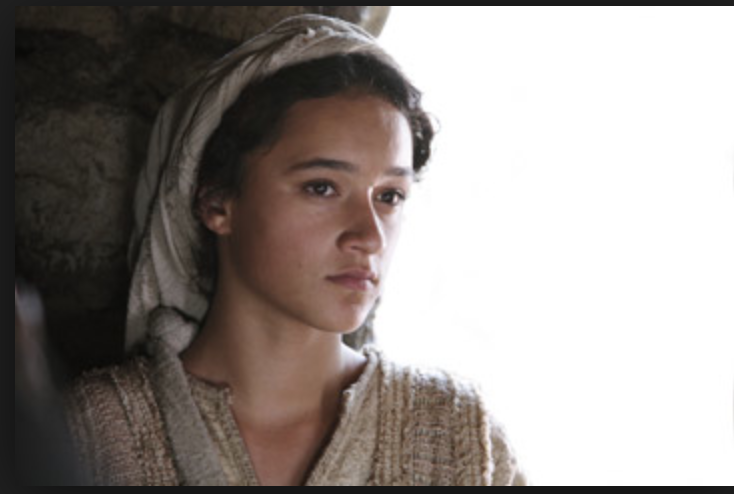
Mary Ponders her Situation at the Epicentre of Immensities
Mary’s encounter with the angel Gabriel has to be one of the most profound experiences of any human being. She was chosen for a special task that was outside the imagination of her calling in life as a recently engaged young Palestinian woman. She becomes a ‘most highly favoured lady’. Can we learn from this striking event in ancient history?
Epiphanies are suggestive of transcendence. Michael Morgan (1994, 56f)) points out that Charles Taylor sees a parallel between the epiphanies of art and poetry in the nineteenth and twentieth centuries and the I-Thou epiphany of religious encounter with the divine. Taylor elaborates the idea of epiphanies (1989, 419f, and especially 490-93). He sees Post-Romantic and modernist art as oriented to epiphanies, episodes of realization, revelation, or disclosure. Epiphanies and epiphanic art are about a kind of transcendence, about the self coming in touch with that which lies beyond it, a ground or qualitative pre-eminence. One might call it a gift of the imagination or a re-enchantment.
Taylor reviews various ways of articulating epiphany in Sources of the Self (C. Taylor, 1989, 419-93). He articulates how God, inserted into this idea of epiphany, fits as a moral source (Sources of the Self, 449-52). Epiphanies can be a way of connecting with spiritual and moral sources through the exercise of the creative imagination: sources may be divine (Taylor), or in the world or nature (Romantics like Thoreau), or in the powers of the imaginative, expressive self (Michel Foucault).
These epiphanies are a paradigm case of what Taylor calls recovering contact with moral sources. A special case of this renewal of relationship between the self and the moral source is religion and the relation to God, which he sees in the work of Dostoyevski. The relationship to art parallels the relationship to religion. The self is oriented in the presence of the inaccessible or sublime, that which captures one’s amazement or awe, for example, when one’s eyes are riveted to a certain painting like Monet’s Lillies, and one’s inner emotions are deeply engaged by a brilliant poem. The individual person is taken beyond self, in an experience of transcendence. The experience involves both elements of encounter and revelation. Light breaks into one’s darkness. It can come in a discovery such as finding out the chemicals in our bodies were once part of the death of a star. We are literally stardust, embedded in creation itself and we owe the stars our very biological life.
When innocent, young teenage Mary hears from an angel that she is to become the vessel of a most profound turn of events in history, she is in awe, overwhelmed. It is truly an epiphany, an encounter with radical alterity. Heaven and earth collide with each other, something dramatic occurs, like lightning. Time stands still in this kairos moment. She allows transcendence and immanence to come together in her body and in her life. It is utterly profound. She knows intuitively that she has been chosen to make history in the great salvation narrative. Her story is punctuated by the incursion of the eternal into the temporal, informed by the descent of transcendence into a young girl’s life. This encounter changed her, everything. We know it as the incarnation.
Dare we be open to such encounters, such moments of inbreaking epiphany? He comes to us as well to call us to the higher vocation of image bearing in our career and family and society.
Mary Considers Her Situation by Luci Shaw
What next, she wonders,
with the angel disappearing, and her room
suddenly gone dark.
The loneliness of her news
possesses her. She ponders
how to tell her mother.
Still, the secret at her heart burns like
a sun rising. How to hold it in—
that which cannot be contained.
She nestles into herself, half-convinced
it was some kind of good dream,
she its visionary.
But then, part dazzled, part prescient—
she hugs her body, a pod with a seed
that will split her.
It is a strong transcendence to use philosopher Calvin Schrag’s language. Transcendence means more than a selfless exposure or reorientation alone, but also a receiving that deeply involves the self, its imagination, its inner resources, its visions and revisions. In this calculus, for religion and art, the self remains autonomous and becomes fulfilled as it opens to the impact of the high otherness, goodness, truthfulness, and beauty beyond our imagination. It powers the sensus divinitatis. The human soul is enlarged. Morgan elaborates through the example of Jewish writer, Martin Buber, on this concept of religious epiphany or I-Thou encounter (Morgan, 1994, 60-61). Taylor appreciates (1994, 226-29) his use of Buber in relation to his (Taylor’s) concept of epiphany. For Buber, the religious event, revelation, involves a meeting between the self and the divine Other, an encounter that depends upon both receptiveness in both parties, but initiated by the divine Trinity. It is an act of self-affirmation, even as it is a giving over of the self to the Other. Life is enhanced, empowered, filled full. What occurs is revelation, high thought, deep realization, kairos time.
The self is receiver, but it is a receiver, not of a content, a proposition, a truth, but rather of a ‘Presence, a Presence as Power’. Furthermore, that Presence provides ‘the inexpressible confirmation of meaning’, a meaning that calls out to be done, to be confirmed by the self in this life and in this world … This confirmation and this affirmation of God and self in the world are what Taylor calls a “changed stance towards self and world, which doesn’t simply recognize a hitherto occluded good, but rather helps to bring this about” (M. Morgan, 1994, 60).
This brings the emergence of a supreme good in one’s experience. Thus, the concept of transcendence through epiphany, that has currency for artists and poets of the twentieth century, provides a category for us to extend to the transcendence of God. May this epiphanic realization continue this Advent Season and open up our world to horizons beyond our imagination, a re-enchantment, a re-visioning. Mary is a model to us. She allowed epiphany and grace to transform her into a vessel of the Christ-event, the most wonderful story of history. The incarnation is central to everything that life means.
https://www.youtube.com/watch?v=hHPtafFeWpk O Come to Us Emmanuel—Advent Carol by Nola Shantz
Dostoyevsky’s (1974) work The Brothers Karamozov reveals the power of transcendence and the danger of refusing it, i.e. by remaining trapped by an immanent frame. Charles Taylor notes that:
One of Dostoyevsky’s central insights turns on the way in which we close or open ourselves to grace. The ultimate sin is to close oneself, but the reasons for doing so can be of the highest. In a sense the person who is closed is in a vicious circle from which it is hard to escape. We are closed to grace, because we close ourselves to the world in which it circulates; and we do that out of loathing for ourselves and for the world.… Rejecting the world seals one’s sense of its loathsomeness and of one’s own, insofar as one is a part of it. And from this can come only acts of hate and destruction. Dostoyevsky … gives an acute understanding of how loathing and self-loathing, inspired by the very real evils of the world, fuel a projection of evil outward, a polarization between self and the world, where all evil is now seen to reside. This justifies terror, violence, and destruction against the world; indeed this seems to call for it. No one … has given us deeper insight into the spiritual sources of modern terrorism or has shown more clearly how terrorism can be a response to the threat of self-hatred.… The noblest wreak it [destruction] on themselves. The most base destroy others. Although powered by the noblest sense of the injustice of things, this schism is ultimately also the fruit of pride, Dostoyevsky holds. We separate because we don’t want to see ourselves as part of evil; we want to raise ourselves above it. (C. Taylor, 1989, 451-52)
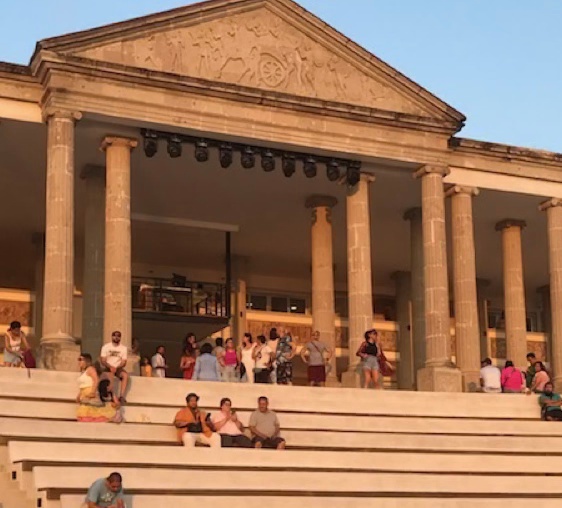
The current events of division, violence and brutality to others (diabolos) are just such a projection of hatred for the other. It is a simple, cold, deadly logic. It is completely grace-less, full of pride and narcissism–warlike. There appears to be a provocative link from self-sufficiency to pride and to the aesthetics of violence (religious or secular). See this pictorial example of the home of a corrupt chief of police in Mexico, now called The Parthenon.
Taylor holds out hope for a transcendent turn to agape love, hope for a different type of transformation from beyond pure immanent choice-focused self-invention and greedy self-interest which brackets the social world, the common good, and a God of love. There is discovery of self within the economy of grace, a discovery and a transformation that offers a different stance towards self and the world. It is an epiphanic discovery, but only if we dare allow it. Continuing with his discussion of Dostoyevsky, Taylor (1989) writes of this epiphanic encounter with transcendence.
What will transform us is an ability to love the world and ourselves, to see it as good in spite of the wrong. But this will only come to us if we can accept being part of it, and that means accepting responsibility.… Loving the world and ourselves is in a sense a miracle, in face of all the evil and degradation that it and we contain. But the miracle comes on us if we accept being part of it. Involved in this is our acceptance of love from others. We become capable of love through being loved; and over against the perverse apostolic succession [of terror and violence] is a grace-dispensing one. Dostoyevsky brings together here a central idea of the Christian tradition, especially evident in the Gospel of John, that people are transformed through being loved by God, a love that they mediate to one another, on the one hand, with the modern notion of a subject who can help to bring on transfiguration through the stance he takes to himself and the world, on the other.… What he [Dostoyevsky] was opposing was that humans affirm their dignity in separation from the world. (C. Taylor, 1989, 452)
We mourn the terrible losses on the Gaza Strip, in Ukraine, and elsewhere, and yet we do not give up on love itself. We must be open to the transformation of the world and our lower attitudes. God is coming! We must move away from self-righteousness to suffer and struggle for peace, hope, righteousness, light, and truth. The God of epiphany has extended the open hand of fellowship, an invitation to dialogue. If we come to realize that the core of reality is love, truth, goodness, beauty, humanism, our cynicism will melt away, our nihilism will give way to rich meaning and purpose. What do we make of Mary’s epiphany and her responses? Can it rethink and remake us?
Carlo Carretto captures it: “To have found God, to have experienced him in the intimacy of our being, to have lived even for one hour in the fire of his Trinity and the bliss of his Unity clearly makes us say: Now I understand. You alone are enough for me.“

Annunciation by Malcolm Guite, Poet-Chaplain
We see so little, stayed on surfaces,
We calculate the outsides of all things,
Preoccupied with our own purposes
We miss the shimmer of the angels’ wings,
They coruscate around us in their joy
A swirl of wheels and eyes and wings unfurled,
They guard the good we purpose to destroy,
A hidden blaze of glory in God’s world.
But on this day a young girl stopped to see
With open eyes and heart. She heard the voice;
The promise of His glory yet to be,
As time stood still for her to make a choice;
Gabriel knelt and not a feather stirred,
The Word himself was waiting on her word.
Philosophical theologian Anthony Thistelton (Intepreting God and the Postmodern Self, 1993) writes that the mystery of the incarnation is too profound for human discovery by reason alone; it requires epiphany or divine revelation. It is beyond our limited imagination to conjure. On the other hand, open-minded reasoning engages, and is engaged by, such profound epiphanies. The right posture, the right intellectual virtues of humility and openness can result in discovering many profound insights.
O Emmanuel, Won’t You Come.
Gordon E. Carkner PhD, author, blogger, YouTube webinars, meta-educator with UBC graduate students and faculty.
Carretto, C. (1974). The God Who Comes.
Morgan, M.L. (1994). Religion, History and Moral Discourse. In J. Tully, (Ed.), Philosophy in an Age of Pluralism: The philosophy of Charles Taylor in question. Cambridge: Cambridge University Press.
Rutledge, F. (2018). Advent: The Once and Future Coming of Jesus Christ. Eerdmans.
Schrag, C. (1997). The Self After Postmodernity. Yale University Press.
Taylor, C. (1989). Sources of the Self: The Making of the Modern Identity. Cambridge, MA: Harvard University Press.
See also Real Presences by George Steiner; Not in God’s Name by Jonathan Sacks.
More on the Turn to Transcendence
Towards an Incarnational Spiritual Culture by Dr. Gordon E. Carkner https://ubcgcu.org/coming-soon/
https://www.youtube.com/watch?v=tS7s9kDPKNw The God of All Comfort with N. T. Wright. This sweeping articulation of a biblical theme is a great way to enter the Advent and Christmas Celebration.
Part 2. The Shepherds Experience a Sound & Light Show of Glory

The fire and light of God is revealed to these simple farmers as part of the grand announcement of incarnation, Emmanuel, God with us. It is complete with a transcendent angelic chorus singing Gloria in Excelsis Deo et Pacem ad Hominem (Glory to God in the Highest and Peace to all Humankind). Joy split the sky. It was like a supernova. In this splendid glory can be found beauty, truth, and goodness plus high time which is a connection with eternity. The shepherds experience a connection with the very ground of their being. Their minds are blown; they are frightened at first by such a dramatic display, but then a deep calm and curiosity overtakes them. They quickly turn into investigators of the baby Messiah. The glory of God that exited the temple during the Babylonian exile of Judah has returned in the Christ child, the baby king. The fire of God (his essential being), his love, his creative power, is a transcendent fire unlike anything on earth. This fire and light brings peace, perspective, and hope for renewal, in effect a whole new creation. It is like a new dawn. This is the right moment for the Hallelujah Chorus, as all creation voices its praise.
‘The night could not contain their boundless praise. We thought that just a poem – until the night a song of solar glory……’
The Song of the Shepherds by Richard Bauckham
We were familiar with the night.
We knew its favourite colours,
its sullen silence
and its small, disturbing sounds,
its unprovoked rages,
its savage dreams.
We slept by turns,
attentive to the flock.
We said little.
Night after night, there was little to say.
But sometimes one of us,
skilled in that way,
would pipe a tune of how things were for us.
They say that once, almost before time,
the stars with shining voices
serenaded
the new born world.
The night could not contain their boundless praise.
We thought that just a poem —
until the night
a song of solar glory,
unutterable, unearthly,
eclipsed the luminaries of the night,
as though the world were exorcised of dark
and, coming to itself, began again.
Later we returned to the flock.
The night was ominously black.
The stars were silent as the sheep.
Nights pass, year on year.
We clutch our meagre cloaks against the cold.
Our aging piper’s fumbling fingers play,
night after night,
an earthly echo of the song that banished dark.
It has stayed with us.
“In our lives we are familiar with disturbing sounds, unprovoked rages and savage dreams, and often there is little to say, particularly for people who have tedious jobs, who pack our food on production lines, who deliver our parcels or clean up our streets. But occasionally, we may experience the ‘Glance’, spoken about in the poem. Those are the moments when the veil is drawn back from our eyes and we see the great wonder of our being. Maybe we cannot explain that surge of sweet joy that lasts for only a moment before we return to our humdrum lives, but it is often an unforgettable and incomprehensible moment of pure grace. These strange moments remind us that God is always around us and in us, and our part is to prepare an opening for God who may be seen or unseen, but who wants to irradiate us and will only be constrained by our own refusal.” ~Malcolm Guite on Epiphany
Handel’s Halelujah! Chorus at the Sydney Opera House
See also John Mark Comer https://johnmarkcomer.com/blog/unhurry-for-the-holidays
If you would like to support the high quality content of this blog, click on https://outreach.ca/donate Choose Staff Person Gordon Carkner.
Our Christmas Music Selection for 2024
Bruce Cockburn Christmas Album https://www.youtube.com/watch?v=OErtIjEusYM&list=PLMBz4uovmsDu1Ta-tJtvKza_Lc0nKyDvF
Lo How a Rose E’er Blooming – Christmas Carol by Nola Shantz (GCU Alumnus)
https://www.youtube.com/watch?v=55SXd9L-oMM
O Come to Us Emmanuel – Advent Carol by Nola Shantz https://www.youtube.com/watch?v=hHPtafFeWpk
Joy to the World (Live from The Chosen) https://www.youtube.com/watch?v=3vnB8xAqzjE
Little Drummer Boy, Pentatonix https://www.youtube.com/watch?v=qJ_MGWio-vc&list=RDQM8IdKZm8eLYU&start_radio=1
Handel’s Messiah at Grace Cathedral https://www.youtube.com/watch?v=2-QV_I-xseA&list=PLmbakg- rAnFgkTU61I0HZEt8lmIfBKkWI
Carol of the Bells, Voices of Lee https://www.youtube.com/watch?v=qHCIIBD3I1k
The Piano Guys Christmas https://www.youtube.com/watch?v=v5mdybeyLVc&list=RDQM8IdKZm8eLYU&index=2
Baroque Christmas https://www.youtube.com/watch?v=0093uRpp11E
Hark! The Herald Angels Sing, Celtic Women in Dublin https://www.youtube.com/watch?v=Xw38pGhPXIk&list=RDQM8IdKZm8eLYU&index=9
Trans-Siberian Orchestra—Christmas Canon https://www.youtube.com/watch?v=4cP26ndrmtg&list=RDQM8IdKZm8eLYU&index=12
For King & Country, O Come, O Come, Emmanuel https://www.youtube.com/watch?v=SkvYR4BcHYc&list=RDQM8IdKZm8eLYU&index=13
Carols from Choir of King’s College https://www.youtube.com/watch?v=zieoBKkN9qE
Anúna: The Coventry Carol (arr. Michael McGlynn): a whisper of Paradise. https://www.youtube.com/watch?v=Wit-jGD4wCw
The Oxford Choir Christmas Carols 2015 https://www.youtube.com/watch?v=9CMm4Ki82EI
Joy to the World, 51st African Children’s Choir https://www.youtube.com/watch?v=R65ekwEmXBE
Anúna – The Wexford Carol (solo Aisling McGlynn) https://www.youtube.com/watch?v=HgGu1I0n-ec
For King and Country, Little Drummer Boy https://www.youtube.com/watch?v=NzEX3QMuVPM
German Christmas Songs: Deutsche Advents & Weihnachtslieder https://www.youtube.com/watch?v=zE-xk_pUK54
Carol of the Bells, Libera Official https://www.youtube.com/watch?v=2ZF4uZiGeho&list=PLJOOOM1_Vojmi5pZElp5a_gyl5udKplC7
Joy to the World (Live from The Chosen) https://www.youtube.com/watch?v=3vnB8xAqzjE
Little Drummer Boy, Pentatonix https://www.youtube.com/watch?v=qJ_MGWio-vc&list=RDQM8IdKZm8eLYU&start_radio=1
The King’s Singers, Gaudete https://www.youtube.com/watch?v=uQyrD7U5aNE
Noel Nouvelet, Anúna https://www.youtube.com/watch?v=H6fbIUbivFM
O Holy Night, Carols from King’s College Chapel https://www.youtube.com/watch?v=gTFG_nvreoI
Traditional Christmas Carols https://www.youtube.com/watch?v=GVQTDs7VKwk
Instrumental Christmas Carols https://www.youtube.com/watch?v=G1Eq0f5mMVQ
noël :: anne porter
The customary carols
Bring us ragged miracles
That are loved all the more
Because they are so common
But there are carols
That carry phrases
Of the haunting music
Of the other world
A music wild and dangerous
As a prophet’s message
Or the fresh truth of children
Who though they come to us
From our own bodies
Are altogether new
With their small limbs
And birdlike voices
They look at us
With their clear eyes
And ask the piercing questions
God alone can answer.
 ubcgcu
Leave a comment