Luke 1: 26-56
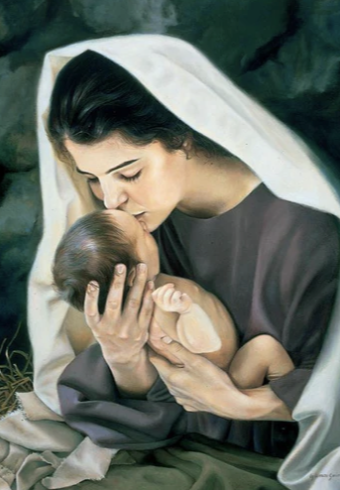
Epiphanies are suggestive of transcendence–something other worldly and yet present at hand in our experience. Michael Morgan (1994, 56f)) points out that Charles Taylor sees a parallel between the epiphanies of art and poetry in the nineteenth and twentieth centuries and the I-Thou epiphany of religious encounter with the divine. Taylor elaborates the idea of epiphanies (1989, 419f, especially 490-93). He sees Post-Romantic and modernist art as oriented to epiphanies, episodes of realization, revelation, or disclosure. Epiphanies and epiphanic art are about a kind of transcendence, about the self coming in touch with that which lies beyond it, a ground or qualitative pre-eminence. One might call it a gift of the imagination, or even a re-enchantment of reality.
Taylor reviews various ways of articulating epiphany in Sources of the Self (1989, 419-93). He articulates how God, inserted into this idea of epiphany, fits as a moral source (Sources of the Self, 449-52). Epiphanies can be a way of connecting with spiritual and moral sources through the exercise of the creative imagination: sources may be divine (Taylor), or in the world or nature (Romantics like Thoreau), or in the powers of the imaginative, expressive self (Michel Foucault).
These epiphanies are a paradigm case of what Taylor calls recovering our contact with moral sources in an amoral society. A special case of this renewal of relationship between the self and the moral source is religion and the relation to God, which he sees articulated well in the work of Fyodor Dostoyevski. The relationship to art parallels the relationship to religion. The self is oriented in the presence of the inaccessible or sublime, that which captures one’s awe, for example, when one’s eyes are riveted to a certain painting like Monet’s Lillies, or our inner emotions are deeply moved by a poem. One is taken beyond oneself, in an experience of transcendence; the experience involves elements of both encounter and revelation.
When Mary hears from an angel that she is to become the vessel of a most profound turn of events in history, she is in awe, overwhelmed. She cannot understand what is happening; she can only magnify the Lord.
It is truly an epiphany, an I-Thou encounter with radical alterity. Heaven and earth reach out to each other at this juncture and something dramatic happens. This news changes her life. Time stands still in this kairos moment. She allows transcendence and immanence to intermingle within her body, and then her life narrative. Mary’s story is punctuated by the incursion of the eternal into the temporal, informed by the descent of transcendence within the immanent time-space world. We know it as the incarnation, the most profound identification of the divine with humanity. D. Steven Long writes in Speaking of God (309): “The purpose of the church is to recognize and acknowledge those conditions by which we can, like Mary, say yes to God and in so doing make Jesus present to the world. Those conditions are the way of holiness and that assumes the transcendentals—truth, goodness and beauty.”

Beautiful Advent Guides
Isabelle Hamley, Embracing Humanity: A Journey Towards Becoming Flesh.
Darrell Johnson, Awaken Wonder: Devotional Readings for Advent.
Malcolm Guite, Waiting on the Word: A Poem a Day for Advent, Christmas, and Epiphany.
Refugee by Malcolm Guite
We think of him as safe beneath the steeple,
Or cosy in a crib beside the font,
But he is with a million displaced people
On the long road of weariness and want.
For even as we sing our final carol
His family is up and on that road,
Fleeing the wrath of someone else’s quarrel,
Glancing behind and shouldering their load.
Whilst Herod rages still from his dark tower
Christ clings to Mary, fingers tightly curled,
The lambs are slaughtered by the men of power,
And death squads spread their curse across the world.
But every Herod dies, and comes alone
To stand before the Lamb upon the throne.
Gord’s Christmas Reads 2025
Quentin Genuis, Recovering People: Addiction, Personhood, and the Life of the Church. Cascade, 2025. (March GFCF speaker)
The New Testament in Color: A Multiethnic Bible Commentary, IVP Academic (eds. Esau McCaulley, Janette H. Ok, Osvaldo Padilla, and Amy Peeler)
Miraslov Volf et al, Life Worth Living: A Guide to What Matters Most (perfect Gen Z resource).
Chris Watkin, The State of Nature and the Shaping of Modernity: Tracing the Roots of Colonialism, Secularity, and Ecology (one of the great minds of our time).
Alex Sosler, A Short Guide to Spiritual Formation: Finding Life in Truth, Goodness, Beauty, and Community. Baker Academic.
Nilay Salya, Professor of Political Science and International Relations, Nanyang Tech University, The Global Politics of Jesus (Harvard Divinity School Lectures).
David P. Gushee, Defending Democracy from its Christian Enemies.
Paul Kingsnorth, Against the Machine: On the Unmaking of Humanity.
Sejong Chun, Paul’s New Creation: Vision for a New World and Community.
Richard Bauckham, Jesus and the Eyewitnesses, 2nd edition (on the Gospel accounts of Jesus).
Michael McEwan, The Devil Reads Nietzsche: A Public Theology for the Post-Christian Age..
Tim Keller, Go Forward in Love: A Year of Daily Readings from Tim Keller.
David S. Dockery & Trevin K. Wax (eds.), Christian Worldview Handbook.
Graham Tomlin, Blaise Pascal: The Man Who Made the Modern World.
Lucy Ash, The Baton and the Cross: Russia’s Church from Pagans to Putin.
Thomas Albert Howard, Broken Altars: Secularist Violence in Modern History.
Jonathan Linebaugh, The Well That Washes What it Shows (an accessible introduction to the Bible).
Robert Bowman, et al., The Incarnate Christ and His Critics: A Biblical Defense
 ubcgcu
Leave a comment