Yohanna Katanacho
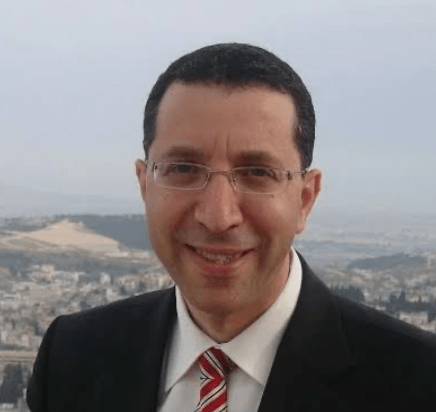
Unleashing Palestinian Christian Orthopathos:
Empowerment & Missional Justice Amidst Suffering
Wednesday, March 18, 2025 @ 12:00 PM
Join this Forum on Zoom
https://us06web.zoom.us/j/83337906485?pwd=T7iOcRZaMnzqNQy490zxN6Aa1y7NRe.1
Abstract
This lecture unveils the transformative power of Palestinian Christian Orthopathos – a potent understanding of suffering that fuels empowerment and missional justice. The lecture will delve into the Sermon on the Mount, explore the profound suffering of the Apostle Paul, and illuminate other scriptural insights. The exploration forges a powerful connection between missional justice and radical peacemaking within the crucible of Palestinian suffering, revealing Christ’s suffering and teachings as a vital orthopathic worldview for navigating immense challenges.
Biography
Yohanna Katanacho is currently the academic dean at Nazareth Evangelical College in Israel. He is a Palestinian Israeli Evangelical Christian who studied at Bethlehem University (B.Sc.), Wheaton College (M.A.) and Trinity Evangelical Divinity School (Master of Divinity & Ph.D.). He has taught at colleges and seminaries in many countries. He has authored or contributed to dozens of books and numerous articles in Arabic and English. Professor Rev. Katanacho is also the Lead Translator of the Colloquial Galilean Bible which is in the North Levantine Arabic dialect.
__________________________
Orthopathos (also commonly spelled orthopathy) is a theological term from Greek roots: ortho- meaning “right,” “straight,” or “correct,” and pathos (or patheia) referring to passion, affection, emotion, feeling, or suffering.It denotes “right affections,” “right passions,” “right feelings,” or “right emotions” — the proper alignment, formation, and orientation of the heart’s deepest sentiments, desires, motivations, and affective life toward God and in accordance with divine will.Orthopathos completes the classic Christian triad alongside:
- Orthodoxy — right belief / correct doctrine (head/mind)
- Orthopraxy (or orthopraxis) — right practice / correct action and behavior (hands/feet)
Together they form a three-dimensional vision of authentic Christian faith and spiritual formation: right thinking, right doing, and right feeling/loving.
Core Meaning and EmphasisOrthopathos stresses that genuine Christian life is not only cognitive (believing true things) or behavioral (doing good works), but deeply affective and relational. It involves cultivating “holy tempers” or godly dispositions — such as love for God and neighbor, compassion, humility, joy in God, hatred of sin, zeal for justice, peace, hope, and other fruit of the Spirit — so that the believer’s emotions, passions, and inner motivations are transformed and rightly ordered by the Holy Spirit.
It is not about fleeting or subjective emotional highs, nor mere sentimentality. Instead, it concerns a renewed heart whose affections align with God’s own heart: rejoicing over what delights God, grieving over what grieves God, showing compassion where God shows compassion, and being motivated by love rather than fear, pride, apathy, or disordered desires.
Historical and Theological Context: The term gained prominence in the 1970s–1990s among Wesleyan, Pentecostal, and some liberation theology circles (e.g., Samuel Solivan’s work on orthopathos as the liberating transformation of suffering/pathos by the Spirit, especially in contexts of oppression). It draws inspiration from figures like John Wesley, who emphasized the renewal of holy affections/tempers as central to salvation and sanctification. It has since appeared in evangelical, Reformed, and broader Protestant discussions as a way to insist that emotional and motivational formation is essential — not secondary — to discipleship.
Summary: Orthopathos reminds us that loving God fully requires not only confessing truth and obeying commands, but having a heart that spontaneously feels and desires in ways that mirror God’s own character and passions. As one summary puts it, “the things that break the heart of God break the heart of His people, and the things that inflame the heart of God burn within His people.”
_______________________________
A Prayer for 2026
Psalm 103: 1-5
- Pray for the Peace of God which stands in the gap, stands as guard of your heart and mind, the core of your being and agency. It is truly transcendent of all human understanding. Phil 4:7
- Pray that God will Bless the Work of your Hands, that he will multiply your education, your dreams, your imagination, and your creativity. Ps 90:17
- Pray for God’s Favour to be Bestowed upon You, that it can surround you like a shield to protect you from all harm and sustain you even in the darkest hour. Ps 5:12
- Pray for God’s Intimate Presence to create in you a state of awe. Isaiah 41:10
- Pray for God’s Refuge & Strength, the ever present divine help in time of need, struggle, and doubt. Ps 46:1
- Pray that God will Lead you by his Spirit, by his Word, that he will be your internal compass of wisdom and discernment on the path forward—your true north. Ps 119:105
- Pray that God will be your Source of Authority over Evil: fragmentation, distraction from God’s goodness, and deception. He will protect you by the Blood of the Lamb and the Word of our Testimony: against fear, depression, against those things that seek to overwhelm you. Luke 10:19
_____________________________________
Five Resources on Spiritual Formation
Invitations from God: Accepting God’s Offer to Rest, Weep, Forgive, Wait, Remember, and More by Adele Calhoun
The Genesee Diary: Report from a Trappist Monk by Henry Nouwen (see also The Wounded Healer)
He Leadeth Me: An Extraordinary Testament of Faith by Walter Ciszek, S.J., and Daniel L. Flaherty, S.J.
Invitation to a Journey: A Road Map for Spiritual Formation by M. Robert Mullholland Jr.
The Joy of Listening to God: Hearing the Many Ways God Speaks to Us by Joyce Huggett
 ubcgcu
Leave a comment