Resources: Pensées by Blaise Pascal
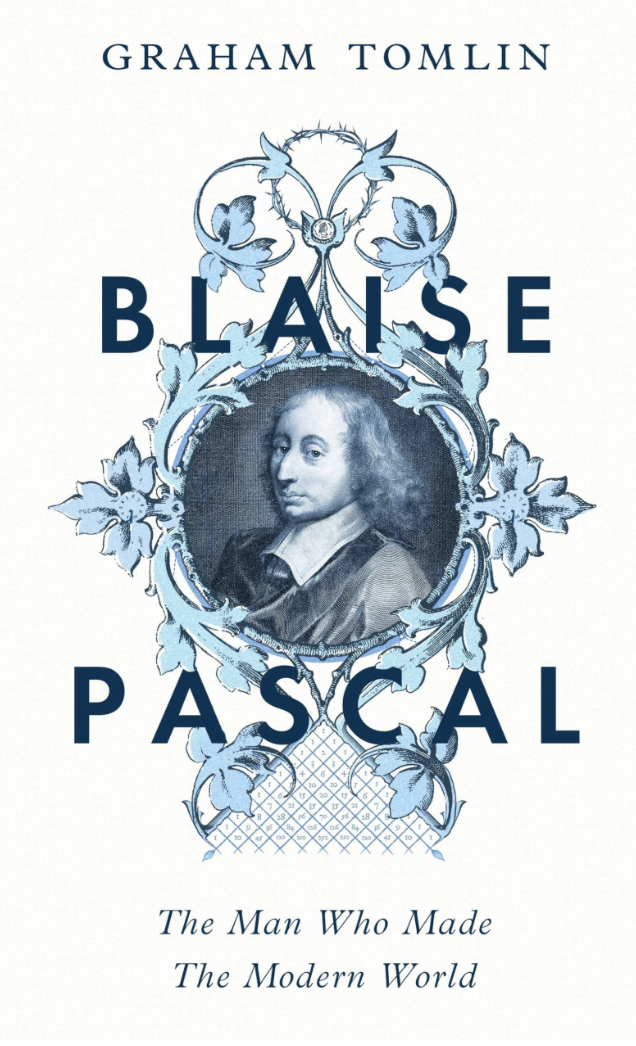
Graham Tomlin, Blaise Pascal: The Man Who Made the Modern World, Hodder & Stoughton, 2025.
French scientist and polymath Blaise Pascal’s (17th century) apologetic for the Christian faith is primarily found in his unfinished work known as Pensées (“Thoughts”), a collection of fragments and notes intended as An Apology for the Christian Religion. Pascal, a brilliant mathematician and philosopher who underwent a profound religious conversion in 1654 (his Night of Fire), aimed to persuade skeptical, worldly unbelievers (often modern “pagans” or rationalists influenced by emerging secular thought), and complacent Christians, of Christianity’s truth and personal vital relevance. Unlike traditional apologetics that rely heavily on purely rational proofs starting from abstract premises, Pascal adopted a more psychological and existential approach (rooted in an acute analysis of the human condition), emphasizing human experience, the limits of reason, and the heart’s desire role in belief. He brings in the moral dimension in an intriguing fashion.
Key Elements of Pascal’s Apologetic Strategy
- The Enigma of the Human Condition: Greatness Mixed with Wretchedness/Brokenness
Pascal begins with a penetrating diagnosis of humanity. Humans exhibit astonishing greatness (intellectual capacity, moral aspirations, creativity, sense of infinity, longing for transcendence) together with a profound wretchedness (boredom, anxiety, cruelty, mortality, inner conflicts, inability to find lasting happiness). Life is much more complex than the easy clichés we use to comfort ourselves. Pascal leads us on a penetrating journey to understand the paradox of being human.
No other philosophy or religion adequately explains this paradox, claims Pascal. Secular philosophies and other worldviews either deny the wretchedness (leading to superficial, naive, shrill optimism) or the greatness (leading to despair and nihilism), high ideals mixed with serious dysfunction. Christianity alone accounts for both: humans are made in God’s image (explaining the greatness) but have fallen and continue to fall into sin (the wretchedness/corruption/fraud/lies). Knowing Jesus Christ “strikes the balance” by revealing both the goodness and glory of God and our own misery and self-defeating problems and addictions. He clarifies and contrasts this stark polarity. This in turn creates the conversation and the search–we do want more from life but cannot find the source in humans.
2. Limits of Reason and Diversion
Pure reason (scientific evidence, worldviews, and logic) cannot settle ultimate questions like God’s existence or the meaning of life—it leads to either scepticism or indifference. At best, it leads to Deism–the belief in an irrelevant, aloof god or primal ‘uncaused cause’ (Acquinas). Philosopher Pascal realized early in life that reason is quite useful, but it has definite limits. At the same time, people distract themselves through endless “diversion” (entertainment, ambition, society, climbing the ladder, pursuit of money, gambling, video games, romance) to avoid facing their own wretchedness and mortality. They live in denial of this existential human dilemma; they push it down out of their first level consciousness. Pascal wants to “never leave them in peace”, stripping away these distractions to force honest confrontation with the realities of self and the world. The heart of the matter is important. Graham Tomlin captures the concept: “The ‘heart’ is the deep current that flows underneath our conscious thinking. It is not so much to be contrasted to ‘mind’, as if it somehow contradicts reason, but refers to a deeper level of awareness and conviction.” (G. Tomlin, 2025, 297) This is what a therapist, mentor, or counsellor tries to unearth or connect with.
3. The Role of the Heart (Anthropology)
Pascal was a great observer of people, poised as they were between order and disorder, infinity and nothingness, brilliance and illusions. As a brilliant mind, he saw the many contradictions and paradoxes in human experience, people’s self-justification and philosophical arguments. Pascal famously distinguished a deeper point about human motives: “The heart has its reasons, of which reason does not know.” True belief involves more than intellectual assent; it requires the “heart” (intuition, will, experience, deeper desires) to be engaged. There is a thick/deep structure to human reason in the underlying desire of the will (motivation). This is similar to existentialist Danish philosopher Søren Kierkegaard two centuries later. Faith is a gift, but humans can prepare for it, and must personally engage it. They ought to seek out the hidden God and the hidden answers to life’s paradoxes. This is a deeper engagement with reality that takes real courage and wisdom to execute.
He then shows that Christianity is an attractive way of thinking, living, and feeling: an “Order of Charity” or a path of love, not violence or force. Reason or proof subtly follows a change in the desire of the heart (passion) like at his Night of Fire, where he encountered God personally, dramatically, profoundly. It changed him utterly along with his perspective on reality (social imaginary). He became convinced that people need to ask the deeper questions of life: purpose, death, meaning, suffering, the vulnerability of human life in a vast universe. A famous quote from Pensées says: “Reason’s last step is the recognition that there are an infinite number of things beyond it.” Even science operates with many necessary assumptions that cannot be proven. Christianity is worthy of respect because it understands these paradoxes of human nature (suspended between infinity and nothingness) and the redemptive love of God.
“We burn with desire to find a firm footing, an ultimate, lasting base on which to build a tower up to Infinity, but our whole foundation cracks and the earth opens up into the depths of the abyss.” (G. Tomlin, 2025, 284)
William Wood writes in Duplicity: “What sort of freak (chimera) is humanity! How novel, how monstrous, how chaotic, how paradoxical, how prodigious. Judge of all things, feeble earthworm, repository of truth, sink of doubt and error, glory and refuse of the universe! Who will unravel such a tangle?”
4. Pascal’s Wager
Pascal is asking his interlocutors to dig deeper, to think and experience the perplexity and mystery of humankind. One famous element is the “wager” (especially in Pensée, 233). Since reason cannot decide or prove absolutely whether God exists or not, we must still choose—Key Point: non-belief, agnosticism, scepticism is itself a bet, gamble, or wager. Pascal admits that, apart from faith, reason cannot tell us whether we were created by God, by the devil, or just by chance. This produces an existential squeeze. What are the real stakes to the life stance that we choose? Most of us want to live our best life and stay in touch with reality–remain sane, stay in the game. There is an intriguing connection here to his work on probability theory. But God is still beyond the intellectual game. The consequences of the bet are real. There is no safe/neutral space; we all have to choose. We all have skin in this game.
- If you believe and God exists → infinite gain (eternal life/big prize).
- If you believe and God does not exist → finite loss (some earthly sacrifices for the good of others).
- If you do not believe and God exists → infinite loss (eternal separation/very high risk).
- If you do not believe and God does not exist → finite gain (temporary pleasures).
- Rationally, Pascal says one should “wager on God” because the odds are in favour of it. He urges not mere intellectual assent, but living as if God exists (attending worship, curbing passions, loving your neighbour, helping the poor, reconciling with enemies), as if what Jesus taught was eternally true, the very voice of God. He believes that this practice can lead to genuine faith over time. The wager, of course, is not the whole apologetic but a pragmatic move to motivate a person to action when intellectual barriers or incessant sceptical questions persist, where one is frozen in place–spiritually stuck. Our passions or deep desires can sometimes ‘make us dull of mind’, says Pascal; we need to calm them down, stop letting them rule our thinking and perceptions. But on the other side of choosing for God, there is deep joy as we live into faith (Hebrews 11:1f). And there is cumulative evidence that one can investigate. The stories of Jesus in the Gospels, the prophecies and the miracles are too good to be just made up–they all point in a certain direction and this develops a strong plausibility for the faith. If we cannot seem to believe, at least we know it is not for rational reasons (it is true for many that no amount of evidence would suffice). Because our desires and passions are off base (bogged down), or morally hostile to God, we are not free and we are not thinking clearly. We need God’s help to deal with our inner self-deception as Augustine (one of his favourite authors) taught. We struggle with irrational resistance to the truth; this is to our own ultimate disadvantage. Pascal wants to help the atheist or agnostic follow freely the truth wherever it leads, to be open to the possibility of belief in God, because the stakes are just too important.
Positive Evidences for Christianity
What makes the faith attractive, lovable, desirable, peace-producing, enlightening? Some things do not need to be proven absolutely, but can help us make sense of things once we have launched into faith–the plausibility factor. Pascal believes that we can get ourselves into the right place, the right epistemic position to judge the deeper philosophical and religious issues. His main point is that ‘atheism is a huge gamble’. He wants us to “put our ethical and metaphysical money on God existing” (G. Tomlin, 2025, 332). Beyond the root anthropological argument and his Wager, Pascal’s Apologetic includes the following items of investigation to help people get to the point where they are likely to make a good decision about the most important questions of all: Are we here by blind chance or is there a good and loving God behind the universe?
- The fulfillment of Old Testament prophecies in Jesus’s life and ministry, death, and resurrection. “The Scripture presents us not with an obvious God whose existence is as plain as a tree … but a God who hides from those who are not interested in searching for him.” (G. Tomlin, 2025, 309)
- The historical reliability of the Christian narrative, and the miracles surrounding Christ. He places his strongest emphasis on the cross of Christ–where the love of God encounters the ambiguous human condition in a profound way. The cross is the true genius and heart of the faith–a hidden revelation.
- The perpetuity and unique character of the Jewish people and Christian revelation. It is a Judeo-Christian faith that he promotes. The Hebrew scriptures and true Judaism point, not to a kingdom of political power, but to one of love and servant leadership–sacrifice for the marginalized, suffering for the good. Old Testament narrative and prophecy points to Christ as Messiah for Jews and Gentiles. The Bible is both ‘christocentric’ and ‘christoscopic’.
- Christianity’s high moral profundity, its gravitas and transformative power: Lives are changed by the encounter with the Gospel. As the Apostle Paul said, it can look like “a scandal to Jews and foolishness to Gentiles” but when grasped at its true depth, it is “the power of God and the wisdom of God.” Pascal did not shy away from the enigmatic character of Christianity–a crucified God who was victorious over human corruption/wretchedness/violence. It points towards the satisfaction of our deepest desires, the true purpose of human life–the sovereign good, transcendent agape love. God alone is mankind’s true and highest good. Charles Taylor would call this the ‘hypergood’.
Pascal’s apologia is both existential and persuasive rather than strictly deductive. He disagreed with Descartes’ deductive philosophy and the human cogito as the centre of reality. He targets the will and emotions (the core heart motives) as much as the intellect, aiming to attract unbelievers to want Christianity by showing it as the only satisfying explanation of human reality and the answer to existential human longing–the solution to the great human puzzle. His work remains influential for addressing modern scepticism, where abstract proofs often fail to connect, while honest self-examination (a crisis of faith in one’s ideology or narcissism) opens a door to faith. According to Pascal, Christianity is at the same time both ‘strange’ and ‘attractive’. As a scientist, Pascal wanted to rigorously bring all the evidence to the table to give us the best epistemic outcomes.
Ultimately, he argues that Christianity is a true take on reality. So he encourages sceptics to try looking at life through Christian eyes. The way we look at things (our hermeneutical framework) determines what we see. Graham Tomlin opens up these issues in chapters 12, 13, and 14. Pascal drew much on St. Augustine: “The one thing that can bring us happiness is the find our rest in God, to listen to God.” He wants people to realize that God cannot be known at a distance. He must be known intimately, with the intensity of love and commitment, passion and beauty, with all the risks that are involved in the divine-human relationship. He hopes that through such discourse his interlocutors will ‘wish it were true’. Then they can be shown its rational coherence, i.e., that it makes sense of our experience of reality. In the end, Pascal was “captivated and seized by a vision of beauty that he could not have arrived at through purely rational means…. a perspective from which everything else made sense” (G. Tomlin, 2025, 317).
~Dr. Gordon E. Carkner, Meta-Educator, Author of Towards an Incarnational Spiritual Culture.
 ubcgcu
Leave a comment