Can scientific naturalism even begin to explain ethics?
R. Scott Smith, PhD, Biola University
Scott.smith@biola.edu
In the west, until the Enlightenment, both ethics and religion tended to be seen as areas in which we could have knowledge. But with the historical rise of 1) the view that the universe is a closed, mechanistic, and material system, 2) the view that science is the pinnacle of the disciplines, and 3) empiricism (the theory that all knowledge comes by the five senses), science came to be viewed as the unique set of disciplines that gives us knowledge of facts. Instead, ethics and religion were relegated to the realm of mere values, personal preferences, and opinions. This, of course, is known as the “fact-value split.”
Before the Enlightenment, and even the rise of naturalism to prominence in the modern era, moral principles and virtues generally tended to be seen as the kinds of things that can be universal, objectively real, transcendent, and even immaterial, being knowable by reason and/or revelation. By and large, people then tended to see morals as having an essential nature. But that mindset shifted in light of empiricism and naturalism. For if 1) all knowledge comes by the five senses, 2) there are no real, immaterial universals, and 3) all that exists is made up of physical stuff, then morals also came to be viewed as the kind of thing amenable to being studied empirically by science.
Now, naturalists have proposed many alternative views about morals. E.g., some argue that they are just biological adaptations, while others contend they are just our constructions. Some focus on the meaning of moral statements and our language use. Some of these conclude that moral statements do not have any cognitive content, while others disagree, being subjectivists or objectivists. Still others embrace “error” theory, and so on.
Yet, they all hold in common a rejection of any real, intrinsically valid moral facts or properties, because there are no essential natures. This gives rise to a problem for any naturalist, for as Simon Blackburn explains, “The problem is one of finding room for ethics, or placing ethics within the disenchanted, non-ethical order which we inhabit, and of which we are a part” (Ruling Passions: A Theory of Practical Reasoning (Oxford: Clarendon Press), 49).
But I will argue that if we take naturalism seriously, and what it claims is real is indeed so, then we cannot know anything (even in science, business, etc.). To do this, I will examine the claims of Daniel Dennett, a leading philosopher of neuroscience. If I am correct, then the fact-value split is false. But, we do know many things, even a few widely held, clear examples in ethics. These findings will help show that naturalism is false. But that means a radically different worldview, and ontology, must be true.
(For more on this topic, see my In Search of Moral Knowledge (2014) and Naturalism and Our Knowledge of Reality (2012).)
Based on academic citations, Stiglitz is the 4th most influential economist in the world today, and in 2011 he was named by Time magazine as one of the 100 most influential people in the world. Stiglitz’s work focuses on income distribution, asset risk management, corporate governance, and international trade. He is the author of several books, the latest being the best seller, The Great Divide: Unequal Societies and What We Can Do About Them (2015).
Below are some notes on his presentation at UBC. It is interesting to read this against the background of The Sermon on the Mount in Matthew 5-7 and Jim Wallis’ profound and compassionate book The (Un)Common Good. Chrystia Freeland’s book Plutocrats and Thomas Picketty’s book Capital in the Twenty-first Century are also very insightful contributions to the economic state of our world. Read More…
Students engaging and encouraging fellow students on the cutting edge of thought and research.
Courage and integrity in the pursuit of excellence in research and noble personal character.
Winsome exploration of fullness and joy in our work and life, to live large with humility.
The agape love posture of respect in relationships with high goals for collegiality and friendship.
In preparation for global citizenship and pursuing hope for a better and more just world.
A stance of intellectual openness in the pursuit of a reasoned faith and faithful, responsible, virtuous reasoning, handling the pursuit of knowledge wisely.
A constructive contribution to campus discourse, raising important questions, and exploring fresh ideas and horizons.
Drilling down into the richest heritage of Judeo-Christianity, leaving no stone unturned. Exploring how this can inspire and open up channels for academic investigation.
Develop a deep identity in Jesus Christ and the biblical narrative while respecting difference in convictions of others, promoting a responsible spiritual quest for truth, beauty, goodness and community. Pursuing my truest self.
Encouraging intense curiosity that draws from the wisdom of faculty across the disciplines and scholarship from around the globe.
Advocating for others who are less fortunate or less privileged, pursuing their empowerment and freedom from oppression and grinding poverty. Pursuit of the common good towards an integral humanism.
Key Words to Capture the GCU Narrative Curiosity, Community, Character, Open to Dialogue, Digging Deeper into Faith and Reason, Integration, Science-Religion Dialogue, Identity Capital, Big Questions, Meta-Biology, Meaning and Calling, Adding Value to Education, Culture Making, Justice and the Common Good, Creative Imagination, Good Scholarship, Innovation, Christo-centric Inspiration, Incarnational Humanism, Adventure and Fun, Celebrating Creation, Re-thinking the Secular, Social Relevance.
GCU is interdisciplinary and international, it creates a lively conversation as people bring their wealth of knowledge, experience and expertise to the table. They also bring their heart, humor and their joy to community. Let’s get to know each other and explore new horizons together during this important journey of postgraduate education.
130101_002Scott Smith Audio File “Does Postmodernism Offer a Better Alternative?
Naturalism is a picture of the whole of reality that cannot, according to its own intrinsic premises, address the being of the whole; it is a metaphysics of the rejection of metaphysics, a transcendental certainty of the impossibility of transcendent truth, and so requires an act of pure credence logically immune to any verification…. Thus naturalism must forever remain a pure assertion, a pure conviction, a confession of blind assurance in an inaccessible beyond; and that beyond, more paradoxically still, is the beyond of no beyond. (D.B. Hart, 2013, p. 77)
The commitments to metaphysical naturalism and ideological scientism that govern “public reason” dictate a conception of reality that prevents the grounding of any morality at all…. If metaphysical naturalism is true then human rights are not and cannot be real, natural or discovered. They are at most constructed conventions or useful fictions, but intellectually they are unwarranted remnants from a rejected conception of reality. (Brad Gregory, Notre Dame, 2012, p. 224-5)
Scott showed brilliantly that logically naturalism hampers or handicaps our ability to know things and know moral values. Nominalism reduces the world to particulars. It is anti-intellectual in the sense of understanding the essence of things, persons or ethics. Ultimately, we cannot trust our own thoughts, perceptions and convictions; it is skeptical of mental properties. Its strong ideological scientism is self-stultifying. We are left with no certainty of knowledge at all.
His counter was that, in fact, most of us believe we do know persons and things and moral values like justice and fairness and love. Thus skepticism should be thrown back on metaphysical naturalism or materialism. See also the work of Alvin Plantinga, Where the Conflict Really Lies Chapter 10.
Talks on Alternatives to Relativism by Jerry Root, Wheaton College : http://www.cslewis.org
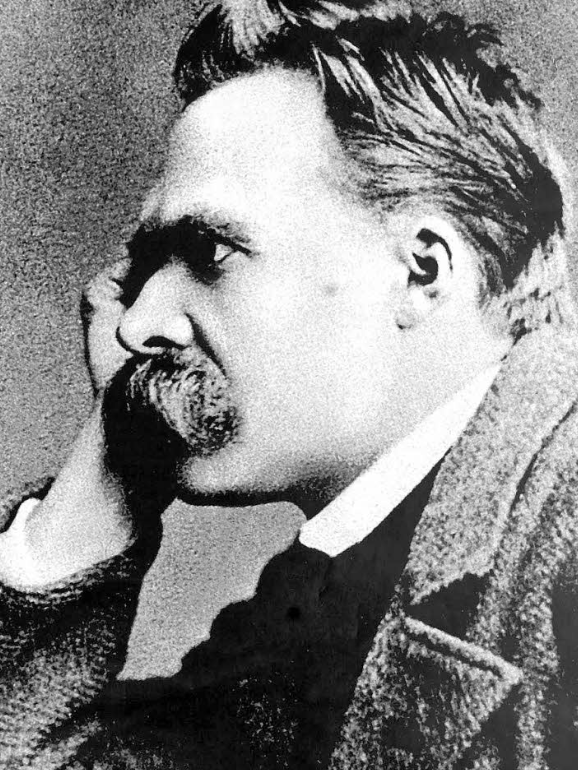
We see genuine hope in premiere Canadian philosopher Charles Taylor and his retrieval of the language of the good. Ethical relativism denies that any objective, universal moral properties exist. It arose in the philosophical context of the dominance of empiricism and naturalism and the rejection of metaphysically abstract universals. It perpetuates the mindset that we know how things really are for all people: i.e. that morals are relative to individuals or cultures. It is a universal claim that there are no universals. Nietzsche saw very clearly that if there was an end to God and traditional values, then the strong could impose their values on the masses. Anyone heard of the alt-right? Domination would be widespread. Thus came his model of the ubermensch (superman) and the ethics of will-to-power. There is a natural progression from relativism to will-to-power ethics (with the view that a human is just another thing in the world to be managed, controlled or exploited).
William Golding’s Lord of the Flies, which many of us studied in secondary school, is a graphic, heart-wrenching picture of unrestrained evil, where might makes right and bullying and scapegoating is the accepted social ethos. A group of boys marooned on a remote island make their own society, and the results are shocking. The twentieth century has trembled at the great atrocities and abuse of power by those who are without any fear of a transcendent being (Big Gods) or any sense of obligation to a code of conduct, higher ideals or norms. They operate without accountability. We enter a Hobbesian world where it is ‘all against all’. See the BBC documentary on Nietzsche “Human all too Human” https://www.youtube.com/watch?v=3EGOwduWVKA
Moral philosopher R. Scott Smith argues (In Search of Moral Knowledge) that ethical relativism or subjectivism is a bankrupt view of the nature of morality. It fails as a moral theory and a guide to one’s moral life. It results in morally inconsistent and untrustworthy behaviour. It leads to the corrosion of morality itself with absurd consequences:
We should not settle for a relativistically based tolerance, since it will not succeed in building a moral society or in helping people be moral. That kind of morality forces us to consider all ideas and ways of life as being equally valid, yet we can know that this is not the case …. Nevertheless, tolerance (as respect of people as having equal moral value) would make sense if a universal, objective moral basis exists for that equality. (R. Scott Smith, In Search of Moral Knowledge, 162)
Relativism in the twentieth century has led us into some very dangerous political experiments; billions have been spent on war-making with the consequence of potential total annihilation (MAD); human rights have been violated in terrible ways; imperialism ran rampant; multiple millions have perished. Death camps and squads have flourished. The amount of suffering was unprecedented, giving it the label the bloodiest century in history. British journalist Paul Johnson (A History of the Modern World: from 1917 to the 1990s) graphically illustrates the way in which the ethic of will-to-power has flourished in the soil of relativism during the twentieth century. In fact, we may well ask: Do we have one example in history of benevolent leadership without the restraint of traditional morality and the rule of law? Any time a leader sees themselves above the law, citizen wellbeing is in jeopardy. Can one find a historical-political context where the governing authorities who have absolute power (whether king, dictator, tzar or proletariat leader) actually do not become corrupt and abuse that power? We don’t think so.
Without a moral plumb line, societies seem headed for personal nihilism and/or political tyranny. This dilemma was admitted by an atheist blogger: RationalSkepticism.org The ultimate end point is despair and ugly oppression, propaganda and control from the top. A subjectivist ethic is no ethic at all and offers no hope for society or for psychologically healthy relationships. It consists in the blind leading the blind. It offers no motive reason to get along in society, sacrifice for the other, no moral basis for law, no place to appeal when there is a dispute between parties, the loss of human rights. It encourages élitism. Morality must address the proper resolution of conflicts and call unjust behaviour to account. Relativism seems to lead us into some frightening conclusions both intellectually and experientially. We must ask whether there is not another paradigm that can be more intellectually sound, sane and just. Despite its popularity and its role as an opiate for the unreflective masses, we have shown that relativism is both inconsistent and dangerous. It corrupts individuals and society at large.
We agree that beliefs are not strictly objective, and that we are subjectively tied in with them (Charles Taylor, Sources of the Self). Our convictions are partly a matter of resonance, and they are precious to us and our identity, not as arbitrary as we often superficially claim. There is both an objective and subjective pole of the good. Taylor is a falsifiable moral realist. What we disavow is the conclusion that all moral beliefs are of equal value or strictly relative to the individual or the culture at hand. This has been shown to be unworkable and riddled with a nasty trail of racism, Dionysian cruelty and violence. We are all accountable to high standards, to virtue. It seems counter-cultural today, but our conviction is that we do not have a right to our own individual morality (radical autonomy). That view has proven inadequate and vacuous, hollowing out the self.
A hierarchy does exist even if we are unaware of its existence. Some values have a better fitness with whom we aspire to be as a civil human community. They are nobler, higher and more life-nurturing. Others are lower, demeaning and more death-dealing. We believe that the way forward is a recovery of the ancient idea of the good as per McGill philosopher Charles Taylor (See other blog posts on the topic Qualities of the Will). He offers quite a nuanced version of moral realism that can be tested in human experience. Taylor believes, against the grain of much contemporary moral philosophy and moral rebellion, that there is a hierarchy of values well worth attending to. A number of top moral and anthropological scholars agree with him (e.g. Nicholas Wolterstorff, Miraslov Volf, Richard J. Mouw, J. Budziszewski, Alasdair McIntyre, R. Scott Smith). If ethical relativism were correct, there could be no such thing as moral growth or purpose in culture’s or a person’s life. David Brooks (The Road to Character) argues convincingly that moral growth is indeed necessary for moral health and sound leadership. To have improvement, we must have a standard by which to judge and discern the difference in moral values, and to expose and flush out moral vices, fraud, corruption, irresponsibility.
It is our conviction that objects and healthy relationships have independent existence (critical realism) and innate value, that there is something true about the world despite what we may want to think. This means that there is a proper and responsible way to live together in late modernity. Plurality of convictions need not imply complete relativism, nor does it imply an implosion into subjectivism/solipsism. It means that we have to drill down deeper in understanding different ethical frameworks and worldview options. We have to critically separate the true and authentic from that which makes us feel good, that which we desire, or even that on which we were raised. Philosopher Arthur Holmes says it well:
Neither the plurality of different worldview perspectives nor the different elaborations given any one perspective imply that worldviews are entirely relative. Truth-claims can still be made and ways must be found for evaluating the claim that a certain worldview is objectively true.
Holmes is saying that it is possible to discern truth, move towards it, embrace it, and vitally important that we do so. Our wellbeing depends on aligning our lives with the facts and the good, better, best. Ethical systems (even relativistic ones) are grounded in worldviews. Ethical relativism is tied to materialistic naturalism, a worldview that Thomas Nagel (Mind and Cosmos) says is inadequate to living the moral life, or even offering proper explanatory value for the phenomenon of human morality. We all need a posture, a world-life perspective, to give structure and meaning to our lives and our society, and to set appropriate goals. Thus, worldview discernment is foundational to finding a way forward out of corrupt, confusing, painful and destructive relativism. We need to test our beliefs on the anvil of reality and be open for reconfiguration and transformation to a better outlook.
The real danger, the real intellectual enemy here is ontological subjectivity. This is the conviction that an object or idea has no reality outside a person’s mind. Truth depends on me and my take on reality—the strict social constructionist view which we find in Neo-Nietzscheans like Michel Foucault. It applies to ethics as well, in that relativism can reduce ethics to perceived experience or personal relational experiments. In fact, humans are subjectively involved in coming to know the world, but there must be a world objectively there and a community to dialogue with, in order for the knowing to occur. Believing something does not necessarily make it so. That can be a fantasy or fideism no matter what percent buy in. Morality is not a majority vote. There are important objective criteria which are used to critically examine the validity of a worldview (James Sire, The Universe Next Door).
There are three dominant and competing worldview options in the early twenty-first century: Naturalism (atheism or exclusive humanism), Pantheism, and Christian Theism. Naturalism and Theism are the key competitors in the West. A relativistic view of morality derives either from Naturalism or Pantheism. The Naturalist view holds that there is no ‘Big God’ (Ara Norenzayan) and therefore no derived transcendent source of right and wrong, no transcendent or infinite goodness from which to derive the human finite goods, or common social good. Thus, moral choices are individualistic and subjective or made by a group ruled by an élite. Philosopher Thomas Nagel (Mind and Cosmos), although an atheist, does not believe that naturalism can offer the explanatory power necessary for human ethics. Pantheism promotes the idea that good and evil are part of the system, the colour of life, even part of god or ultimate reality (good = evil). Shirley MacLaine along with other New Age enthusiasts is fundamentally Pantheistic. They are tolerant in one sense, but hopelessly naive in another, and deeply intolerant in yet another sense.
Christian Theism, on the other hand, roots its ethical framework in a good and generous God who transcends human reality. The good is sourced in an infinitely Good God. Ethics (including the capital virtues) is oriented to what pleases God and benefits one’s fellow humans (D. Stephen Long, The Goodness of God). Humans are called to mediate this goodness to society and to the biosphere through good stewardship and practice of the virtues. Evil is that which detracts people from these goals and twists/perverts the true, the beautiful and the good: selfishness, covetousness, pride and greed among other capital vices. It is often a matter of finding love in all the wrong places or meeting our needs in all the wrong ways, many times at direct expense to others, even those we love and admire. Evil is cowardly, narcissistic, selfish, irresponsible behaviour.
Expressing late nineteenth century ambivalence, atheist Albert Camus saw the need for God in society and the consequences of losing God in moral discourse, even though he himself believed that no God was available. In his book, The Rebel, Camus writes:
When man submits God to moral judgement he kills Him in his own heart. And then what is the basis of morality? God is denied in the name of justice, but can the idea of justice be understood without the idea of God?
His thoughts were prophetic at mis-twentieth century. The rejection of God has proved a terrible mistake for the world, producing incipient narcissism, self-trivialization and even despair, self-destruction and destruction of others through terrible violence. It has resulted in our current obsession with productivity, consumption and workaholism. Many people still long for God and the higher goods to help reshape human relations even though they cannot personally understand how to believe in his existence (CBC Ideas Series After Atheism). This is tragic, but not irredeemable. There is hope, even in a secular age.
At its heart, Christianity is concerned about an historical event: the Jesus story. It is actually based on a series of events culminating in the life, death and resurrection of Jesus of Nazareth. The story is mediated through the Bible and a living community of faith that has grown and flourished for two thousand years. This is public information available for investigation and scrutiny by anyone interested. Embodied in Jesus is a fresh, liveable and life-giving ethic: concern for the marginalized, for women and children, the poor and weak, just political relationships, reconciliation and love for enemies, economic equality of opportunity (Jim Wallis, The (Un)Common Good). It is all about hospitality (Matthew 25). He had a strong vision for humanity. Also in Jesus, we find a major truth claim: he claimed to be God in human flesh (John 14: 6 and 7), in effect to be the Transcendent Good embodied in a person, in human flesh. It is articulated in the Sermon on the Mount which was so highly appreciated by reformers like Ghandi and Martin Luther King Jr. This can and should be tested for its authenticity and robustness. If it is correct, it has the deepest possible relevance to people today, offering rich hope for life direction/vision and personal change. Christians believe that his call and invitation is to all humans from all backgrounds and religions and viewpoints to explore a higher ethic and a healthier humanism (Jens Zimmermann, Incarnational Humanism). It is a universal welcome.
Unfortunately, the ‘truth question’ has been repressed and abused in our politically correct era, too heavily connected with power-interests. But the grave danger in this repression is that people may readily buy into fool’s gold, moral Ponzi schemes, and build their lives and their values upon a lie or a constructed illusion. Truth, integrity, servanthood and goodness are our friends, not our enemies. They are essential to academic integrity, moral responsibility and psychological health, and fulfilling relationships that endure the tests of life. We must never give up on/sell out our critical moral faculties, our ability to discern the qualities of the will. Dr. Alister McGrath of Oxford University captures the urgency of the moment.
To allow “relevance” or “openness” to be given greater weight than truth is, quite simply, a mark of intellectual shallowness and moral irresponsibility. The first and most fundamental of all questions must be: Is it true? Is it worthy of belief and trust?
The relevance question, although very important, should always be secondary to the truth question. Otherwise, we become confused intellectually, spiritually and morally. It makes our identity shaky as well. Humans share more values than is often perceived: Killing you daughter because you claim that she shamed the family by marrying the wrong guy is always evil. Oxford scholar C. S. Lewis argues very intriguingly in his important book The Abolition of Man for what he calls the “Tao” or the doctrine of objective, shared values in all cultures around the world, the belief that certain attitudes are really true and others really false, to the kind of thing the universe is and the kind of beings that we humans are. There is truth, as he sees it, that transcends cultural plurality and individual bias or choice. He sees in the Tao a way to avoid the abyss of relativism and nihilism. See also English professor Dennis Danielson’s new book on this theme: The Tao of Right and Wrong. Those who aspire to high values (justice, respect, concern for family, sexual fidelity, consistent behaviour, honest business relations, truthfulness, compassion, mercy) do have something important in common and this can offer support to others who don’t yet see such a vision, or believe that it is possible. Some of us need moral inspiration from exemplars like Martin Luther King Jr. who embody such high values and stand out from the crowds, commit them selves to love and doing the right thing https://www.npr.org/2010/01/18/122701268/i-have-a-dream-speech-in-its-entirety.
The question of the good takes us into deeper reflection on our identity and what makes us truly human after all (see the link to the CBC Ideas series The Myth of the Secular). The questions raised within the Jewish-Christian scriptures help us discern the foundations of who we are and how we might live a robust, kind, dignified and nobler communal existence. Our freedom needs the content and moral horizon of the good in order to provide meaning that will endure the stressors of life. We find structure within which to discern our sometimes perplexing ethical choices, and vexing human problems and questions. Here is a worldview and a plausible faith that is open for rigorous personal examination. It is a road to freedom.
Psychologist Erich Fromm has some profound insight on moral decision-making.
Our capacity to choose changes constantly with our practice of life. The longer we continue to make the wrong decisions, the more our heart hardens; the more often we make the right decisions, the more our heart softens–or perhaps comes alive …. Each step in life which increases my self-confidence, my integrity, my courage, my conviction, also increases my capacity to choose the desirable alternative …. Each act of surrender and cowardice weakens me, opens the path for more surrender, and eventually freedom is lost.
Instead of a toxic, opiate relativism that confuses us and puts us to sleep morally, there is a tremendous need today for the courage of deep, positive conviction. Society will not avoid anarchy if an appropriate moral and spiritual glue is not found (Brad Gregory, The Unintended Reformation). It has to be more substantial than consumerism or personal desire, interest or appetite. We need a platform for healthy debate and substantial answers to real moral and ethical questions, as sociologist Jurgen Habermas adjures us. It is not first technology, but rather moral decision-making, that will determine what kind of future we will have. It must be grounded in the love of one’s neighbour and human generosity and care for the weak and vulnerable, rather than acquisition of the most wealth, power and pleasurable experiences.
At a practical level, in his National Bestseller, Stephen Covey has argued a strong case for a principle-centred life and leadership style. The Seven Habits of Highly Effective People is brilliant with insight into how to make relationships really work and how to operate with fairness, integrity, honesty, win-win justice and human dignity. It is radical material in our personality-cult age, but it provides hope for a mature direction in life and the development of strong character and powerful, life-enhancing servant leadership. People need a means or paradigm to learn how to live from the inside out according to their truest self. Integrity by Henry Cloud brilliantly reinforces this theme.
Ethical Relativism is partly the result of lazy thinking about the world and very weak or shallow reflection on self, resulting in a thin self. It leads down a dark path to ideology, nihilism and the existential abyss. Christian principles (e.g. Sermon on the Mount; Romans 12, Philippians 2, I Corinthians 13, and Ephesians 4 and 5 idea of giftedness) offer the kind of parameters and stability that we need to value others highly, mentor our children, make the tough choices in life and to build a better world, a better moral infrastructure. We can courageously face some of our toughest ethical and political headwinds (Glenn Tinder, The Political Meaning of Christianity). We ignore the moral and spiritual insights of Christianity to our own detriment, some might say to our culture’s peril. No Christian is perfect or always consistent, but responsible freedom is the quality of attitude we need for a healthy local and world community, a just, non-violent society that reaches out to the marginalized, the stranger. Humans will flourish in new ways as they discover and live by high, God-inspired principles. This entails good stewardship and a robust vision. It offers a good wager.
~Gordon E. Carkner PhD, Philosophy of Ethics, University of Wales.
See Gord’s new book on the renewal of culture: The Great Escape from Nihilism: rediscovering our passion in late modernity, (Infocus, 2016) https://ubcgcu.org/new-book-release-the-great-escape/
CBC Ideas Program: The Truth about Post-Truth http://www.cbc.ca/radio/ideas/the-truth-about-post-truth-1.3939958
On Topic, Thoughtful Quotes from Andy Crouch in Playing God: Redeeming the Gift of Power (2013)
What is the deepest truth about the world? Is the deepest truth a struggle for mastery and domination? Or is the deepest truth collaboration, cooperation and ultimately love? (p. 48)
Love transfigures power. Absolute love transfigures absolute power. And power transfigured by love is the power that made and saves the world. (p. 45)
It is not much of an exaggeration to say that nearly an entire generation of students of literature and culture, under the influence of Nietzsche’s intellectual decedent Michel Foucault, devoted tremendous intellectual energies to exposing the Nietzschean underbelly of dominion in precisely the domains that were once thought to represent a refuge from the will to power—in art and architecture, in family and friendship, and not least in religion. (p. 48)
In a Nietzschean world, we are all reduced to waiting for Superman—or, just perhaps, acquiring enough power that we ourselves can thrust back all that resists us, achieving the domination we believe is necessary for the triumph of the good. (p. 50) The quest to become Superman does not produce strength adequate to master reality–it undermines it. For in his commitment to power as godlike domination over all space and over all other beings, it is idolatry. When idolatry seems to work, it is radically unstable … the injustice that flows from idolatry ultimately ruins not just its victims but its perpetrators. (p. 52)
A vision as pessimistic as Nietzsche’s is frankly conductive to insanity. It would not have been so influential if it were not so plausible in our fallen world. But Jesus holds out another possibility for power–that the story of beginnings told in Genesis still matters east of Eden. What would it look like to paint an alternative to Nietzsche’s dark vision of bodies in competition? (p. 51)
All true beings strive to create room for more being and to expand its power in the creation of flourishing environments for variety and life, and to thrust back the chaos that limits true being. In doing so it creates other bodies and invites them into mutual creation and tending to the world, building relationships where there had been none: thus they then cooperate together in creating more power for more creation. And the process goes on. There is a kind of being that delights in sharing space and a deeper, truer being that is able to create more than enough space–room for more being. (p. 51)
In the resurrection, the original power of creative love displaced sin and death. Sin and death, and the twin systems they create, idolatry and injustice, are already unmasked and have lost the critical battle. Creative love was always stronger and more real—and in the community of the resurrection, the first and latest followers of Jesus find that reality living, breathing and working powerfully through us. (p. 53)
See also GCU Blog Posts comparing Jesus and Nietzsche.
R. Scott Smith, In Search of Moral Knowledge: overcoming the fact-value dichotomy.(IVP Academic 2014)
Charles Taylor, Sources of the Self: the making of the modern identity. (Harvard, 1989)
David Bentley Hart on Ethics https://www.youtube.com/watch?v=lC2SpvYboC4
See blog post on Provocative quotes by Hart on Naturalism
Dr. Gordon E. Carkner PhD Philosophical Theology.
Bibliography on Scriptural Ethics by James T. Bretzke, S.J., S.T.D., Professor of Moral Theology, Boston College
John E. Hare at Yale, The Moral Gap: Kantian Ethics, Human Limits and God’s Assistance. OUP
Alasdair McIntyre, Three Versions of Moral Inquiry.
J. Budziszewski, Written on the Heart: the case for natural law. (IVP, 1997)
Charles Taylor, Sources of the Self: the making of the modern identity. (Harvard, 1989)
See ubcgcu.org GCU Study Updates on Ephesians 4 and 5.
Relativistic ethics cannot prove that relativistic ethics is of a certain high value; it is hung up on its own premise. In fact, we notice that relativism is not an insight into reality; it is itself a projected value imposed upon reality (i.e. the value that all is relative), a moral and an ontological claim about reality. It is not immediately obvious that all is relative. “Relative to what?”, we might ask. It would require a standard or interpretive framework to determine what is a solid anchor versus what is relative to that standard. We are caught in a contradiction with this contemporary abstraction.
Actually, what has emerged in the modern era is not the end of absolutes (ultimate loyalties or principles) but a multiplication of absolutes. “The relativization of the absolute leads to the absolutization of the relative,” writes Russian thinker Sergei Levitzky. We have ideologically substituted many gods (pluralism) for the one God. Should it be shocking to discover how much these “absolutes” conflict with one another? Consequential to this conflict, we tend to lose our ability to discern good from evil and right from wrong, virtue from vice. The hero and the villain gain equal status: Mother Teresa is equally as good as Charles Manson. Joseph Stalin matches the value of Jesus of Nazareth. This is surely to take a stance that is essentially irrational and absurd, filled with internal intellectual dissonance. New Age prophetess and actress, Shirley MacLaine, states the position: “Until mankind realizes that there is, in truth, no good and there is, in truth, no evil–there will be no peace.” She claims to have found the magic bullet, the magic solution to all human conflict. How many others among us believe this kind of simplistic nonsense?
While the desire for peace is noble and commendable, such views as MacLaine’s formula for peace is absurd. How could we even maintain basic respect? Can ethnic cleansing be on the same level as building a hospital? Doctors Without Borders and Robert Mugabe? Relativism promotes intellectual and moral fuzziness that sounds cool on surface but in fact is naive, uncritical and even dangerous. It is a true example of fideism (blind, irrational faith); it is a superstition without grounds in the reality of lived experience. As in the philosopher Wolfe quote in the previous post, it requires no critical thinking at all.
The perspective of individual relativism dominates the mindset of a good number of university students today. They go with the flow and develop, rather uncritically, moral values that are quite subjective and without external standards/norms or significant grounding. One could say that their moral values have a certain therapeutic quality to them, rooted in feelings and largely uncritical, unexamined. They have absorbed from the culture that one has a right to one’s own private morality, whatever that might entail by the end of four years of undergraduate study. Hey, it’s my journey into adulthood; let me explore it my way. I am under construction…
Moral relativism is the view that moral judgments are true or false only relative to some particular standpoint (for instance, that of a culture or a historical period) and that no standpoint is uniquely privileged over others. It has often been associated with other claims about morality: notably, the thesis that different cultures often exhibit radically different moral values; the denial that there are universal moral values shared by every human society; and the insistence that we should refrain from passing moral judgments on beliefs and practices characteristic of other cultures.
Relativistic views of morality first found expression in 5th century Greece, but they remained largely dormant until the 19th and 20th centuries. During this time, a number of factors converged to make moral relativism appear plausible. These included a new appreciation of cultural diversity prompted by anthropological discoveries; the declining importance of religion in modernized societies; an increasingly critical attitude toward colonialism and its assumption of moral superiority over the colonized societies; and growing skepticism toward any form of moral objectivism, given the difficulty of proving value judgments the way one proves factual claims.
For some, moral relativism, which relativizes the truth of moral claims, follows logically from a broader cognitive relativism that relativizes truth in general. Many moral relativists, however, take the fact-value distinction to be fundamental. A common, albeit negative, reason for embracing moral relativism is simply the perceived untenability of moral objectivism: every attempt to establish a single, objectively valid and universally binding set of moral principles runs up against formidable objections. A more positive argument sometimes advanced in defense of moral relativism is that it promotes tolerance since it encourages us to understand other cultures on their own terms.
Critics claim that relativists typically exaggerate the degree of diversity among cultures since superficial differences often mask underlying shared agreements. In fact, some say that there is a core set of universal values that any human culture must endorse if it is to flourish. Moral relativists are also accused of inconsistently claiming that there are no universal moral norms while appealing to a principle of tolerance as a universal norm. In the eyes of many critics, though, the most serious objection to moral relativism is that it implies the pernicious consequence that “anything goes”: slavery is just according to the norms of a slave society; sexist practices are right according to the values of a sexist culture. Without some sort of non-relative standard to appeal to, the critics argue, we have no basis for critical moral appraisals of our own culture’s conventions, or for judging one society to be better than another. Naturally, most moral relativists typically reject the assumption that such judgments require a non-relativistic foundation.
~Definition from the Internet Encyclopedia of Philosophy
The individual relativist (sometimes called a soft relativist) often makes up morality as life unfolds, sometimes choosing from different religious and philosophical traditions; it is taken to be a matter for self-construction. There is nothing transcendent, objective or systematic about values; moral convictions belong strictly to an individual’s free and personal choice. Tolerance then becomes a necessary sanction of an individual’s views or opinions, so we can loosely get along within a pluralistic values society. It promotes the outlook that there are no absolutes, no right or wrong, no transcendent source of the good, only individual or social constructions, personal values within a marketplace of possible options. Brilliant Notre Dame Sociologist Christian Smith articulates the mood this way in his award winning book on 18-23 year olds, Souls in Transition. He notes the following characteristics in this generation:
soft ontological antirealists
epistemological skeptics (question everything)
perspectivalists (various ways to see this; mine is only one among many alternatives)
in subjective isolation (following my own unique path)
constructivists: building my self and my morality from the ground up (often rejecting the tradition of my parents)
moral intuitionists (how I feel about a situation or decision is the most important factor)
Cultural relativism is slightly different. In this case, moral values and value systems of a group are relative to the sociological and psychological conditions of different cultures or tribes. Continental poststructuralist philosopher Jean Francois Lyotard would say that there are many narratives/many stories and each deserves to be heard in a democracy of global cultural values. Each has its own history and special conditions. This is a post-colonialist perspective. To judge one culture as true or superior (especially that of Dead-White-Male-Europeans) and another as false would be seen to be both inappropriate and arrogant–colonialist or imperialist. We are encouraged to affirm and celebrate the plurality, the diversity, la diférence in late modernity. The focus here is on the conviction that moral values are essentially a social agreement, a consensus or social contract (J. Rousseau).
It was Nietzsche’s insight to unmask Western Enlightenment and recognize that rationality could not automatically produce truth, morals or certainty (despite Immanuel Kant’s claim that the rational man will naturally follow the moral law). This is also known as the failure of practical reason. We can ask ‘Which Rationality and Whose Moral Standards?’ Early modernity in its promise of a unified moral consensus has failed us, and left us in a state of fragmentation. Science itself could not offer a substantial moral consensus; disagreement is more the order of the day. Evolution struggles to produce moral beings we would respect or want to marry out of the tooth and claw of natural history. And yet this has not stifled the desire for common moral views to bind humanity together, and help us solve international relations as in the Universal Charter of Human Rights at the UN piloted by Charles Malik. We never loose our instinct that certain actions are just and fair and others are unjust and despicable, that there are higher and lower values and behaviour (Charles Taylor). The need for a proper moral grounding and for appropriate moral discernment never departs the human drama, never vanishes from the human psyche.
This leaves the individual self of late modernity in the strange (and challenging) situation of needing to create myths about the world and make up the moral self (Foucault), or invent the world and one’s identity as well. We borrow from Max Weber the idea that individual values thus replace traditional morality (an objective sense of good and evil, right and wrong), or a normative principled ethics. Relativism seemed to be the only authentic moral choice after the “death of God” in European consciousness. See the immensely popular and insightful essay by Glenn Tinder called “Can We Be Good Without God?” from Atlantic Monthly (December 1989). Nietzsche himself was the inventor of many of the new values around which our world now revolves, self-assertion, consumerism and radical individualism being among the dominant ones. Note for the moment the lack of concern or sense of responsibility for the Other (E. Lévinas), compassion or empathy.
Building on this assumption of diversity and subjective choice of values, German intellectual Max Weber suggested that the task for the future was one of positing values. Personal values have replaced objective standards or norms in society (once rooted in a Christian worldview) in what early modern European historian Brad Gregory calls hyperpluralism. Humans in this schema are creative “value-makers,” according to Weber, not “good-discoverers”. This means that one projects one’s values onto the world as one sees fit. The content of these values varies widely from those which are pro-human and compassionate to those which celebrate cruelty and sadism and are even anti-human or transhumance. With globalization, the masses have values provided for them by the internet and social media marketplace. They are given a variety of options which conflict with each other. Want to find a group that sanctions violence? No matter how unusual, you can find a comrade in cyberspace who shares your quirky likes/dislikes or conspiracy theories. We might say, “That guy is kind of dark, but it is cool with me. Live and let live.”
For Nietzsche, truth-claims about moral issues were not much more than a statement about human subjectivity, a derivative of certain sociological and psychological conditions, coming out of a knowledge-power centre. According to Nietzsche, Enlightenment liberalism had produced three types of people: a. the “last man” the one who craved private creature comforts, security and amusements (e.g. the eighties yuppie or Boomers) the archetype of consumerism; b. the radical nihilist, who devalued all previous values (e.g. Nietzsche and his disciples among the Poststructuralist philosophers of the extreme) and set out completely new values as inventors of a new reality; and finally c. the “will-to-power” ruler who would enforce the dominant values of the day and the regime (e.g. Hitler, Pol Pot, Mugabe, Pinochet, Kim Jong Un, ISIS or Stalin). We have experienced all three types in the twentieth century and suffered much under their chosen values, some of which include creatively starving millions of their own people to death (Stalin’s purges). In this sense, he saw the dark future of the West.
Thus what may seem on surface a happy, naive relativism (or youthful consumer nihilism) ends up entailing some very scary perspectives and outcomes that we may not like or endorse at all. In fact, we would flee their regimes and not welcome them in our family or neighbourhood. Some of these values, that we say everyone has the right to enjoy and endorse, end up in some awfully frightening places for society, as in Nazi concentration camp racism, or gender prejudice, gangster violence or the transhumanists who wish to redesign/remake human beings. We will speak more about the darker implications and consequences of relativism in future posts in this series. Suffice is to say that a key part of the dominant ethos of Western ‘enlightened’ morality in late modernity contains at its core a major problematic (complete with serious contradictions and consequences). There is no doubt that relativism plays into the hands of those with more pernicious and malevolent views and the will-to-power elites. Chaos does not always lead to creativity; it often leads to oppression and domination, tremendous pain and suffering.
~Gordon E. Carkner, PhD in Philosophical Theology
Fact: Most philosophers today do not believe in moral relativism.
“It’s God that’s worrying me. That’s the only thing that’s worrying me. What if He doesn’t exist? What if Rakitin’s right–that it’s an idea made up by men? Then, if He doesn’t exist, man is the king of the earth, of the universe. Magnificent! Only how is he going to be good without God? That’s the question. I always come back to that. Who is man going to love then? To whom will he be thankful? To whom will he sing the hymn? Rakitin laughs. Rakitin says that one can love humanity instead of God. Well, only an idiot can maintain that. I can’t understand it. Life’s easy for Rakitin. ‘You’d better think about the extension of civic rights, or of keeping down the price of meat. You will show your love for humanity more simply and directly by that, than by philosophy.’ I answered him: ‘Well, but you, without a God, are more likely to raise the price of meat if it suits you, and make a rouble on every penny.’ He lost his temper. But after all, what is goodness? Answer that, Alyosha. Goodness is one thing with me and another with a Chinaman, so it’s relative. Or isn’t it? Is it not relative? A treacherous question! You won’t laugh if I tell you it’s kept me awake for two nights. I only wonder now how people can live and think nothing about it. Vanity!”
― Fyodor Dostoyevsky, The Brothers Karamazov
“Truth is what your contemporaries let you get away with.”
― Richard M. Rorty, Postmodern Thinker
Neither the plurality of worldviews, nor the elaboration given any one, implies that worldviews are entirely relative. Truth claims can be made and ways must be found for evaluating the claim that a certain worldview is objectively true. –Arthur Holmes, American Philosopher
“We should challenge the relativism that tells us there is no right or wrong, when every instinct of our mind knows it is not so, and is a mere excuse to allow us to indulge in what we believe we can get away with. A world without values quickly becomes a world without value.”
― Jonathan Sacks, Chief Rabbi in the UK
“I do not have it in for relativism. In many respects I find it a fascinating, even attractive, alternative. It engenders epistemological humility, defeats an arrogant pomposity in belief, even promotes a sort of democratic ideal in matters of knowledge. Perhaps its most comforting feature is that it requires no hard work at all in the matter of justifying beliefs.”
― David L. Wolfe, Epistemology: The Justification Of Belief
What is so notable about the twentieth century and a principal cause of its horrors, is that great physical power has been acquired by men who have no fear of God, and who believe themselves restrained by no absolute code of conduct. –Paul Johnson, British Historian
Ethical Relativism claims that we know how things really are for all people–that morals are relative to individuals or cultures…. It is a constructivist approach to ethics: what makes something right is something we choose. [It] is a bankrupt view of the nature of morality…. It leaves us unaccountable and makes it easy to rationalize any behaviour. We should not settle for a relativistically based tolerance, since that will not succeed in building a moral society or in helping people be moral. That kind of morality forces us to consider all ideas as being equally valid, yet we know that this is not the case …. Nevertheless, tolerance (as respect of people as having equal moral value) would make sense if a universal, objective moral basis exists for that equality.
~Biola Philosopher R. Scott Smith
The religious relativist, while claiming to take every religion seriously, does not take any religion seriously. He does not appreciate what is at stake in religious disagreements. –Dr. Jay Newman, Canadian Philosopher University of Waterloo
Build a Foundation for Success as a Graduate Student
Dr. Gordon Carkner
At the beginning of a new school year, it is worth asking the question: How do hard working, successful people of noble character pursue their highest goals and stick with them as a life-long task? What’s the secret to that Nobel Laureate, Pulitzer prize winner or Order of Canada recipient? Here are seven discerning pointers to keep you motivated and keep you building into your academic quest, and ultimately your career. These are some of the planks you need to lay down in order to fulfill your dreams. The best piece of advice given to me at the beginning of my PhD work was that one has to really, really want this, to be willing to grow up and do what it takes to make it happen. Are you hungry enough for that PhD, or Masters? This means you count the cost, find the resources and develop the skills, then commit yourself to the effort day after day with wise stewardship of time and good partnerships. How will your faith make a difference in this pursuit? These suggestions are rooted in the knowledge that God is interested in every detail of your life (Psalm 139), so a full conversion to living robustly under his loving care and grace is a key aspect of this foundation. The collected wisdom below is directed at helping you to mark out a design for a constructive life. It is not a slick formula.
1. Devote yourself to your truest purpose (your deeper dream or vision). This will ignite your spirit and animate your life. Write it out clearly and revisit it regularly to reflect upon it and finesse it, at least monthly if not weekly. What is that great good to which you want to devote your life? Become powerfully inner-directed by discerning this deeper purpose and let it drive your life like a piston. Ask yourself “Who am I deep within?”, “What gets me fired up and motivated?” “What do I really want to accomplish with my life?” These are primary questions of the first order. Author Frederick Buechner says that “calling is where our passion intersects with the world’s pain and need”. Identify the unique and strategic nature of your calling; many people are deeply unhappy and bored because they did not take the time to self-examine, self-reflect and drill down deep enough to find this well of vision within. St. Augustine discovered that, as we look deep within, we also transcend self and find God in fresh ways; the reflective life is well worth living. Read More…
There is often more to graduate life than meets the eye. You are being shaped and also shaping something of a vision for your life and your contribution. This is exciting news but can also be intimidating. Ultimately you are preparing for leadership and building identity, social and moral capital.
1. Find Your Identity Firstly in a Credible Life. Character has been proven to be just as important as competence, and we all know how important is competence in our academic skills. Know yourself; take time weekly for reflection and a long walk in solitude. Discern your sources of motivation; there may be some dark stuff there that will trip you up some day. Deal with your ‘demons’ while in grad school. Drill down into your true calling rather than floating with what is pop or trendy or ephemeral. This is what we call identity capital and it is a strategic effort in your twenties. Go for the deeper life connected to eternal values and virtues that have proved the test of time and built civilizations. Good mentors can have an influence here; seek them out. It is important to say No to several good things, in order to say a deeper and stronger Yes to your calling. This is the area of personal formation (aka discipleship for Christians). See the book Practice Resurrection by Eugene Peterson on identity capital.
“Before you are a leader, success is all about growing yourself. When you become a leader, success is all about growing others.” ~Jack Welch.
“It takes twenty years to build a reputation, but only five minutes to lose it.” ~Warren Buffet
2. Build a Vision for your Life and your Life’s Work. Ask God to help you discern it, refine it, and deepen it over time. Write it down and revisit it often. Cultivate it continuously (obsessively) so it runs deep in your psyche and empowers you. I talk about this more in my blog post ‘Platform for Success’. This is absolutely critical and keeps you from becoming a flaky person, tossed around by the latest news or trends.Go deep for the long pass. To use an agricultural image, put the plow in deeper. I am fortunate to work with people of deep personal vision and it is impressive to see its impact and the productivity of their lives.
“Progress occurs when courageous, skillful leaders seize the opportunity to change things for the better.” ~Harry S. Truman Read More…







 ubcgcu