Posted by: gcarkner | November 29, 2014

Advent Reflections

 Advent Reflections

Screen Shot 2014-12-09 at 4.23.16 AM

Just at the right time, kairos time, he comes to dwell among us in incarnate flesh: pulsating corpuscles, arms and legs running to greet us, face filled with compassion, hands breaking bread to feed the masses, words that give life and vision. Here lies the grand invitation to counter nihilism, violence, will to power, to search into the deeper things of life, reach higher for a transcendent encounter with divine Otherness. It is time to ponder the big questions of meaning, purpose and identity: the profound light that shines in the darkness of our world. There is more to this than meets the eye. We need our best philosophers, historians and scholars, poets and scientists to work on this investigation. There are clues to a great quest here. What kind of in breaking is this? How does it connect with our history? What’s the meaning of this virgin birth, this epiphany of grace, these angelic visitations, this gift, this cosmic wonder, this explosion of the imagination? Advent is that and a sign of more…

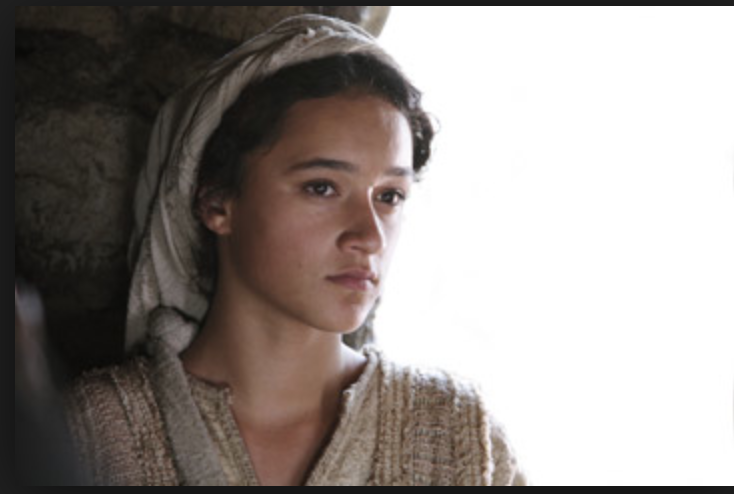
We have touched him with our hands, rubbed shoulders, felt his robust embrace, dined and broke bread together, listened to wisdom that set our minds on fire, felt his care and inclusion, captured a mission that drove us to reach the world with a compelling love. We saw him die and rise again, ascend through the heavens. Divine presence is with us in his Holy Spirit. It has unleashed an economy of grace and goodness, humility and compassion. The pregnant Mary sings her Magnificat, saying an awe-filled Yes to God’s work in and through her: “Things hidden for centuries have become so crystal clear tonight. Insight and justice have set up a new epistemology, a new way of knowing and being, a new world where love is the main game in town, where peace-making and blessing (shalom) are our politics. It is a new playing field, a new paradigm, a new human narrative. Infinite meets finite like a comet burning through the atmosphere; divine goodness ushers in hope of healing; a new future is born. Our people, our human race, have longed for this for centuries only in our wildest dreams, feeding on divine promise to Abraham, Isaac and Jacob, David. Once we could only hope for such wondrous things. Now they are tangible, palpable, life-transforming.” What a reality check Advent brings to us.

Christians claim Jesus as God’s Word (divine logos) made flesh, dwelling among us. Here God’s speech is embodied, full-blooded, not flat and lifeless, not reductionistic or atomistic. It is a sign, a communicative action (Kevin Vanhoozer, 2009), much more than the mere letters. It is poetic, prophetic, pedagogical, full of spiritual vitality revealed in a tangible historic person. The language of incarnation leverages the world and transforms individuals; it is strategically located within the human story, not a fantasy. The incarnation is the only adequate reply to the challenges of dissolution (loss of connection between word and world). There is much to grapple with as we see in Jens Zimmermann’s scholarship on the subject.

Christ the creative wisdom of God, and God’s active Word in creation, is enfleshed in the temporal-historical dimension of our world as the concrete Jewish Messiah, Jesus the Christ…. This is the Word through whom all things were made, and the Word hid in the eternal bosom of God, the Word who spoke through the prophets, the Word whose mighty acts defined the history of Israel. In Jesus the Christ this Word has become flesh, and the eternal has become temporal, but without ceasing to be eternal…. In Christ temporality and eternity are conjoined…. In the incarnation, creation, the world, time and history have been taken up into the God-man, who is the center of reality…. Faith and reason are inseparable because their unity is in Christ. (J. Zimmermann, 2012a, pp. 264-5)

Language (speech act) starts with creation: God spoke and the heavens, the stars, the seas, the plants and trees and living creatures, man and woman came into existence in abundance. They continue to do so (creatio continua). God’s word was enacted in a particular place and time in history. It makes space for new drama. There is intense presence and place; God has carved out space and time for his presence. When humans are addressed by God (the whole premise of Judeo-Christianity), they are drawn up into a divine dialogue, to reason and commune with their Creator, their ultimate mentor. They are identified, loved and valued. A perlocutionary act is a robust speech act that produces an effect in those addressed through the speaker’s utterance. God speech has impact in all of human culture. Theologian Hans Urs von Balthasar (R. Gawronski, 1995, Word and Silence) sees the Word of God revealed in three rich and powerful ways: Creation, Scripture, and Incarnation, three different types of language, each powerful in its own right, each complementary to the integrity and impact of the others, using both traditions of language culture. The incarnation is God’s megaphone to late modernity with all its challenges, conundrums, contradictions and struggles.

~Gord Carkner

See also Emerging Scholars Advent Reflections: http://blog.emergingscholars.org/2014/12/advent-expecting-our-hope-to-be-fulfilled/

Screen shot 2013-01-28 at 7.35.06 PM

“But God is present in reality no matter what unreality our practice and our ponderings imply. He is forever trying to establish communication; forever aware of the wrong directions we are taking and wishing to warn us; forever offering solutions for the problems that baffle us; forever standing at the door of our loneliness, eager to bring us such comradeship as the most intelligent living mortal cannot supply; forever clinging to our indifference in hope that someday our needs, or at least our tragedies will waken us to respond to his advances. The Real Presence is just that, real and life-trasforming. Nor are the conditions for the manifestation of his splendours out of the reach of any of us! Here they are; otherness, openness, obedience, obsession.” ~The Captivating Presence by Albert Edward Day

Advent, like its cousin Lent, is a season for prayer and reformation of our hearts. Since it comes at winter time, fire is a fitting sign to help us celebrate Advent… If Christ is to come more fully into our lives this Christmas, if God is to become really incarnate for us, then fire will have to be present in our prayer. Our worship and devotion will have to stoke the kind of fire in our souls that can truly change our hearts. Ours is a great responsibility not to waste this Advent time.”  ~Edward Hays, A Pilgrim’s Almanac

The season of Advent means there is something on the horizon the likes of which we have never seen before…. What is possible is to not see it, to miss it, to turn just as it brushes past you. And you begin to grasp what it was you missed, like Moses in the cleft of the rock, watching God’s [back] fade in the distance. So stay. Sit. Linger. Tarry. Ponder. Wait. Behold. Wonder. There will be time enough for running. For rushing. For worrying. For pushing. For now, stay. Wait. Something is on the horizon.”
~Jan L. Richardson, Night Visions: Searching the Shadows of Advent and Christmas

“You keep us waiting. You, the God of all time, Want us to wait. For the right time in which to discover Who we are, where we are to go, Who will be with us, and what we must do. So thank you … for the waiting time.”
~John Bell, quoted in The Westminster Collection of Christian Prayers, compiled by Dorothy M. Stewart

“To have found God, to have experienced him in the intimacy of our being, to have lived even for one hour in the fire of his Trinity and the bliss of his Unity clearly makes us say: Now I understand. You are enough for me.” ~Carlo Carretto

“God’s word of love becomes flesh in us, is embodied in us, is enacted through us and in doing so, trust is forged between word spoken and the reality of which it speaks, between the words we speak and transcendent realities to which we point. The Word became flesh … a human life … a work of art … a new humanism … a new community … a new social imaginary. Integrity is his name. Hope is what he offers.” Anonymous

O almighty God, who by the birth of the holy child Jesus has given us great light to dawn upon our darkness: Grant, we pray thee, that in this light we may see light. Bestow upon us, we beseech thee, the most excellent Christmas gift of charity to all, that so the likeness of thy Son may be formed in us, and that we may have the ever brightening hope of everlasting life; through Jesus Christ our Lord. Amen ~ The Book of Worship

“God is coming! God is coming! All the element we swim in, this existence, Echoes ahead the advent. God is coming! Can’t you feel it?”
~Walter Wangerin, Jr., from “The Signs of the Times,” in The Manger Is Empty

How can God stoop lower than to come and dwell with a poor humble soul? Which is more than if he had said, such a one should dwell with him; for a beggar to live at court is not so much as the king to dwell with him in his cottage.”—William Gurnall

A prison cell, in which one waits, hopes… and is completely dependent on the fact that the door of freedom has to be opened from the outside, is not a bad picture of Advent.” Dietrich Bonhoeffer, 1943

Take time to be aware that in the very midst of our busy preparations for the celebration of Christ’s birth in ancient Bethlehem, Christ is reborn in the Bethlehems of our homes and daily lives. Take time, slow down, be still, be awake to the Divine Mystery that looks so common and so ordinary yet is wondrously present. “An old abbot was fond of saying, ‘The devil is always the most active on the highest feast days.’“The supreme trick of Old Scratch is to have us so busy decorating, preparing food, practicing music and cleaning in preparation for the feast of Christmas that we actually miss the coming of Christ. Hurt feelings, anger, impatience, injured egos—the list of clouds that busyness creates to blind us to the birth can be long, but it is familiar to us all.” ~Edward Hays, A Pilgrim’s Almanac

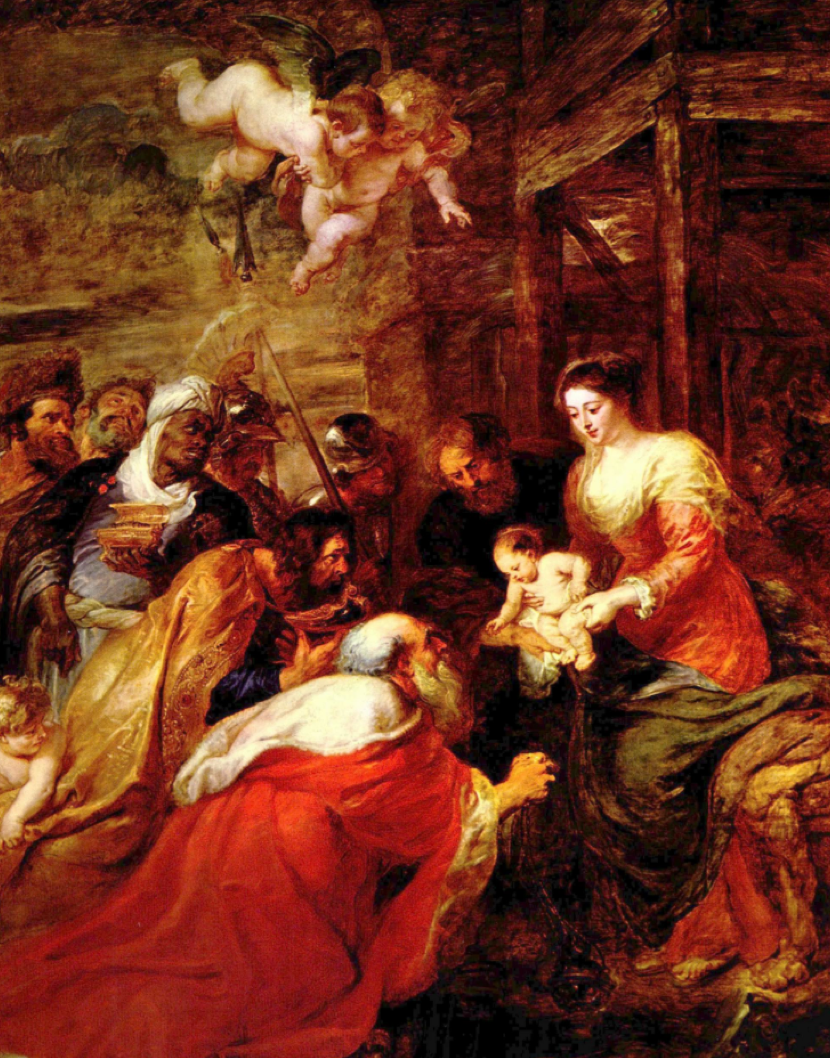
This Advent we look to the Wise Men to teach us where to focus our attention. We set our sights on things above, where God is. We draw closer to Jesus… When our Advent journey ends, and we reach the place where Jesus resides in Bethlehem, may we, like the Wise Men, fall on our knees and adore him as our true and only King.” Mark Zimmermann in Our Advent Journey

Screen Shot 2014-12-06 at 5.47.33 AM

Almighty God, give us grace to cast away the works of darkness and put on the armor of light, now in the time of this life, in which your Son Jesus Christ came to visit us in great humility; So that, at the last day, when he shall come again in his glorious majesty to judge the living and the dead, we may rise to the life immortal.” ~The Book of Common Prayer, published in 1662

One of the essential paradoxes of Advent: that while we wait for God, we are with God all along, that while we need to be reassured of God’s arrival, or the arrival of our homecoming, we are already at home. While we wait, we have to trust, to have faith, but it is God’s grace that gives us that faith. As with all spiritual knowledge, two things are true, and equally true, at once. The mind can’t grasp paradox; it is the knowledge of the soul.” ~Michelle Blake, The Tentmaker

Sometimes it seems as though we spend our lives waiting. Daydreaming about an upcoming vacation, worrying over a medical test, preparing for the birth of grandchild-our days are filled with anticipation and anxiety over what the future holds. As Christians, we too spend our lives waiting. But we are waiting for something much bigger than a trip, bigger even than retirement or a wedding: We are waiting for the return of Jesus in glory. Advent heightens this sense of waiting, because it marks not only our anticipation of Jesus’ final coming, but also our remembrance of his arrival into our world more than 2,000 years ago.” Anonymous

Virgin by Luci Shaw

As if until that moment

nothing real

had happened since Creation

As if the world outside were empty

so that she and he were all

there was–he mover, she moved upon

As if her submission were the most

dynamic of all works; as if

no one had ever said Yes like that

As if that day the sun had no place

in all the universe to pour its gold

but her small room

Posted by: gcarkner | November 25, 2014

Erasmus and Merton: Soul Friends


Erasmus and Merton: Soul Friends

Ron Dart, Department of Philosophy & Politics

University of the Fraser Valley

Screen Shot 2014-11-29 at 9.19.38 AM


 The name of Erasmus will never perish.  ~John Colet (1)


Erasmus has published volumes more full of wisdom than any which

Europe has seen for ages.   ~Thomas More (2)


I am halfway through the Ratio Verae Theologiae of Erasmus, loving

the clarity and balance of his Latin, his taste, his good sense, his

evangelical teaching. If there had been no Luther, Erasmus would now

be regarded by everyone as one of the great Doctors of the Catholic

Church. I like his directness, his simplicity, and his courage. All the

qualities of Erasmus, and other qualities besides, were canonized in

Thomas More.      ~Thomas Merton  Conjectures of a Guilty Bystander (3)


There was never anybody else on earth like Thomas Merton. I for one

have never known a mind more brilliant, more beautiful, more serious,

more playful.    ~Mark Van Doren (4)

Screen Shot 2014-11-25 at 7.56.08 PMThere is no doubt that Desiderius Erasmus (1466-1536) and Thomas Merton (1915-1968) are two of the most significant and towering peaks along the ridge of the historic Christian mountain range. The slow ascent up such peaks takes much time, but the scenery seen from such heights opens up full vistas of beauty, insight and clarity. Both men, although separated by centuries of time, were soul friends. Many of their concerns were the same, and both expressed such a way of being in a most articulate and evocative manner.

It is quite reasonable to suggest that Erasmus and Merton had little in common, hence the folly of such an essay. Erasmus was raised in Holland by the Brethren of the Common Life, became an Augustinian monk at an early age, left the Order a few years later and spent the remainder of his years as one of the most prominent scholar’s in 16th century Europe. Merton was, on the other hand, raised by Bohemian artistic parents, lived a rather indulgent early life, joined the strict Cistercians in his twenties and remained a Trappist for the rest of his life. These outer differences, though, conceal deeper affinities, and it is these deeper affinities between Erasmus and Merton that this paper will examine and explore. Merton was the Erasmus of the 20th century just as Erasmus was the Merton of the 16th century. What is it, though, that makes Erasmus and Merton soul friends? This essay will all too briefly light, linger but not solidly land on nine areas that bind Erasmus and Merton together. Read More…

Posted by: gcarkner | November 23, 2014

Recovering the Virtues

Virtues & Vices of Human Creatures  

from Creation Care Specialist Steven Bouma-Prediger

Screen Shot 2014-11-23 at 3.05.12 PM

Respect & Receptivity: If life in all its diversity is a gift from a benevolent Creator, we should respect its innate, intrinsic and precious value—its creational integrity. Biodiversity (a rich and full flourishing fittedness) is an intended result of God’s wise and orderly creative activity. We as the human dimension of creation are only one species among multitudes, and so we should cultivate the earth in harmony with other creatures, so that we can all sing a symphony of God’s praises together (Psalms 104; 148). In other words, other creatures count morally or have moral standing. We have the same God-loved home, and are interdependent with other God-loved creatures on this planet. The virtue principle is to act to preserve diverse kinds of life. The opposing vice is conceit: to ignore or disdain other creatures, or just use or abuse them for our appetites or pleasure. Conceit has no genuine interest in another and will if necessary violate the integrity of the other through a lack of regard. A different kind of vice would be to worship the other creatures through an excess of reverence. Receptivity is a form of hospitality, which acknowledges our interdependence with the creaturely other; self-sufficiency is the vice that says we don’t have need of the other.  Read More…

Posted by: gcarkner | November 10, 2014

Two Ways of Seeing Reality

Two Different Philosophical Paradigms

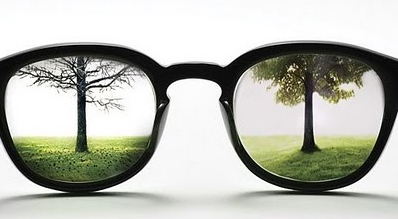
For a deeper understanding/grasp of the relationship between reason and faith, it is helpful to understand the impact of two distinct ways of engaging the world intellectually and philosophically: epistemological and hermeneutical. They constitute two different set of glasses as shown by philosopher Charles Taylor. These two perspectives emerged as a helpful talking point in a recent lecture on Middle European History at St. John’s College, UBC. A Rice University professor of Polish descent had a vastly different perspective to those who favored the German or British way of seeing this post-World War 2 history. They had two radically different ways of seeing the issues related to the emergence of Middle Europe after the Cold War.

  1. Epistemological Approach (Descartes, Locke, Hume). The set of priority relations within this picture often tends towards a closed world position (CWS). Its assumptions include the following:
  • Knowledge of self and its status comes before knowledge of the world (things) and others.
  • Knowledge of reality is a neutral fact before we (the self) attribute value to it.
  • Knowledge of things of the natural order comes before any theoretical invocations or any transcendence (which is thereby problematized, doubted or repressed). This approach tends to write transcendence out of the equation.

 Within the Epistemological View, the individual is primary and certainty is within the mind. The self is an independent, disengaged subject reflexively controlling its own thought processes, self-responsibly. The oft-presumed neutrality of this view is in question. The way of seeing is in fact a heavily value-laden approach or posture. It offers a whole construction of identity and society with its own distinctive priorities and values. Read More…

Posted by: gcarkner | November 9, 2014

Learning from The Great War

War? What is it Good For?…

Screen Shot 2014-11-09 at 6.58.38 AM

This year 2014 marks the hundred-year anniversary of the start of World War I, the conflict that introduced industrial-scale carnage to the world. Never before had science and technology—the mortars, machine guns, tanks, barbed wire and poison gas—conspired so effectively to destroy humans and nature, and effectively to disillusion a whole generation. Ten million soldiers died; twice as many more were wounded or disfigured. Civilians also suffered terribly. The so-called Great War called into question popular beliefs about human progress, morality and religion. It brought in its trail mass disillusionment. Yet for two extraordinary authors and friends, J.R.R. Tolkien and C.S. Lewis, the war deepened their moral and spiritual convictions. Both fought in the trenches on the Western Front and used their experiences to shape their Christian imagination. The pair met in 1926 as young scholars at Oxford University and went on to produce epic stories of heroism. Tolkien wrote “The Hobbit” and “The Lord of the Rings” trilogy. Lewis earned fame for “The Chronicles of Narnia,” a series of children’s books now considered classics. Their tales are fundamentally about a cosmic struggle between good and evil—a theme radically out of step with the cynical and fatalistic spirit of their age. The authors’ use of fantasy is not an escape but a steely realism that captures the human predicament. The stories, combining both tragedy and hope, have fired the imagination of a whole generation. It is a truly courageous and inspiring narrative.

Dietrich Bonhoeffer wrote in The Cost of Discipleship, pp.112-13:

The followers of Jesus have been called to peace. When he called them they found peace, for he is their peace. But now they are told that they must not only have peace but make it. And to that end they renounce all violence and tumult. In the cause of Christ, nothing is to be gained by such methods. His kingdom is one of peace, and the mutual greeting in his flock is one of peace. His disciples keep the peace by choosing to endure suffering themselves rather than inflict it on others. They maintain fellowship where others would break it off. They renounce all self-assertion, and quietly suffer in the face of hatred and wrong. In doing so they overcome evil with good, and establish the peace of God in the midst of a world of war and hate.

 Mother Teresa writes: “If we have no peace, it is because we have forgotten that we belong to each other.” Read More…

Posted by: gcarkner | November 5, 2014

C.S. Lewis Summer in Oxbridge

Videos of Lewis Summer Institute 2014

http://www.cslewis.org/?utm_source=E-Chronicles+October+23%2C+2014&utm_campaign=October23+E-Chronicles&utm_medium=email


Screen Shot 2014-10-23 at 2.14.16 PM


Posted by: gcarkner | November 3, 2014

Brainy Foods for Postgraduate Students

Brain Foods for Grad Student Health

beyond coffee

The brain is important for cognitive function and mental health. When compared to the rest of the body, the brain consumes an immense amount of energy. It is the body’s first organ to absorb nutrients from the food we eat. Dietary factors can affect multiple brain processes by regulating neurotransmitter pathways, synaptic transmission, membrane fluidity and signal transduction pathways.1 The following nutrients are important for brain health.

Dr. Andrea Goldson, PhD graduate of UBC in Food Science 2012,

Programme Coordinator, M Sc, Food & Agro Processing Technology at University of the West Indies, Jamaica

Read More…

Posted by: gcarkner | October 28, 2014

Recentering the Self

Loss of Center: the Shifty Identity of Nihilism

In a recent viewing of the PBS film Elizabeth I: The Virgin Queen, one is reminded of the struggle of the young, highly educated woman struggling for her identity. First she is imprisoned in the Tower of London by her Catholic half-sister who has married Philip of Spain and wants to turn England back to the Catholic faith. This is a bloody time of burning Protestant leaders such as Ridley, Cranmer and Latimer at the stake. You can stand on the spot where it happened in the Broad Street in the heart of Oxford. Elizabeth is accused of conspiracy. This experience in prison helps shape her; she endures humiliation with strength and dignity even though she is King Henry VIII’s daughter (from Anne Boleyn).

Then her half-sister dies suddenly and she is thrust into the royal court to become sovereign of the country. The power struggles begin with her counsellors and advisors and several plots to assassinate her and take over the country. There is plenty of international conspiracy and intrigue. The counsellors want a strategic marriage as quickly as possible, in order to consolidate their power  as much as hers. Her other sister, Mary Queen of Scots, is also a threat, so she must be imprisoned in Dublin Castle. She both loves and fears Mary. Her big decision is finally to remain single, the virgin queen, and “have no man rule over me”. She manages to consolidate her power and fight off the Spanish Armada and rule for a full lengthy forty years. In all of this, she must find her true centre; she can ill afford to waffle; she needs trusted advisors who will speak truth to power. She has to know who she is and what virtues she stands for, if she is to lead her country, serve it well and defend herself from several plots and conspiracies. It is a time of both chivalry and treachery, honour and manipulative treason. She leaves a legacy, lives large, and wins the hearts of her subjects, establishing Elizabethan England for posterity. Read More…

Posted by: gcarkner | October 16, 2014

Peter Harrison’s Brilliant Insight on History of Science

Think Again about the History of Science with Oxford Scholar Peter Harrison

Posted by Philosopher   for the Colossians Forum on December 5, 2011       Reposted here with some edits and additions by gcarkner Oct 16, 2014

A common myth about modern science is what the philosopher Charles Taylor calls “a subtraction story.”  According to this widespread myth, scientific enlightenment was a triumph over religious belief.  The relationship between the two is construed as dichotomous: either reason or faith; either science or theology.   In short: more science, less religion.

This myth has been roundly criticized as a false dichotomy (consider, for example, Alvin Plantinga’s most recent book,Where the Conflict Really Lies: Science, Religion, and Naturalism).  More importantly, historians of science have pointed out that this false dichotomy is simply not true to how science emerged in the West.  Far from being a detriment to scientific exploration, a number of scholars have pointed out that it was precisely Christian theological concepts–and especially those that emerged during the Protestant Reformation–that propelled empirical investigation of nature.  So science wasn’t a way to lose one’s faith; it was Christian faith that compelled scientific exploration.  We shouldn’t simply confuse the history of science with the rise of naturalism.

Screen Shot 2014-10-16 at 4.37.21 AMHowever, the story is complicated and complex.  And no one helps us appreciate that more than Peter Harrison, Andreas Idreos Professor of Science and Religion at the University of Oxford.  A historian of science with training in philosophy and theology, Harrison has an uncanny ability to appreciate the theological nuances at stake in emergence of science in the seventeenth century–and how this was informed by theological shifts in the fifteenth and sixteenth centuries.  Harrison is not content to generically speak of “religion;” he zooms in to consider the specifics of different Christian theological traditions and their impact on the emergence of what we now call “science.”

For example, in his masterful book, The Bible, Protestantism, and the Rise of Natural Science (Cambridge University Press, 1998), Harrison deftly shows how it was a shift in biblical hermeneutics that gave rise to a very different way of “reading” nature that we now associate with the scientific method.  In The Fall of Man and the Foundations of Science (Cambridge University Press, 2007), drawing on careful analysis of theological and scientific texts, Harrison argues that what motivated close empirical investigation of nature was a deep sense of how much how knowledge had been corrupted by the Fall. In both of these studies, Harrison goes beyond simple notions of a Creator to explore the specific theological doctrines that impacted the emergence of science in the West.  Indeed, his work has influenced us here at The Colossian Forum and we encourage folks to acquaint themselves with Harrison’s work.  And in some ways, we see our emphasis on the specific riches of the Christian theological tradition for engaging science as an extension of his work.

Peter Harrison holds a PhD from the University of Queensland and Master’s degrees from Yale and Oxford. He began his academic career at Bond University on Australia’s Gold Coast, where for a number of years he was Professor of History and Philosophy. In 2006 he was elected Andreas Idreos Professor of Science and Religion at the University of Oxford. During his time at Oxford he was Director of the Ian Ramsey Centre and a Fellow of Harris Manchester College. In 2011 he assumed directorship of the Centre of the History of European Discourses at the University of Queensland. A Fellow of the Australian Academy of the Humanities, he was a recipient of a Centenary Medal in 2003. He was the 2011 Gifford Lecturer at the University of Edinburgh and is a Senior Research Fellow in the Ian Ramsey Centre at Oxford. In 2013 he received a DLitt from the University of Oxford.

Harrison is best known for a number of influential writings on religion and the origins of modern science. He has argued that changing approaches to the interpretation of the bible had a significant impact on the development of modern science. He has also suggested that the biblical story of the Fall played a key role in the development of experimental science. His earlier work traces changing conceptions of religion in the West. Harrison contends that the idea of religions as sets of beliefs and practices emerged for the first time in the seventeenth century.

Major Publications

See also Colossian Forum Science, Faith and Culture    http://www.colossianforum.org


Screen Shot 2014-10-17 at 5.43.31 AM


Posted by: gcarkner | October 11, 2014

The Genius of David Bentley Hart

David Bentley Hart May One of the Most Brilliant Philosophers Alive Today

David Bentley Hart

He is an editor of First Things Journal, an Eastern Orthodox theologian, philosopher, and cultural commentator. Hart earned his BA from the University of MarylandMPhil from the University of Cambridge, and MA and PhD from the University of Virginia. He has taught at the University of Virginia, the University of St. Thomas (Minnesota)Duke Divinity School, and Loyola College in Maryland. He was most recently a visiting professor at Providence College, where he also previously held the Robert J. Randall Chair in Christian Culture. On 27 May 2011, Hart’s book Atheist Delusions was awarded the Michael Ramsey Prize in Theology. As a patristics scholar, Hart is especially concerned with the Greek tradition, with a particular emphasis on Gregory of Nyssa and Maximus the Confessor. His writings on such figures are distinctive in that they are not cast in the mould of typical patristics scholarship; Hart is quite willing, for instance, to use Maximus as a “corrective” to Heidegger’s “history of Being”. The emphasis is very much on ideas and “deep readings”, which seek to wrest from ancient texts insights that might fruitfully be brought into living contact with contemporary questions. Issues of the Scottish Journal of Theology and New Blackfriars have devoted special space to his work.

As a cultural critic, Hart has a brilliant ability to cut to the heart of current debates on God, meaning, the history of faith, aesthetics, and the postmodern condition.

See also his provocative quotes on Naturalism on this Blog

Bibliography

Books

  • The Experience of God: Being, Consciousness, Bliss. New Haven: Yale University Press: 2013. (a brilliant volume which critiques naturalism and promotes a fresh understanding of God).
  • The Devil and Pierre Gernet: Stories. Grand Rapids, MI: Wm. B. Eerdmans: 2012.
  • Atheist Delusions: The Christian Revolution and Its Fashionable Enemies. New Haven, CT: Yale University Press, 2009. (award winner challenge to historical revisions of Christian influence on Western culture)
  • In the Aftermath: Provocations and Laments. Grand Rapids, MI: Wm. B. Eerdmans: 2008.
  • The Story of Christianity: An Illustrated History of 2000 Years of the Christian Faith. London: Quercus: 2007.
  • The Doors of the Sea. Grand Rapids, MI: Wm. B. Eerdmans: 2005.
  • The Beauty of the Infinite: The Aesthetics of Christian Truth. Grand Rapids, MI: Wm. B. Eerdmans: 2003.

Screen Shot 2014-10-11 at 7.49.41 PM

____________________________________________________________________________
“Late modern society is principally concerned with purchasing things, in ever greater abundance and variety, and so has to strive to fabricate an ever greater number of desires to gratify, and to abolish as many limits and prohibitions upon desire as it can. Such a society is already implicitly atheist and so must slowly but relentlessly apply itself to the dissolution of transcendent values. It cannot allow ultimate goods to distract us from proximate goods. Our sacred writ is advertising, our piety is shopping, our highest devotion is private choice. God and the soul too often hinder the purely acquisitive longings upon which the market depends, and confront us with values that stand in stark rivalry to the only truly substantial value at the center of the social universe: the price tag.”
________________________________________________________________________________
“Empiricism in the sciences is a method; naturalism in philosophy is a metaphysics; and the latter neither follows from nor underlies the former.”
__________________________________________________________________________________
“It is only because a dreamer has temporarily lost the desire to turn his eyes toward more distant horizons that he believes he inhabits a reality perfectly complete in itself, in need of no further explanation. He does not see that this secondary world rests upon no foundations, has no larger story, and persists as an apparent unity only so long as he has forgotten how to question its curious omissions and contradictions.”
______________________________________________________________________________________

Articles

  • Response to critiques of The Beauty of the Infinite by Francesca Murphy and John A. McGuckin, Scottish Journal of Theology 60 (February 2007): 95-101.
  • “Daniel Dennett Hunts the Snark”First Things 169 (January 2007).
  • Contribution to Theology as Knowledge: A SymposiumFirst Things 163 (May 2006): 21-27.
  • “The Lively God of Robert Jenson”First Things 156 (October 2005): 28-34.
  • “The Anti-Theology of the Body”The New Atlantis 9 (Summer 2005): 65-73.
  • “The Soul of a Controversy”The Wall Street Journal (April 1, 2005).
  • “Tsunami and Theodicy”First Things 151 (March 2005): 6-9.
  • “The Laughter of the Philosophers”First Things 149 (January 2005): 31-38. A review loosely structured around The Humor of Kierkegaard by Thomas C. Oden, containing a long excursus on Johann Georg Hamann.
  • “God or Nothingness” in I Am the Lord Your God: Christian Reflections on the Ten Commandments Carl E. Braaten and Christopher Seitz, eds. Grand Rapids, MI: Eerdmans, 2005: 55-76.
  • “The Offering of Names: Metaphysics, Nihilism, and Analogy” in Reason and the Reasons of Faith. Reinhard Hütter and Paul J. Griffiths, eds. London: T. & T. Clark, 2005: 55-76.
  • “Tremors of Doubt”The Wall Street Journal (December 31, 2004). This article was the seed for the book The Doors of the Sea.
  • “Ecumenical Councils of War”Touchstone (November 2004).
  • “The Pornography Culture”The New Atlantis 6 (Summer 2004): 82-89.
  • “Freedom and Decency”First Things 144 (June/July 2004): 35-41.
  • “An Orthodox Easter”The Wall Street Journal (April 9, 2004) (in “Houses of Worship”).
  • “Religion in America: Ancient & Modern”, The New Criterion (March 2004).
  • “A Most Partial Historian”First Things 138 (December 2003): 34-41. A review of Religion and Public Doctrine in Modern England Volume III: Accommodations by Maurice Cowling.
  • “Christ and Nothing”First Things 136 (October 2003): 47-57.
  • “The Bright Morning of the Soul: John of the Cross on Theosis”, Pro Ecclesia (Summer 2003): 324-45.
  • “Thine Own of Thine Own: the Orthodox Understanding of Eucharistic Sacrifice” in Rediscovering the Eucharist: Ecumenical Considerations Roch A. Kereszty, ed. (Paulist Press, 2003): 142-169.
  • “A Gift Exceeding Every Debt: An Eastern Orthodox Appreciation of Anselm’s Cur Deus Homo“, Pro Ecclesia 7.3: 333-348.
  • “The Mirror of the Infinite: Gregory of Nyssa on the Vestigia Trinitatis“, Modern Theology 18.4 (October 2002): 542-56
  • “No Shadow of Turning: On Divine Impassibility”, Pro Ecclesia (Spring 2002): 184-206.
  • Contribution to The Future of the Papacy: A SymposiumFirst Things 111 (March 2001): 28-36.
  • “The ‘Whole Humanity’: Gregory of Nyssa’s Critique of Slavery in Light of His Eschatology”, Scottish Journal of Theology 54.1 (2001): 51-69.
  • “Analogy” in Elsevier Concise Encyclopaedia of Religion and Language (Elsevier Press, 2001).
  • “The Writing of the Kingdom: Thirty-Seven Aphorisms towards an Eschatology of the Text”, Modern Theology (Spring 2000): 181-202.
  • “Matter, Monism, and Narrative: An Essay on the Metaphysics of Paradise Lost” Milton Quarterly (Winter 1996): 16-27.

« Newer Posts - Older Posts »

Categories