Posted by: gcarkner | October 10, 2013

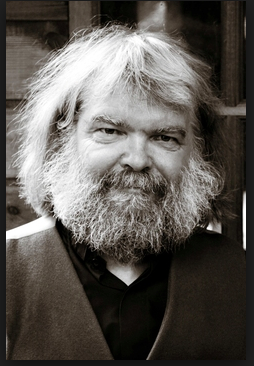
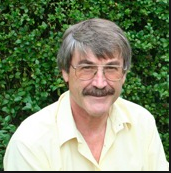
Malcolm Guite, Chaplain-Poet-Lecturer

A Sonnet for Trinity Sunday by Malcolm Guite, Cambridge University

In the Beginning, not in time or space,

But in the quick before both space and time,

In Life, in Love, in co-inherent Grace,

In three in one and one in three, in rhyme,

In music, in the whole creation story,

In His own image, His imagination,

The Triune Poet makes us for His glory,

And makes us each the other’s inspiration.

He calls us out of darkness, chaos, chance,

To improvise a music of our own,

To sing the chord that calls us to the dance,

Three notes resounding from a single tone,

To sing the End in whom we all begin;

Our God beyond, beside us and within.

~Malcolm Guite, Chaplain-Poet-Musician-Lecturer, Cambridge University
 
Posted by: gcarkner | October 9, 2013

Owen Gingerich Harvard Astronomer-Historian of Science

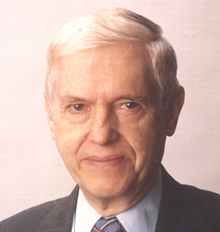
Owen Gingerich

Owen Jay Gingerich (born 1930) is a former Research Professor of Astronomy and of the History of Science at Harvard University, and a senior astronomer emeritus at the Smithsonian Astrophysical Observatory. In addition to his research and teaching, he has written many books on the history of astronomy.

Gingerich is also a member of the American Academy of Arts and Sciences, the American Philosophical Society, and the International Academy of the History of Science. He has been active in the American Scientific Affiliation, a society of evangelical scientists, and is on the Templeton Foundation’s Board of Trustees.

Career and Contributions

Due largely to Gingerich’s work, De revolutionibus (here the cover of the 2nd edition of 1566, Basel) has been researched and cataloged better than any first-edition historical text except for the original Gutenberg Bible. Read More…

Posted by: gcarkner | October 4, 2013

Ghost in the Machine

The Ongoing Debate about the Relationship between Mind & Brain

(Self, Soul, Mind, Consciousness?)
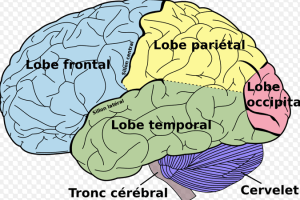
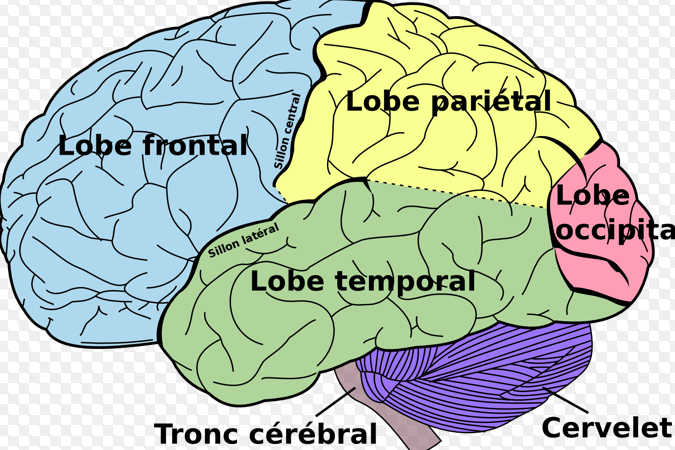
Brain

http://www.youtube.com/watch?v=PniAu9XTW3Y

Is there a ghost in the machine? Mind-Brain Debate

Richard Swinburne (Oxford), Raymond Tallis (Manchester),

Martha Robinson (University College London) & Dr Stuart Derbyshire (Birmingham)

___________________

http://www.youtube.com/watch?v=YfWGV9sZ3J4

William Lane Craig, The Materialist and the Mind

____________________

http://www.youtube.com/watch?v=ku-GmndXDXo

Professor Raymond Tallis debates RSA chief executive Matthew Taylor

Neuromania: can neuroscience explain human behaviour and culture?

___________________

Thomas Nagel’s Big Question in Mind & Cosmos.

1. He discusses the conflict between reductionist and antireductionist views of reality: he is convinced as a philosopher that physicalistic and naturalistic view of the human brain (and the universe) is fundamentally flawed.

“My aim is not so much to argue against reductionism as to investigate the consequences of rejecting it— to present the problem rather than to propose a solution. Materialist naturalism leads to reductionist ambitions because it seems unacceptable to deny the reality of all those familiar things that are not at first glance physical. But if no plausible reduction is available, and if denying reality to the mental continues to be unacceptable, that suggests that the original premise, materialist naturalism, is false, and not just around the edges.” (p. 15)

2. Nagel focuses on three different aspects of the the amazing world of mind: consciousness, cognition (mental functions such as thought, reasoning, and evaluation) and value. In each case, he explains why a reductionist explanation is inadequate. In the chapter on consciousness he writes:

“What kind of explanation of the development of these organisms, even one that includes evolutionary theory, could account for the appearance of organisms that are not only physically adapted to the environment but also conscious subjects? In brief, I believe it cannot be a purely physical explanation. What has to be explained is not just the lacing of organic life with a tincture of qualia but the coming into existence of subjective individual points of view— a type of existence logically distinct from anything describable by the physical sciences alone.” (p. 44)

“The existence of consciousness is both one of the most familiar and one of the most astounding things about the world. No conception of the natural order that does not reveal it as something to be expected can aspire even to the outline of completeness. And if physical science, whatever it may have to say about the origin of life, leaves us necessarily in the dark about consciousness, that shows that it cannot provide the basic form of intelligibility for this world.” (p. 53)

According to the reductionist point of view, every aspect of reality can be explained in terms of physics, chemistry and the initial conditions of the universe. The origin and development of life, consciousness, and the capacity of human beings to understand the universe via science can all be explained in terms of biochemical processes that are governed by the laws of physics and chemistry. For an alternative well-informed perspective, see Alister McGrath’s excellent work A Fine-Tuned Universe. Philosophy of mind and Christian theism (to name just two domains of human knowledge) has long held there are problems with this view of reality. From these disciplines the explanation is offered that nearly every aspect of the life of the mind is best explained by appealing to a comparable cause, another mind.


Other Scholarly Reading on Neuroscience, Philosophy of Mind & Religion

(in consultation with Dr. Judith Toronchuk, Biopsychology, Trinity Western University)

Barrett, Justin. Why would anyone believe in God? AltaMira Press, 2004.

Barrett, Justin. Cognitive Science, Religion, and Theology: From Human Minds to Divine Minds. Radnor, PA: Templeton Foundation Press, 2011; Born Believers.

Beauregard, Mario. Brain Wars: The Scientific Battle Over the Existence of the Mind and the Proof That Will Change the Way We Live Our Lives, Harper One 2012.; The Spiritual Brain: a neuroscientist’s case for the existence of the soul. (with Denyse O’Leary)

Brown, Warren S. and Brad D. Strawn. The Physical Nature of Christian Life: Neuroscience, Psychology, and the Church. NY: Cambridge University Press, 2012.

Corcoran, Kevin. Rethinking Human Nature. Grand Rapids, MI: Baker, 2006.

Green, Joel. Body, Soul and Human Life. Grand Rapids: Baker, 2008.

Green, Joel, ed. What About the Soul? Neuroscience and Christian Anthropology. Nashville, TN: Abingdon, 2004.

Green, Joel and Palmer, Stuart. In Search of the Soul: Four Views of the Mind-Body problem. Downer’s Grove, IL: InterVarsity, 2005.

Hasker, William. The Emergent Self. Cornell University Press, 1999.

Jeeves, Malcolm, ed.  From cells to souls–and beyond: changing portraits of human nature. GrandRapids, MI: Eerdmans, 2004..

Jeeves, Malcolm. Human Nature: Reflections on the Integration of Psychology and Christianity . Radnor, PA: Templeton Foundation Press, 2006.

Jeeves, Malcom.ed., Rethinking Human Nature: A Multidisciplinary Approach.Grand Rapids: Eerdmans, 2011.

Jeeves, Malcom and Warren Brown. Neuroscience, Psychology and Religion. Conshohoken, PA: Templeton Foundation Press. 2009.

McNamara, Patrick. The Neuroscience of Religious Experience. Cambridge University Press, 2009.

Markham, Paul N. Rewired: Exploring Religious Conversion. Eugene, OR: Pickwick, 2007.

Murphy, Nancey. Bodies and Souls, or Spirited Bodies? New York, NY: Cambridge, 2006.

Murphy, Nancey and Warren Brown, Did MNeurons Make Me do it?: Philosophical and Neurobiological Perspectives on Moral Responsibility and Free Will. Oxford: Clarendon, 2007.

Newberg, Andrew and Mark Waldman, How God Changes Your Brain: Breakthrough Findings from a Leading Neuroscientist. Ballantine Books, 2010.
Russell, Robert John et al (eds.) Neuroscience and the Person: scientific perspective on divine action 4. Vatican City State: Vatican Observatory, 1999.

Schjoedt, Uffe. “The Religious Brain: A General Introduction to the Experimental Neuroscience of Religion”, Method and Theory in the Study of Religion 21 (2009): 310-339.

Schloss, Jeffrey & Michael Murray (eds.) The Believing Primate: scientific, philosophical and theological reflections on the origin of religion.

Swinburne, Richard. The Evolution of the Soul. Oxford University Press.

Biola Conference on Neuroscience & the Soul http://cct.biola.edu/events/2013/May/10/neuroscience-and-soul-conference-cct-annual-confer/
Posted by: gcarkner | September 30, 2013

Myths about Scientific Reason and Faith

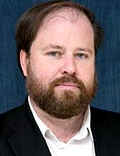
Dr. Paul Davies on Scientific Reason and Religious Faith

Reprint from a thought provoking article on the nature of science and the laws of physics.

The New York Times, 
November 24, 2007

Tempe, Arizona, USA.

SCIENCE, we are repeatedly told, is the most reliable form of knowledge about the world because it is based on testable hypotheses. Religion, by contrast, is based on faith. The term “doubting Thomas” well illustrates the difference. In science, a healthy skepticism is a professional necessity, whereas in religion, having belief without evidence is regarded as a virtue. 
 
The problem with this neat separation into “non-overlapping magisteria,” as Stephen Jay Gould described science and religion, is that science has its own faith-based belief system. All science proceeds on the assumption that nature is ordered in a rational and intelligible way. You couldn’t be a scientist if you thought the universe was a meaningless jumble of odds and ends haphazardly juxtaposed.

When physicists probe to a deeper level of subatomic structure, or astronomers extend the reach of their instruments, they expect to encounter additional elegant mathematical order. And so far this faith has been justified.
 
The most refined expression of the rational intelligibility of the cosmos is found in the laws of physics, the fundamental rules on which nature runs. The laws of gravitation and electromagnetism, the laws that regulate the world within the atom, the laws of motion — all are expressed as tidy mathematical relationships. But where do these laws come from? And why do they have the form that they do?

When I was a student, the laws of physics were regarded as completely off limits. The job of the scientist, we were told, is to discover the laws and apply them, not inquire into their provenance. The laws were treated as “given” — imprinted on the universe like a maker’s mark at the moment of cosmic birth — and fixed forevermore. Therefore, to be a scientist, you had to have faith that the universe is governed by dependable, immutable, absolute, universal, mathematical laws of an unspecified origin. You’ve got to believe that these laws won’t fail, that we won’t wake up tomorrow to find heat flowing from cold to hot, or the speed of light changing by the hour. Read More…

Posted by: gcarkner | September 30, 2013

Research Disciplines

Research Disciplines that Make a Difference

1. Take lots of notes on your computer while reading; set up a sound filing system so that you have easy access. You never know when you are going to need that paper or quote in future. Perhaps you will use it in teaching eventually. Pen & paper notes are fine as long as you get them on your computer as soon as possible. Reference everything. Back up everything at least twice!

2. Discipline and design your work in two week chunks. This is enough time to master a new book, or get a handle on a new research method, or write a section of a chapter. Have either your supervisor or a friend hold you accountable to the goal of that period. Meeting regularly with someone to discuss what you learned is key to the process; this is the Oxford model of the tutorial. It is 900 years old and it works.

3. Only answer your email at a certain time of the day; don’t let it constantly distract you from the task at hand. The ping on your email system can be your enemy in disguise.

4. Get help when you get stuck or depressed, from a pastor, counsellor, a professor, or administrator. I met a psychiatrist once on a flight to England and her specialty was to help PhD students who got stuck right in the middle of their work. Imagine that. This is often when people quit–when the early novelty wears off and you see much work still ahead, and no light yet at the end of the tunnel. Remember the movie A Beautiful Mind. Help is available!

5. Write up a schedule with a series of milestones to accomplish by a specific date. You have no idea of what you can accomplish until you set the goal and try. Build that dissertation chapter by chapter like blocks in a building. One day you wake up and Voila you are a PhD!

6. Write, read, create, imagine in the early part of your day. Your mind is freshest and most open to new breakthrough thinking at this time. First four hours are usually the most fruitful for most. Busy work and administration should wait until late in the day, unless it is an emergency.

7. Learn from different types of writing: journalistic, artistic/creative, novel, technical, philosophical. Develop that art of good rhetoric throughout your graduate degree. Expand your vocabulary and grammar base. By all means, learn what makes a good argument in your field, with solid substantiation.

8.View your research as a diamond drill; day after day you are applying pressure to the rock of ignorance, and one day out pops a diamond, the breakthrough or big insight, a thesis proposal or concluding chapter. That’s how the Eurotunnel got completed–38 kilometres through rock from two continents. Perseverance, discipline and patience is of the essence. Keep drilling even when it is no longer thrilling.

9. Keep a regular journal of all your thoughts, but don’t try to integrate them all into your thesis. Only include what you need to get a PhD; save the rest for a conference or your book. That brilliant idea can wait to be developed later. You are not doing your magnum opus in your PhD; in one sense, you are just cutting your teeth on research and writing. I met a professor once who filled ten journals over the time of his PhD. Some of your thoughts are half way home … and that is a good start. Thoughts build momentum over time. Write down the questions you have not solved; they can simmer for awhile in your subconscious mind. It is also good therapy to look back and see how far you have come and how much your writing has improved. The degree is geared to make a new you with new abilities and work habits!

10. Don’t wallow in your weaknesses; get the training or the help from others that you need, whether a computer programming skill or lab technique. You are running a business and you cannot possibly have all the expertise or skills needed to run it at the outset. Enthusiasm and academic passion can only carry you so far. Sometimes you will need to take an extra course, or hire someone to train you. If you need expertise by another professor in your department, go through your own supervisor to maintain good protocol.

11. Build a nice circle of friends and have fun together; let off steam once in awhile. Other PhD students are often your marker of sanity; they pull you back from the workaholism abyssDon’t sleep in your lab! Have a life outside work. Church can help immensely; build a prayer partner. Go to a movie, a dinner party, or a friend’s wedding. Some theology study can help to balance out your life as well. Feed your whole person and it will pay dividends in the creativity of your work. Remember the Sabbath principle and stay cool; be committed but don’t get obsessed with your project. UBC students have the luxury of Regent College and Bookstore next door with all of its rich resources.

~Reflections from Gord Carkner, a fellow sufferer in doing two graduate degrees, both of which seemed impossible at first, hard and burdensome in the middle, exhilarating to finish, but eventually they changed my life.

References:

How to Get a PhD by Philips and Hugh.

How to Read a Book: the classic guide to intelligent reading. by Mortimer J. Adler & Charles van Doren.

Posted by: gcarkner | September 27, 2013

Ann Voskamp Discovers Gratitude

Quotes from Ann Voskamp, One Thousand Gifts

for the Curious of Heart

Gratitude-Gifts-Grace-Glory-Goodness-Joy-Fullness-Meaning-Blessing

Eucharisteo: Ann’s Unique Hermeneutic on the Spirituality of Everyday Life

Eucharisteo (thanksgiving) always precedes the miracle. And don’t we all long for a miracle of grace.

See also Brene Brown TED Talk on Vulnerability 

http://www.ted.com/talks/brene_brown_on_vulnerability?language=en

https://www.youtube.com/watch?v=8lXYZ6s3Dfk Louie Schwartzburg, Nature, Beauty, Gratitude

Kari Jobe, Revelation Song

Book of Philippians

“Our fall was, has always been, and always will be, that we aren’t satisfied in God and what He gives. We hunger for something more, something other.”

“Humbly let go. Let go of trying to do, let go of trying to control, let go of my own way, let go of my own fears. Let God blow His wind, His trials, oxygen for joy’s fire. Leave the hand open and be. Be at peace. Bend the knee and be small and let God give what God chooses to give because He only gives love and whisper a surprised thanks. This is the fuel for joy’s flame. Fullness of joy is discovered only in the emptying of will. And I can empty. I can empty because counting His graces has awakened me to how He cherishes me, holds me, passionately values me. I can empty because I am full of His love. I can trust.”

“We don’t see the material world for what it is meant to be: the means to communion with God…. There is a belief missing, that God is good and that he gives good gifts.”

“When we lay the soil of our hard lives open to the rain of grace and let joy penetrate our cracked and dry places, let joy soak into our broken skin and deep crevices, life grows. How can this not be the best thing for the world? For us?”

“He does have surprising, secret purposes. I open a Bible, and His plans, startling, lie there barefaced. It’s hard to believe it, when I read it, and I have to come back to it many times, feel long across those words, make sure they are real. His love letter forever silences any doubts: “His secret purpose framed from the very beginning [is] to bring us to our full glory” (1 Corinthians 2:7 NEB).”

“The greatest thing is to give thanks for everything. He who has learned this knows what it means to live…. He has penetrated the whole mystery of life: giving thanks for everything…. Saying Yes to God’s graces is the linchpin of it all.”

“Thank You, God, for the bread of now …

for your Son and sacrifice …

for the love song You keep singing, the gift of Yourself that You

keep giving …

for the wild wonder of You in this moment.”

“I don’t really want more time; I just want enough time. Time to breathe deep and time to see real and time to laugh long, time to give You glory and rest deep and sing joy and just enough time in a day not to feel hounded, pressed, driven, or wild to get it all done–yesterday.”

“I have to seek God beauty. Because isn’t my internal circuitry wired to seek out something worthy of worship? …. True Beauty worship, worship of Creator Beauty Himself. God is present in all moments, but I do not deify the wind in the pines, the snow falling on the hemlocks, the moon over harvested wheat. Pantheism, seeing the natural world as divine, is a very different thing than seeing divine God present in all things …. Nature is not God but God revealing the weight of Himself, all His glory, through the looking glass of nature.”

“It is in the dark that God is passing by. The bridge and our lives shake not because God has abandoned, but the exact opposite: God is passing by. God is in the tremors. Dark is the holiest ground, the glory passing by. In the blackest, God is closest, at work, forging His perfect and right will. Though it is black and we can’t see and our world seems to be free-falling and we feel utterly alone, Christ is most present to us …” Read More…

Posted by: gcarkner | September 25, 2013

Alvin Plantinga, October 2nd @ UBC

Alvin Plantinga

Dr. Alvin Plantinga, former John O’Brien Professor of Philosophy, Notre Dame University;

currently Jellema Chair in Philosophy, Calvin College.

Topic:  Science & Religion: Where the Conflict Really Lies

 Wednesday, October 2, 2013 @ 4:00 p.m.    Scarfe Building Room 100, UBC

http://www.youtube.com/watch?v=4pUF82TZFCs&feature=youtu.be

Abstract

Taking Christian belief as C.S. Lewis’s ‘Mere Christianity’, I’ll argue that there is no real conflict between science and Christian belief. I’ll go on to argue that there is a real conflict between science and naturalism, the thought that there is no such person as God or anything like God.  So if we take naturalism to be a religion or a quasi-religion, then there is indeed a science-religion conflict; it’s not between Christianity and science, however, but between naturalism and science.

Like any Christian (and indeed any theist), I believe that the world has been created by God, and hence “intelligently designed”. As far as I can see, God certainly could have used Darwinian processes to create the living world and direct it as he wanted to go; hence evolution as such does not imply that there is no direction in the history of life. What does have that implication is not evolutionary theory itself, but unguided evolution, the idea that neither God nor any other person has taken a hand in guiding, directing or orchestrating the course of evolution. But the scientific theory of evolution, sensibly enough, says nothing one way or the other about divine guidance. It doesn’t say that evolution is divinely guided; it also doesn’t say that it isn’t. Like almost any theist, I reject unguided evolution; but the contemporary scientific theory of evolution just as such—apart from philosophical or theological add-ons—doesn’t say that evolution is unguided. Like science in general, it makes no pronouncements on the existence or activity of God.

Biography

Dr. Plantinga is professor emeritus of Philosophy at the University of Notre Dame, was described by Time magazine in 1980 as “America’s leading orthodox Protestant philosopher of God.”  He is the author of numerous articles and several books, including God and Other Minds: the Rational Justification of Religious Belief (Cornell 1967), God, Freedom and Evil (Eerdmans 1974), Warranted Christian Belief (Oxford 2000) and Where the Conflict Really Lies: Science, Religion, and Naturalism (Oxford 2012 from which he draws this lecture).  Among many honors, Plantinga is the past president of the American Philosophical Association, Central Division, and the Society of Christian Philosophers, and a Fellow of the American Academy of Arts and Sciences. With a PhD in Philosophy from Yale University, Alvin Plantinga is widely known for his work in philosophy of religionepistemologymetaphysics and Christian apologetics. He delivered the Gifford Lectures three times, was a Guggenheim Fellow, 1971–1972. In 2012, the University of Pittsburgh’s Philosophy Department, History and Philosophy of Science Department, and the Center for the History and Philosophy of Science awarded him the Rescher Prize.

Handout for the Lecture: Science and Religion- where conflict handout

See also new book by David Bentley Hart called The Experience of God: Being ,Consciousness, Bliss

https://ubcgcu.org/2012/09/15/alvin-plantinga-where-the-conflict-really-lies/ Book review by Dr. Olav Slaymaker

https://ubcgcu.org/2013/09/24/where-the-conflict-really-lies-chapter-10/  Summary of argument on the Conflict between Science & Naturalism.

 Sample of Plantinga’s talk and good humour 

http://www.youtube.com/watch?v=rbjp9PrtPS8 Where the Conflict Really Lies Biola U.

See Thomas Nagel’s book which has fuelled much current debate: Mind and Cosmos: why naturalistic neo-Darwinism is almost certainly wrong.

Also see the detailed scholarly work on the subject of natural theology by Alister McGrath called A Fine-Tuned Universe.

Posted by: gcarkner | September 24, 2013

Where the Conflict Really Lies, Chapter 10

Alvin Plantinga, Where the Conflict Really Lies. Chapter 10 Summary.

Again the following contains summary notes on our GCU discussion last fall of the concluding chapter of Plantinga’s important and immensely challenging book. The provocative title of this chapter is: “The Evolutionary Argument Against Naturalism”. Having demonstrated that the so-called conflict between Christian theism and science is rather superficial and that there is deep concord between science & theism, Plantinga goes a step further. He reveals the deep unease, discord, even conflict between naturalism and science. P(R/N&E) is low (the probability of reliability of our rationality, given an embrace of naturalism and evolution is low). https://ubcgcu.org/2013/08/17/alvin-plantainga-ubc-october-2013/

Many of our colleagues take naturalism and science as appropriate intellectual bedfellows, working “hand-in-glove”. But Plantinga argues that naturalism (which includes materialism) is in conflict with evolution, a main pillar of contemporary science. The argument centers on the status of our cognitive faculties: those faculties, or powers, or processes that produce beliefs or knowledge in us (e.g. perception, memory, a priori intuition, introspection, testimony, induction). His argument concerns the question of the reliability of  cognitive faculties (reliability of cognitive content) if we espouse naturalism and unguided evolution together. The probability is very low. Can we get to true belief, reliable knowledge by this path? Again it is an argument from coherence (or rather, in this case, incoherence). One of the philosophy PhD students in the group astutely noted that the philosophical argument reductio ad absurdum is also at play. We recommend that you read the entire chapter to get the full impact and clarity of his articulation on the matter.  This was the cutting edge of Plantnga’s talk on October 2 at Scarfe 100 UBC. It is helpful to note that Plantinga is considered one of the top twenty Christian scholars in the world. Read More…

Posted by: gcarkner | September 24, 2013

Where the Conflict Really Lies, Chapter 9

Where the Conflict Really Lies: Concord Between Science & Theism (Imago Dei) Summary of Chapter 9.

Below are some summary thoughts by Alvin Plantinga  from his book Where the Conflict Really Lies, Chapter 9. We encourage you to read the whole chapter, in fact the whole book to get the full impact of this brilliant philosopher. Specifically he is using an argument from coherence in this chapter. Plantinga speaks to graduate students and faculty at UBC, Scarfe Building Room 100 at 4:00 pm on Wednesday, October 2nd on this topic. Sponsored by Graduate & Faculty Christian Forum (with assistance from the Murrin Fund) https://ubcgcu.org/2013/08/17/alvin-plantainga-ubc-october-2013/

Thesis: God created both us and our world in such a way that there is a certain fit or match between the world and our cognitive faculties: adequatio intellectus ad rem (the adequation of the intellect to reality). For science to be successful, there must be a match between our cognitive faculties and the world. These are his main points.

1. Reliability & Regularity: For science to be successful, the world must display a high degree of regularity and predictability. It is an essential part of Christian theism to think of God as providentially governing the world in such a way as to provide that kind of stability and regularity. The world is due to a creative intelligence.

2. Law & Constancy: Albert Einstein “Every one who is seriously engaged in the pursuit of science becomes convinced that the laws of nature manifest the existence of a spirit vastly superior to that of men.” Theism offers important resources here: we can think of the necessity of natural law both as a consequence and also a sort of measure of divine power. Read More…

Posted by: gcarkner | September 23, 2013

Recovering Stewardship…5

Corruption and Environmental Costs of Wreckless Consumerism

When did we lose the enchantment of the world? When did we decide to sacrifice the future of our children and have them pay our debts? When did we decide to pollute to our hearts content with no thought for the flourishing of future generations? Who sold us this mythology of consumerism and growth without end, a carbon future with our end? How did we become so deluded, so corrupt? G. K. Chesterton, British social critic, was not far from the mark when he wrote: “A person who is dependent upon the luxuries of this life is a corrupt person, spiritually corrupt, politically corrupt, financially corrupt. Christ said that to be rich is to be in a peculiar danger of moral wreck.” This should give us pause in our fast world. Nobel prize winner Daniel Kahneman (Thinking Fast and Slow) is asking us to slow down and think more deeply, more circumspectly, where we see things more clearly and make our best judgments. Al Gore and his research team have articlated six areas of vital concern for the future of human civilization in his important  book The Future: six drivers of global change. Now we have the communal vision of  a ‘new human narrative’ by Jeremy Rifkin in Zero Margin Cost Society: the internet of things, the collaborative commons, and the eclipse of capitalism in 2014. Watch his lecture to get the summary theme:  www.youtube.com/watch?v=5-iDUcETjvo

It should be clear through this five part discussion that the possessive, consumptive attitude is corrosive of individual values of service and compassion toward humanity and the planet. There is no question that the utilitarian ethic of comfort and survival has destroyed our ability to love and respect our neighbour (both local and global). Love and a quest for the good (Charles Taylor, Iris Murdoch) is the foundation of any substantive ethic. Greed and acquisitiveness, on the other hand, are highly toxic forces in public ethics and relationships, promoting a radical breakdown in trust, and nasty politics. Harvard sociologist Daniel Bell strikes the jugular vein when he says that we are presently in a spiritual crisis, a crisis of belief, a crisis of perspective. Steven Bouma-Prediger calls it a lack of discernment about our home. We are alienated and at war with our own home–our fragile blue-green planet, earth.

Corruption: Wealth is a dangerous, heady wine if not handled with accountability. We have seen this in the lifestyle decisions of bankers, traders and Wall Street executives during the high rolling days before the 2008 economic crash that almost entirely crippled the whole global financial system. The power that goes with great wealth can be tremendously life-giving or incredibly death-dealing. The documentaries “Enron: the Smartest Guys in the Room” and “Inside Job” reveal some shocking, narcissistic behaviours in the leadership of this and other corporations and government. Highly trained, otherwise intelligent people seemed to lose touch with reality; they bought into an operative cultural pathology, fuelled by greed and the ruthless vices of conquest. This has exposed a values vacuum in the governance of corporate society. Also see the movie The Corporation for some eye-opening insights  http://www.youtube.com/watch?v=xHrhqtY2khc Read More…

« Newer Posts - Older Posts »

Categories