~Dr. Eva Sham, Ph.D. in theology, University of St. Michael’s College, Toronto, is an independent scholar/researcher in historical theology.
The hermeneutic course that I audited many years ago taught that the modern grammatico-historical method of biblical interpretation (exegesis) was more “objective” than the traditional allegorical approach (for example, Paul’s use of allegory in Gal. 4:2₋₋31). Nevertheless, my longing to know God put me on a journey of exploring different ways of reading the Bible. One of them is the figural reading of Scripture.[1] “Figural reading” originates from the term “figure” which means a word that represents another and includes literary tropes such as metaphor, analogy, and others.
Figural exegesis has its roots in the writings of the Church Fathers who distinguished the “spiritual” sense from the “literal” (“historical” or “plain”) sense of the text. The figural sense includes what medieval theologians described as three non-literal levels of meaning which refer to matters of faith (allegory), matters of morals (tropology), and matters of our final realities (anagogy), It also includes the Protestant dyad of typology and allegory. In Puritan typology, Old Testament types foreshadow New Testament antitypes such as Christ, the Church, and redemption-related events. By the seventeenth-century, however, the figural approach became increasingly regarded as an untrustworthy way to interpret the Scriptures.
It is in the context of a growing dominance of historical-critical exegesis that Jonathan Edwards, eighteenth-century New England philosophical theologian, preacher, and pastor, continued to read Scripture figurally and typologically. For him, the entire universe is full of images/types of divine things because God has revealed himself in God’s “two books”: Scripture and nature or Creation even though the natural world during his era was regarded as an entity that could be studied independently.
For example, in the sermon “Christ, the Light of the World” based on John 8:12,[2] Edwards uses the figure “light,” which is both a natural and scriptural type, to represent a number of things but especially Christ. For him, the beauty of light signifies Christ’s beauty. Just as light revives those in darkness, Christ (the Sun of Righteousness) awakens people from their deep sleep of sin, enlivens them, and causes them to bear fruit as children of light (John 12:35₋₋36; Eph. 5:8).
The traditional practice of reading the Bible figurally uncovers a spiritual sense of Scripture that the modern historical-critical method of exegesis, which views the literal sense as historical reference, is unable to do. Figural practice may be described as a five-fold movement of sowing, tending, gathering, sorting, and delighting.[3]
Let us consider the biblical word light in John 8:12. In sowing, this word is allowed to interact and resonate with other biblical texts to which it refers. We tend to this word by engaging with these texts in their diverse contexts from Genesis to Revelation, such as
Gen. 1:1₋₋5; Is. 60:1₋₋3; 2 Cor. 4:3₋₋6; Rev. 21:9₋₋11, 22:5. Here, God’s Word does its work in our minds and hearts as we take the time to pray, reflect, and study. We then gather up and take note of all the connections that these biblical references have with the word light in John 8:12. Various theological elements relating to creation, the glory of God, life, the gospel, Christ, and the Church would emerge from these biblical texts. In sorting these theological ideas in relation to John 8:12, we might articulate the following: God’s creative Word or Scripture reveals that Christ has overcome all the darkness of evil and suffering in this world; while unbelievers are blind to the gospel of life in Christ, those who follow him will eventually behold the divine glory. In the final movement of figural practice, we rejoice in God’s Word and respond to God’s grace with prayer and praise.
Thus, instead of treating the biblical texts as objects of analysis, we are drawn into the Word of God (Heb. 4:12). As we practise the figural reading of Scripture in small groups and are nurtured through figural sermons and teachings in our church communities, God’s Word forms us and eventually transfigures the Church (the body of Christ) as a whole to reflect the glory of Christ.
1. Ephraim Radner, Time and the Word: Figural Reading of the Christian Scriptures (Grand Rapids: Eerdmans, 2016), 6₋₋8.
2. Jonathan Edwards, The Works of Jonathan Edwards, vol. 10, Sermons and Discourses, 1720₋₋1723, edited by Wilson H. Kimnach (New Haven: Yale University Press, 1992), 535₋₋546.
Professor of Philosophical Theology at DePaul University
Tuesday, September 24, 2024 @ 4:00 PM
Abstract
This lecture explores two sides of the modern economy: the rationalized and disenchanted world of the Amazon warehouse, and the enchanted world of products that magically appear on our doorsteps. Dr. Cavanaugh will argue that these are two sides of the same coin. First, he will show that even Max Weber himself could not shake free of the idea that modernity was haunted by enchantment in production. Second, he will look at Karl Marx’s analysis of enchantment in consumption. Finally, he will argue that the biblical concept of idolatry captures our current cultural moment: a shift in what we worship to things of our own creation.
Biography
William T. Cavanaugh, PhD from Duke University, is Professor of Catholic Studies and director for the Centre for World Catholicism and Intercultural Theology at DePaul University in Chicago. He is the author of The Myth of Religious Violence, Oxford University Press, 2009; and The Uses of Idols, Oxford University Press, 2024. His specialty is political theology, economic ethics, and ecclesiology. In his 2024 tome, Dr. Cavanaugh reveals his excellent scholarship in this deeply researched topic of cultural idolatry, offering a sustained, cogent, sympathetic critique in a wonderful model of public theology. This impressive work ranges across the fields of history, philosophy, political science, sociology, and cultural studies. For this lecture, special attention to chapters 3. and 7. will help.
Cavanaugh’s Research Interests
His major areas of research have to do with the Church’s encounter with social, political, and economic realities. He has authored six books and edited three more. His books and articles have been published in 10 languages. He has dealt with themes of the Church’s social and political presence in situations of violence and economic injustice. He just recently published a book on secularization and idolatry, called The Uses of Idolatry, exploring the ways in which a supposedly disenchanted Western society remains enchanted by nationalism, consumerism, and the cult of celebrity. He teaches in an interdisciplinary way, showing the riches and challenges of Christian tradition through art, theology, scripture, music, poetry, history, and novels.
“Idolatry is the human creation of systems that react back upon us and come to dominate us as false gods.” ~Bill Cavanaugh
About the Book: “Jean-Luc Marion once described idolatry as the ‘low water mark of the divine.’ What he meant was: it is not something to be dismissed. Idolatry, too, is a sort of revelation. William Cavanaugh’s careful, sympathetic exercise in this important book embodies this approach. Akin to Augustine’s theologically inflected ethnography of the late Roman Empire, here Cavanaugh ‘reads’ the rituals of late capitalism in order to discern the devotions of our so-called secular age. But he does so in the spirit of invitation, not denunciation. A wonderful model of public theology written for a wide audience.” (James K. A. Smith, author of How (Not) to Be Secular).
The church is the incubator and the epicentre of counterdesire, writes Christopher Watkin in Biblical Critical Theory. (473-76) What are the rhythms of our hearts? The contrast below constitutes a veritable manifesto for an alternative outlook and lifestyle. Chris Watkin contrasts consumption-desire and biblical intimacy-desire in a most helpful manner.
Consumption-desire is centred in the consumer, who is always right and votes with the wallet. Intimacy-desire has two poles, the lover and the beloved, who both shape the relationship. Here freedom is defined by the ability to love and give life to one another.
Consumption-desire is cyclical: lack, desire, consumption, satisfaction, dissatisfaction, repeat. Intimacy-desire forges a cumulative depth of relationship over time, investing over and over again continuously.
Consumption-desire is fuelled by the noble lie of ultimate fulfilment–every product and pleasure contributes to the good life. Intimacy-desire is driven by the promise of ultimate fulfilment when “the kingdom of the world has become the kingdom of our Lord and his Messiah.” It seeks to fan into flame, develop and cultivate existing desires to meet the deepest human needs–servanthood-oriented.
Consumption-desire is economic, obeying the laws of scarcity, equivalence, merit, and performance. It is motivated by debt. Intimacy-desire is aneconomic, running free in world of bounty, superabundance, gift, and grace. It is motivated by thankfulness and generosity. The more I give away, the more I have.
Consumption-desire is mediated by corporations who like monetizable assets like labour, money, our data. It is based on an investment of capital. It calculates and focuses on your use value. Intimacy-desire is unmediated: God and church do not want your monetizable assets; they want you, yourself as an end, a member of a family. It is based on an investment of character and wants your full enjoyment.
Consumption-desire tends towards restlessness; Intimacy-desire tends towards rest.
Consumption-desire understands pain as lack, to be remedied by further consumption. Intimacy-desire sees pain as growth, to be worked through and harnessed to deepen the relationship.
Consumption-desire is indexed by possessions. Growth comes through accumulating more things, more money and assets. Intimacy-desire is indexed by dispossession–I lose my life in order to save it. My liberation is through self-forgetfulness, kindness and generosity.
“The power and wisdom we desire, the love and freedom, the rest and satisfaction, the justice and fullness…. The cross of Christ is the narrow road to the transfigured fullness of every human desire.” (Christopher Watkin, Biblical Critical Theory, 2022, 433)
One of the big problems in today’s late modern age is a sense that morality is up for grabs, that moral values are relative to each individual, like one’s taste in music or coffee. I have raised questions about this posture through this blog series on The Qualities of Freedom of the Will, where I attempt to apply a hermeneutics of liberation and reconciliation (community healing). Our quest is to discover freedom in the context of responsible relationships and mutual obligations for the common good. I see genuine hope in Canadian philosopher Charles Taylor and his retrieval of the language of the good–within his critical moral realism. For him, moral reality is given rather than merely constructed. Ethical relativism, on the opposite end of the spectrum, denies that any objective, universal moral properties or principles exist. Such relativism arose in the philosophical context of the dominance of empiricism and naturalism (early modernity) and the rejection of metaphysically abstract universals or transcendentals like Truth, Beauty, and Goodness. Relativism perpetuates the mindset that we know how things really are for all people: i.e., that morals are relative to individuals, cultures, or sub-cultures. Paradoxically, it is a ‘universal claim’ that there are no universal standards of human behaviour. Nietzsche saw very clearly that if there was an end to God and traditional values, then the strong could impose their values on the masses. Domination would be widespread. Thus came his model of the ubermensch (superman) and the ethics of will-to-power. There is a natural progression from relativism to will-to-power ethics (with the assumption that a human is just another thing in the world to be manipulated). This is why ideologies of various kinds (especially the far right and far left, Fascism and Communism) are so powerful today. Personhood, dignity, and freedom are all under threat in a relativistic world. There are serious personal and social consequences of a commitment to relativistic ethics and morality.
William Golding’s novel Lord of the Flies, which many studied in secondary school, is a graphic, heart-wrenching picture of unrestrained evil, where might makes right and bullying and scapegoating is the accepted social order. A group of boys, marooned on a remote island, are forced to make up their own society, and the results are both shocking and mesmerizing. The most powerful boys asserted domination. The twentieth century has trembled at the great atrocities and abuse of power by those who are without any fear of a transcendent being or any sense of obligation to a code of conduct, higher ideals, or even a set of norms. They operated without moral accountability, except to their own ideology or self-idolatry (malignant narcissism).
Moral philosopher R. Scott Smith argues in his book, In Search of Moral Knowledge, that ethical relativism or moral subjectivism is in fact a bankrupt view of the nature of morality. It fails as a moral theory and a guide to the moral life and civilized society. It results in morally inconsistent and untrustworthy behaviour and a breakdown of the social order. In effect, it leads to the corrosion/corruption of morality itself:
We should not settle for a relativistically based tolerance, since it will not succeed in building a moral society or in helping people be moral. That kind of morality forces us to consider all ideas and ways of life as being equally valid, yet we can know that this is not the case.… Nevertheless, tolerance (as respect of people as having equal moral value) would make sense if a universal, objective moral basis exists for that equality. (R. S. Smith, In Search of Moral Knowledge, 162)
Yale Professor of Law and History, Samuel Moyn, agrees in his 2015 book, Christian Human Rights, where he reminds us that there was once a Christian understanding of basic rights. Relativism in the twentieth and early twenty-first century has led us into some very dangerous political experiments. Untold billions have been spent on war-making, with severe consequences on human wellbeing. Human rights have been violated in terrible ways; imperialism ran rampant; multiple millions of persons have perished amidst the brutality. Millions died. Need I mention the death camps of German Naziism or the Russian Gulag? The amount of suffering and destruction of property was unprecedented, giving twentieth the legacy the bloodiest century in history. British journalist Paul Johnson (A History of the Modern World: from 1917 to the 1980s) graphically illustrates the way in which the ethic of will-to-power has flourished in the soil of relativism during the twentieth century. In fact, we may well ask: Do we have one example in history of benevolent leadership without the restraint of traditional morality and the rule of law? Indeed, can we find a historical-political context where the governing authorities who have absolute power (whether king, dictator, tzar, or proletariat leader) actually do not become corrupt and abuse their power? Andy Crouch captures it:
In a Nietzschean world, we are all reduced to waiting for Superman—or, just perhaps, acquiring enough power that we ourselves can thrust back all that resists us, achieving the domination we believe is necessary for the triumph of the good…. The quest to become Superman does not produce strength adequate to master reality–it undermines it. For in his commitment to power as godlike domination over all space and over all other beings, it is idolatry. When idolatry seems to work, it is radically unstable … the injustice that flows from idolatry ultimately ruins not just its victims but its perpetrators. (A. Crouch, 2013, 50, 52)
Relativism and the Quest for a Stable and Free Society
Without a moral plumb line, societies seem headed for personal nihilism or political tyranny. This dilemma was admitted by an atheist blogger: RationalSkepticism.org. The ultimate end point is despair and ugly oppression, propaganda and control from the top (Jason Stanley, How Fascism Works). We get the splendid idolatry of nationalism where a celebrity or the state is worshipped (W. T. Cavanaugh, The Uses of Idolatry, chapter 6.). A subjectivist ethic is no ethic at all and offers no hope for society or for psychologically healthy people’s relationships–it runs from reality and responsibility. It will encourage more people to become sociopathic and narcissistic.
Relativism is very unstable ground for ethics. It offers no motive reason to get along in society, no moral basis for law, no place to appeal when there is a dispute between parties. There entails a loss of human rights and freedoms. If an individual truly lives on the assumption of moral relativism, no one will trust them or like them. That says a lot at a practical level. It encourages élitism, arrogance, and cheating. We need much higher standards to arbitrate the variety of human desires and goals. Robust morality must address the proper resolution of conflicts and call unjust behaviour to account, as in the Universal Declaration of Human Rights which has produced so much good in the world. We have to treat others like they really matter, like they are worthy of love and respect (imago Dei). Moral relativism leads us into some frightening conclusions (amidst its moral ambivalence)–intellectually, sociologically, and experientially. We must ask whether there is not another paradigm that can be more intellectually sound, sane, and just for all, something that will lead to better human flourishing . Despite its popularity (more than 50% of Americans; many college students) and its role as an opiate for the unreflective masses, relativism is both incoherent and dangerous. It corrupts society and prepares the way for bullies to assert their leadership, boosting injustice and challenging liberal democracy. Unscrupulous people take advantage of it all the time.
I agree with Charles Taylor that beliefs are not merely objective, and that one is subjectively tied in with her beliefs (C. Taylor, Sources of the Self). Our value convictions are partly a matter of resonance, and they are precious to us, to our identity and sense of self. We own them personally. Think of the amazing passion of Greta Thurnberg on saving the planet from climate disasters. But they are not as arbitrary as some often superficially claim. There is both an objective and subjective pole of the moral good. Charles Taylor as stated in an earlier post is a falsifiable moral realist. What he disavows is the conclusion that all moral beliefs are of equal value or strictly relative to the individual or the culture at hand, such that we cannot call them to account. This view has been shown to be unworkable and riddled with a nasty trail of racism, Dionysian cruelty, and violence. All humans, all leaders, all cultures are accountable to high standards, to high virtue, to responsible behaviour and speech. It seems counter-cultural today, but the conviction this blog series demonstrates and promotes is that we do not have a right to our own individual morality (radical autonomy/autonomos), unless we live on a desert island far from all other human beings. That view has proven to be a fantasy, socially inadequate, and vacuous: hollowing out the self, producing a thin ineffectual self with a tepid, self-centred character. In this sense, we were not born to be happy–to just live out of our own desires of self-fulfilment.
Some values have a better fitness with what we aspire to be as a human community and as high-minded individuals. They are nobler, more life-nurturing, pro-human, pro-justice, and pro-community. Other values are lower, demeaning, death-dealing, repressive of others, disrespectful towards minorities or the marginalized. Many people indeed are not living up to their full potential. I argue that the way forward is a theo-anthropological move, which involves a recovery of the ancient idea of the good as championed by philosopher Charles Taylor. He offers a more fully nuanced version of moral realism than many. Taylor believes, against the grain of much contemporary moral philosophy and the current moral revolution, that there is a hierarchy of values well worth attending to. A number of top moral and anthropological scholars agree with him (Nicholas Wolterstorff, Miraslov Volf, Richard J. Mouw, J. Budziszewski, Alasdair McIntyre, R. Scott Smith, Oliver O’Donovan, Nigel Biggar, D. Stephen Long). If ethical relativism were correct, there could be no such thing as moral growth or purpose in culture or in a person’s life. But we know instinctively that it is not appropriate to remain childish and self-centred into our thirties. Everything would settle down to the lowest common denominator of relational chaos, and mutually assured destruction. Narrative growth, discussed in Blog 8 of this series, would be stifled. David Brooks (The Road to Character) argues convincingly that moral growth is indeed necessary for moral health and the future of sound leadership. To have improvement, one must have a standard of rightness or goodness by which to judge and discern the difference in moral values, and to expose moral vices, calling them to account. Nietzsche and Weber do not get the last word on our values.
It is my conviction that objects and healthy relationships have independent existence and innate value, that there is something true, good, and beautiful about the world and people, despite what we may want to think (realism). Life is hard and there is a proper and responsible way to live together unselfishly in late modernity. Plurality of convictions do exist in today’s world, and we need patience with each other, but that observation definitely need not imply complete relativism, nor does it imply that one should slide into personal subjectivism. It does mean that we have to drill down in understanding different ethical frameworks and worldview (social imaginary) options. We have to critically separate the true and authentic, noble and integrated, from that which makes us feel good, that which we desire, or even that on which we were raised. Philosopher Arthur Holmes says it well:
Neither the plurality of different worldview perspectives nor the different elaborations given any one perspective imply that worldviews are entirely relative. Truth-claims can still be made and ways must be found for evaluating the claim that a certain worldview is objectively true.
Holmes is saying that it is possible to wisely discern truth, move towards it, embrace it. It is vitally important that we do so. Ethical systems are always tied to worldviews or what Taylor calls a way of seeing and experiencing the world, a social imaginary. Ethical relativism is actually tied into materialistic naturalism, a worldview outlook that honest atheist Thomas Nagel (Mind and Cosmos) says is inadequate for understanding or living the moral life. It cannot even offer proper explanatory gravitas for the complex phenomenon that is human morality. We all need a posture, a world-life perspective or story, to give structure and meaning to our lives and our society, and to set appropriate moral goals. Thus, worldview discernment is foundational to finding a way forward out of corrupt, painful, and debilitating relativism. We need to test our beliefs on the anvil of reality and be open for correction and for transformation to a better outlook. Indeed, we need a better narrative or plausibility structure.
What would it look like to paint an alternative to Nietzsche’s dark vision of bodies in competition?
The real danger, the real intellectual misfit here is ontological subjectivity. This is the conviction that an object or idea has no reality outside a person’s mind or heart. In this view, truth lacks a transcendent quality; it is all within me, according to my choice. Truth depends on me and my take on reality. This is the strict social constructionist view which we find in Neo-Nietzschean philosophers like Michel Foucault. Relativism reduces ethics to perceived experience. In fact, humans are subjectively involved in coming to know the world, but there must be a world objectively there and a community/culture to dialogue with, in order for the knowledge to emerge. Just believing something does not make it so. That can be nothing more than fantasy, fideism, hypocrisy, or cowardice. We must check our motives. There are important objective criteria which are used to critically examine the validity or plausibility of a worldview (James Sire, The Universe Next Door).
There are three dominant, competing worldview options in the early twenty-first century in the West: Naturalism (atheism/materialism), Pantheism, and Christian Theism. Naturalism and Theism are the two key competitors. A relativistic view of morality derives either from Naturalism or Pantheism. The Naturalist view holds that there is no God, and therefore no derived transcendent source of right and wrong, no transcendent goodness from which to derive or define human goods, pursue righteousness, or the common social good. Thus, moral choices are individualistic and subjective (or made by a group ruled by an élite). Again, philosopher Thomas Nagel (Mind and Cosmos), although an atheist, does not believe that naturalism can offer the explanatory power necessary for what we know as human ethics. Richard Dawkins and Sam Harris are wrong at a fundamental level: atheistic scientism and a stable moral society (where we treat each other fairly) are incompatible (J. D. Hunter & P. Nedelisky, Science and the Good). Honoured Christian philosopher Alvin Plantinga added his critique to this view in Where the Conflict Really Lies. Pantheism promotes the idea that good and evil are part of the system, the colours of life, even part of god or ultimate reality (good & evil are one). This makes moral discernment really tough, if not impossible. The waters become quite murky. That doesn’t seem like the way to go for wisdom on human relations either.
Tim Keller has an important insight at this juncture. I paraphrase: “All worldviews are embedded in a combination of reason, faith, emotions, and a particular social context. No one is neutral philosophically, spiritually, or ethically. To move from one social imaginary to another means moving from one standard set of beliefs to another, one community of faith to another, one standard of orthodoxy and heresy to another. For example, it is a huge leap of faith from the doctrine of atheism to humanism.” We have to judge their plausibility and their consequences/outcomes. This video below contains quite a good dialogue at Google on the topic.
Christian Theism, on the other hand, roots its ethical framework in the infinite goodness of personal God, who transcends human and creational reality. God is not just another entity in the world, but the very ground of being, the Creator of all things. In this scenario/paradigm, the good is sourced in a God who is infinite goodness in a person. Ethics, including the capital virtues, is oriented to what pleases God and benefits one’s fellow humans (D. Stephen Long, The Goodness of God). Humans are called to mediate this goodness to society and to the biosphere through good stewardship and practice of the virtues (righteousness, fruits of the Spirit, 2 Peter 1:3-11). Evil is that which detracts people from these goals and twists the true, perverts the beautiful and the good. It divides people via selfishness, covetousness, pride, hatred, and greed among other capital vices. It is often a matter of misplaced loves: finding love in all the wrong places or meeting one’s needs/longings/filling that existential void in all the wrong ways. This often happens at the direct expense of others, even those we love and admire. Evil is cowardly, irresponsible behaviour and it should be resisted. It divides us, alienates us from one another, destroys precious lives.
Expressing late nineteenth century ambivalence about God and ethics, atheist existentialist Albert Camus recognized the need for God regarding the social good. He realized the consequences of losing God in moral discourse, even though he himself believed that no God was available to us. In his book, The Rebel, Camus writes:
When man submits God to moral judgement he kills Him in his own heart. And then what is the basis of morality? God is denied in the name of justice, but can the idea of justice be understood without the idea of God?
His thoughts were ironically prophetic. Tom Holland has continued this theme today in his book Dominion. Many are unaware of the dire cultural consequences of rejecting God, denying God’s existence. The rejection of God has proved a terrible mistake for the world, producing incipient narcissism, self-trivialization, and despair. It leads to various forms of self-destruction/self-harm and destruction of others through terrible violence and theft. It has resulted in our late capitalist obsession with productivity, efficiency, and consumption, acquisitiveness and greed that so dominates the consumer economy (William Cavanaugh, The Uses of Idolatry). Cavanaugh sees the consumer economy as a kind of religion or secular worship. Many people still long for God and the higher goods deep within to help reshape human relations even though they cannot personally understand how to believe in his existence once again. Many people today find that they miss God deeply, the idea of agape love and the economy of grace, a world where charity and generosity are the dominant aspirations for human wellbeing. What kind of moral universe do we want to inhabit going forward?
What are the robust sources of morality in our day?
At its heart, Christianity is concerned about an historical event/nrrative: the Jesus Story. It is actually based on a series of events culminating in the life, death and resurrection of Jesus of Nazareth. The story is mediated through the Bible and a living community of faith that has grown and flourished for two thousand years. It has roots in Judaism and the Hebrew prophets, the calling of Abraham and Moses, the wisdom of the Psalms. This is public information available for investigation and scrutiny by anyone interested (Leslie Newbigin). Embodied in Jesus is a fresh, livable and life-giving ethic: concern for the marginalized, for women and children, the poor and weak, just political relationships and human rights, reconciliation and love for enemies, economic equality of opportunity (Jim Wallis, The (Un)Common Good). Jesus revealed a strong vision for humanity that changed the ancient world in fundamental ways. In Jesus, we find a major truth claim: he claimed to be God in human flesh (John 14:6 and 7), in effect to be the Transcendent Good Embodied in a Person, showing us by example how the compassionate/good life could be lived. The incarnation is a core belief in Christianity. It is articulated in the Sermon on the Mount which was highly appreciated by social reformers like Ghandi and Martin Luther King Jr. This can and should be tested for its authenticity and robustness. If it is correct, gripping and authentic, it has the deepest possible relevance to people today, offering rich hope for personal transformation. Christians believe that his call and invitation is to all humans from all backgrounds and religions and viewpoints to explore a higher ethic and a healthier humanism (Jens Zimmermann, Incarnational Humanism). It is a universal invitation to the existential depths of a person. Tim Keller claims that Christianity makes better sense of the world than the alternatives because it can account for more of the phenomena; more of human complexity and identity; more cultural diversity; more of our experiences of longing, fullness and hope; and more of our desire for justice, satisfaction and wholeness (T. Keller, Making Sense of God). The biblical story is a living and active agent of humanization for so many people today (Dr. Jordan Peterson). It provides a great set of lenses by which to understand culture and ourselves at depth. It connects.
The Relevance Question, although very important, should always be secondary to the truth question. Pragmatism can block the full truth of a situation, and cloud our judgment. We become confused intellectually, spiritually, and morally. Humans share more basic values across cultures and centuries than is often perceived, and have quite similar aspirations for their children. Oxford literary scholar C. S. Lewis argues very strongly in his important book The Abolition of Man for what he calls the “Tao” or the doctrine of objective, shared values in all cultures around the world, the belief that certain attitudes are really true and others really false, to the kind of thing the universe is and the kind of beings that we humans are. Dennis Danielson did a modern rewrite (The Tao of Right & Wrong) of the ideas of Lewis in this book. There is truth, as he sees it, that transcends cultural plurality, individual bias or choice. He sees in the Tao a way to avoid the abyss of relativism with its consequential nihilism/nothingness. Those who aspire to high values (justice, respect, concern for family, sexual fidelity, consistent behaviour, covenant, honest business practices, just government, truthfulness, compassion, mercy) do have something important in common and this can offer support to others who don’t yet see such a vision, or believe that it is possible. All people need inspiration from moral exemplars who embody such high ideals and standards of behaviour.
The question of the good takes us into deeper reflection on our identity and what makes us truly human. The questions raised within the Jewish-Christian scriptures help us discern the foundations of who we are and how we might live a kind, dignified, sane, and noble communal existence. There is something intrinsically personal about the nature of obligation, the value of persons. Moral claims are made by someone within a web of obligations, and grounded in some objective value. All of us want to be treated with dignity and respect. Our freedom needs the content and moral horizon of the good that Taylor writes about in order to provide meaning that will endure the stressors of life and provide a thick identity.
Love transfigures power. Absolute love transfigures absolute power. And power transfigured by love is the power that made and saves the world (This is the Biblical Narrative in Essence).
Psychologist Erich Fromm has some profound insight on moral decision-making:
“Our capacity to choose changes constantly with our practice of life. The longer we continue to make the wrong decisions, the more our heart hardens; the more often we make the right decisions, the more our heart softens–or perhaps comes alive…. Each step in life which increases my self-confidence, my integrity, my courage, my conviction, also increases my capacity to choose the desirable alternative…. Each act of surrender and cowardice weakens me, opens the path for more surrender, and eventually freedom is lost.”
Step up with Courage for the Good and the Common Good.
Instead of the toxic opioid of relativism that confuses us and puts us to sleep morally, there exists a tremendous need for the courage of deep, positive conviction. Society will not avoid anarchy if an appropriate moral and spiritual source and glue is not found (Brad Gregory, The Unintended Reformation). It has to be more substantial than consumerism or personal desire, self-interest or appetite, or just fighting for my interests and individual rights. We need a platform for healthy debate and substantial answers to real moral and ethical questions, as sociologist Jurgen Habermas adjures us: “It is not first technology, but rather moral decision-making, that will determine what kind of future we will have.” It must be grounded in the love of one’s neighbour and human generosity and care for the weak and the vulnerable, rather than acquisition of the most wealth and pleasurable experiences possible (radical expressivism and self-indulgence).
What is the deepest truth about the world? Is the deepest truth a struggle for mastery and domination? Or is the deepest truth collaboration, cooperation, and ultimately love? Andy Crouch, Playing God.
People need a proper paradigm, a moral map, to learn how to live from the inside out according to their higher self, higher motives of truth, beauty, and goodness that promote good personhood, longevity for the human race and for the planet. The book Integrity by Henry Cloud reinforces this theme.Ethical relativism leads down a dark path to ideology, and into the abyss of nihilism. Christian principles (Sermon on the Mount; Romans 12 and Ephesians 4 and 5 idea of giftedness, agape love, the pedagogy of charity) offer the kind of parameters and stability that we need to value others highly, mentor our children, make the tough choices in life and to build a better world, a better moral infrastructure for civil political discourse. We can face head on some of our toughest ethical and political challenges (Glenn Tinder, The Political Meaning of Christianity). We ignore the moral and spiritual insights of Christianity to our own peril. Nobody is perfect or always consistent, but responsible freedom is the quality of attitude we need for a healthy local and world community, a just, non-violent, functional society which creates opportunities for all, not just the wealthy and privileged. I believe at a deep level and from experience that humans will flourishing and experience joy in new ways as they discover and live by and through high, God-inspired principles. Let me close with one more quote from wise author Andy Crouch:
All true beings strive to create room for more being and to expand its power in the creation of flourishing environments for variety and life, and to thrust back the chaos that limits true being. In doing so it creates other bodies and invites them into mutual creation and tending to the world, building relationships where there had been none: thus they then cooperate together in creating more power for more creation. And the process goes on. There is a kind of being that delights in sharing space and a deeper, truer being that is able to create more than enough space–room for more being. (A. Crouch, 2013, 51)
Application to Responsible Moral Living: Mentally Strong People Do These Things Consistently
1. Reflect on their progress; they are willing to pivot to improve outcomes; they develop healthy self-critical skills.
2. Tolerate discomfort, fear and even suffering for the long goal. They are willing to take the necessary, but not foolish, risks to grow or improve the world.
3. They think big; think productively; watch for new opportunities; open doors; associate with eagles.
4. Examine their core beliefs with a view to staying in touch with reality, and doing what is best for others as well. They take time out to rest and reflect on what is really important in life, to gain clarity, peace, and composure. They care for their family and friends and don’t let work devour them or become an idol.
5. They do not play the victim or complain about circumstances or colleagues; they are prepared to work and succeed on their own merits, while being open to grace and gifts from others who like their project and vision. They have staying power (resilience) because they know what they want and are bigger than (transcend) their problems. They are reliable, accountable, fruitful people.
6. Practice kindness and discretion; they manage emotions, thoughts and behaviour despite success or failures of the moment. They accept full responsibility for their past behaviour (good or bad) and are willing to reconcile wherever possible.
7. They are outrageously generous to the less fortunate and care about and celebrate the success of others.
8. They are constantly learning new things that improve their skill set and make themselves into better human beings. They aspire to wholeness and balance.
9. Stay out of debt which enslaves, oppresses, and depresses many people; it can even lead to crime and bankruptcy. They take care of their health, get exercise, eat well, and get regular medical checkups.
10. Develop healthy habits: prayer, Bible reading, worship, compassion, good friendships, community building. They are more than willing to go the extra mile to help others.
~Gordon E. Carkner PhD, Philosophical Theology, University of Wales. Meta-Educator with UBC Postgrad Students, Author, Blogger, YouTube Webinars and Lectures
See Gordon’s newest book on the renewal of culture: Towards an Incarnational Spiritual Culture: Grounding Our identity in Christ, Wipf & Stock, 2024; and his recent YouTube Video “Rethinking identity Through the Lens of Incarnation” https://www.youtube.com/watch?v=hRpC9f0J6WM.
Applebaum, A. (2024). Autocracy Inc.: The Dictators Who Want to Run the World. Penguin.
Begbie, J. (2023). Abundantly More: The Theological promise of the Arts in a Reductionist Age. Baker Academic.
Cavanaugh, W.T. (2024). The Uses of Idolatry. Oxford University Press.
Crawford, M. B. (2015). The World Beyond Your Head: On Becoming an Individual in an Age of Distraction. New York: Farrar, Strauss & Giroux.
Crouch, A. (2013). Playing God: Redeeming the Gift of Power. IVP.
Gregory, B. S. (2012). The Unintended Reformation: How a Religious Revolution Secularized Society. Harvard University Press.
Holland, T. (2019). Dominion: How the Christian Revolution Remade the World. Basic Books.
Hunter, J.D. & Nedelisky, P. (2018). Science & the Good: The Tragic Quest for the Foundations of Morality. Yale University Press.
Johnson, P. (1983). The History of the Modern World from 1917 to the 1990s. Weidenfeld and Nicolson.
Keller, T. (2016). Making Sense of God: An Invitation to the Skeptical.
Long, D. S. (2001). The Goodness of God: Theology, Church and the Social Order.
Moyne, S. (2015). Christian Human Rights. University of Pennsylvania Press.
Smith, R. S. (2014). In Search of Moral Knowledge: Overcoming the Fact-Value Dichotomy. IVP Academic.
Taylor, C. (1989). Sources of the Self: the Making of the Modern Identity. Harvard University Press.
Tinder, G. (1991). The Political Meaning of Christianity: The Prophetic Stance. Harper San Francisco.
Wallis, J. (2013). The (Un)Common Good: How the Gospel Brings Hope to a World Divided. Brazos
Zimmermann, J. (2012). Incarnational Humanism: A Philosophy of Culture for the Church in the World. IVP Academic. See also 2024 edition by Regent Publishing.
Narrative Contours of the Free & Responsible Moral Self
What is My Story?
We continue our quest to reflect deeply on the moral self with Charles Taylor, seeking wisdom for cultural and personal renewal. But how is our freedom situated in order to avoid chaos in our life? In his articulation of moral mapping, Taylor looks to narrative depth as a defining feature of the self, identity, and agency. Narrative is very consequential to the stability and continuity of the healthy individual over time. This dimension is in the shape of a personal quest. Taylor acquires this notion of self involved in a narrative quest from Alasdair MacIntyre (C. Taylor, 1989, 17, 48). MacIntyre writes: “The unity of a human life is the unity of a narrative quest” (A. MacIntyre, 1984, 219). Narration of the quest for the good allows one to discover a unity amidst the diversity of goods that demand one’s attention. The continuity in the self is a necessary part of a life lived well in moral space. Taylor sees narrative as a deep structure (a temporal depth) in his thick concept of self, adding another texture to its communal and linguistic richness of moral language. The good is more than a concept outside the self, an ideal of life lived well, or a virtue in the sky. It is something embodied/incarnated, embedded in a life, carried in one’s story and the story of one’s community. Narrative community is an important way to understand and mediate the good. Taylor (1989) writes:
This sense of the good has to be woven into my understanding of my life as an unfolding story…. Making sense of my life as a story is not an optional extra…. There is a space of questions which only a coherent narrative can answer. (C. Taylor, 1989, 47)
The key issue here for Taylor is the unity and past-present-future continuity of a life, over against a strong focus of the self-as-discontinuity promoted by Michel Foucault, where the quest is to get free of oneself, to get free of societal influences and one’s past. Foucault focuses on ‘freedom from’ obligations and ties to the other; Taylor focus on ‘freedom to’ assist the other, with a view to mutual growth and a better society.
The movement for Foucault is towards the ever-new, aesthetic, Romantic, re-invented self, a self which dislikes vulnerability, and tries to avoid being known by others, wedging itself free from history and community. For him and his ideology of care of self, narrative depth is not a priority, and there is a minimal interest in continuity of life with the past. Foucault is very future-oriented, he desires to escape the self of ‘oppressive history’, the normalized self. Taylor disagrees with this extreme approach, believing that one’s story, properly understood, is an essential and highly valued part of one’s identity. Thus, for him it becomes relevant to ask, “What has ‘shaped me thus far?” and “What direction is my life taking in terms of the good?”, “Does my life have weight and substance?” (C. Taylor, 1989, 50). Taylor suggests that a healthy self asks these important questions about the span of one’s life. He is not only interested in the immediate present, bemoaning the past, or escaping the painful past into a fantastic future of one’s own creation: “My sense of the good has to be woven into my life as an unfolding story” (C. Taylor, 1989, 47). This also includes a sense of calling. The pressing question between Taylor and Foucault is: What is the way to substantial freedom, to healthy character of freedom? Is it denial or deconstruction of the burdensome past, or is it fathoming one’s narrative depth of identity and marking out the trajectory of one’s narrative quest, in order to make sense of one’s story? Meaning of one’s life is at the heart of the narrative quest. Taylor would agree with counsellors and psychiatrists who respect the nuances of a person’s broken past/trauma in their therapy. Otherwise, the client is paralyzed/emotionally frozen from the start. We see this played out dramatically in the Netflix Series Transplant. A Syrian doctor emigrated to Toronto is experiencing many flashbacks to the war in Syria and the loss of his parents. The issues are deep and painful.
We dare not let our lives be reduced to a log thrown up onto the beach.
In this argument for narrative dimensions of the self, Taylor also draws on Paul Ricoeur (P. Ricoeur, 1992, 113-68) who has written on the important difference between ipse and idem-identity. Idem-identity refers to the objective stability of one’s identity (character) over time (read as a succession of moments) and outside time, character traits that don’t change with time. One might call it the ‘what’ of identity. Ipse-identity is more fluid and dynamic, as per one’s personal identity as an unfolding character in a novel–it is more future oriented. Ipse is the ‘who’ of identity. It develops over time and with experience and education in the temporal becoming of the self. One is a different self after an undergraduate degree, or the birth of one’s first child, for example. The narrative is carried through memory and anticipation, and linked with temporality. Crucial to ipse-identity is the ongoing integration of past, present, and future in a unified fashion, crucial to a healthy narrative unity (C. Taylor, 1989, 50). Ricoeur believes that narrative is the key genre for description of the self in time and space. The dialectic between ipse and idem identity is rooted in narrative. Telling one’s story is being able to track the dynamic relation of character and action over the course of one’s life.
There are two significant implications of these two features of identity through time. One is the possibility of the future as different from the present and past, also the possibility of redeeming the past, to make it a part of the positive meaning of one’s life story (C. Taylor, 1989, 51). Recently, I heard a person of thirty-something years say that he hates his parents and wants nothing to do with them. This is tragic! Taylor would encourage this person to seek out a fresh interpretation of, for instance, his suffering, parental neglect, hurts, and disappointments. Where is forgiveness in all this turmoil and angst? Narrative depth does not allow for such a discontinuity with the past, a refusal of past identity or origins. Taylor cautions against avoidance of/rejection of the past:
To repudiate my childhood as unredeemable in this sense is to accept a kind of mutilation as a person; it is to fail to meet the full challenge involved in making sense of my life. This is the sense in which it is not up for arbitrary determination what the temporal limits of my personhood are. (C. Taylor, 1989, 51)
This is deeply profound and true. The past, grappling with the meaning of the past, seeking healing from past hurts and failures, is vital to a healthy, resilient , stable identity. A whole culture (we in the West) can also cut itself off from its own past, to its detriment (Tom Holland, Dominion).
Taylor agrees with Foucault that it makes sense to set a future trajectory for one’s life, to project/prospect a future story, to have what MacIntyre calls ‘a quest’. This promotes the sense that one’s life has direction and a mission, rather than just working until exhaustion. Taylor says,
Because we cannot but orient ourselves to the good, and thus determine our place relative to it and hence the direction of our lives, we must inescapably understand our lives in narrative form, as a ‘quest’. (C. Taylor, 1989, 51, 52)
This quest requires a telos or goal. For this to be effective of change, some knowledge of the good is required. Taylor believes in narrative in the strong sense—a structure inherent in human experience and action, narrative as a human given, part of reflection and self-interpretation in the moral animal. One begins to experience transcendence above the circumstances and struggles of one’s life. This narrative is embedded in community where one is accountable to other such narratives. This adds depth to our relationships. Taylor sees these conditions as connected facets of the same reality.
There is, in Foucault’s constitution or discovery of self, the will to escape the past, especially with his heavy emphasis on the continual, radical reinvention of self from the ground up. He has left us this heritage in the early twenty-first century (Abigail Favale). He does not want to leave a trail in the character of the self; it is a very abstract and limited relationship to narrative. This is where Taylor can both correct and complement Foucault. Taylor presses the question as to whether one can so easily accomplish this ‘great escape’ from one’s past self history There is a deficit in the narrative unity and continuity of the self that is endemic to Foucault’s liberation strategy (freedom from).
In Taylor’s sense of the moral self, Foucault is suggesting a self-articulation that attempts to escape one’s earlier, historical self, untying the present and future self from a past identity. The assumption is that the earlier self is in the confines or grip of power/knowledge. Foucault’s focus of concern is the becoming of the self (ipse-identity), the re-scripting of the self. There is a common interest, in both Taylor and Foucault, in the future of the self, but a sharp disagreement on the relationship with the past. This reveals a major difference in the possibilities for the future or one’s life. Taylor maintains continuity with the past, with a view to carefully and sensitively resolving past issues. Foucault, on the other hand, maintains a radical break with the past, seeing a need to deconstruct it, escape it, disrupt its hold. One can also attempt to change one’s identity in order to hide from the pain of the past. But, the pursuit of a complete, discontinuous re-invention of self courts psychosis and the lively possibly of doing oneself damage (C. Taylor, 1989, 51). It is easy to imagine that some very extreme (even criminal or anarchistic) forms of life could emerge out of assuming such experimentation. In Taylor, on the other hand, the good is interlaced with narrative and community in order to provide the self with more infrastructure, roots, and depth of meaning.
What are we to conclude? With Taylor’s vision as a corrective to Foucault, one can build on Foucault’s strengths in the arts of escaping domination with its strong sense of responsibility for one’s self-creativity and self-empowerment, and moderate his extremes (the strongest being social anarchy). In his revolutionary fervour, Foucault seems to miss the point of the idem-identity (the continuous aspect of the moral self) as an essential part of the unifying aspect of one’s character, story, and identity. He dos not have a full grasp of Ricoeur’s concept of narrative. Both philosophers agree that taking responsibility for one’s self-constitution is a mature strategy. Nevertheless, the two disagree dramatically on the importance of a thoroughly situated self with a freedom that is also intimately contextualized in a relationship to the good, to community, and narrative. Taylor does offer insights on the contours of the self to which Foucault was philosophically blind. Ricoeur believed that it was in accountability/carrying out one’s promises that one realizes a true, authentic self. These insights seem to be important in making intelligible sense of the meaning of life, and also in offering a dimension of normative accountability. In general, Foucault over-plays the factor of power to exclusion of the good and a healthy narrative; his moral self is consciously very power-laden. New York Times journalist David Brooks follows more in the intellectual path of Taylor in his fine book on his emergent moral growth over time: The Second Mountain.
~Gordon E. Carkner, PhD Philosophical Theology, University of Wales, Author, Blogger, YouTube Webinar Producer, Meta-Educator with UBC Postgraduate Students.
Brooks, D. (2019). The Second Mountain: The Quest for a Moral Life..
Favale, A. (2022). The Genesis of Gender: a Christian Theory. Ignatius Press.
Holland, T. (2019). Dominion: How the Christian Revolution Remade the World. Basic Books.
MacIntyre, A. (1984). After Virtue: A study in moral theory. (2nd Edition) Notre Dame, IN: University of Notre Dame Press
Ricoeur, P. (1992). Oneself as Another. Chicago: University of Chicago Press.
Taylor, C. (1989). Sources of the Self:The Making of the Modern Identity, Harvard University Press.
Thiselton, A. (1995). Interpreting God and the Postmodern Self: On Meaning, Manipulation and Promise. Grand Rapids, MI: Eerdmans.
Side Note from Wikipedia: The theory of narrative identity postulates that individuals form an identity by integrating their life experiences into an internalized, evolving story of the self that provides the individual with a sense of unity and purpose in life. This life narrative integrates one’s reconstructed past, perceived present, and imagined future. Furthermore, this narrative is a story – it has characters, episodes, imagery, a setting, plots, and themes and often follows the traditional model of a story, having a beginning (initiating event), middle (an attempt and a consequence), and an end (denouement). Narrative identity is the focus of interdisciplinary research. In recent decades, a proliferation of psychological research on narrative identity has provided a strong empirical basis for the construct, cutting across the field, including personality psychology, social psychology, developmental and life-span psychology, cognitive psychology, cultural psychology, and clinical and counseling psychology.
My 2020 audio podcast on The Existential Identity Crisis of Millennials:
One further parameter is important to Taylor’s quest for a sound moral ontology–the constitutive good (C. Taylor, 1989, 91-107). The moral framework operates at two levels. At one level, there are the general life goods, those that are valued by the individual self. The life goods are things that make life worth living or the virtues they advocate: such as justice, reason, piety, courage, freedom, moderation, respect. They are features of human life that possess intrinsic worth. At a motivational level, Taylor reveals the vital category of the constitutive good. This good he also calls the moral source. With this emphasis, Taylor wants to recover the category of moral motivation for the self along with the other categories of the good. The constitutive good can be (but not necessarily) transcendent of the self. This source of inspiration and motivation for the good can be outside the self, or higher than the self. Moral sources provide the inspiration or motivation to live in line with life goods. This is especially the case for the dominant hypergood. Taylor (C. Taylor, 1989, 516) writes concerning this phenomenon, “High standards need strong sources.” The moral source empowers the individual self to realize the hypergood in moral life, at the level of both inspiration and praxis. It is also an important source of the self and its agency, or ability to both embrace and do the good. The constitutive good empowers/animates the moral agent and the moral horizon of that agent. It gives to the life goods their quality of goodness (C. Taylor, 1989, 93, 122). Many individuals are not consciously aware of this motivating good, but all of us seek for such inspiration. We do not flourish in the absence of such a source.
ConstitutiveGood refers to that which is essential to the particular nature or character of something; it has sustaining, energizing and nurturing power (C. Taylor, 1989, 264); it is the type of good that provides enabling conditions for the realization of strong qualifications in one’s life. Therefore, one’s relationship to such a good is vital to building one’s moral capacity. Knowing such a good also means loving it, wanting to act in accord with it (C. Taylor, 1989, 533-4), growing toward it. Crucial to the position of the constitutive good is that it has independence of the self. To clarify this category, Taylor wrote in an e-mail to me:
“A constitutive good is a term I used for what I also called moral sources, something the recognition of which can make you stronger or more focused in seeking or doing the good. It’s a matter of motivation, and not just definition of your moral position.”
This is a vital concept because without the empowerment of the constitutive good, the pursuit of the hypergood could be perceived to be a tremendous burden, even oppressive. Michel Foucault carried a fear of hypergoods for this reason. The source offers hope for benefits of embracing the good, and allowing the hypergood to rule in one’s life. One concludes that it also builds into one’s meaning structure. Taylor wants to broaden the definition of morality to include questions of what one should admire and love. “The constitutive good does more than just define the content of the moral theory. Love of it is what empowers us to be good.” (C. Taylor, 1989, 93).
Examples of the Constitutive Good A constitutive good tells a person what it is about a human being (sets the value of her existence) that makes her worthy of non-discriminating care and respect. Romantics would consider their source of the good to be in nature: Things are good because they are natural to human beings. Nature inspires and finds a resonance with the self. Theists would take God as a divine, transcendent source of the good: The individual moral agent is inspired to mediate God’s goodness to society, and to take other humans as worthy of respect because they are made in God’s image. Post-Romantics like Foucault would see the self, in itself, as the major source of the good: The autonomous individual makes things good by choice (subjective valuation) or positing and promoting a value (projectivism). A certain value such as creativity, autonomy or style is counted worthy because it is freely chosen, posited, and valorized by Foucault (following Nietzsche) and his schema of the moral self, not because it’s own inherent worth of goodness. Foucault substitutes the category of telos for constitutive good within his four fold schema. It is the desired and imagined ethos, style of life or mode of being (vision of life as a work of art). This is what motivates and inspires the self rather than a source of inspiration from outside the individual self.
Sources of the good (spiritual sources), according to Taylor, tend to be embedded in a particular culture and function for moral agents of that culture during a certain historical moment or era. Key to his argument is the insight that there have been major shifts in what people take to be the inspirational sources of the good down through the centuries. Modernization, in particular, involves a massive cultural shift with the replacement of one set of views about the self, nature and the good with another. The constitutive good is located differently, and therefore one’s relationship with this good can vary from one era to another. According to Taylor, sources tend to vary from a. those solely external to the self, to b. those both internal and external, to c. those totally internal. As Taylor notes, at one time, the good was wholly external to the self as it was perceived in Plato’s moral ontology of the Forms. Taylor notes the big transition in moral sources in the last four centuries:
Moving from an epoch in which people could find it plausible to see the order of the cosmos as a moral source, to one in which a very common view presents us a universe which is very neutral, and finds the moral sources in human capacities. (C. Taylor, 1994, 215)
He takes Plato as his representative of the first, the ontic logos: “The cosmos, ordered by the good, set standards of goodness for human beings, and is properly the object of moral awe and admiration, inspiring us to act rightly.” (C. Taylor, 1994, 215). This is, however, an important distinction: Taylor himself is a strong realist, but not a neo-Platonist: that is, the view that the good is part of the metaphysical structure of the world. Platonic moral realism has been discredited because it leans too heavily on the idea of an ontic logos, a meaningful order. But nor is Taylor, on the other hand, a radical subjectivist. His view of realism lies somewhere between the Romantic subjectivist Rilke, and the Platonic objectivist. He wants to champion both the subjective and objective dimensions of the moral individual, and maintain that there are sources outside and inside the self. Taylor (C. Taylor, 1989, 127-143) notes that Augustine first articulated the whole idea of a reflexivity of self. In this case, the constitutive good is both internal and external, and the relationship is importantly one of both reaching inside and reaching out— from within to gain access to what lies beyond the self in God. In Foucault’s case, as with many other late moderns, the constitutive good is reduced to one that is internal to the self: Here, the source of the good and the self is taken as inside the self and its capacities—revealed through artistic self-expression and self-shaping in a radically reflexive relationship with oneself. Taylor’s great concern about the constitution of the moral self is the loss of outside-the-self moral sources (C. Taylor, 1994, 216). It puts a heavy burden on the individual to inspire himself and decide the value of everything. He considers that the exclusion of outside sources is quite costly (making a deprivation) to the moral self and issues in the draining of moral culture.
On reflection, why is the constitutive good important? For Taylor, it is vital that one articulate, or make explicit, the constitutive good, in order to understand from where this inspiration or moral empowerment comes. It can also reveal/expose the less honourable or corrupt sources of a certain moral ontology, to expose false or less authentic motivations. Taylor challenges that the dedicated silence of many modern moral outlooks (including that of Foucault) about such external sources of the good prevents these outlooks from fully understanding themselves. They are in effect cut off from their own history. Taylor counts it as a vital task to put moral sources back on the philosophical agenda. It has practical consequences for moral agents. If one does not reflect on one’s moral sources, one is in danger of losing contact with them altogether. This can cause a breakdown/implosion in cultural vision. One is also in danger of losing the life goods which they both ground and empower. Agency must be empowered. Taylor argues for an independent constitutive good that resources the self. Foucault, on the other hand, sees the sources located within the self alone. In his case, sources of the self are merely human constructions, based on radical self-interest. Therefore, they should not have imputed to them too high a worth.
Thus, there seems to be in Foucault the strong potential of a slide toward celebration of one’s own creative powers and the reduction of sources of the good to one’s individual creative imagination. From Taylor’s perspective, this is a problem, a loss (read deficit) of a significant dimension in moral self-constitution. Sources of the self are severely limited in the quest for self-sufficiency and freedom of action. Taylor gives an example of the resulting problems.
People agree surprisingly well, across great differences of theological and metaphysical belief, about the demands of justice and benevolence, and their importance.… The issue is what sources can support our far-reaching moral commitments to benevolence and justice. (C. Taylor, 1989, 515)
This is his famous dilemma of modernity—coping with a strong hypergood without strong sources—a dilemma that often leads to cynicism. Taylor, over against Foucault, is not suggesting that one give up on these high ideals for justice, benevolence, and care for the other. Foucault seems to fear that the demands of benevolence can exact a high cost in self-care and self-fulfilment, which may in the end require a payment of either self-negation, or even self-destruction (in his view). Taylor does recognize the cost in the general truth that,
The highest spiritual ideals and aspirations also threaten to lay the most crushing burdens on humankind. The great spiritual visions [and ideologies] of human history have also been poisoned chalices, the causes of untold misery and even savagery. (C. Taylor, 1989, 516)
Chantal Delsol (Icarus Fallen) also writes about this sort of fear if the good in the history of twentieth century European wars. Ideologies initially captured people’s imagination, but they led to terrible devastation and death camps. This is especially true of certain Marxist and Fascist political ideologies that reigned in various decades of the twentieth century. Here’s her statement on meaning/spirituality:
To have meaning is to stand for something other than oneself, to establish a link with a value, an idea, an ideal beyond oneself. Life has meaning, for example, for those who spend their lives in search of a cure for a disease, or in the struggle against injustice, or just to show every day that society can be more than a jungle. The link one establishes with this value or idea confers a higher value on life…. A life that has meaning recognizes certain references…. In other words, it is paradoxically worth something only to the extent that it admits itself not to be of supreme value, by recognizing what is worth more than itself, by its ability to organize itself around something else. Everyone will admit that existence is at once both finite and deficient. We consider society to be mediocre, love insufficient, a lifespan too narrow. The person whose life has meaning is the one who, instead of remaining complacently in the midst of his regrets, decides to strive for perfection, however imperfectly, to express the absolute, even through his own deficiencies, to seek eternity, even if only temporarily. If he spends his life making peace in society or rendering justice to victims, he is effectively pointing, even if it is with a trembling finger, to the existence of peace and justice as such…. By pursuing referents, he points to them. He awkwardly expresses these impalpable, immaterial figures of hope or expectancy…. Individual existence, when it means something, points to its referent through its day-to-day actions and behaviours, the sacrifices it accepts and the risks it dares to take…. The seeker moves forward, all the while wondering, “What is worth serving?” Individual existence structures itself through the call for meaning. Existence is shaped by questions and expectations. (C. Delsol, Icarus Fallen, 4-5)
Morality as benevolence and responsibility for the other can breed self-condemnation for those who feel its import and yet fall short of its ideals. This can challenge the impulses to self-contentment or harmony within oneself. Taylor (C. Taylor, 1989, 516) understands, along with Foucault, some other negative results of an ethic of benevolence without proper moral sources: a. A threatened sense of unworthiness can lead to projection of evil onto the other as happens in racism and bigotry, or b. Some individuals try to recover meaning through political extremisms.
So Taylor, in dialogue with Foucault, would agree that high ideals can lead to destructive ends, and might do so without a robust constitutive good, but he disagrees that this is the only possible outcome. Not all humanisms are destructive. He believes that it is possible to move towards justice and a better social order, towards just relations, just institutions, and even constitutions. He sees the potential of the good for positive results in the individual and communal realm, especially as the proper sources of such good is realized from outside the self. The pursuit of justice and benevolence, for instance, often does require self-sacrifice, but this self-sacrifice can benefit both the giver and the recipient as in a good marriage or family, and contribute to mutual communal benefits, enhance personal freedom, and inspire others to pursue such noble ends. Thus, the issue of moral sources is vital to this debate on the qualities of freedom of the will, as Taylor emphasizes. Freedom’s motivation to execute responsible behaviour requires the good.
Application of Moral Sources
Transcendent divine goodness is present and accessible in the human sphere through the incarnation of Jesus who is called the Christ. Transcendence does not therefore mean aloofness and indifference, or a burdensome or unreachable standard of perfection, but rather a creative, fruitful engagement with the world, society and its institutions. Transcendent divine goodness takes on an historical and christological determination in order to impact the human moral world. By reading the moral life through the life of Christ, one cannot espouse a minimalist and juridical conception of the moral life that merely acts on what is permitted and forbidden. We find a moral life that makes sense in the light of a Christ who is full of goodness, who incarnates divine, infinite goodness in human flesh, and articulates it authentically, historically, and culturally. D. Steven Long highlights to the moral normativity of the life of Jesus.
In Christian theology, Jesus reveals to us not only who God is but also what it means to be truly human. This true humanity is not something we achieve on our own; it comes to us as a gift.… The reception of this gift contains an ineliminable element of mystery that will always require faith. Jesus in his life, teaching, death and resurrection and ongoing presence in the church and through the Holy Spirit … orders us towards God. He directs our passions and desires towards that which can finally fulfil them and bring us happiness … [and] reveal to us what it means to be human. (D. S. Long, 2001, 106-7)
This immanence offers the option of life of the self, lived not autonomously but in cooperation with divine wisdom and goodness. In the incarnation of Jesus Christ, goodness is made accessible, personal and real. It is not left as an abstract unattainable ideal, or a wholly other reality alone. It is transcendent goodness expressed in our immanent reality. Within this plausibility structure, the roots for the ethical life, the transcendent condition for this life, lie in God, not in a mythological ontology of freedom (Foucault). Jesus and his followers, the church, are the dynamic unity between the transcendent/eternal and the temporal, the absolute and the contingent. The relational goodness of God is discovered not by means of a mere abstract speculation but in human lives oriented toward God, subjectivity engaged and inspired by the needs of the human other, as well as by the goodness of God. Therefore, the first human life to consider for this position of hope is the life of Jesus, who found his moral sources in God, his Father. He promised the same potential goodness (righteousness) to his disciples through the work of the Holy Spirit. This trinitarian goodness is a gift, and profoundly it is the gift of Jesus Christ. He is God’s goodness embodied, embedded in human culture, sourced in God’s own self. The human self, in this case, is constituted by its engagement with the divine self in the process of discovering a spiritual and moral epiphany. This is an encounter which provides transformation and a new vision for the world. The focus is on agape love not on power. One does have a relationship with one’s own self, but one can also have a relationship with a transcendent self who is goodness, love in communion (The Christian Trinity).
There is a second aspect of incarnation, beyond Jesus’ particular presence on earth. It is God the Son’s presence in his church. The church offers an historical and cultural presence, performance and embodiment of God’s goodness, socially locating divine goodness in a human community and narrative. Schwöbel (1992, 76) notes that divine goodness, a communion of love in itself, “finds its social form in the community of believers as the reconstituted form of life of created and redeemed sociality.” (D.W. Hardy, 2001, 75) underlines that the task of the church is to face into “the irreducible density of the goodness that is God in human society” and elsewhere he (D. W. Hardy, 1996, 202) identifies “the existence of social being in humanity (the social transcendental), and the movement of social being through the social dynamic, as due to the presence of divine sociality and hence the trinitarian presence of God.”
Thereby, one’s own self-constitution is seen to involve the flourishing of the other, the honouring of the other, as well as receiving from the other in mutuality, in a communion of love. The other changes in significance, from a categorical threat (a potential dominator in the world of will to power and disciplinary practices) in Foucault’s ethics, to an esteemed opportunity of mutuality. The other is highly valued as an end in herself. The self, in this case, discovers and constructs itself within community, with a moral inclusiveness that involves the pursuit of a communion of love, rather than a pursuit of radical autonomy. However fragile or imperfect this incarnation of trinitarian goodness in Christian community, it is no less profound for the transformation of the self according to a strong transcendence of depth. Human creatures are called upward morally and spiritually to image and give witness to the dynamic being and activity of the triune God. This imaging transforms the moral vision of the self in a dynamic way, and enhances human possibilities for action towards the good of the other and the good of society.
That most poignant image of hope, the Kingdom of God, expresses the relation of free divine love and loving human freedom together in depicting the ultimate purpose of God’s action as the perfected community of love with his creation. (C. Schwöbel, 1995, 80)
This entails a transcendent moral turn for the self, beyond fear of domination and mutual competition (agonisme) or pursuit of self-indulgence (an anti-humanist stance), to a pro-human, pro-existence, self-giving love and mutual support.It is important to realize that raw self-construction is called into question in this blog series. It begs the question of human givenness and of the discovery of self in community. It is not the economy of a naked, free human will choosing to follow a moral law or choosing to design self autonomously. Goodness is no mere achievement of the human will; it is truly a mysterious gift of God.
Therefore, Wealth, Power, Pleasure, and Honour cannot be the key goals for our lives. Bishop Robert Barron says it well on YouTube: “Your Life is not About You.”
Dr. Gordon E. Carkner, author, blogger, meta-educator with UBC postgraduate students
Taylor, C. (1989). Sources of the Self: The Making of the Modern Identity, Harvard University Press.
Taylor, C. (1994). Charles Taylor Replies. In J. Tully (Ed.) Philosophy in an Age of Pluralism: The philosophy of Charles Taylor in question (pp. 213-57). Cambridge: Cambridge University Press.
Long, D.S. (2001). The Goodness of God. Grand Rapids: Brazos Press.
Schwöbel, C. (1992). God’s Goodness and Human Morality. In C. Schwöbel, God: Action and revelation (pp. 63-82). Kampen, Holland: Pharos.
Schwöbel, C. (1995). Imago Libertatis: Human and Divine Freedom. In C. Gunton (Ed.) God & Freedom: Essays in historical and systematic theology (pp. 57-81). Edinburgh: T. & T. Clark.
Language & the Road to Freedom within the Moral Horizon
As in the previous post, shared language is key to moral realism. Sometimes our language can be quite restrictive. It is often hard to see beyond the picture of the world that has taken us captive. But fresh language and new interlocutors can free us from the grip of too narrow a perspective on life and reality–too small a social imaginary (worldview). Perhaps academics need to collaborate more on language, to expand their imagination whatever the discipline. I have been impressed over the years with engineering and science faculty who have done a second PhD in Fine Arts or Humanities. These were some of the most innovative academic program developers at University of Waterloo back in the day, pioneering communal learning in Systems Design Engineering. Can new language set us free for new levels of innovative genius and creativity? One could see language as a form of wealth to steward. It is harmful to close ourselves off, or to implode into a minimalist or reductionist language game (scientism, consumerism, materialism). Charles Taylor has a masterful coverage of two major types of language theories in his tome The Language Animal: Designative-Instrumental & Constitutive-Metabiological. The first is more scientific, the other more holistic including meaning, ritual, ethics, the arts, and religion. One longs to grasp the richness of the full human linguistic capacity. Ethics has more to do with constitutive language. Language does not merely describe; it constitutes meaning and fundamentally shapes human experience. The quote below reveals a problematic deficit of language in the West.
Morality is what tells us how to act, what our obligations are to each other, (for example, to treat each other with respect and dignity). Are you a mere means to my ends, or someone of inherent, objective value or worth? Ethics attempts to define the good life which often includes the virtues and language about character (David Brooks, The Road to Character). Together they are interwoven and they can influence the shape of a whole civilization. Humanitarianism obliges us to come to the aid of human beings in need regardless of polis, nation, race, or religion (plus other differences). One of the key sources of this outlook is Christianity in the West: “there is neither Jew nor Greek, male nor female; all are one in Christ.” Taylor puts it this way:
Our sense is that in answering this call, we are acceding to a higher, fuller, truer form of human life, as individuals, as societies, as humanity in general. But then the highest principles of morality define also an ethical ideal, a view of the good life. (C. Taylor, 2016, 203)
Barriers to this higher life include narrowness of vision, incomprehension of the other, sliding into xenophobia, burying oneself in one’s own troubles, sinking into resentment about personal trials. Worse, it can involve projection of evil onto others, in order to feel good: the defence of identity by rejecting/excluding nonconformers, or lashing out at those who trigger our inner conflicts.
On the positive side, we are moved towards the good by Christian agape, the transcendent encouragement to love one’s neighbour and even one’s enemy. This is often seen as inspired by the love of God. There are such sources of the good in other religions as well. All of this relates to Constitutive language.
Three Key Aspects of Constitutive Language Semantics: Habitus; Articulation; Hermeneutics
Habitus (enactments) This involves the everyday received culture in which we are born, a culture that we did not invent, together with its regular activities, the pre-articulate, or tacit elements: enactments/ embodiment/performativity/praxis/ritual. Habitus includes existential habits, relationships and commitments within a pre-existing skein (web) of meanings. This in turn occurs within a larger overall landscape of meanings. Because the culture pre-exists us, we must perform and discover our identity within its parameters. Examples: wedding, bathing a child, funeral, family meal, baptism, fasting, planting a tree, justice/hospitality like defending the homeless, repeating The Lord’s Prayer, Christmas or Easter celebrations. Ritual can provide healing for the individual with respect to their larger social and cosmic whole. James K. A. Smith calls these religious and secular phenomena the liturgies of life (The Nicene Option). Ritual encourages us to slow down and reflect. It helps us to process life events that impact us— especially new commitments/covenants, suffering, and tragedy. To take on a habit is to embody certain social meanings. It does, however, allow for structured improvisation. All of this is included in Taylor’s concept social imaginary of a given society. Another word he uses is doxa: the taken-for-granted preconscious understandings of the world and our place in it that shape our more conscious awareness (C.Taylor, 2016, 272, 73).
Verbal Articulation (explanation and justification) This includes naming a norm together with its crucial features (a code, principles and precepts, rights, virtues to emulate, a family of values). This can also be captured by a great work of art, an exemplary life (Martin Luther King, Nelson Mandela), a poem or musical performance. This is the symbolic-expressive. It can involve a metaphor or a meaningful story such as a novel: Les Misérables, or The Brothers Karamazov. Robust scholarship on this topic can be found in: George Lakoff and Mark Johnson, Metaphors we Live By. Articulation helps us grasp the meaning of our experience, gives us a handle on it. It is articulate meanings which animate our lives, give life to our longings and intimations. We need words to grapple with lived experience, to name things in their embedding. Language is the very house of our being in this case. It is important to know that these articulations are correct and that the norms we describe are valid. He also uses the term footings (meanings). (C. Taylor, 2016, 224)
Hermeneutics (interpretation) helps us make sense of human actions and reactions, responses and attitudes, behavioural causes and effects. This kind of reflection makes these humanly understandable, graspable and palpable or real for us. Such interpretation of self happens against the backdrop of a whole “landscape of meaning” within which an agent operates. This includes a whole constellation of motives, norms and virtues. Such packages of interpretation are rooted in an overall philosophical anthropology. This process of searching for coherence within ourselves, within our moral framework, is essential to a healthy, robust identity and essential to our own integrity. Whatever meaning we attribute to the part has to make sense within the whole, whose meaning it also helps to determine. (C. Taylor, 2016,, 218, 286)
In the CBC Series The Myth of the Secular, David Cayley and his guests open up for re-examination the language of the secular. It is an excellent series. They don’t buy the traditional thesis of secularization (flattened, one-dimensional secularism) that involves the subtraction of religion as science enters the picture in a bigger way. Today, religion is flourishing throughout the world. Charles Taylor, the featured philosopher in the series, suggests reflection on the transcendent condition of our having a grasp on our own language, especially as we explore the expressive-poetic tradition of language. We often discover this in dialogue (C. Taylor, 1989, 37) when pushed to the wall by colleagues who disagree with our personal convictions. It can be irritating but at the same time freeing and life-giving. Language is so embedded in our identity that we have a hard time transcending it without dialogue with others of a different worldview or academic field. Let’s celebrate what other language games and metaphors, figures of speech, can illuminate.
A return to transcendence is central to the recovery of one’s identity as George Steiner (Real Presences) notes. Unlike Nietzsche and Foucault, who produce a literature of escape from the self, transcending the self in Charles Taylor’s relationship to the good offers a different model. It helps us escape identification with any one particular voice in the conversation. We escape the trap of language games that are confining such as utilitarianism or tribalism. It means that we are able to step beyond our own place, to understand ourselves and others as playing a part in the whole, to see ourselves from the perspective of the larger whole, and even the common good. It is truly humbling in a good sense. This allows for the development of ‘common space’. As Taylor puts it, “Some of the most crucial human fulfillments are not possible even in principle for a sole human being…. Our sense of good and sense of self are deeply interwoven and they connect with the way we are agents who share a language with other agents” (C. Taylor, 1989, 40, 41; see also Robert Bellah, Habits of the Heart). We know how good this feels when we genuinely communicate well with others, learn from each other through genuine, creative dialogue. Charles Taylor notes that: “Because language is never private, it serves to place some matter out in the open between interlocutors… to put things in public space. The constitutive dimension of language provides the medium through which some of our most important concerns, the characteristically human concerns, can impinge on us all. This makes possible judgments and standards.” He opens up these issues in more profound detail in The Language Animal.
Taylor notes that the contemporary quest for meaning or fullness can be met by building something into one’s life, some pattern of higher action or excellence, a good; or it can be met by connecting one’s life with some greater reality or redemptive story, or both (C. Taylor, 1989, 46). Ultimately, for the believer, conversation with God brings one into play with a transcendence of identity. We can make a transcendent turn into shalom or wholeness, or agape love (Romans 5: 1-5). Here, I am using language in a very fruitful, positive, and healing way, tapping into a richer heritage. We need more words today, more concepts, not less. Science is only part of the language on offer (Designative), one room in the large household of language.
Walking in the Clouds: Highest accessible point in Canada (7,100 feet above sea level)
I want to suggest that the liberated self together with other selves, operating under the grace of God, discovers such transcendence, and captures this sub-regent responsibility to constitute language (up to a point)—to name things and make culture, a creative task. There exists more of a dialectic, two-way phenomenon between self and language. Self is neither totally transcendent of language (modern tendency) nor a mere product or effect of language (late modern tendency). Things are much richer in real life, more complex and imaginative.
We become full human agents, capable of understanding ourselves, and hence of defining our identity, through our acquisition of rich human languages of expression…. Language changes our world, introducing new meaning into our lives, open to the domain it encodes. Language doesn’t simply map our world but creates it. (C. Taylor, 2016)
As sociologist Peter Berger points out, there is a sense in which humans make the world (culture) and the world (culture), in turn, shapes them and their descendants (Berger and Luckmann, The Social Construction of Reality). Language is a crucial factor in this shaping process, but so is the strong agency of a healthy individual. Just recently I was talking with a PhD student nearing graduation who remarked that it feels really good when you eventually hammer out the language into the robust and proper shape—representing years of research, reflection, and struggle. She has experienced this process of culture- and knowledge-making firsthand. You are literally a new person when you get through all those hoops and have that all-important final conversation with your examining interlocutors (the thesis defence), including mentors who have believed in you for five and six years sometimes. I will develop this more over the coming week.
Can language help us in our question for high quality freedom, a higher way of life, higher human aspirations? Eugene Peterson is a master word craftsman, a scholar-poet-theologian. Here’s what he says about language that can engage you and set you free, enhance your existence:
Christian followers of Jesus have an urgent mandate to care for language—spoken, heard, written—as a means by which God reveals himself to us, by which we express the truth and allegiance of our lives, and by which we give witness to the Word made flesh…. Contemporary language has been dessicated by the fashions of the academic world (reductive rationalism) and the frenzy of industrial and economic greed (reductive pragmatism and consumerism). The consequence is that much of the talk in our time has become, well, just talk—not much theological content to it, not much personal relationship involved, no spirit, no Holy Spirit…. We need a feel for vocabulary and syntax that is able to detect and delete disembodied ideas, language that fails to engage personal participation. We need a thorough grounding in the robustness of biblical story and grammar that insists on vital articulated speech (not just the employment of words) for the health of the body and mind and soul…. Words don’t just sit there, like bumps on a log. They have agency. Scott Cairns, reflecting on his work as a poet working with words in the context of a believing community reading the Scriptures, says that we “are attending not only to a past (an event to which the words refer), but are attending to a present and a presence (which the words articulate into proximity for their apprehension)… leaning into that articulate presence, participating in its energies, and thereby participating in the creation of meaning, with which we help to shape the future.”
In a future post, I will open an investigation into the sources of the good. Where do we discover the good and how does it feed into our lives?
Application of Moral Language Skill Set & Wisdom for Moral-Ethical Dialogue
Able to pursue ideas amidst diversity and think for yourself.
Champion a continual search for the truth, and disagreement with lies and deception, propaganda, poor scholarship.
Too much choice can be harmful to one’s psychological and sociological wellbeing.
Don’t buy into relativism or subjectivism/solipsism (unfortunately, 70% of Canadians do just that). It cannot be lived well, and is definitely not good for human flourishing.
Remember that your personal opinion on moral issues might be poorly examined and ill-informed, weak empirically, bigoted or seriously biased.
Celebrate high values/virtues/ideals: honesty, trustworthiness, humility, compassion, decency, respect for life, good environmental stewardship, taking responsibility for your behaviour and for others (inclusive humanism).
Shun dishonesty, cheating, abuse, exploitation, theft, fraud, plagiarism, things causing emotional pain and suffering to others, the dark side of human character.
Ask yourself what leads to a truly good life and how do I get there? Hang out with good, noble people.
Embody the principles you say you believe in.
Learn to distinguish between good, better, best decisions. Not all theories or worldviews are of equal value. Remember, there is a hierarchy among the moral goods.
Think hard about the consequences of your actions and decisions before you leap, including the unintended ones.
~Dr. Gordon E. Carkner, PhD Philosophical Theology, Meta-Educator with UBC graduate students and faculty, Author of Towards an Incarnational Spiritual Culture. GFCF Past Lectures: https://www.youtube.com/channel/UCl4NgIg_ht8IZCRIhho4nxA
Peter Berger and Thomas Luckmann, The Social Construction of Reality: A Treatise in the Sociology of Knowledge. Penguin, 1967.
Charles Taylor, Sources of the Self: The Making of the Modern Identity, Harvard University Press, 1989.
Charles Taylor, A Secular Age, Harvard University Press, 2007.
Charles Taylor, The Language Animal, Harvard University Press, 2016. Jens Zimmermann, Hermeneutics: A Very Short Introduction. Oxford: Oxford University Press, 2015.
So far in our discussion on the qualities of our choices and agency, we have discovered some new language: qualitative discriminations, moral horizon, the hypergood. We are, in fact, in the process of unlearning nihilism. There is a lot to grapple with in the morality-identity-spirituality zone (spiritual geography). Charles Taylor does not make it simple or easy for us; morality is complex and it is very important to our wellbeing. We know that total, unqualified freedom is an actual impossibility. Paradox: If freedom alone is our first or only priority, we will not achieve it; we will have tyranny. Total freedom can become the enemy of freedom. It is appropriate limits that actually pave the way to freedom, in a city as well as in personal relationships. Moral claims are made by someone within an a priori web of obligations and it is grounded in some objective value. There is something intrinsically personal about the nature of obligation, and thus we can assume that perhaps the source of our intuited obligation is also personal. More of that in later posts.
In this light, it is time to talk about the important communal dimension of the moral self. In this post, I continue with the project of moral mapping, moral recovery, amidst the posture of critical moral realism. We want to face the full reality of our total moral makeup, within our moral universe. Charles Taylor, in his approach to cultural renewal, extends the concept of one’s moral map to include key terms of community, communality, and communion. How is one’s moral identity formation interwoven with the constitution of the good life within social spaces like family, village, guild, or profession? A strong qualification in Taylor’s notion of the freedom of the moral self is the communal (inter-subjective) aspect of self-constitution and self-discovery. We are active participants in shaping our desires, in pursuing wisdom, but the right community also assists immensely. The experience of moving from one community to another is very instructive. The good is not just a free-floating ideal that we champion, but truly something embedded in human story and the web of a human community. Life is hard, suffering is real, and it hurts. Suffering can also bring good into our lives. But the good offers us a currency for human flourishing, wholeness, shaping our desires, or developing a fruitful life. Taylor is pointing in the direction of the interface between the individual agent and the community. Above all, we must make peace with our humanity.
Our Current Cultural Problem In the West, at this time of major cultural transition, we are losing our moral skillset, says Matthew Crawford in his book, The World Beyond Your Head. Moral relativism has demoted morality to a kindergarten level of seriousness and that makes us much more vulnerable as a society and as individuals. We are morally autistic. We have lost much of our history, memory and heritage, much of our traditional sources of meaning-making (existential homelessness). We have lost the ability to work with others in developing moral values that matter and give structure and meaning to our lives (triangulation). Thus, we do not really understand ourselves well as whole persons: what is noble or despicable human behaviour or attitude. This creates new levels of anxiety and makes growing up much harder and more threatening. Instead of the ancient moral goods and virtues, we are left as victims of the values of the transactional marketplace: efficiency, productivity, usefulness or cash-out value, the bottom line, ability to meet deadlines. Our identity is being reduced to performance and that makes us quite vulnerable to our supervisors, who keep raising the bar and adding projects to our desk. It is leading to an epidemic in anxiety, depression, and eventually burnout, because in this competitive environment, enough is never enough. Too many people are talking about a mid-career crash. It is also leading to serious addiction to high performance drugs and pain killers (even opioids). We have become victims of our own high achievement goals, needing to be super heroic just to feel okay about ourselves. This is not freedom, but slavery–commodification and depersonalization of the self.
William Cavanaugh also has some urgent concerns and insights on our consumer society in his new book, The Uses of Idolatry. There is a real sense in which consumerism drains us of our very humanity. The things we consume take on a life of their own and our whole identity is shaped by them. This becomes our secular religion, filled with magical objects and rituals. We invest commodities with divinity. Branding and marketing invest products with meaning and spiritual imagination. Brands are the current opiate of the masses.
Consumer culture is in many ways the opposite of materialism; it is instead a form of excarnation, an attempt to transcend the material by making the material goods vehicles for the highest human aspirations…. In its attempt to create its own self-image, the self is constantly investing divinity in things (W. T. Cavanaugh, The Uses of Idolatry, 299, 304)
Addictions to Radical Individualism/Personal Isolation
Self-help or Happiness Industry.
Self-invention Culture of Expressive Individualism.
Consumer-identity Culture: I am What I Purchase.
New Age Transcendentalism or Gnosticism (including drugs like LSD).
Therapeutic Culture: My feelings about myself are priority one.
In Taylor’s view, the self is partly constituted by a language, one that necessarily exists and is maintained within a language community, among other living, speaking individuals. He opens this up in a big way in his book, The Language Animal.
There is a sense in which one cannot be a self on one’s own. I am a self only in relation to certain interlocutors: in one way in relation to those conversation partners who are essential to my achieving self-definition; in another in relation to those who are now crucial to my continuing grasp of language of self-understanding … a self exists only within …‘webs of interlocution’. (C. Taylor, 1989, 36)
These webs of interlocution prove significant; the communal Other is critical to one’s moral self-constitution. In Taylor’s view, there is a necessary, ongoing conversation with significant others which is critical to one’s moral identity development. There is a current myth that says that one can define oneself in terms of a relationship with self alone (Foucault), and explicitly in relation to no communal web, that true creativity and originality demands that one should work out their own unique identity, that is, to become an original (C. Taylor, 1989, 39). Taylor uses the term expressive individualism to describe this phenomenon. But as he demonstrates, this is not possible at a practical level. It is rather an artificial and unhealthy abstraction of what it means to be a full and healthy human being. Thus, against the backdrop of Taylor’s convictions, the contemporary quest for freedom as mere autonomy can lead in an unhealthy direction, towards a harmful isolation of self with its consequent high anxiety. Late modernity is leading people in the direction of radical isolation and self-grounding. It raises a key question of what is important to moral constitution and what feeds healthy agency and robust subjectivity.
Taylor’s communal self contrasts starkly with today’s Western radically individualistic self. He contests this abstract posture:
I define who I am by defining where I speak from, in the family tree, in social space, in the geography of social statuses and functions, in my intimate relations to the ones I love, and also crucially in the space of moral and spiritual orientation within which my most important defining relations are lived out. (C. Taylor, 1989, 35)
Taylor notes that even from one’s earliest years, one’s language for the moral must be tested on others. Matthew Crawford agrees strongly with this viewpoint. Gradually, through this sort of relational-moral-conversation, the individual gains confidence in what life means and in who they are as a moral being and a good person. The community offers natural, healthy validation. The other person must be granted her intrinsic integrity, voice, and presence as well. One is moved, even transformed, by the lives, the wisdom and the deeper understanding of other people on the same journey and by moral mentors who take an interest in a younger person’s wellbeing and life trajectory. Taking his picture of the social dimensions of self a step further, Taylor argues for the socially embedded nature of the moral self. One relates to the good, not only as an individual self, but within a communal context, where the community also relates to and incarnates some good or goods. Thereby, we see the dynamics of an emergent moral culture, to which we can both contribute and benefit.
In terms of the social embeddedness of the morally recovering individual, community does not necessarily entail a dull uniformity, or cultic conformity, nor mere conventionalism. Rather, he suggests a dynamic, growing economy of being-with-others. Community emerges even while there is friendly disagreement at some level. But it must be stated that one cannot have community without some sort of normativity, some common commitment to the good. Otherwise, there is too much internal conflict and not enough social glue. The community must incarnate such a good within its matrices, because there is in reality no actual value-neutral, inter-subjective state of affairs. It is essential to trust and mutual respect, to basic human flourishing. There is a notable link between Foucault’s avoidance of community and his avoidance of normativity in general. The interpretation of self in terms of its relation to the good, to the moral horizon and to the hypergood can only proceed via recognition of an individual’s interdependence (not co-dependence) with other selves. Taylor presses the point more firmly: “The drive to original vision will be hampered, will ultimately be lost in inner confusion, unless it can be placed in some way in relation to the language and vision of others” (C. Taylor, 1989, 37). This is what he means by a thick identity.
Application in the Virtuous Community What kind of people form a virtuous community? How do we locate ourselves with respect to the good? What do wisdom, courage and hope, benevolence and love have to do with scholarship or everyday life? What do moderation, self-restraint and frugality, patience and gratitude have to do with academic excellence, business acumen, or scientific brilliance? Can we truly flourish if we live, work and love virtuously? Our moral vision shapes our goals and actions day to day. Many will know of philosopher Alasdair MacIntyre’s landmark book After Virtue which decried the cultural loss of this ancient language of virtue. In its place, late moderns have substituted the Nietzschean/Weberian language of an individual’s posited values, a self-invented morality which tends towards solipsism.
A moral virtue is an excellence of character, developed by conscious choices over time and thus for which we can and should be praised; virtue disposes one to act in such a reasonable way to avoid extremes, to act in short as a sage would act. It is hard to develop on one’s own, but rather requires community virtue to support the individual in virtue or character growth. We need others to learn how to practice virtue. Virtues are heuristic, they teach us about new dimensions of life as we embrace them and embody them. Professor Steven Bouma-Prediger (For the Beauty of the Earth, 140) a UBC visiting scholar articulates the language of virtue this way:
A virtue is a state of praiseworthy character—with the attendant desires, attitudes and emotions. Formed by choices over time, a virtue disposes us to act in certain excellent ways. Knowing which way is the truly excellent way involves avoiding the extremes of vice by looking to people of virtue as role models. As certain virtues shape our character they influence how we see the world. And the entire process of forming virtues is shaped by a particular narrative and community covenant. The settled disposition to act well, which makes us who we are, is nurtured by the stories we imbibe and the communities of which we are a part. https://ubcgcu.org/2014/11/23/recovering-the-virtues/
See you in the next post as I continue to pull on the thread of meaning with Charles Taylor.
Dr. Gordon E. Carkner, PhD University of Wales, Meta-Educator with Postgraduate Students and Faculty, University of British Columbia, Author, Blogger, YouTube Webinar Producer.
Bruggemann, Walter. The Psalms and the Life of Faith. Fortress, 1995.
Carkner, Gordon E. Towards an Incarnational Spiritual Culture: Grounding Our Identity in Christ. Eugene, OR: Wipf & Stock Publishing, 2024.
Carkner, Gordon E. The Great Escape from Nihilism: Recovering Our Passion in late Modernity. InFocus Publishing, 2016.
Cavanaugh, William T. Being Consumed: Economics and Christian Desire. Grand Rapids, MI: Eerdmans, 2008.
Crawford, Matthew B. The World Beyond Your Head: On Becoming an Individual in an Age of Distraction. New York: Farrar, Strauss & Giroux, 2015.
Gregory, Brad. The Unintended Reformation: How a Religious Revolution Secularized Society. Harvard University Press, 2012.
Taylor, Charles. Sources of the Self: The Making of the Modern Identity. Cambridge, MA: Harvard University Press, 1989.
Taylor, Charles. A Secular Age. Harvard University Press, 2007.
Taylor, Charles. The Language Animal. Harvard University Press, 2016
P.S. The Idea of Secular Who indeed are we moderns? Where are our roots? What can we salvage from the past to offer us wisdom for today? What do we have to say to each other? How can we live and work together in a fruitful way amidst intense plurality and difference? In his 2007 Templeton Prize tome, A Secular Age, top Canadian philosopher Charles Taylor offers a deep reflection on the history and current state of modernity in the West. He documents a major change in the social imaginary, the way things make sense to us, a change that spans 500 years. This change is a shift in ethos, involving people’s basic sensibilities, their assumptions and perceptions about the way things really are. Taylor notes that human flourishing has become the main focus of life in a period of unbelief in the transcendent or divine. We have moved from a transcendent to an immanent worldview over the past five centuries, from a world picture where God was the ultimate good for the majority of citizens, to one where human flourishing in itself is the ultimate good and prime goal of human existence.
Taylor is post-Durkheimian in his view of our secular age; religion has not been replaced by science. He claims that we are in pursuit of more, rather than less, spirituality today. This reveals what he coins as the “Nova Effect” of multiple spiritual journeys in this pursuit of human flourishing, where the individual’s search is the main focus. Think the movie Eat, Pray, Love. Western modernities are the fruit of new inventions, newly constructed self-understanding, rooted in new consciousness and blends of consciousness, a new sense of self. Self, identity is a many splendored thing in late modernity.
He articulates in much detail here, and in his 1989 Sources of the Self, three contemporary Western spiritualities: exclusive/scientific humanism, Christian humanism and neo-Nietzschean anti-humanism. These three hypergoods (cultural drivers) vie for our attention, each with a radically different message to deliver. Taylor feels that this is where the greatest increase in understanding of our modern identity is available for our study and reflection, critique and dialogue. This insight is deeply profound and needs to be taken very seriously.
Amidst this documentation of our modern spiritual journeys, Taylor willingly raises the provocative question for our reflection: Does the best life involve our seeking or acknowledging or serving a good which is beyond (independent/transcendent of) mere human flourishing? Is human flourishing in itself the best prime directive, the one that leads to the best results for human experience? He adjures us to look beyond naïve to reflective, self-critical positions.
In this pursuit, he suggests the need for a recovery of thethickness of language; he wonders whether we have flattened or depreciated our language within the ethos of exclusive humanism and Analytical Philosophy. Have we given science and descriptive language too much purchase on our identity and our ability to know things? More on this issue of the flatness of language in a later post. It is the first time in history, notes Taylor, that a purely self-sufficient humanism came to be a widely-available option (one where human flourishing remained the ultimate goal, and where there was an eclipse of all goals beyond this). We ought to be aware of this fact.
He mirrors this dimension of Modernity to us, and puts it under critical scrutiny. Many of our current most famous spiritual journeys (even though they start within the immanent frame), do not end in immanence, atheism or secularity, but end in belief in God with robust results for human insight (e.g. T.S. Eliot, Gerard Manley Hopkins, G.K. Chesterton, Theresa of Lisieux, as well as many contemporary leading intellectuals like Tom Holland or Larry Siedentop). This journey entails a transcendent turn towards agape love, a love which God has for us and in which we moderns can participate and engage through his power, one which can transform and mobilize us beyond mere human perfection, pushing out the edges of human possibility, and ironically human flourishing. See also on this theme my 2016 book The Great Escape from Nihilism.
Historian Brad Gregory from Notre Dame University captures the crux of our discussion when he writes about this cultural sea change: i.e., the subjectivizing of morality in the West. I suggest reading the whole of chapter 4.
A transformation from substantive morality of the good to a formal morality of rights constitutes the central change in Western ethics over the past half millennium, in terms of theory, practice, laws, and institutions…. [It entails] a formal ethics of rights rather than a substantive ethics of the good [managed by the state]: combining liberty with equality. It recognizes individuals to hold their respective conceptions of the good, whatever they might be, and to lead the lives as they please, however they might wish, within the laws that it stipulates and enforces, in a manner consistent with the same recognition for everyone else…. The highest political goods the maximization of individual choice, and the greatest social virtue is the toleration of others’ choices and actions. (B. Gregory, The Unintended Reformation, 184)
I continue, with constructive intent, my resistance (agonisme) against the idea that freedom can be reduced to a mere matter of the will alone: naked individual choice. Building on the concept of moral horizon in the previous post, I look inside that frame to examine the active ingredients. Within the moral horizon, according to philosopher Charles Taylor, the domain of the moral includes many different goods that cry for one’s attention. This can be frustrating and confusing; there is often competition and even conflict between these goods, especially in society at large, but also within an individual. Taylor wants to strongly affirm these goods for the self, in their plurality. But he does not want to stifle or lose their full moral and maturity potential just because they come into conflict. He believes that the tensions between moral goods are a healthy sign, and thus he does not want to resolve these tensions in any facile way: by allowing, for example, one good to devour, repress, or eliminate the rest. This actually does happen in various schools of moral thought. He believes that within the framework, one good—the hypergood—tends to surpass in value and organize the others in some priority. This is a very significant factor in understanding the dynamics within one’s moral framework.
The potential resolution of this dilemma of the plurality of goods and the tension between goods comes by way of a highest good among the strongly-valued goods. Within the moral framework, this is called the hypergood (C. Taylor, 1989, 63-73, 100-102, 104-106): “Let me call higher-order goods of this kind ‘hypergoods’, i.e. goods which are incomparably more important than the others, but provide the standpoint from which these [other goods] must be weighed, judged, decided about.” (C. Taylor, 1989, 63) The hypergood has hierarchical priority and dominance; it holds a significant shaping power within the moral framework. It is the good of which the individual is naturally most conscious, their greatest passion, a good that rests at core identity. It is the driver of one’s desires, sense of self, and destiny.
Why is this Diversity of Goods important to Taylor? He tries to explain in his tome Sources of the Self with a chapter entitled ‘The Conflicts of Modernity’ (C. Taylor, 1989, 495-521), a broad reflection on the diversity of goods and the conflicts of the good among the major movements within modernity. Taylor is quite convinced that there exists a diversity of goods for which a valid claim can be made; he means that they have a legitimate claim on the self. Ethics, in his view, ought not be reduced to the choice of just one good or principle, such as happiness, efficiency, or aesthetic-freedom (Foucault) to the exclusion of all others. This kind of choice is too simplistic and narrow, and it is Taylor’s conviction that the denial of certain goods or families of goods has led to serious imbalance (one-sidedness or even corruption) within Western moral philosophy. This has eventually led to negative consequences for how people live together in the world and can divide people in dangerous ways, even leading to violence or the cancelling of someone’s human rights. He cautions against a selective denial or exclusion of certain goods. Taylor wants to revive these goods in moral currency to “uncover buried goods through rearticulation—and thereby to make these sources again that empower” (C. Taylor, 1989, 520). He wants to affirm the complexity of multiple moral goods in his type of critical moral realism. This makes life interesting.
Taylor exposes an important error of thought:
What leads to a wrong answer must be a false principle. [This outlook] is quick to jump to the conclusion that whatever has generated bad action must be vicious…. What it loses from sight is that there may be genuine dilemmas here, that following one good to the end may be catastrophic, not because it isn’t good, but because there are others that cannot be sacrificed without evil. (C. Taylor, 1989, 503)
This is an important nuance. Extreme repudiations and denials of the good are not just intellectual errors; they are also “self-stultifying, assuming that a particular good can empower one to positive action” (C. Taylor, 1989, 504). Crucially, it is the affirmation of the tension between these goods that keeps an ethical theory and praxis in healthy balance. The tensions are not beyond resolution, but resolution requires the recognition of the need for a hierarchy of the goods. Taylor (C. Taylor, 1989, 503-507 & 514) promotes an important inclusive, anti-reductionist stance on the good. This is important background information in order to explain the key function of the hypergood.
A good example of the problem is the current emphasis on self-fulfilment or self-realization (my good). A society of self-fulfillers, whose affiliations are more and more seen as tentative, revocable, and mobile, cannot sustain a strong identification with community of any sort. This leads to social fragmentation.
Our normal understanding of self-realization presupposes that some things are important beyond the self, that there are some goods or purposes the furthering of which have significance for us and hence which can provide the significance of fulfilling life needs…. A totally and fully consistent subjectivism would tend toward emptiness: nothing would count as fulfilment in a world in which literally nothing was important but self-fulfilment. (C. Taylor, 1989, 507)
Orchestration of Various Goods Relationship to a good comes with a cost: There are times when one good has to be sacrificed for another, especially a lower for a higher. Taylor strongly claims that a conflict between goods should not entail or require the conclusion that one must refute or cancel out other important goods, nor to refute the general validity of goods The hypergood effectively orchestrates the arrangement of hierarchy among the goods, as it interprets their priority and their moral play. It can raise or lower their priority, promote or demote them, or even eliminate certain goods from moral play altogether. We should pay close attention to this moral driver in individuals and groups. It is vital that the individual self be very conscious of, and well-positioned with respect to this particular good. This pre-eminent good grounds and directs one’s overall moral beliefs, goals, and aspirations. It works to define and give important shape to one’s entire moral framework.
Here are some examples of the hypergood (C. Taylor, 1989, 65) given by Taylor: happiness, equal respect, universal justice, divine will, self-respect, and self-fulfilment. There can also be conflict between these hypergoods as there are between persons who hold them close to their heart. There tends to be a conflict among the three major hypergoods in Western culture: (a) universal justice and reduction of human suffering (concern for the victim), (b) self-determining freedom/aesthetic-freedom, and (c) the affirmation of everyday life or equal respect. More could be said about this later.
This hypergood has a major influence on how one articulates a particular moral horizon, the hierarchy of life goods and how one is generally oriented in moral life. The hypergood is independent, and shapes the desires and choices of the self. It is core to one’s very identity. It is not merely an ideal or the mere object of a high admiration or contemplation (a poetic entity). The hypergood can be quite demanding, and often asks for great personal sacrifice: for example, a hypergood oriented to preserve and protect nature could require a person lay down their body in front of logging trucks and risk arrest to save old growth forests.
What is the Key Role of the Hypergood? What is one’s possible relationship to this good? How does it impact one’s identity? According to Taylor, a self with the requisite depth and complexity to have an identity (a thick self), must be defined in terms of such a good, and is interwoven with it. One’s whole identity is essentially defined by one’s orientation to such a hypergood; it is deeply personal and held as sacred. Taylor (C. Taylor, 1989, 63) notes that, “It is orientation to this which comes closest to defining my identity, and therefore my direction to this good is of unique importance to me.” It is also a core ideal at the centre of one’s sense of calling. It provides the point against which an individual measures her trajectory in life.
Finally, the hypergood is something which one grows towards and something that moves and motivates the individual self deeply–it provides emotional and spiritual infrastructure, one could say. Taylor (C. Taylor, 1989, 73) stresses that, “Our acceptance of any hypergood is connected in a complex way with our being moved by it.” The hypergood has a major impact on one’s moral stance in life. His strong claim is that this is not only a phenomenological account of some selves, but an exploration of the very limits of the conceivable in the reflective human life, more like an anthropological given.
To know who I am is a species of knowing where I stand. My identity is defined by the commitments and identifications which provide the frame or horizon within which I try to decide from case to case what is good, or valuable, or what ought to be done or what I endorse or oppose … It is the horizon within which I am capable of taking a stand.… It is to be oriented in moral space, a space in which questions arise about what is good or bad, what is worth doing and what not, what has meaning and importance for you and what is trivial and secondary. (C. Taylor 1989, 27, 28)
What applies to the moral horizon applies to the hypergood. Taylor provocatively suggests that the hypergood that shapes the moral self could include the fulfilment of one’s duties and obligations (responsibility) to others. “Responsibility for the Other transports the self beyond the sphere of self-interest. Other-responsibility could also be seen as the greatest form of self-realization, featuring as the highest vocation of human subjectivity” (C. Taylor, 1989, 112). As a hypergood, Other-responsibility is integrated into the structure of selfhood without compromising the exteriority of the claims of the Other. Eventually, he provocatively posits the possibility that agape love could be such a hypergood to empower the moral self and bring unity amidst plurality.
Application in the Middle East Recently I met the Dean of Nazarene Evangelical College, Yohanna Katanacho. He is a Langham Trust scholar, a Palestinian-Israeli-Christian. His stories of the Middle East bring tears to your eyes. So many thousands are killed, maimed, homeless and starving, eating out of tin cans. The church used to thrive in Gaza but now is only 800 persons. Some $65 Billion USA aid has been given to Israel for weapons of destruction. The church in the West Bank and Israel proper is poor and hurting from all the mayhem, restrictions, and hate speech. The Western/Global church has tragically abandoned the church in this area overall. Christian Zionism in America and Canada confuses so many people about the real situation on the ground and causes more suffering. Yohanna is a very humble and deep Christian believer. He is asking for our understanding and our help.
Yohanna has a vision/frame for Missional Justice: His hypergood involves the pursuit of justice with righteous/honest/good motives, bringing people together, offering forgiveness, loving the enemy, building bridges of reconciliation. He articulates agape love as a fresh worldview, a new culture, a new civilization needed among the various factions in the Middle East: Palestinian, Jew, and Christian. He sees a longterm vision of building such a new culture (not of violence and hate, but mercy and love). If ever there was a place where love and the moral good needs to be active and relevant today, it is in the land where the Palestinian Jew, Jesus of Nazareth, chose his first disciples, healed the sick, and brought the nations together. He preached a message of peace, honesty, humility, and social healing. Jesus clears a highway through the jungle of modern life that draws us towards a full humanization (common flourishing). People have found stability and wisdom by being grounded in him.
Dr. Gordon E. Carkner, PhD University of Wales, Meta-Educator with postgraduate students and faculty, University of British Columbia, Author, Blogger, YouTube Webinar Producer.
Taylor, C. (1989). Sources of the Self: The making of the modern identity. Cambridge, MA: Harvard University Press.
Carkner, G. (2024). Towards an Incarnational Spiritual Culture: Grounding our Identity in Christ. Eugene, OR: Wipf & Stock Publishing.
p.s The Crisis of Affirmation: Philosopher Charles Taylor, later in The Sources of the Self, speaks of the twin horns of a dilemma that we face in Western culture, between self-hatred and spiritual lobotomy. If we believe in moral norms/standards of conduct, we may feel depressed that we cannot seem to live up to even our own weak standards–this leads to guilt, shame and self-loathing. We face the moral gap between our ideals and our personal moral capacity. On the other hand, we can do serious self-damage by cynically giving up on morality altogether–a spiritual lobotomy that leads to cynicism and ultimately nihilism (a living death). Taylor wisely claims that morality, spirituality and identity are inter-twined. That will become more and more clear through this series. Nihilism, the loss of meaning (Jean Paul Sartre’s empty bubble on the sea of nothingness), is not healthy for anyone. It constitutes an enormous emotional black hole. How can we love the world and love ourselves in the midst of the world’s (and our own) brokenness and imperfections? If there is no appeal to grace within this dilemma, we are painfully, existentially stuck. This is a terrifying fate indeed. Perhaps a transcendent turn to agape love offers a way out, suggests Taylor.
As you follow this series, you will realize that mature, healthy freedom is not merely liberty to do whatever you want. It involves responsibility for the impact of your actions on others and on creation/the natural world. Once the case is made for qualitative discriminations, Taylor continues to develop the case for moral realism by arguing that one has to make sense of these basic human moral intuitions within some structure. This means that one has to articulate self within a moral framework, in a way that makes sense of that experience. The various goods that vie for attention need to be organized within a defined moral worldview, a big picture of moral thought and action. This process involves the geography metaphor of moral mappingof a landscape, making explicit the existence within the self of a map which can describe, contextualize, and guide one’s moral experience and judgments; it includes a set of moral parameters. Taylor believes that this is very significant for healthy moral consciousness. He sees that this moral horizon is an essential dimension of the self’s moral reality, claiming that all people have such a framework, even if it exists in a fragile state, or if they are entirely unconscious of it. The self is interconnected in dialectical relationship with such a horizon. Inherent in this discourse is a call to a higher version of freedom. Taylor writes:
I want to defend the strong thesis that doing without moral frameworks is utterly impossible for us; otherwise put, that the horizons within which we live our lives and which make sense of them have to include these strong qualitative discriminations. Moreover, this is not meant just as a contingently true psychological fact about human beings … Rather the claim is that living within such strongly qualified horizons is constitutive of human agency, that stepping outside these limits would be tantamount to stepping outside what we would recognize as integral, that is, undamaged human personhood. (C. Taylor, 1989, 27)
He comments on the crisis that emerges with the loss of such a horizon as a disorientation of self, the kind of phenomenon that is endemic to nihilism (C. Taylor, 1989, 18-19). He notes that to begin to lose one’s orientation is to be in crisis—both a moral and identity crisis at once—and to lose it utterly is to break down and enter a zone of extreme pathology (C. Taylor, 1989, 27-28). Employing the metaphor of physical space, Taylor claims that the framework orients the self in moral space, a space of moral questions of purpose, conduct, and direction. One’s moral horizon is composed of a series of qualitative discriminations (spoken of in post 2/ in this series), strong evaluations, or judgments about which goods are of higher importance. The moral horizon automatically invokes a hierarchy of goods; it offers structure and guidance concerning how to relate to others, what it is good to be, and what is meaningful, important and rewarding, what one endorses and opposes. Some may lack this orientation, but it is not taken as a situation to be normalized or celebrated as a boon of freedom. Actually, it shows us concern for that individual’s moral and mental health, as a form of confusion. It exhibits a crisis of self.
The qualitative nature of the framework reads as follows:
To think, feel, judge within such a framework is to function with a sense that some action, or mode of life, or mode of feeling is incomparably higher than the others … available to us. Higher means deeper, purer, fuller, more admirable, making an absolute claim …. Higher goods command our respect, awe, admiration—act as a standard. (C. Taylor, 1989, 19-20)
This reference to incomparably higher speaks of the hypergood, an important aspect of the framework. This topic will be covered in the next post. The framework or horizon is one’s ultimate claim about the nature and contours of the moral world. It is the moral home in which we dwell. It is not held lightly or casually, but taken as real (as one’s moral ontology); it is essential to understanding oneself and one’s human world. Can freedom itself offer such a moral ontology? Let’s see as we examine to parameters of our framework. Importantly, one’s moral map transcends the self, is greater and higher than the self. Examples of such frameworks are found in a theistic religion like Judaism but also in secular viewpoints such as Scientism, Marxism or New Age. Nihilism denies that such a frame exists. One’s horizon contains a disciplined, life-shaping worldview. One’s identity lives in a dynamic relationship with, it is moved deeply–captivated by such a framework. The horizon is composed of strongly-affirmed goods. Inherently, there is a personal resonance of these goods with the self. One’s horizon offers a place to locate the self, and set one’s moral priorities, and build out from there in character and the goal trajectory of one’s life. Taylor takes note of this important distinction about the development of identity.
My identity is defined by the commitments and identifications which provide the frame or horizon within which I can try to determine from case to case what is good, or valuable, or what ought to be done, or what I endorse or oppose … the horizon within which I am capable of taking a stand (C. Taylor, 1989, 27). If the human is a self-interpreting animal [both Foucault and Taylor affirm this], the moral framework is deeply endemic to one’s self-interpretation (Taylor, 1989, pp. 34-36).
In terms of nuances, we learn that there are different moral horizons, different maps, for different people and groups. Taylor recognizes that the orientation in moral space of an anarchist is quite different from that of a Catholic or a feminist. In fact, one could say that various people live in different moral universes: operating with radically different assumptions, drives and concerns (a fundamental insight). Charles Taylor considers that it is quite positive to articulate these differences, rather than hide them philosophically, because it can works towards better understanding as in negotiation between different countries. Dialogue and communication is productive. According to our philosopher, the relationship with one’s framework is dialectical–i.e., the framework is not static. Contrary to Foucault’s assumption, such a framework is not simply something imposed by society, parents, or a ruling elite–part of a power/knowledge regime. It is chosen by adults with clear minds.
Spiritual Quest: I have learned much from Taylor about the link or interface between morality and spirituality. He firmly believes and demonstrates that one’s moral framework also includes a personal spiritual quest or narrative journey (C. Taylor, 1989, 17-18). It is something that is both invented and discovered at once “in virtue of which we make sense of our lives spiritually” (C. Taylor, 1989, 18). It also refers to the search for and discovery of one’s moral calling. The quest is to find a fit for one’s reflective moral experience, and discovering this fit depends on, is interwoven with inventing it. That is complex but very insightful regarding mature freedom. Making sense of life involves framing meaningful expressions which are adequate and carry moral substance and currency (C. Taylor, 1989, 18). Humans are creatively involved in the development and shaping of their moral horizon as they grow and mature. Taylor agrees with Foucault regarding this creative dimension of self-shaping autonomy.
Taylor uses the term articulatefor the process whereby the aspects of the moral world are identified, clarified, and made accessible, so that they can empower moral agents (C. Taylor, 1989, 18). To articulate is in a sense to draw the background picture which makes sense of one’s life morally speaking. It offers to locate the good vis-à-vis the self, and to specify the dynamics of how I am related to the good. He suggests that the self naturally has an urge to articulate (make explicit) this background picture (moral map). It can be a very liberating experience. The articulation produces an awareness of something that is unspoken but presupposed: the tacit becomes explicit. This process reveals itself, especially when there is a moral challenge to one’s framework by another person of significance in one’s life. It can also be triggered by a moral dilemma or a challenging circumstance as in suffering a loss or tragedy. This elicits the ideals that draw the self to a particular moral outlook, empowers the self, and inspires a person to act in accord with their emerging framework. It is also important to realize that one can adopt new goods into one’s moral framework as these are deemed valuable in the process of one’s quest for moral growth throughout one’s life. Human rights language can come later in one’s life and still have a very positive impact.
The Benefits of Articulation:
(a) It deepens one’s understanding of moral goods and responses by showing what underpins them. The process backgrounds and contextualizes the moral self, thought, and action. It helps us break out of our current moral autism where performance and productivity has replaced moral validation (Matthew Crawford, The World Beyond Your Head, 183-85). This can help with what ails modernity.
(b) It heightens and sharpens one’s consciousness/awareness of the complexity of the moral life and the diverse range of goods to which modern individuals adhere. This can be surprising, as it shows us what drives our friend or colleague.
(c) It enhances the rational discussion and evaluation of goods because they are brought to the surface of consciousness. This is one place where Taylor’s moral ontology really stands out: importantly, he believes in the possibility of rational discussion of ethical ideals and convictions. They are not strictly or rightly a private affair. People deserve to know where we are coming from, to avoid manipulation.
If articulacy is to open us, to bring us out of the cramped postures of suppression, this is partly because it will allow us to acknowledge the full range of goods we live by. It is also because it will open us to our moral sources, to release their force in our lives. (Taylor, 1989, 107)
(d) Finally, articulation provides a correction to the “self-enforced inarticulacy” (C. Taylor, 1989, 53-90) of much modern moral philosophy with respect to these qualitative discriminations. Taylor (C. Taylor, 1989, 84, 90) disagrees with those who want to obscure these frameworks or remain mute about the place of qualitative distinctions in the moral life. That seems quite ingenuous or dishonest, as pragmatic concerns alone are insufficient for human flourishing. It also helps them to seek foundations or sources for their moral convictions, to discern which are shallow and selfish and which are of substance and have longterm applicability.
Martin Luther King Jr. said, “The moral arc of the universe is long, but it tends towards justice.”
Throughout his discussion about frameworks, Taylor recovers/revives an interest in a commitment to the good. In his understanding, development of identity emerges in a way that is closely linked to one’s orientation within a particular moral framework or horizon, that is, where one is positioned with respect to one’s moral map, plus the goods within one’s horizon. This is the defining edge of meaning in one’s life; he claims that a person with depth (a thick self) must be defined in terms of the good: “In order to make minimal sense of our lives, in order to have an identity, we need an orientation to the good, which means some sense of qualitative discrimination, of the incomparably higher” (Taylor, 1989, p. 47). What one calls the good is the most significant defining factor: “What I am as a self, my identity, is essentially defined by the way things have significance for me and how I orient myself to the good” (C. Taylor, 1989, 34). Genuine self-understanding, clarification, moral self-discipline, and education require that the self be identified and articulated within such a moral horizon. It also means that, “one orients oneself in a space which exists independently of one’s success or failure in finding one’s bearings” (C. Taylor, 1989, 30). Good mentorship is often needed to work things through. One is able to grow up into one’s framework and get over intimidation by its complexity and demand. This adds another dimension to the objective pole in his moral ontology: the moral horizon has a status independent of the self, though intimately and dialectically entwined with the self.
Discerning Between Differing Horizons: There is another important distinction in Taylor’s proposal. He identifies the existence of many different and conflicting horizons that frame an individual’s moral space. Is he merely proposing another sophisticated form of relativism, one of moral frameworks? In this regard, he does clarify an important qualifier about frameworks in a response to critical papers on his work, Philosophy in An Age of Pluralism (J. Tully, Ed., 1994). He strongly denies the arbitrariness of one’s framework, or the equality of all frameworks, in favour of a more critical and thoughtful perspective, where some frameworks actually calculate as being of higher value than others. This is essential to his critical moral realism:
Realism involves ranking (some) schemes and ranking them in terms of their ability to cope with, allow us to know, describe, come to understand reality. Some schemes are better or worse than others …. Moral realism requires one be able to identify certain moral changes as gains or losses, yet it can be sensitive to the complexities of life and of moral choice. (C. Taylor, 1994, 220 and 224)
This is not exactly the same as scientific critical realism (although there is some overlap) where the forces of nature operate in a certain way whether humans observe them in that way or not, and where the scientist bends her analysis or theory to fit newly discovered data sets from research. The moral goods do not exist actually outside of the human realm; it is human beings only that see significance in a moral good and a particular moral framework–Taylor’s concept of resonance. Moral realism means that some frameworks are truer to authentic human experience and make more sense than others, that is, that they are more plausible, and nobler. This remains an important nuance in his discourse.
From the average person’s perspective, there are no final criteria for evaluating or judging between different frameworks, except to transparently reveal what they actually claim. Frameworks are evaluated rationally by their highest ideals—hypergoods—and by their personal resonance with the self (sense of fitness). They are deeply connected to one’s self-interpretation, one’s sense of self in the relationship to others. Taylor puts forward an honest appraisal of the actual situation, a critique of the superficial notion of soft relativism.
The point of view from which we might constate that all orders are equally arbitrary, in particular that all moral views are equally so, is just not available to us as humans. It is a form of self-delusion to think that we do not speak from a moral orientation which we take to be right. That is a condition of being a functioning self, not a metaphysical view we can put on or off. (C. Taylor, 1989, 99)
Significantly, it is not possible for anyone to hold a position where all horizons are created equal, or to hold one’s moral horizon lightly or superficially, because it shapes one’s very identity; it is a serious matter, one with gravitas.
Taylor does offer hope that when one could become dissatisfied with one’s horizon, and that there is a way forward of searching/working through it to a better alternative. This is the way of error reductionor filling the gaps within one’s view. He also emphasizes that one must be able to live consistently and non-ambivalently within one’s horizon: It must have liveability. This is the direction of increased plausibility or resonance. Both subjective and objective dimensions are recognized together in his ethics. Therefore, one can engage in intelligent rational dialogue about horizons, and even across horizons. Horizons are to be respected and not to be feared or shunned as a mere ploy of controlling forces.
Application: It is highly documented that humans are susceptible to corruption. Sometimes they lack discernment between right and wrong, good and evil. Taylor is no moral relativist as I have argued above. I believe that he would agree with French philosopher Chantal Delsol in her book, Icarus Fallen, that even though Europeans have been shy about language of the good since World War 2, they do want to discern between Good and Evil. I take this definition from my recent publication, Towards an Incarnational Spiritual Culture (G. Carkner, 2024, 83-84). It can be applied to social justice and harmony across difference–towards societal renewal.
Delsol’s Definition of Evil: The Greek concept of diabolos literally means “he who separates,” he who divides through aversion and hate; he who makes unjust accusations, denigrates, slanders; he who envies, admits his repugnancy. The absolute Evil identified by our contemporaries takes the form of racism, exclusion or totalitarianism. The last in fact appears to be the epitome of separation, since it atomizes societies, functions by means of terror and denouncement, and is determined to destroy human bonds. Apartheid and xenophobia of all varieties are champions of separation. This features the Machiavellian psychological profile.
Delsol’s Definition of the Good: For contemporary man, the notions of solidarity and fraternity, and the different expressions of harmony between classes, age groups, and peoples, are still associated with goodness. The man of our time is similar to the man of any time insofar as he prefers friendship to hate and indifference, social harmony to internal strife, peace to war, and the united family to the fragmented family. In other words, he seeks relationship, union, agreement, and love, and fears distrust, ostracism, contempt, and the destruction of his fellow men. . . . The good has the face of fellowship, no matter what name it is given, be it love, the god of Aristotle, or the God of the Bible.
Since the time of Paul, Christian thought had been directed to the status and claims of humans as such, quite apart from the roles that they might occupy in a particular society. It is hardly too much to say that Paul’s conception of deity provided the individual with a freehold in reality. It laid a normative foundation for individual conscience and its claims. (L. Siedentop, The Invention of the Individual, 152)
Dr. Gordon E. CarknerPhD Philosophical Theology, University of Wales, Author, Blogger, YouTube Webinar Producer, Meta-Educator UBC Potgraduate Students & Faculty

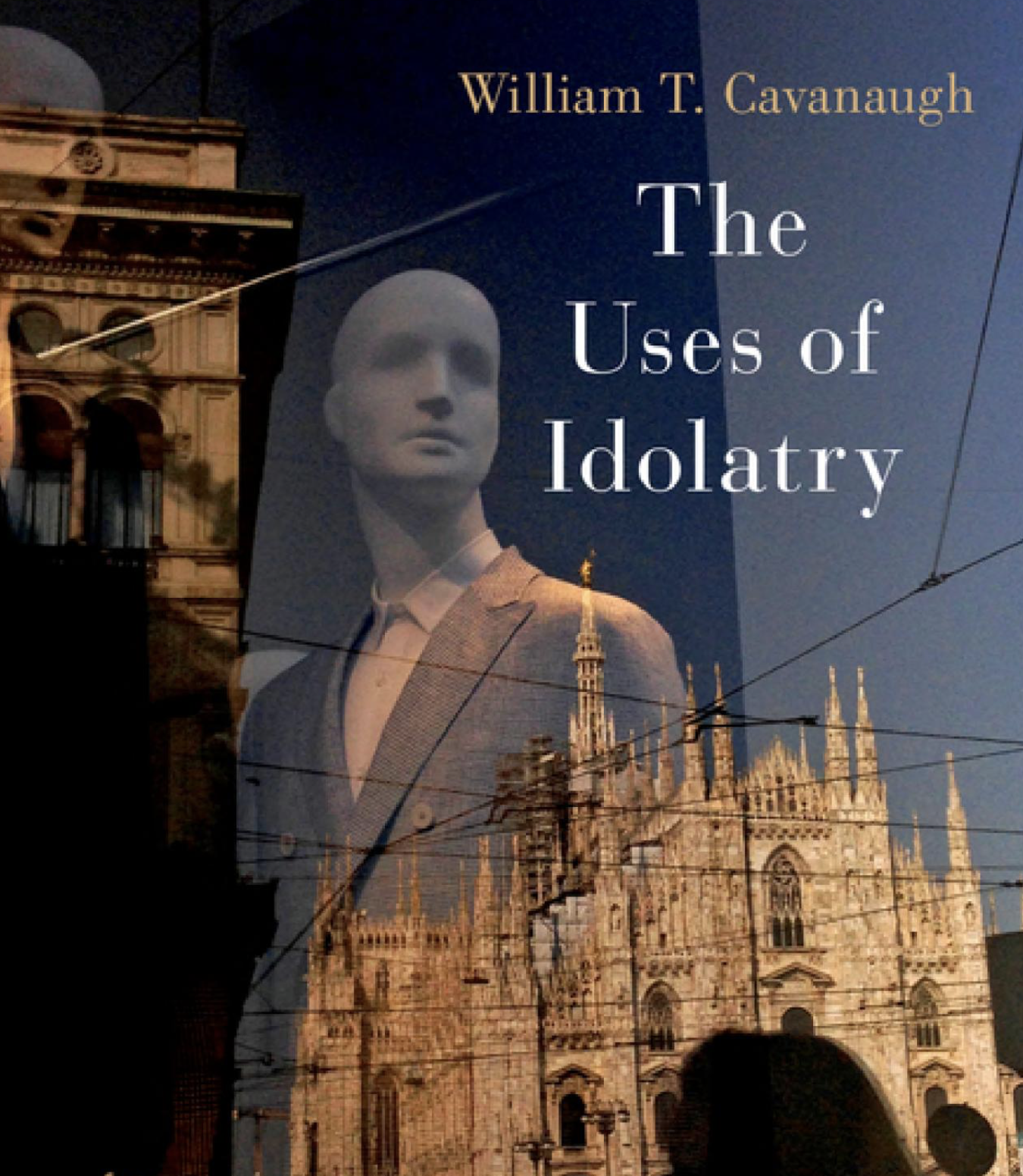


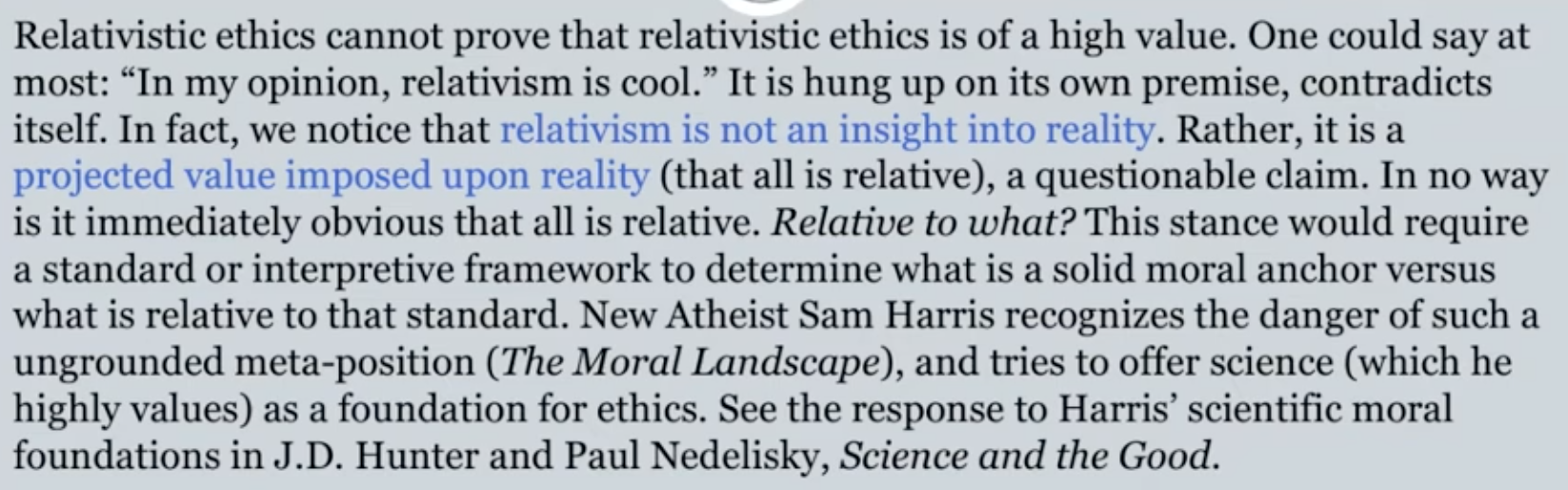

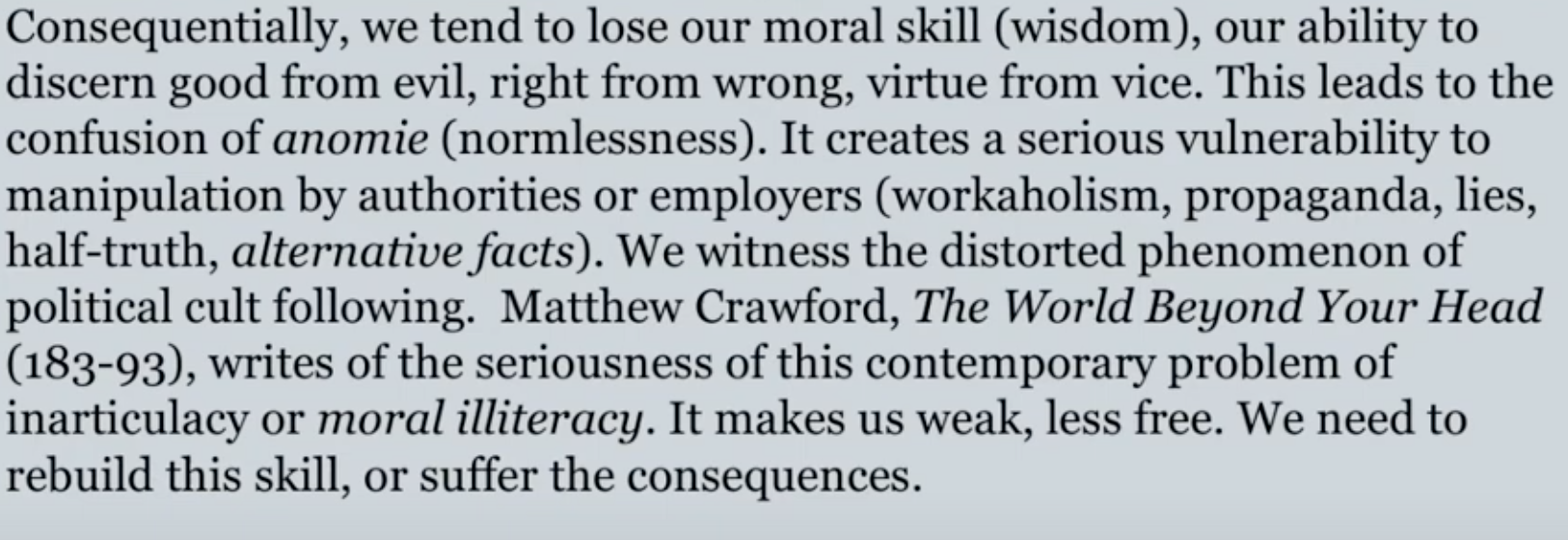

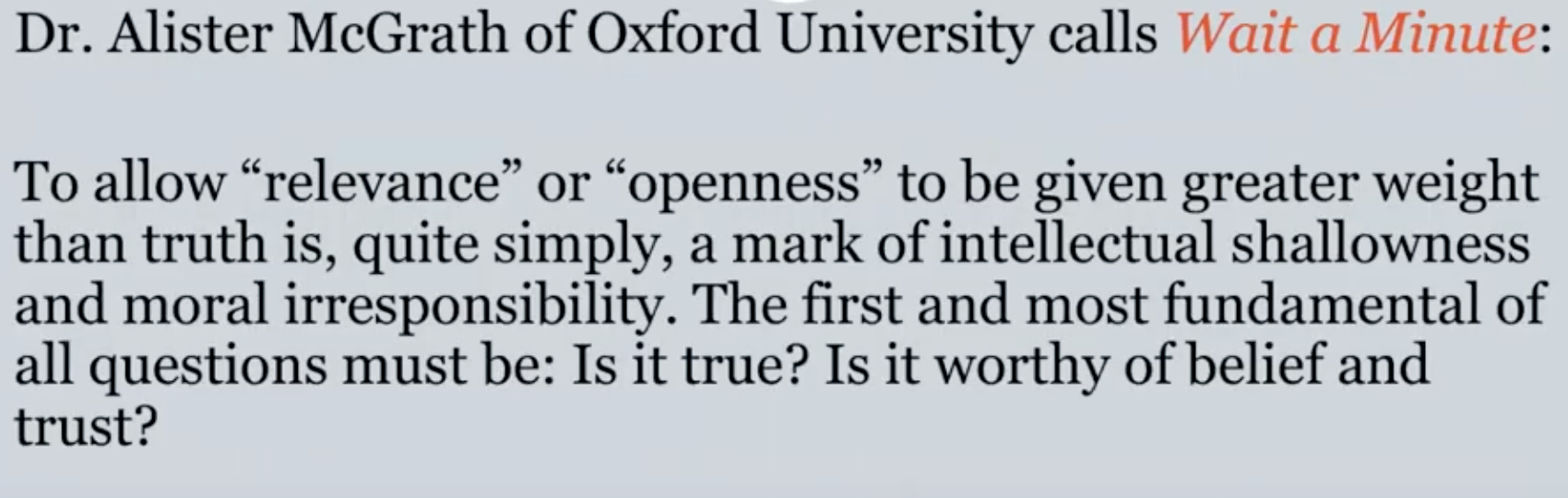



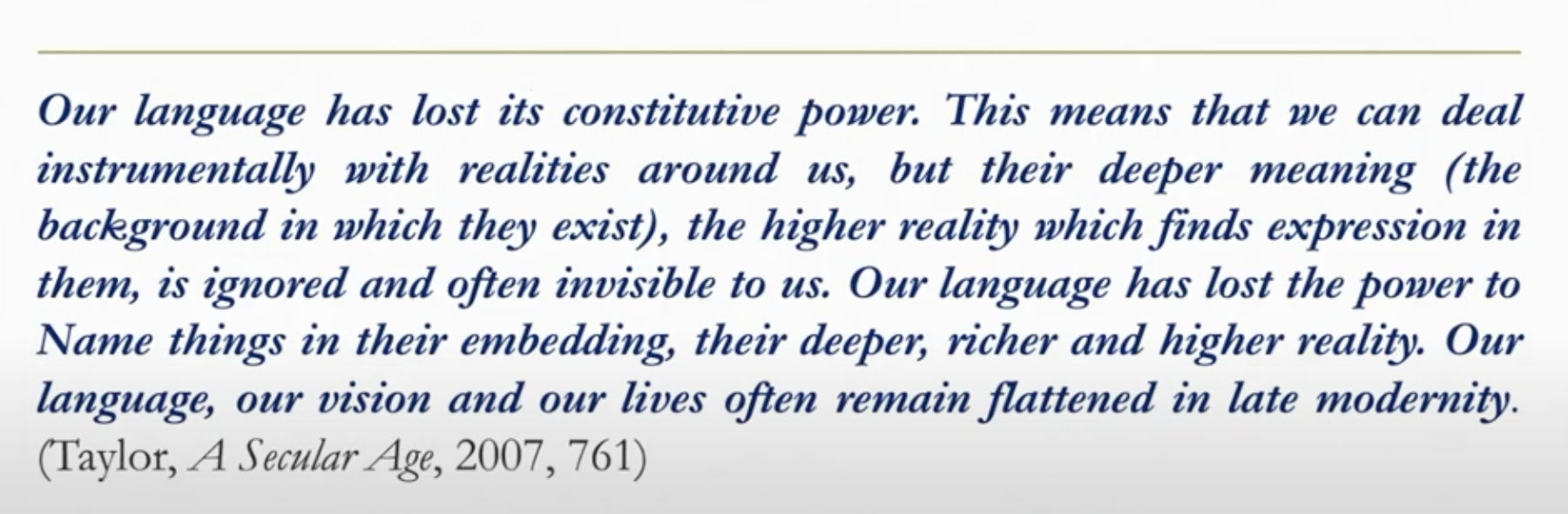


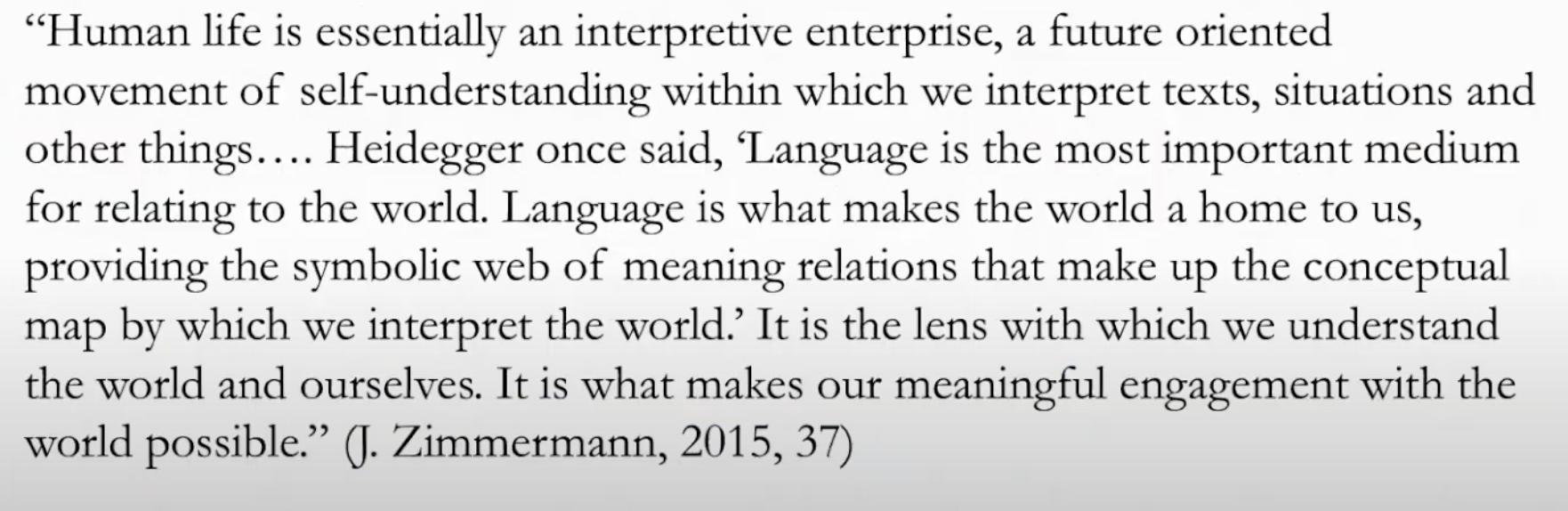




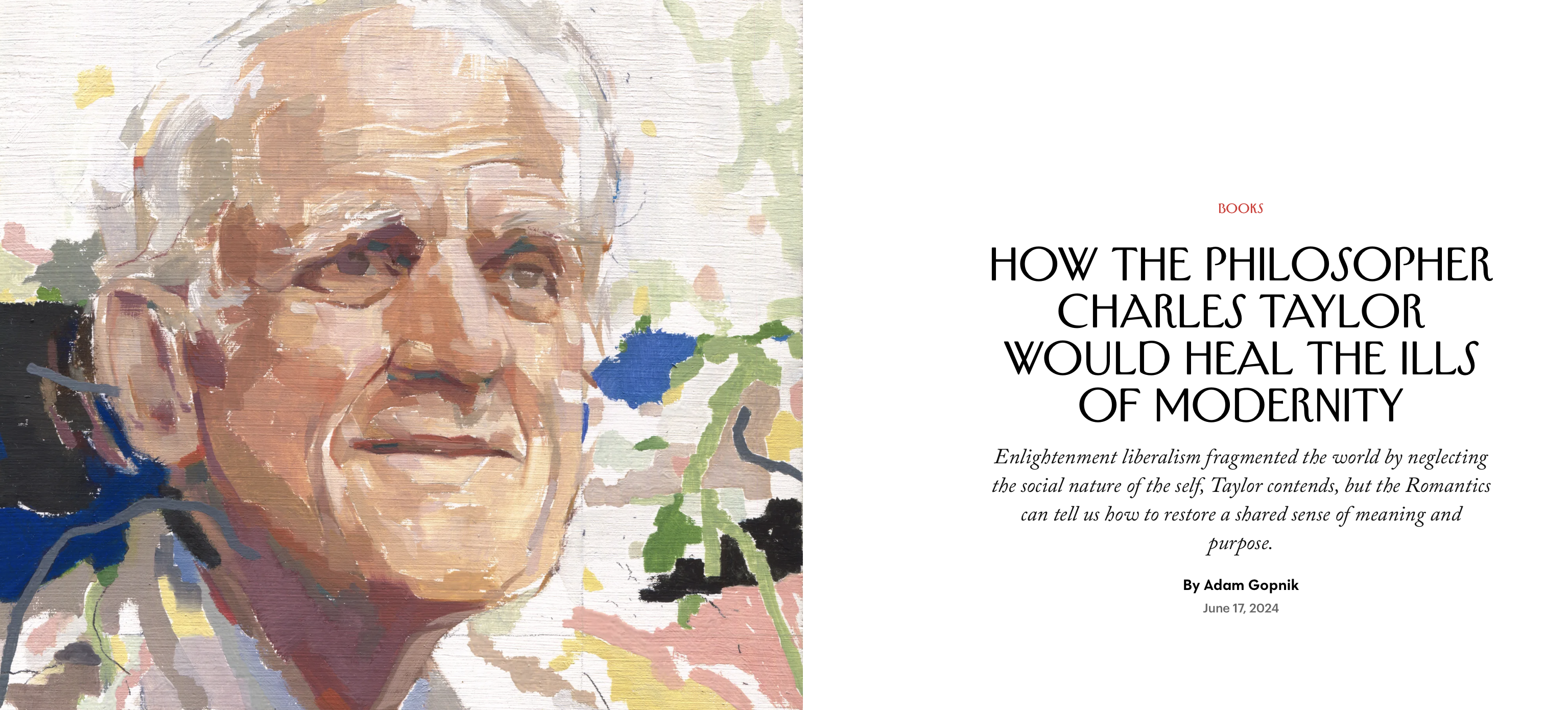

 ubcgcu