Posted by: gcarkner | July 21, 2015

Consequences of Radical Freedom

Radical Freedom and its Discontents

Screen Shot 2015-08-05 at 2.36.53 PM

According to Charles Taylor (Hegel and Modern Society, 1979, pp. 156f), historically the trend toward the radicalization of freedom comes from four key moves. It is an adventure in nihilism. It involves a decontextualization, a shaking loose of the self from definitions of human nature and from the natural world, the cosmic order, social space, or history. This gets back to Michel Foucault’s notion of getting free of oneself and his critique of the present. There are four stages to this move and four consequences.

Stage (a) The new identity of the self-defining subject is won by breaking free of the larger matrix of a cosmic or societal order and its claim. Freedom is defined as self-dependence, and self-sufficiency. It entails a negative concept: freedom is won by breaking the hold of the lower oppressed self (constructed by a disciplinary society for Foucault) so that one might explore one’s potential, experimental self. (Ibid., p. 156)

Stage (b) Human nature is not simply a given, but is to be remade, reinvented. To be integrally free, one must reshape one’s own nature. The only kind of situation which this view can recognize is one defined by the obstacles to unrestricted action, which have to be conquered or set aside as external oppression; liberation is a process which results in freedom from shackles. One of the key shackles is the identity given to one’s self by others. (Ibid., pp. 155, 156)

Stage (c) In this stage, there is a celebration of the Dionysian expressive release of instinctual depths (the uncensored self) of the human animal. ‘Modern society is seen as the oppressor of the spontaneous, the natural, the sensuous or the “Dionysiac” in man’ (Ibid., p. 140). Rooted in Schopenhauer, this dark and pessimistic view of freedom and the human condition leads to despair about freedom understood as self-dependence, because this sort of freedom can release violence and many other forms of negative human self-expression. There is both fear of, and celebration of, such human desires in the third part of Foucault’s oeuvre, the later ethical works.

Stage (d) The final stage of this Nietzschean nihilism is the death of all traditional values (transvaluation of all values) and the admission that ethics is grounded in the will to power. The empty self risks ending in nihilism, that is, self-affirmation through the rejection of all values. One after the other, the authoritative horizons of life, Christian and humanist, are cast off as shackles on the will. Under these circumstances, freedom means dependent in one’s actions only on oneself, lacking accountability to God, principle or society (Ibid., p. 157). Foucault’s ethics seems to include all four stages. He points enthusiastically in the direction of freedom, but does not offer parameters or guidelines of how to proceed, intentionally so. Nor does he offer ways of avoiding or managing the most negative results of this kind of freedom. Read More…

Posted by: gcarkner | July 3, 2015

Summer Good Reads

Good Reads for Summer 2015

Screen Shot 2015-07-03 at 9.14.28 AM

  Wesley Hill, Spiritual Friendship.

John Dickson, Humilitas  

Iain Provan, Against the Grain: selected essays.  

Susan Cain, Quiet: the power of introverts in a world that can’t stop talking.

Wendell Berry, This Day.  

Os Guinness, The Global Public Square  

Thomas Merton, The Seven Story Mountain: an autobiography of faith.  

Daniel J. Treier, Virtue and the Voice of God: towards a theology of wisdom.  

Daniel James Brown, Boys in the Boat: nine Americans and their quest for gold at the 1936 Berlin Olympics  

Rowan Williams, The Truce of God (2005)  

David Skeel, True Paradox: How Christianity Makes Sense of Our Complex World.

DSC00588


Posted by: gcarkner | May 31, 2015

Twin Heritages Recovered

Twin Heritages: Christ and University

What if we could harness the power, resources and critical skills of the research university for the growth and health of the contemporary church and its mission? What if we could harness the full richness of Christian history and spirituality, benevolence and moral capacity for the enrichment and inspiration of the university community and academia itself?

It would surely break open a new, powerful vision of unparalleled creativity and promote untold good for humanity. It would give us  fire in the belly we have hardly imagined. It would be a boon to research and a boon to the church, producing a win/win scenario. The alienation between these two highly influential institutions, two carriers of significant weighty heritage, is nothing short of a tragedy of late modernity. Perhaps we are due for some Big Sky Re-Thinking.

Envision the Possibilities

  • Faith and Reason could pull together like plow horses. We could rethink their relationship.
  • Science and the Imagination could complement one another with intensity.
  • Wisdom could be combined with the Holy Spirit to enrich philosophy and education.
  • Goodness and Beauty could become central to research and application of insight.
  • Excellence of character could complement excellence of scholarship in the formation of students and the model of professors.
  • A new paradigm of freedom could be discovered: as generosity of spirit rather than freedom as an end in itself, a freedom that builds community and promotes joy, and is connected to the good.
  • We could recover Christian Humanism for robust social change, and satiate our hunger and thirst for meaning and purpose. There is a robust tradition to tap into here.
  • The Wonder of the Cosmos (13.8 billion light years across) made available through powerful telescopes could complement an appreciation of the Creator who loves us intensely, has a vested interest in our well-being, in this small corner of the known universe on the edge of the Milky Way.
  • Pioneering in science through particle accelerators, revolutionary breakthroughs in genetics, nanotechnology and neuroscience could be complemented by a great leap forward in human compassion and  social responsibility, a leap forward in ownership of responsibility for climate change and our relationship to the biosphere.

Read More…

Posted by: gcarkner | May 14, 2015

Take Every Thought Captive

https://www.youtube.com/watch?v=ZUOAKyTK6JY John Lennox Is Anything Worth Believing?

Screen Shot 2015-04-10 at 12.22.25 PM

Take Every Thought Captive

Take every thought captive poses an inspiring challenge by Paul the Apostle in II Corinthians 10; this is part of our ongoing GCU study group. It entails a challenging statement on intellectual and spiritual discipline, one of the mind and heart. The UBC graduate students wrestle with the quest to think and negotiate the university landscape differently, to access and apply the graces of God in their context. Paul uses the dramatic, attention-grabbing metaphor of war in order to build Christian resolve in the young church, while at the same time deconstructing the very culture of war.

What kind of warfare is Paul addressing? What kind of weapons is he offering? What sort of strategy? How does it relate to the academic enterprise of graduate school? What are the ideologies of our colleagues that set up a wall to the gospel, the negative apologetic? What worldview has taken our friend captive and hampers their spiritual insight? How do we get at the whole truth with the aid of the Logos? These are critical questions.

Paul’s weapons are rooted in the capital virtues, the gentleness and authority of Jesus and the power of the Holy Spirit: truthfulness and integrity, righteousness, patience, the gospel of peace and blessing (shalom), faithfulness, hope, knowledge of God and his calling, a constructive stance or attitude (Ephesians 6: 13-17), discernment and discipleship, respect and dialogue, leveraging agape love, refusal of despair. We must build our consciousness and use multivalent angles and approaches to build bridges to faith as the diagram below suggests. We also need to tap in to those Christian roots of higher learning and preparation for leadership.

Screen Shot 2015-04-10 at 12.07.58 PM

It is not people themselves, but faulty or immoral reason, that we are called to take captive on campus. This comes complete with arguments and assumptions that set themselves against the knowledge of God: scientism, consumerism, materialistic naturalism, exclusive secularism, reductionism, market fundamentalism, toxic politics of hate, and various types of imperialism. These can be somewhat formidable at times. Alister McGrath, a British theologian, represents for many of us someone that believes the mind really matters to spiritual health, that sharp theology and clear thinking is important to all believers. He articulates Paul’s intent and strategy in his books: Intellectuals Don’t Need God? and A Fine-Tuned Universe. See also Blog Post Can We Make Peace Between Faith and Reason?

Christ-centeredness must reign supreme in our minds and not just in our hearts. Grace and love must be combined with philosophical and theological sharpness. Circumspect thinking and positive action also comes through strongly in the prophetic work by Jim Wallis, The (Un)Common Good: How the gospel brings hope to a world divided. Our strategy on campus and beyond must be active in initiating and hosting conversation about the big questions. It is a public challenge and a confidence-builder for Christians that Jesus the Christ is the wisdom of God and the power of God, the very nexus of faith and reason, truth and love personified. This is the background radiation of the universe.

~Dr. Gordon Carkner

Does the Universe Need God? Dr. Hans Halvorson, Princeton University 

 https://www.youtube.com/watch?v=SDwpTcSEjak

Paul K. Moser The Christ-shaped Philosophy Project

http://www.epsociety.org/userfiles/art-Moser%20(Christ-Shaped%20Philosophy).pdf

https://www.youtube.com/watch?v=Jo3vRqrW8NU Ravi Zaccharias Response to New Atheism

See also Alister McGrath, A Fine-Tuned Universe: the Search for God in Science and Theology.

Questions and Answers with Professor John Lennox

https://www.youtube.com/watch?v=1tr7dCphnkw

Philosopher Dallas Willard on Understanding Naturalism 

http://www.dwillard.org/articles/artview.asp?artID=46

Duelling Oxford Professors on the Existence of God: Peter Atkins and John Lennox

https://www.youtube.com/watch?v=fwMBqm3Pw_Y

Posted by: gcarkner | April 8, 2015

God and the Multiverse, May 6, UBC

Screen Shot 2015-02-08 at 2.49.10 PM

Deborah Haarsma

Astronomer from Calvin College and  President of BioLogos

God and the Multiverse

 Wednesday, May 6 @ 4:00 p.m.

Woodward (IRC) Room 1, UBC

Audio File

Abstract

The last 100 years have transformed our understanding of the universe.  We now know that the universe is ancient, beginning in a Big Bang 13.8 billion years ago, and that it continues to expand today, at an ever-increasing rate.  We’ve also seen amazing evidence that some physical laws and constants are fine-tuned for life, as well as hints that our universe is part of a much bigger multiverse. What does all this have to do with God?   This talk will give an overview of a range of religious and non-religious responses to these exciting discoveries.

Biography

 Deborah Haarsma earned a PhD in physics at the Massachusetts Institute of Technology in1997. An experienced research scientist, she was Chair of the Department of Physics and Astronomy at Calvin College from 2009-2012, Professor of Astronomy from 1999-2012. She has several publications in the Astrophysical Journal and the Astronomical Journal on extragalactic astronomy and cosmology. Dr. Haarsma has studied very large galaxies (at the centers of galaxy clusters), very young galaxies (undergoing rapid star formation in the early universe), and gravitational lenses (where spacetime is curved by a massive object). Her work uses data from several major telescopes, including the Very Large Array radio telescope in New Mexico, the Southern Astrophysical Research optical and infrared telescope in Cerro Pachon, Chile, and the Chandra X-ray Observatory in orbit around the earth. Since January 2013, Dr. Haarsma has served as President of BioLogos (biologos.org) a serious academic dialogue between current world-class science and Christian faith.  BioLogos was founded by Dr. Francis Collins of the National Institute of Health in the USA, and runs annual conferences for scientists and church leaders. In this subject area, Haarsma published Origins: Christian Perspectives on Creation, Evolution, and Intelligent Design with her husband and fellow physicist, Loren Haarsma. She also edited the anthology Delight in Creation: Scientists Share Their Work with the Church with Rev. Scott Hoezee.

Screen Shot 2015-05-03 at 8.28.17 PM

Nebula where Stars are Born

Sample Talk by Dr. Haarsma at Westmont College https://www.youtube.com/watch?v=PYRZvMpYVAs

See also:

Alister McGrath, A Fine-Tuned Universe: the Search for God in Science and Theology (2009).

“Are there viable pathways from nature to God? Natural theology is making a comeback, stimulated as much by scientific advance as by theological and philosophical reflection. There is a growing realization that the sciences raise questions that transcend their capacity to answer them—above all, the question of the existence of God. So how can Christian theology relate to these new developments?

In this landmark work, based on his 2009 Gifford lectures, Alister McGrath examines the apparent ‘fine-tuning’ of the universe and its significance for natural theology. Exploring a wide range of physical and biological phenomena and drawing on the latest research in biochemistry and evolutionary biology, McGrath outlines our new understanding of the natural world and discusses its implications for traditional debates about the existence of God.

The celebrated Gifford Lectures have long been recognized as making landmark contributions to the discussion of natural theology. A Fine-Tuned Universe will contribute significantly to that discussion by developing a rich Trinitarian approach to natural theology that allows deep engagement with the intellectual and moral complexities of the natural world. It will be essential reading to those looking for a rigorous engagement between science and the Christian faith. – Amazon

Satyan Devados at Cal Tech God, Math and the Multiverse

https://www.youtube.com/watch?v=mrWyj34WGFE

Interview with Physicist Steven Barr 

http://www.strangenotions.com/modern-physics-ancient-faith-an-interview-with-physicist-dr-stephen-barr/

David Christian: The history of our world in 18 minutes 

http://www.ted.com/talks/david_christian_big_history?language=en

Screen Shot 2015-05-03 at 8.31.59 PM

Galaxy similar to our Milky Way

Screen Shot 2015-05-11 at 12.16.31 PM


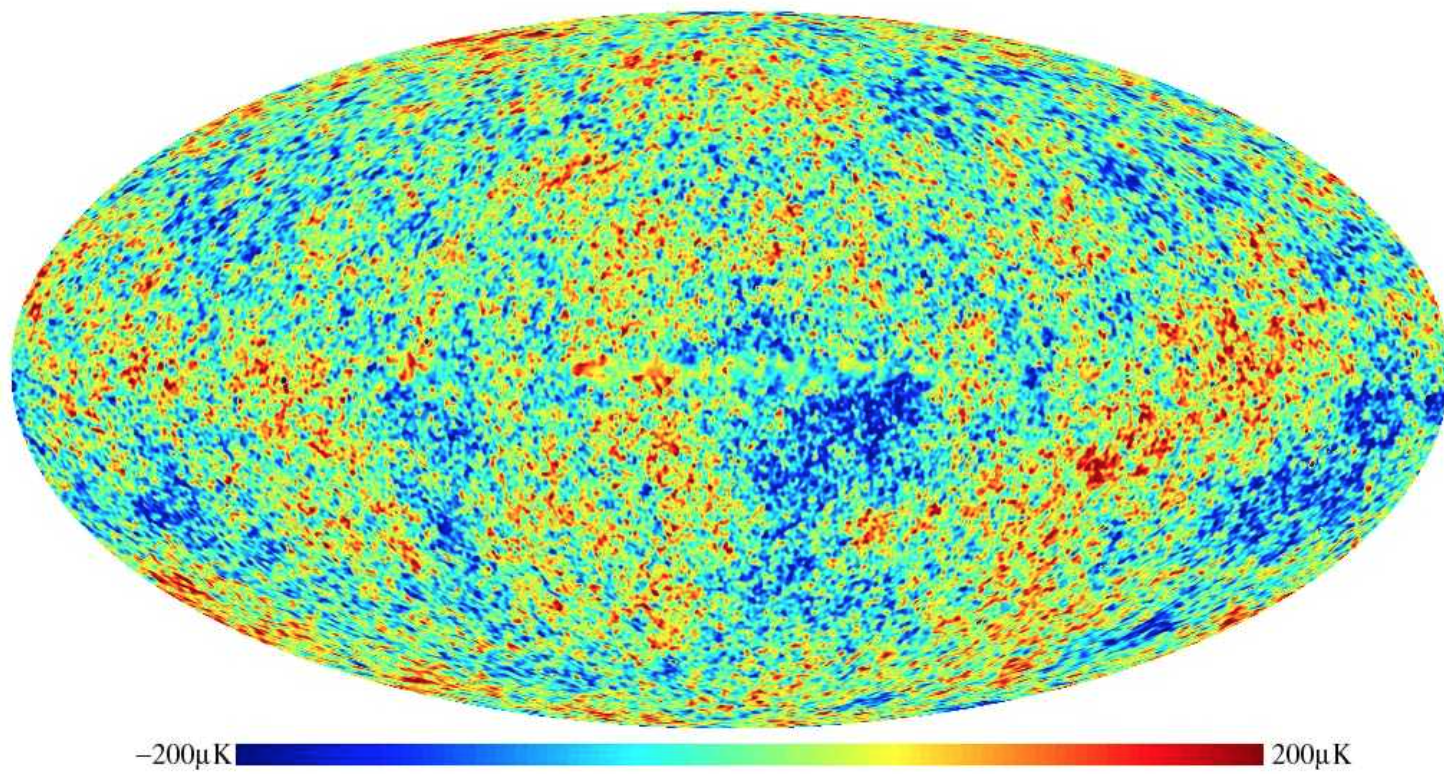
Background Radiation from Big Bang

Screen Shot 2015-05-11 at 12.17.07 PM


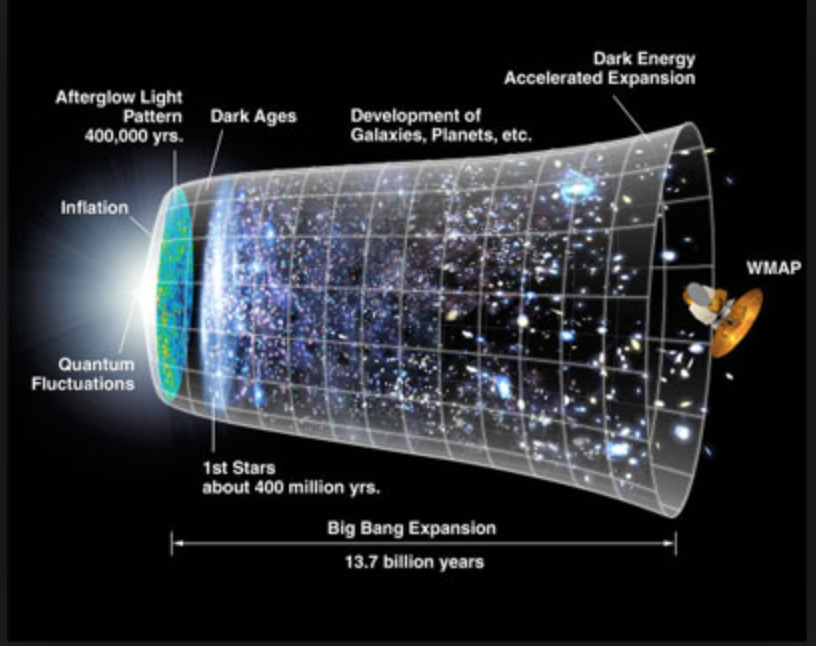
Cosmological History

Posted by: gcarkner | March 30, 2015

Rene Girard on Deep Easter

The Gospel According to René Girard

~ Peter Barber, Ph.D. Student Religious Studies at UBC~

The two principal assertions of Girard’s hermeneutical model are ‘mimetic desire’ and ‘scapegoating’. Mimetic desire is the idea that humans do not experience being and identity autonomously, but always only through an Other, a model for one’s desire. This could be an older sibling, an exemplar or a mentor. Desire and by extension ‘being’ is borrowed. This essential feature of human nature accounts for the enormous learning capability (the physical apparatus for which is now identified as the brain’s mirror neuron system), and is a positive basic feature of human existence. And yet, since desiring and being is through a model other, two or more persons desiring the same object(s) or things could end in rivalry over the object(s). This can and often does result in occasioning conflict and seeming to necessitate, in the estimation of the rival(s), the need for sacrifice of the Other, in order to gain the being blocked or inhibited by the model.

It is in this way that scapegoating regularly results from mimetic desire going sideways, as just described. Positive learning descends into destructive violence, the desire to destroy what you admire. The term scapegoat is chosen by Girard because it encapsulates our cultures’ reception of the spirit of Christ’s revelation throughout history, that sacrifice of the other is not ‘good’, is not even necessary, but is the false transfer of responsibility for rivalry and violence off of oneself and entirely onto the Other. The transferal is followed by destruction of the Other for his/her guilt, and for the danger or social pollution they still pose, in blocking access to the desired object(s). It threatens social chaos, and the scapegoat is sacrificed to restore peace and order.  Read More…

Posted by: gcarkner | March 29, 2015

The Challenge of Easter

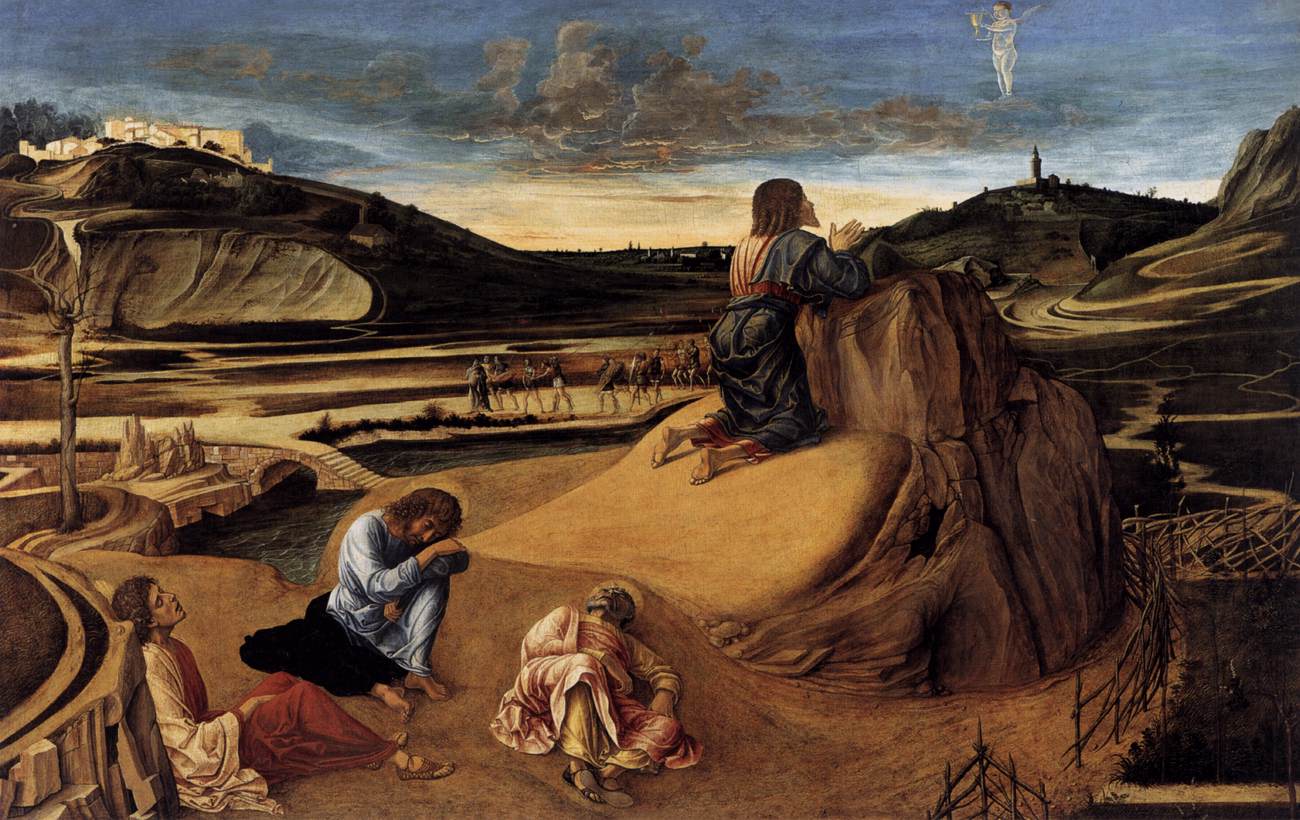
Giovanni_Bellini

Giovanni Bellini

How are we to understand Good Friday and Easter from such a distance? How does it relate to our experience? Is it mere sentiment or something more profound? Andy Crouch in his book Culture Making: recovering our creative calling, (Chapter 8 “Jesus as Culture Maker”) has some brilliant insights into the difference that Jesus life, death and resurrection have for shaping the horizons of possibility (shalom and human flourishing) for societies, ancient and modern. He helps us grapple with the various dimensions of this sorrow and celebration. See also I Corinthians 15.

The Cross

He suffered the full weight of the human story of rebellion against God. He was literally impaled on the worst that culture can do–an instrument of torture that stood for all the other cultural dead ends of history, from spears to bombs, gas chambers to waterboards. Like all other instruments of violence, a cross is cultural folly and futility at its most horrible. (141)

The core calling of [Jesus] life is not something he does at all in an active sense–it is something he suffers. The strangest and most wonderful paradox of the biblical story is that its most consequential moment is not an action but a passion–not a doing but a suffering. (142)

On Good Friday, love embraced suffering as Jesus drank the bitter cup. Dr. Martin Luther King Jr. self-consciously followed the same journey of the suffering death of Jesus, the way of the cross, as he promoted civil rights for African-Americans in the Southern USA in the 1960s. He worked hard to replace the perverted symbol of the cross which was used as a justification for aggression, hate and violence—e.g. the Ku Klux Klan. His life quest was to restore the cross as a symbol of love, mercy, justice and non-violence. He incarnated a form of extreme love, a committed non-violent protest against systemic injustice. ~Iwan Russell-Jones, Professor of Faith and the Arts, Regent College

Read More…

Posted by: gcarkner | March 24, 2015

Scholar Claims Moral Knowledge is Vital

Book Review by J. W. Wartick

(full review http://jwwartick.com/2014/09/01/ismk-smith/)

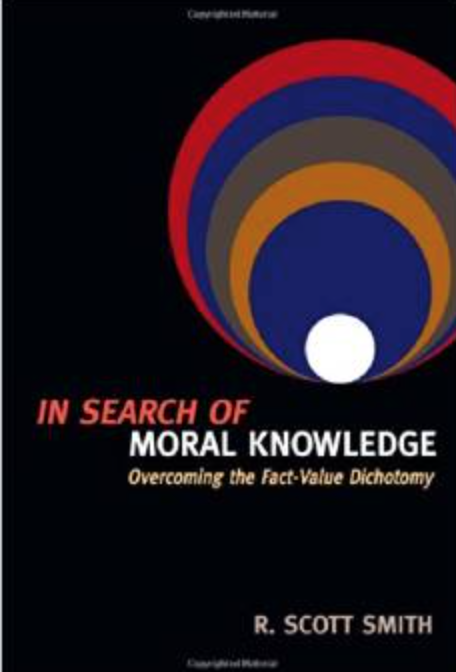
Screen Shot 2015-03-24 at 12.17.30 PM

R. Scott Smith’s In Search of Moral Knowledge: Overcoming the Fact-Value Dichotomy (IVP Academic 2014) is a systematic look at the possibility of moral knowledge in various metaethical systems, with an argument that a theistic, and specifically Christian, worldview is the most plausible way to ground the reality of morals.

Smith begins by providing overviews of various historical perspectives on ethics, including biblical, ancient (Plato and Aristotle), early (Augustine through Aquinas), and early modern (Reformation through the Enlightenment) systems. This survey is necessarily brief, but Smith provides enough information and background for readers to get an understanding of various ethical systems along with some difficulties related to each.

Next, the major options of naturalism, relativism, and postmodernism for ethics are examined in turn, with much critical interaction. For example, Smith argues that ethical relativism is deeply flawed in both method and content. He argues that relativism does not provide an adequate basis for moral knowledge, and it also undermines its own argument for ethical diversity and, by extension, relativism. Moreover, it fails to provide any way forward for how one is to live on such an ethical system and is thus confronted with the reality that it is unlivable. Ultimately, he concludes that “Ethical Relativism utterly fails as a moral theory and as a guide to one’s own moral life” (163).

For Naturalism, however, Smith contends the situation is even worse: “we cannot have knowledge of reality, period, based on naturalism’s ontology. Yet there are many things we do know. Therefore, naturalism is false and we should reject it not just for ethics, but in toto” (137). His argument for this thesis is, briefly, that naturalism has no basis for mental states–and therefore, for beliefs–and so we cannot have knowledge (see 147ff especially).

For full review see: http://jwwartick.com/2014/09/01/ismk-smith/

2007_09_09_07_09_34

Posted by: gcarkner | March 22, 2015

Is Agape Love a Source of the Good?

Charles Taylor and the Constitutive Good 

According to Taylor, sources of the good tend to vary from (a) those solely external to the self, to (b) those both internal and external, to (c) those totally internal. As he notes, at one time, the good was wholly external to the self as it was perceived in Plato’s moral ontology; the good was endemic to the structure of reality. The Stoics also saw things this way. Taylor notes the big transition in moral sources in the last four centuries:

Moving from an epoch in which people could find it plausible to see the order of the cosmos as a moral source, to one in which a very common view presents us a universe which is very neutral, and finds the moral sources in human capacities. (1994, p. 215)

He takes Plato as his representative of the first. “The cosmos, ordered by the good, set standards of goodness for human beings, and is properly the object of moral awe and admiration, inspiring us to act rightly” (Taylor, 1994). There is, however, an important distinction. Taylor himself is a moral realist, but not a neo-Platonist (the view that the good is part of the metaphysical structure of the world). Platonic moral realism has been discredited because it leans too heavily on the idea of an ontic logos, a meaningful order. Nor is Taylor, on the other hand, a radical subjectivist. His view of realism lies somewhere between the Romantic subjectivist Rilke, and the Platonic objectivist. He wants to champion both the subjective and objective dimensions of the moral self, and maintain that there are sources outside as well as inside the self. Read More…

Posted by: gcarkner | March 15, 2015

The Courageous Quest for Justice

Thought-provoking Quotes from Jim Wallis, The (Un)Common Good

It is from numberless diverse acts of courage and belief that human history is shaped. Each time a man stands up for an ideal, or acts to improve the lot of others, or strikes out against injustice, he sends forth a tiny ripple of hope, and crossing each other from a million different centres of energy and daring those ripples build a current which can sweep down the mightiest walls of oppression and resistance.  ~Robert F. Kennedy

Our goal is to create a beloved community and this will require a qualitative change in our souls as well as a quantitative change in our lives. ~ Rev. Dr. Martin Luther King Jr.

Screen Shot 2015-03-15 at 6.43.45 PM

“People were made for family, community, and human flourishing, not consumerism, materialism, addiction, and empty overwork.” (p. 18)

“How do we build a culture for the common good in an age of selfishness?” (p. 21)

“Who we think Jesus is will determine the kind of Christianity we live.” (p. 25)

“We are looking for moral clarity, mental sharpness, and emotional maturity in our responses to the steady assault of outside messages on our lives.” (p. 37)

“The greatest challenge to us in a world of injustice and a culture of cynicism is how to hang on to belief in a better world that would change this one.” (p. 39)

“The pilgrimage of our lives is the learning to apply the kingdom to the biggest and most consequential of social and political events, to the most personal of our closest relationships, and to the daily interactions we have with colleagues, coworkers, neighbours, and complete strangers. The Teacher wants to teach us in all those ways.” (p. 39)

“The Beatitudes and the Sermon on the Mount are the charter of the kingdom of God, the Magna Carta or the constitution of the kingdom; they are the instruction manual for living in the new age.” (p. 47)

“To be able to feel the pain of the world is to participate in the very heart of God. The compassionate response of God’s people to human suffering is one of their defining characteristics.” (p. 48)

“And when Jesus is asked by his disciples who will be first in his kingdom, he tells them it will be the servants of all. Humility us the one of the most under appreciated values in our intensely competitive culture, economy and politics.” (p. 49)

Read More…

« Newer Posts - Older Posts »

Categories