Posted by: gcarkner | September 19, 2013

Recovering Stewardship…4

Consumerism has its Personal Cost

Consumer Angst

As stated in the previous post in this series, consumerism is heavily motivated by a strong individualism. The corporate or common good is often far from the mind of the consumer. Individualism as a form of identity creates in people a sense of isolation. With this isolation, comes fear and insecurity. Many people today pursue acquisitiveness in order to control their private world and establish some sort of security for themselves and their family. This is a virulent combination. Strangely, this can lead to an even greater insecurity and tremendous stress related to the challenge of maintaining the consumptive lifestyle and keeping boredom at bay.

Legitimate needs (food, water, shelter) can be met, but illegitimate wants (laced with pride, envy, greed) are literally  insatiable. They create obsessive behaviour similar to that found in alcoholism or drug addiction.  The West invented shop-aholism. In this sense, the consumer ethos emerges as the opiate of the masses. Enough is never enough; there is always the craving for more. The boom in the therapy industry in North America has a lot to do with the resulting neuroses and boredom caused by crude consumerism. It turns out not to provide meaning and fulfilment, but the opposite, soul angst. We note the very sad example of the wealthy and eccentric aircraft billionaire Howard Hughes. Read More…

Posted by: gcarkner | September 14, 2013

Recovering Stewardship …3

From Whence Comes Consumerism?

What are the philosophical and historical roots of consumerism? What we now know as the Consumer Society is actually a fairly recent development–roughly since 1945. It is a post-World War II phenomenon. During this era, advertising exploded as an industry. Governments fuelled consumption in order to rebuild their Gross Domestic Product. Factories multiplied and consumer goods increased exponentially both in variety and number as did wealth. The advertising industry went into full gear, utilizing popular media as the means to promoting consumption. The result has been a phenomenal, unstoppable revolution in rising expectations (think cell phones today). And of course with this comes the voracious consumption of natural resources and fossil fuels (cheap energy). One of the reasons that consumerism is so virulent in the late twentieth and early twenty-first century is that many in the West have bought into a metaphysical naturalistic materialism as well. Material things are on the ascendant: only the physical world exists and matters to us. Read More…

Posted by: gcarkner | September 11, 2013

Creative Interpretation of the Immanent Frame

Charles Taylor & the Immanent Frame of the Secular

~Dr. Gordon E. Carkner~

 We are offered a particularly insightful analysis of our current cultural ethos by McGill Philosophy Professor Charles Taylor in his most recent prize winning tome A Secular Age. (2007). Richard Rorty spoke of Taylor as one the top twelve philosophers of our day. He captures the way in which we have located ourselves in the late modern world and the picture that has taken our minds captive: he calls it the immanent frame. This house of the mind and imagination constitutes a unique social imaginary (implicit understanding of the space in which we live) in human history. Our focus here in a series of blog posts will be to exposit the key insights of Chapter 15 in A Secular Age. In this critical analysis, he shows how religion has been philosophically and culturally marginalized in Western culture (even while it is experiencing a resurgence). Taylor leads us to think freshly about how we have arrived in this cultural space.

The core theme of this landmark book is (510) to study the fate of religious faith in the strong sense in the West, meaning:  a. belief in a transcendent reality, and b. the connected aspiration of personal transformation, which goes beyond ordinary human flourishing. He is deconstructing or calling into question the subtraction story or Western Master Narrative (one deeply embedded in modern consciousness), where science replaces religion after Christendom. Within this perspective, the growth of science entails the death of God or the recession of religion. Religion is seen to be replaced by science. Is this hermeneutically valid?, asks Taylor.  When and why did science become equivalent to secularism? This is the crux of the investigation that Taylor leads our thinking about contemporary Western culture. Read More…

Posted by: gcarkner | September 10, 2013

Advice to Young Scholars

Advice to Young Scholars

~Dr. Martin Ester, Computer Science, Simon Fraser University~

Hard at Work

I am Martin Ester,  a computer science professor at SFU. I have supervised graduate students for more than ten years. I am also a Christian who is convinced that my faith is relevant to all aspects of our world. I continue to enjoy this part of my job very much and have the impression that my students also do enjoy their studies, at least once in a while. Sometimes current or prospective students ask me for advice on how to succeed, and I have tried to distill the following short advice, which will hopefully be useful not only for computer science students, but for many others across the disciplines.

1) Make sure to know why you are doing this:

Make sure that you know why you are going to grad school. The monetary benefit of earning a higher salary with a graduate degree may be smaller than you think. And the reputation of your degree may also not be worth investing several years of your life. You may waste part of your life and will not even succeed with your graduate studies if you do not have a better answer. I believe that you need to have a passion for your thesis topic, an inner motivation to explore that helps you to overcome the inevitable hard times during grad school. On the other hand, your studies need a purpose that goes beyond your own interests, and you should have a realistic understanding of how your studies will help you to better serve humanity. Keep in mind that not every PhD graduate can have an academic career. Read More…

Posted by: gcarkner | September 8, 2013

Dr. Olav Slaymaker on Stewardship

UNIVERSITY SERVICE: an Emeritus Professor’s understanding of stewardship at a research university.

Screen Shot 2014-09-04 at 9.14.11 AM

When I was appointed to a tenure track position in 1968 I was told that the appropriate allocation of my time should be approximately 40:40:20 respectively to teaching, research and service. In this context, service was defined as anything from departmental committee work through university administration to continuing education and public lectures downtown and volunteer international development work. When I became Head of my Department in 1982 I soon realized that the balance had shifted from 40:40:20 to 30:60:10 (i.e. reduced teaching and service vis-à-vis research). My estimate of the current situation is that there has been a further drift away from teaching and service such that 20:75:5 describes better the balance of effort that is required in order to achieve tenure and/or promotion. Read More…

Posted by: gcarkner | September 6, 2013

GCU Book Study

GCU Fall Book Study
Want to join it?  gcarkner@shaw.ca
Hi GCU Book Study Fans,

Quick update: Bill Reimer (breimer@regent-college.edu) at Regent Bookstore said we could get the book for $18.00, but you have to order the book at the store. Email is probably adequate. There are Kindle Reader versions online for $9.60. The 2010 Christianity Today Award Winner is God is Great, God is Good. (ed. Craig & Meister)
It truly is a winner, with a super scholarly team behind it. We are due to learn so much together from this community reading and discussion. Great spark to our thinking and dialogue.

Can you tell me which days are good for you as a discussion time at 12:00 noon Tuesday, Wednesday or Thursday?

Thanks so much,
Gord

gcarkner@shaw.ca
Review of the book:
God is Great, God is Good edited by William Lane Craig and Chad Meister is a book geared specifically to address the arguments and rhetoric of the so-called New Atheism. With contributions from fourteen scholars, this is a 14-chapter book of essays critiquing the most notable points of contention from popular atheist writers Richard Dawkins, Sam Harris, Daniel Dennett, and Christopher Hitchens.Because of the topical way the book is composed, it could easily be read in a non-linear fashion; it doesn’t have to be read from beginning to end. However, the book follows a structure: Part 1 – God Is – presents essays dealing with God’s existence. Part 2 – God is Great – presents evidence from natural theology which show God’s power in creation. Part 3 – God is Good – presents essays with a moral theme. And Part 4 – Why it Matters – wraps up the overall case with discussions on divine revelation, history, and the identity of Jesus Christ. This review will present an overview of the chapter content and highlight some notable points.

William Lane Craig opens the book in chapter one and deals with Richard Dawkins’ treatment of the arguments for God. He demonstrates that the main arguments from The God Delusion are poorly formulated and outright inadequate. In particular, Craig deals with what Dawkins calls the main argument of his book – the “who designed the designer” objection. Among other things, Craig points out that: “In order to recognize an explanation as the best, you don’t need to be able to explain the explanation. In fact, such a requirement would lead to an infinite regress of explanations, so that nothing could ever be explained and science would be destroyed.”1In chapter two, J.P. Moreland deals with The Image of God and the Failure of Scientific Atheism. He explains that atheism and/or naturalism cannot give an account for five particular (and crucially important) features of human persons, what Moreland calls the “five recalcitrant features of the image of God.” These five are consciousness and the mental, free will, rationality, unified selves, and intrinsic, equal value and rights. He concludes that “given the epistemological and Grand Story constraints placed on the scientific naturalist ontology, not a single one of these five fits naturally in a non-ad-hoc way.”2 Like much of Moreland’s work, it is profound and fascinating; a mere listing of his five points does no justice to the depth of content he provides for each. Read More…
Posted by: gcarkner | September 5, 2013

Can We Recover Stewardship?

Can We Be Good Stewards Once Again?

Contemporary attitudes toward material possessions constitute a critical problem for Western societies or developed nations. The consumer ethic is so dominant that people often don’t even think about it; they have no antidote or alternate perspective; it is the air we breathe, the water we swim. People are captivated by a powerful passion to possess: toys, gadgets, vacations, experiences (elusive freedom). The all-out quest for affluence has exceeded what any previous generation could have imagined. Greed has replaced need as the major motivational energy behind much of our activities. Notre Dame  history professor Brad Gregory (The Unintended Reformation) asks the pressing question: “Is the will-to-consume the only glue (common ideology or passion) we have left for society in the pluralistic West?” Have we lost our soul?

In America, the top 1% of wage earners own an astounding 50% of the wealth of the entire country according to Wall Street insider  John R. Talbott. Salaries for some of our sports icons, traders and bankers has hit the stratosphere and continue to escalate. Robert Jensen of University of Texas believes that late modern  Capitalism is actually working against democracy, because of its extreme concentration of wealth. It develops a powerful elite who control the wealth and thereby control the government. Are politicians excessively controlled by Wall Street, London Business and Bay Street? is a question worth asking.

Sociologist Max Weber captures the mood: “For one with the acquisitive appetite, money is not so much a means of securing goods and services as an end in itself… Man[kind] is dominated by the making of money, by acquisition as the ultimate purpose of life.” Thus what was once a means to an end, has become an end in itself. In certain cases, it has reached almost psychotic proportions. The first decade of the twenty-first century is riddled with scandalous and unethical business practices fuelled by lies and excessive greed (Enron, WorldCom, 2008 Banking/Market Crisis, Subprime Mortgage Fiasco, Bernie Madoff). Many people and their hopes and retirement dreams were sacrificed in the name of consumption and reckless behaviour, acquisitiveness and upward mobility. The weaker members of society suffered terribly. Greed led to so much corruption, so many unnecessary compromises in the marketplace. This kind of selfishness is a very narrow aspect of people, but has become all too dominant as a life goal–it makes us inhuman in the end. Read More…

Posted by: gcarkner | August 28, 2013

Gerard Manley Hopkins

The Grandeur of God

by Gerard Manley Hopkins, Oxford University Poet

The world is charged with the grandeur of God.

It will flame out, like shining from shook foil;

It gathers to a greatness, like the ooze of oil

Crushed. Why do men then now reck his rod?

Generations have trod, have trod, have trod;

And all is seared with trade, bleared, smeared with toil;

And wears man’s smudge and shares man’s smell: the soul

Is bare now, nor can foot feel, being shod.

And for all this, nature is never spent;

There lives the dearest freshness deep down things;

And through the last lights off the black West went

Oh, morning, at the brown brink eastward, springs–

because the Holy Ghost over the bent

World broods with warm breast and with ah! bright wings.

Gerard Manley Hopkins

Posted by: gcarkner | August 17, 2013

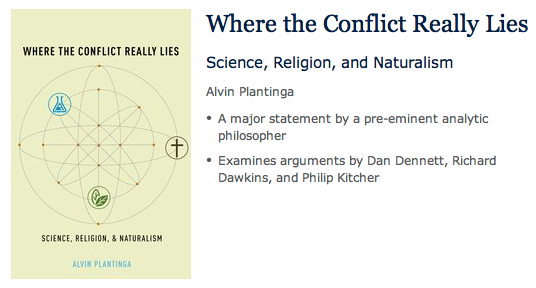
Alvin Plantinga @ UBC October, 2013

Alvin Plantinga

Dr. Alvin Plantinga, former John O’Brien Professor of Philosophy, Notre Dame University;

currently Jellema Chair in Philosophy, Calvin College.

Topic:  Science & Religion: Where the Conflict Really Lies

 Wednesday, October 2, 2013 @ 4:00 p.m.    Scarfe Building Room 100, UBC

http://www.youtube.com/watch?v=4pUF82TZFCs&feature=youtu.be

Abstract

Taking Christian belief as C.S. Lewis’s ‘Mere Christianity’, I’ll argue that there is no real conflict between science and Christian belief. I’ll go on to argue that there is a real conflict between science and naturalism, the thought that there is no such person as God or anything like God.  So if we take naturalism to be a religion or a quasi-religion, then there is indeed a science-religion conflict; it’s not between Christianity and science, however, but between naturalism and science.

Like any Christian (and indeed any theist), I believe that the world has been created by God, and hence “intelligently designed”. As far as I can see, God certainly could have used Darwinian processes to create the living world and direct it as he wanted to go; hence evolution as such does not imply that there is no direction in the history of life. What does have that implication is not evolutionary theory itself, but unguided evolution, the idea that neither God nor any other person has taken a hand in guiding, directing or orchestrating the course of evolution. But the scientific theory of evolution, sensibly enough, says nothing one way or the other about divine guidance. It doesn’t say that evolution is divinely guided; it also doesn’t say that it isn’t. Like almost any theist, I reject unguided evolution; but the contemporary scientific theory of evolution just as such—apart from philosophical or theological add-ons—doesn’t say that evolution is unguided. Like science in general, it makes no pronouncements on the existence or activity of God.

Biography

Dr. Plantinga is professor emeritus of Philosophy at the University of Notre Dame, was described by Time magazine in 1980 as “America’s leading orthodox Protestant philosopher of God.”  He is the author of numerous articles and several books, including God and Other Minds: the Rational Justification of Religious Belief (Cornell 1967), God, Freedom and Evil (Eerdmans 1974), Warranted Christian Belief (Oxford 2000) and Where the Conflict Really Lies: Science, Religion, and Naturalism (Oxford 2012 from which he draws this lecture).  Among many honors, Plantinga is the past president of the American Philosophical Association, Central Division, and the Society of Christian Philosophers, and a Fellow of the American Academy of Arts and Sciences. With a PhD in Philosophy from Yale University, Alvin Plantinga is widely known for his work in philosophy of religionepistemologymetaphysics and Christian apologetics. He delivered the Gifford Lectures three times, was a Guggenheim Fellow, 1971–1972. In 2012, the University of Pittsburgh’s Philosophy Department, History and Philosophy of Science Department, and the Center for the History and Philosophy of Science awarded him the Rescher Prize.

Handout for the Lecture: Science and Religion- where conflict handout

https://ubcgcu.org/2012/09/15/alvin-plantinga-where-the-conflict-really-lies/ Book review by Dr. Olav Slaymaker

 Sample of Plantinga’s talk and good humour 

http://www.youtube.com/watch?v=rbjp9PrtPS8 Where the Conflict Really Lies Biola U.

See Thomas Nagel’s book which has fuelled much current debate: Mind and Cosmos: why naturalistic neo-Darwinism is almost certainly wrong.

Also see the detailed scholarly work on the subject of natural theology by Alister McGrath called A Fine-Tuned Universe.

Posted by: gcarkner | July 22, 2013

God and Nature Blog

American Scientific Affiliation Spring Blog God & Nature

Lots of interesting articles

http://godandnature.asa3.org/1/post/2013/07/spring-2013-issue-of-god-nature-now-complete.html

Never too early to start making summer plans…for 2014! The ASA/CSCA/CiS Annual Science & Christianity conference is planned for McMaster University “From Cosmos to Psyche: All Things Hold Together in Christ”.

« Newer Posts - Older Posts »

Categories