The Take Home Message of Remembrance Day
In Canada, this is the week of remembrance of people who have made the ultimate sacrifice “for God and country”, for “freedom”, for “honour” in the great wars of the 20th century. Our veterans deserve their due respect. It gives us pause to think about the sacrifice, the costs. The trumpet plays its forlorn tune at the cenotaff. The wreaths are laid ever so gently, slowly, so as to slow time itself. It is a moment for reflection on where we are and what we have learned from history.
However, we must avoid at all costs a glorification of war. Is there ever a just war when so much mayhem occurs, people’s lives are destroyed, property stolen, families ripped up the middle, refugees are driven across wastelands or into jungles as we are seeing now in the Congo or Syria. War brings us ‘hell on earth’. War is a false gospel, a bad culture, a deadly discourse, a dis-ease, a way of life steeped in blood and immense suffering. War is full of arrogance, bravado, machismo, imperialism, deception and pride. It is a false god! It reveals itself as the art of being overcome by evil. War is a failure in good diplomacy, a failure of our ethics and politics. It is nothing to be proud of. War is for moral children who cannot discern the conversation of negotiated needs, of politicians who cannot think deep enough, without the patience to study the consequences and the debts to be paid.
I was reading Romans 12 this week and Paul is reflecting on a different gospel, a different culture, a discourse of peace, love and constructive living together, using our gifts to bless one another, negotiating our conflicts, loving our enemies. Jesus is announced as the Prince of Peace who claimed, “Blessed are the peacemakers, for they shall be called the children of God.” This is a high honour. Romans 12 is a discourse of realistic evaluation of faith and giftedness to pursue a calling which honours God and builds into communion. It is a heroic paradigm shift from war. Read More…
Remember What? Invest in What?

Posted in Faith & Culture, Prayer & Spirituality
Freedom, Identity and the Good…2
Freedom, Identity and the Good
Proposition One: Redeemed freedom means that one refuses freedom as an ontological ground of ethics, and embraces a new definition of freedom within an ontology of the moral good. Charles Taylor’s moral horizon of the good is offered as a lively and robust alternative to Foucault’s horizon of aesthetic-freedom.

Foucault’s idea of autonomous freedom as self-invention, self-interpretation, self- expression, self-legislation and self-justification is radical indeed. Schwöbel sums it up:
In deciding for policies of action which incorporate choices concerning the interpretation of our possibilities of action, of our goals of action and of the norms of action we attempt to observe, we decide the fundamental orientation of our lives. Such decisions are examples of self-determination. Self- determination is contrasted to determination by external authorities. (Schwöbel, 1995, pp. 62-3)
Aesthetic-freedom certainly has its appeal; it comes with a creative, youthful energy, to launch human subjectivity, overcoming the inertia and restrictions of governmentality and power relations. Foucault does not apologize for its elitist outlook. But this view of freedom has revealed a failure to offer sufficient direction for subjectivity, for the use of the will; it lacks a position of critical appraisal of actions or choices. Thus, it has a major deficit in equipping the self for serious moral reflection and action; it short circuits moral discourse by moving too quickly to praxis or action, without sufficient reflection on reasons for action, or on the virtues, or the goods involved in ethics.
During the conversation with Foucault in previous posts, cracks and contradictions in his ideology of the aesthetic have emerged along with its potential dangers of Dionysian proportions. Taylor illuminates the darker side of Foucault’s artful freedom. The absolute sovereignty that Foucault has given to the individual for self-expression raises concerns: it may indulge in a fantasy of the human will. Foucault propounds a very optimistic anthropology of the aesthetic self (artistic work is worthy in and of itself) with great faith in the creativity of the individual, and at the same time, great cynicism about society and its institutions. He understands that domination can occur in corporate regimes of knowledge (making evil visible), but he is less open to acknowledge the potential evil in individual self-shaping and self-expression. This is a major oversight which is not acceptable for such a notable scholar. Read More…
Posted in Faith & Culture, Seeker Corner, Stewardship
Freedom, Identity and the Good
Freedom, Identity and the Good
The quest for freedom is central to some major expressions of modern self-consciousness. This blog series will explore a fresh paradigm for freedom in late modernity, a re-thinking of the context of the self and the rich contours of the self. Michel Foucault in particular brings the issue of freedom to the centre of the discussion of moral self-constitution. Now it is time to draw the discussion into some overall conclusions, with a hopeful trajectory of the future. It will include some reflection on a way forward for the moral self, following from the three-way engagement between Foucault, Taylor and three theologians. Three propositions will try to capture the new insights garnered, and offer projections towards future directions, under the overall theme of a quest for redeemed freedom. They cannot be fully defended here, but it is very useful for final reflection and future thought, exploration and debate within this particular moral discourse of the constitution of the moral self. C. Schwöbel (1995) articulates the trajectory of this conclusion.
The redemption of freedom is liberation from freedom for freedom, from the destructive consequences of absolute self-constituted freedom and for the exercise of redeemed and created human freedom which is called to find fulfilment in communion with God … Redeemed freedom is … essentially finite, relative freedom, freedom which is dependent on finding its orientation in the disclosure of the truth of the gospel … freedom as created, as the freedom of creatures whose freedom is not constituted by them but for them. (p. 78)
Redeemed freedom is defined by this writer as a recovery of the language and horizon of the moral good, the social horizon of the neighbour, and the theological horizon of trinitarian goodness-freedom. It requires that the self turn from flight to courageously face the moral good, the Other and God, in order to rescue freedom from some of its most negative possibilities. Here are the three important propositions.
Proposition One: Redeemed freedom means that one refuses freedom as an ontological ground of ethics, and embraces a new definition of freedom within an ontology of the moral good. Taylor’s horizon of the good, seen in previous posts, is offered as an alternative to Foucault’s horizon of aesthetic-freedom.
Proposition Two: Redeemed freedom by definition takes on a distinctively communal character; it is contextualized within a discussion and relationships between fellow interlocutors, against the backdrop of larger narrative which makes sense of self. Individual freedomt gives up ground to community and makes space for the Other in order to avoid some of the pitfalls of radical autonomy and provide for a richer moral, social and ultimately political experience.
Proposition Three: Redeemed freedom flourishes within a transcendent trinitarian horizon. Trinitarian divine goodness proves to be a fruitful plausibility structure within which to think differently about freedom and the moral self. Trinitarian goodness-freedom answers some of the concerns in the Foucauldian self and reveals new opportunities for identity, discovery, transformation and exploration. It also adds sophistication and meaning to some of Taylor’s categories without offering the final answer on the discussion. It is in the life of Jesus as a member of the Trinity that one can visualize this goodness-freedom dynamic most dramatically.
~Gordon E. Carkner, PhD Philosophical Theology
Scholarship & Excellence
A Review of Andreas Köstenberger’s Excellence
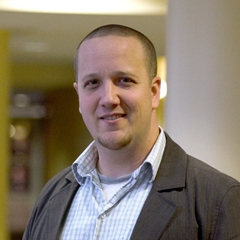
Guest contributor David Leonard
Today, we are featuring a book review from guest contributor and ESN member David Leonard. David recently completed a Ph.D. in philosophy and teaches a wide range of courses at several universities in the Twin Cities. His current project involves developing a taxonomy of the intellectual virtues, to be used in college-level philosophy courses.
Because of his own scholarship on virtue, David is especially well-suited to review the book under consideration, Excellence: The Character of God and the Pursuit of Scholarly Virtue by Andreas Köstenberger, Director of PhD Studies and senior professor of New Testament and Biblical Theology at Southeastern Baptist Theological Seminary in Wake Forest, North Carolina. Thank you, David! ~ Mike
Nearly twenty years ago, the esteemed Alvin Plantinga wrote the following words, in offering his advice to Christian philosophers:
The Christian philosopher who looks exclusively to the philosophical world at large, who thinks of himself as primarily belonging to that world, runs a two-fold risk. He may neglect an essential part of his task as a Christian philosopher; and he may find himself adopting principles and procedures that don’t comport well with his beliefs as a Christian. What is needed, once more, is autonomy and integrality. 1

Excellence: The Character of God and the Pursuit of Scholarly Virtue (Crossway, 2011) Read More…
Regent Bookstore Literary Tour
Regent Bookstore Tour: Faith, the Arts and Literature
Imagine this! Literature that could change you life, broaden your horizons, inspire you at deep levels.
Regent College houses the best bookstore in the Lower Mainland of British Columbia. Drop in and browse for inspiring spiritual and theologically driven literature, Regent College Bookstore (corner of Wesbrook Mall and University Blvd. UBC’s Gate One). It is a store full of constant surprises and delights. This tour focuses on the Christian Literati and Writers equipped to open the universe of you imagination. If you are on a search for depth and meaning, this is a place to stop, linger, reflect: a soul building exercise. Take time out to browse, ask questions, have a coffee, even meet a new friend. Bill Reimer the manager and his staff are very helpful to your education. There is also a very good chance of running into someone interesting. That happens to me all the time. Recently I met two Korean guys, one from a New York art school and one from Korea. They were exciting, curious people. The store also has some excellent music.
Below you will find some of the choice titles and authors to explore, books to rock your worldview. This is especially vital for people in the hard sciences, engineering, medicine, and business. In GFCF & GCU, we encourage students and faculty to invest in their core self while they are building their academic expertise and research skills, to search for bold sources to build inspiration and imagination. If you are suffering from the caricature that Christian literature is dull and lifeless, think again. Bookstore Manager Bill Reimer’s genius in providing this collection is second to none; he knows books; he can get you books … fast. In fact, the friendly staff at the store could become your best friends in terms of good literature. The selection is a wide-ranging, robust, life-giving service to the whole UBC community. There is also a great selection of CDs of talks by art, literary and film critics such as Alan Jacobs, Ralph Wood, Leland Ryken, and Jeremy Begbie. You will be a richer person for visiting in your spare time or to find a title of poignant importance to your studies.
~Gord Carkner
A. Literary Classics:
John Donne. The Complete English Poems.
George Herbert. The Complete English Works.
Gerard Manley Hopkins. The Major Works.
William Shaespeare. The Sonnets.
Flannery O’Connor. Collected Works.
W. H. Auden. The Age of Anxiety.
B. Contemporary Writers:
Frederich Buechner. Speak What We Feel.
Scott Cairns. Love’s Immensity.
Madeleine L’Engle. A Wrinkle in Time.
Luci Shaw. Water & Soul.
Craig Bartholomew (ed.). In the Fields of the Lord.
P.D. James. The Private Patient.
Marilynne Robinson. Gilead.
Fyodor Dostoevski. Brothers Karamazov.
Blaise Pascal. Pensees
Susan Howatch’s novels including Scandalous Risks.
Rob Alloway’s award winning Babylon Post.
Augustine. Confessions.
Harold Bloom & Jessica Zuba. American Religious Poems.
C. Faith & Culture Critics:
Andy Crouch. Culture Making: recovering our creative calling.
Nicholas Wolterstorff. Art in Action.
Alan Joacobs. Pleasures of Reading.
Hans Rookmaaker. Modern Art & the Death of a Culture.
Laurel Gasque, Art and the Christian Mind: the life and work of Hans Rookmaaker.
Lloyd Baugh. Imaging the Divine: Jesus and Christ Figures in Film.
W. David O. Taylor (ed.). For the Beauty of the Church.
Calvin Seerveld. A Christian Critique of Art & Literature.
Leland Ryken. The Christian Imagination.
Jeremy Begbie. Beholding the Glory (also Resounding Truth).
Many more…
Visual Arts: ArtWay Meditations www.artway.eu Marleen Hengelaar” <marleen@artway.eu> to receive these periodic reflections on your email.
Christians in the Visual Arts: http://civa.org/ Local consultants are Laurel Gasque & Dal Schindel. Also see Rob Des Cotes at A Rocha and his Imago Project.
Imago http://imago-arts.org/
Christian Drama: Pacific Theatre Vancovuer for regular shows http://pacifictheatre.org/

Posted in Apologetics, Faith & Culture, Seeker Corner
Oliver O’Donavan, Ethics and Political Theology

Oliver O’Donovan (born 1945) FBA FRSE, Professor of Christian Ethics and Practical Theology at the School of Divinity, New College, Edinburgh (since 2006). He has also made significant contributions to political theology, both contemporary and historical. He is one of the most reputable scholars in his field.
Previously O’Donovan was Regius Professor of Moral and Pastoral Theology and Canon of Christ Church at the University of Oxford (1982–2006). Before that he taught at Wycliffe Hall, Oxford (1972–77) and at Wycliffe College, Toronto (1977–82). His doctoral thesis on the problem of self-love in St Augustine was completed under both Henry Chadwick at Oxford and Paul Ramsey at Princeton. He is a past President of the Society for the Study of Christian Ethics.
In 2001 he delivered the Stob Lectures at Calvin Theological Seminary, in 2007 he delivered the New College Lectures at New College, University of New South Wales, and in 2008 he delivered a lecture at Princeton Theological Seminary upon receiving the Abraham Kuyper Prize for Excellence in Reformed Theology and Public Life.
O’Donovan is an ordained priest of the Church of England, and has been active in ecumenical dialogue as well as serving on the General Synod. He has been a Fellow of the British Academy since 2000 and a Fellow of the Royal Society of Edinburgh since 2009. He has held distinguished visiting lectureships in the Universities of Durham and Cambridge, the Gregorian University in Rome, McMaster University in Hamilton, Ontario, St. Patricks College, Maynooth, the University of Hong Kong, and Fuller Theological Seminary, Pasadena, California. With scholar wife Joan Lockwood O’Donovan, he has jointly authored two books on the history of Christian political thought. Read More…
Posted in Faith & Culture, Stewardship
David Bentley Hart’s Provocative Take on Naturalism
David Bentley Hart’s Concerns about Naturalism/Materialism
~Provocative Quotes taken from The Experience of God: being, consciousness, bliss. (Yale University Press, 2013)
Naturalism, alone among all considered philosophical attempts to describe the shape of reality, is radically insufficient in its explanatory range. The one thing of which it can give no account, and which its most fundamental principles make it entirely impossible to explain at all, is nature’s very existence. For existence is most definitely not a natural phenomenon; it is logically prior to any physical cause whatsoever…. In fact, it is impossible to say how, in terms naturalism allows, nature could exist at all. (18)
The God described by the new atheists definitely does not exist. (23)
I think it is fair to say that a majority of academic philosophers these days tends toward either a strict or qualified materialist or physicalist view of reality (though many might not use those terms), and that such a position rests upon a particularly sound rational foundation. But, in fact, materialism is the most impoverished in its explanatory range, and among the most willful and (for want of a better word) magical in its logic, even if it has been the fashion for a couple centuries or more. (48) See also Lawrence Bonjour, “Against Materialism” in Robert C. Coons and George Bealer, eds., The Waning of Materialsm (Oxford: OUP , 2010), pp.3-23.
Should Methodology ever become Ontology? An admirably severe discipline of interpretive and theoretical restraint [modern empirical science] has been transformed into its perfect and irrepressibly wanton opposite: what began as a principled refusal of metaphysical speculation, for the sake of specific empirical inquiries, has now been mistaken for a comprehensive knowledge of the metaphysical shape of reality; the art of humble questioning has been mistaken for the sure possession of ultimate conclusions. This makes a mockery of real science. (71)
The sciences concern certain facts as organized by certain theories, and certain theories as constrained by certain facts; they accumulate evidence and enucleate hypotheses within very strictly limited paradigms; but they do not provide proofs of where reality begins or ends, or for that matter what the dimensions of truth are. They cannot even establish their own working premises—the real existence of the phenomenal word, the power of the human intellect accurately to reflect that reality, the perfect lawfulness of nature, its interpretability, its mathematical regularity, and so forth—and should not seek to do so, but should confine themselves to the truths to which their method gives them access. They should also recognize what the boundaries of the scientific rescript are. There are, in fact, truths of reason that are far surer than even the most amply supported findings of empirical science. (71-2) Read More…
Posted in Apologetics, Faith & Culture, Science Reflections, Seeker Corner
Charles Taylor on Secularity & Immanent Frame
Charles Taylor Articulates the Immanent Frame of the Secular
~Dr. Gordon E. Carkner~
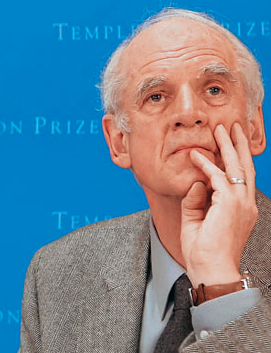
We are offered a particularly insightful analysis of our current cultural ethos by McGill Philosophy Professor Charles Taylor. It arises in his most recent prize-winning tome A Secular Age. (2007). Richard Rorty spoke of Taylor as one the top twelve philosophers of our day. He captures the way in which we have located ourselves in the late modern world and the picture that has taken our minds captive: he calls it the immanent frame. This house of the mind and imagination constitutes a unique social imaginary (implicit understanding of the space in which we live) in human history. Our focus here will be to exposit the key insights of Chapter 15 of A Secular Age. In this critical analysis, he shows how religion has been philosophically and culturally marginalized in Western culture (even while it is in resurgence). Taylor gives us tough insights and leads us to think freshly and circumspectly about how we have arrived in this cultural space.
The core theme of this landmark book is (510) to study the fate of religious faith in the strong sense in the West, meaning: a. belief in a transcendent reality, and b. the connected aspiration of personal transformation, which goes beyond ordinary human flourishing. He is deconstructing or calling into question the subtraction story or Western Master Narrative (one deeply embedded in our late modern consciousness), where science replaces religion after Christendom. Within this perspective, the growth of science entails the death of God and the recession of religion. Religion is taken to be replaced by science. Is this hermeneutically valid?, queries Taylor. When did science become equivalent to secularism and why? This is the crux of the investigation, and of a major confusion.
Ultimately, Taylor wants to explore with us the plausibility of the life-nurturing, transcendent dimensions of human culture. He does not believe that all citizens of late modernity need to deny the possibility of the transcendent within this immanent frame and live within a horizontal dimension only. From his perspective, the story of the rise of modern social spaces doesn’t need to be given an anti-religious spin (579). The actual reality of Western culture is closer to the truth that “a whole gamut of positions, from the most militant atheism to the most orthodox traditional theisms, passing through every possible position on the way, are represented and defended somewhere in our society.” (556) They are defended in various non-neutral contexts, institutions and communities. This creates for citizens of late modernity the sense of being cross-pressured by the different views (the plurality of positions) they encounter. The dialogue and debate of these perceptions is still very robust, with endless potential options to find meaning (the Nova Effect). Both belief and unbelief in God co-exist within society (secularity 3).
What does Taylor mean by the term immanent frame? The buffered identity (as opposed to the porous pre-modern) self is a key part of such a mental frame. It operates within a disenchanted world where supernatural beings or forces with teleological goals or intentions are deemed close to impossible (539). Final causes are eliminated from the picture. With this immanent frame, there is a loss of a cosmic order; everything important is this-worldly, explicable on its own terms; it fits within the time-space-energy-matter dimensions. Social and political orders are constructed by humans solely for mutual benefit, not to please a divine entity. Society is made up of individuals (the normative element). Each human is charged with finding her or his own way of being human (Nova Effect), their own individual spiritual path. Everyone has also become an individual measure of the good (auto-nomos). Read More…
Posted in Apologetics, Faith & Culture, Public Lectures, Science Reflections | Tags: Charles Taylor
Malcolm Guite, Chaplain-Poet-Lecturer
A Sonnet for Trinity Sunday by Malcolm Guite, Cambridge University
In the Beginning, not in time or space,
But in the quick before both space and time,
In Life, in Love, in co-inherent Grace,
In three in one and one in three, in rhyme,
In music, in the whole creation story,
In His own image, His imagination,
The Triune Poet makes us for His glory,
And makes us each the other’s inspiration.
He calls us out of darkness, chaos, chance,
To improvise a music of our own,
To sing the chord that calls us to the dance,
Three notes resounding from a single tone,
To sing the End in whom we all begin;
Our God beyond, beside us and within.
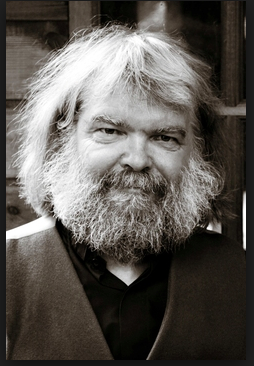
Owen Gingerich Harvard Astronomer-Historian of Science
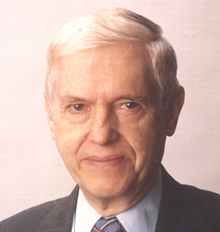
Owen Jay Gingerich (born 1930) is a former Research Professor of Astronomy and of the History of Science at Harvard University, and a senior astronomer emeritus at the Smithsonian Astrophysical Observatory. In addition to his research and teaching, he has written many books on the history of astronomy.
Gingerich is also a member of the American Academy of Arts and Sciences, the American Philosophical Society, and the International Academy of the History of Science. He has been active in the American Scientific Affiliation, a society of evangelical scientists, and is on the Templeton Foundation’s Board of Trustees.
Career and Contributions

Due largely to Gingerich’s work, De revolutionibus (here the cover of the 2nd edition of 1566, Basel) has been researched and cataloged better than any first-edition historical text except for the original Gutenberg Bible. Read More…
Posted in Faith & Culture, Science Reflections

