Foundations of Hope
Gordon E. Carkner, PhD
I am drawing from Joseph Pieper, Hope & History, 1967/English version 1969, assisted by James K. A. Smith of Calvin University in The Nicene Option, 134-5. Pieper explores the nature of hope—especially fundamental and existential hope—in relation to human history, rejecting purely secular or intramundane answers while grounding hope in Christian eschatology. Below is a summary of his main points with the key Scripture being Romans 5:1-5. Hope for him is a theological virtue that operates within a narrative of grace—humans are flawed creatures who depend on God and who are designed to have communion with God. Dialogue is open. Fundamental hope for Pieper is that deep, existential orientation of the human person towards ultimate fulfilment—one of the deepest longings of the human heart. Hope is woven into the very fabric of our human existence. People exist daily with a view to a future fulfilment that transcends their present situation. This idea of fulfilment fills us with anticipation but we also need humility. We realize that life and its unfolding is a gift/call, not merely an achievement or entitlement. Therefore, gratitude should be our natural response. We need to invest true hope, not fantasy, into this generation (18-34 year olds). Narcissists and nihilists sadly try to exploit them and destroy their hope, to divide people and destroy community, promote a crisis of identity amidst their fragile, unformed morality.
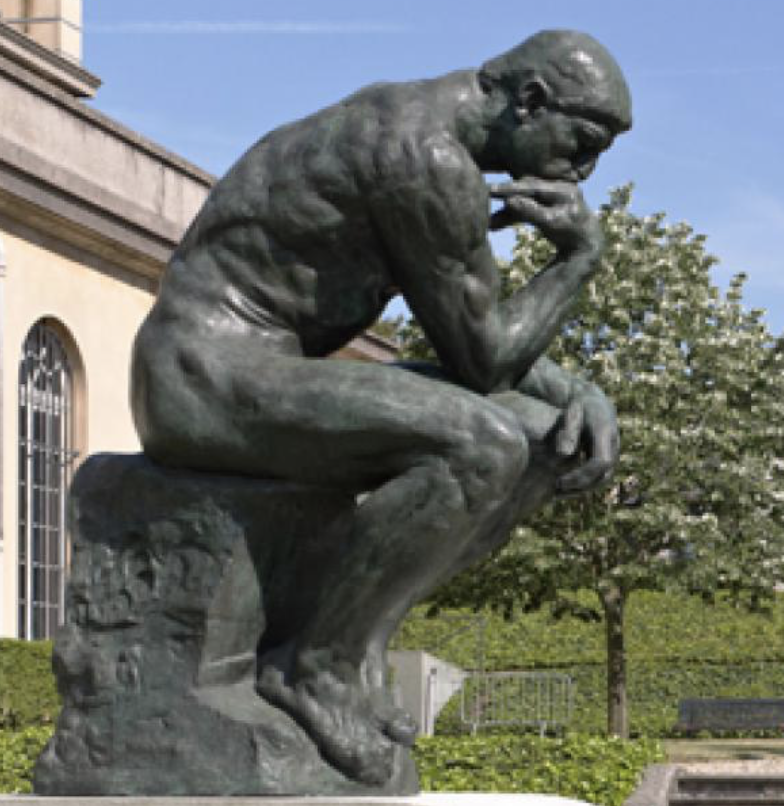
First, there must be a person who hopes. The one who hopes must possess a fundamental trust and commitment. We can rightly ask: What is the psychological state that disposes someone to be hopeful? It cannot be mere sentiment or emotion. Ages 0-5 is the key period of life to build this fundamental trust and security into children. It is, however, good news that hope can be repaired and restored later in life through redemptive means (divine and human), especially through the healing power of Christ within a community of faith. This is not without its complexity. Without a sense of hope that things will improve, we move into a dark space psychologically and spiritually.
2. There must also be an object of hope which refers to a good and desirable future outcome to be hoped for. Both religious and secular people know this in their bones. This could be eternity with God (in the presence of purest love and communion). It can also be the dynamics of life in the kingdom right now where we can appeal to God to heal, give wisdom or direction for life, give us gifts to build the church and bless society, bring justice to bear, or build us into virtuous persons of character (holiness/saintliness). The blessings and depths of eternity (kairos) can be brought into time (chronos). We can expect concrete results (Romans 15:13) as we become intense rays of hope in the world. The right object of hope energizes us and makes us fruitful and joyful in life.
3. There must be a conscious mental act of hope, versus acts done out of hope as per feeding the poor (Romans 5:1-5). Hope is something we engage with our mind and intention/our will. Our ‘hearts’ must be in it. It is a fundamental, decisive stance towards the world, other people, and God/ultimate reality. To hope is to face good and bad reality head on with depths of vision and wisdom from God.
4. Most significantly for Pieper, there must be a substantial ground of hope. This can lie inside and/or outside the person who hopes. It is both existential and structural/objective, immanent and transcendent. This is to be contrasted with ‘wishful thinking’ or a utopian dream (a dangerous form of hope that can lead eventually to cynicism and disenchantment: see point 6). Hope is grounded in particularity: the revelation of God’s faithfulness and the hope of his continued promissory interest in us—especially in the covenants, the incarnation, the cross and resurrection, the coming of the Holy Spirit at Pentecost, but also the second coming. Covenant promise and fulfilment is key to the ground of hope for the Jew, Gentile, and Christian alike as articulated throughout the biblical narrative. This is key to God’s credibility as a promise-keeper. Incarnation is a key part of this grounding connection: God is revealed in Jesus Christ/Jesus of Nazareth, the divine Word made flesh. J. K. A. Smith makes much of the Nicene Creed logic of the incarnation. We also see the importance of God’s faithfulness to his creation, his identification with the struggles of creation, his power and providence to bring about its restoration (Romans 8). This hope reveals God’s suffering love for the whole world (Loren Wilkinson, Circles and the Cross). The revelation must be believed (that is, acted upon in trust and confidence—existentially). We must put our lives into synchrony/alignment with it. Hope is grounded in an active faith which has substance, depth, and coherence. Indeed, it is actually a serious kind of quest. The uncontainable, incarnate God (Jeremy Begbie, Abundantly More), who is goodness and love itself, is ultimately our only hope. The character of the ground of hope is very important to Pieper; it must include transcendence. The right ground contributes to our confidence/assurance: a true Messiah, suffering servant who brings justice for the poor and oppressed (Matthew 5-7, The Sermon on the Mount). This goes against the grain of cynicism, dark motives, and despair that some leaders and influencers promote. God encounter (epiphany) and formation is definitely possible within our human finitude and our moral-spiritual brokenness.

5. Fulfillment is an integral part of hope. We want our hopes to be, one day, no longer mere hopes but tangible realities. We want help to change us, free us from our addictions and perhaps our challenging circumstances right now. But here there is an important nuance which the mature believer grasps: there is always a contingency associated with hope, a confidence without a final guarantee. God is not in a transactional relationship with us—hope is rooted in his economy of grace. Micah 7:7 shows hope as an active, dynamic anchor: symbolized by the statement to “Watch in hope.” We see this in culture today—through graffiti, music, art, movies—as people existentially cry out to the ‘unknown god’ for change and hope, for a more just society and a better life, deeper meaning and purpose. Remember the Berlin Wall story of hoping beyond visible hope for freedom from Soviet oppression: Both young and old people held out hope and change came. Pieper argues that true hope breaks out of the bounds of history and this world—it is both transcendent (a vertical connection to eternity) and eschatological (with a future trajectory of final perfection of culture in God’s full presence). Christ’s resurrection and the promise of a redemptive new age, within the new covenant, offers a realistic hope that things will end well for creation, humanity, and the individual despite sin, suffering, and death. It is essential that hope confronts and answers the hard problems of death, injustice, and human finitude:
“We hope to find ourselves dancing in the kingdom of love—in its redeemed wild spaces. The hope for the final dance, however, is not utopian; it is eschatological, and we are called to both occasion and testify to its inbreaking—its ad-venire—in the dances we find ourselves in. We are called to be subjects of responsibility and love, dancing agents of the kingdom who are gifted and called to be image bearers of the God who is love.” (James K A Smith: The Nicene Option.234)
6. An Immanent Cultural Shift in the Concept of Hope: During the eighteenth and nineteenth centuries (with powerful and devastating impact on the twentieth and twenty-first centuries), there was a major shift in the West towards immanent fulfilment of hope within history as an inevitability. Examples include Marxism/dialectical materialism, the Myth of Progress, Technology and the Market/Libertarianism, Rationality of Humanity, Fascism, Richard Rorty’s Liberal Democratic Utopia of equity and fraternity, Putin’s ‘Make Russia Great Again’, the AI Singularity in Silicon Valley. All of these forms of hope remain dangerous as they are ungrounded in reality. These ideologies are based on a misdirected kind of faith— in a coming earthly paradise, what one might also call hopium. These mythologies have led us into much violence, damage especially to the vulnerable whom Jesus loved and on whom he focused his ministry. Millions died while the ideologues tried to force us into their human-centered kingdom molds. Will Artificial Intelligence force us in its ‘machine’ image? In his book Hope and History, Pieper interrogates history as the ground of hope (progress towards a perfect society). Secular philosophies of history (progressive, utopian, or Marxist) ignore death—they are essentially in a state of death denial (Ernest Becker). Therefore, they cancel themselves as a genuine and productive object of human hope. Purely immanent hope leads inevitably to despair when history disappoints us, as per our ideological catastrophes of the past one hundred years (Chantal Delsol, Icarus Fallen). History actually involves human freedom, decision, responsibility, uniqueness, and the unpredictable; the critical thinking and complexity of biblical prophecy aligns better with these phenomena. The prophet sees the deeper, darker motives in our claims to free people towards a coming utopia—often a dystopia.
7. Christian faith is one produced by and sustained amidst suffering, which produces perseverance, character, and hope. 1 Peter 1:3-5 speaks of a living hope. Hope steers between despair (denying any ultimate good) and presumption (claiming the good as already achievable by human effort alone). It is realistic about the brokenness of history, the fallible human condition, and yet remains open to tremendous transcendent fulfilment and an epiphanic encounter with agape love (your kingdom come, your will be done on earth as it is in heaven). Scripture teaches that Christ is able to liberate us for true freedom and responsibility both now and eschatologically, addressing many modern crises of meaning and purpose among young people. Characteristics of kingdom practices for Christians includes: healing, peace-making, justice, presence, deliverance, and gratitude. In conclusion, Romans 12:12 sets it up: “Rejoice in hope, be patient in suffering, be constant in prayer.” Rev. Dr. Yohanna Katanacho a theologian from Nazareth, Israel teaches this kind of hope in his concept of Orthopathos:
“The Holy Spirit carries our sorrows into the presence of God and imparts a unity with Christ through which we experience both the fellowship of his sufferings and the power of his resurrection. ‘Suffering rightly’ is defined as suffering in communion with God and his people for the sake of his kingdom. Love is the motive behind justice, and peace is its fruit.” (Rev. Dr. Yohanna Katanacho, GFCF lecture at UBC)


Leave a comment