Posted by: gcarkner | May 21, 2013

Work & Identity: Freedom in Context

Reflections on Calling, Work & Identity

Two priceless quotes from Eugene Peterson’s Practice Resurrection put in perspective our hard work as students and faculty, our deliberations, research, debates, writing, teaching and study. They give life to and empower what we do and how we do it. They offer a qualitative difference.

Work is first of all what God does, not what we do. Genesis 1-2 is our entrance story of God in his revelation to us. Most significantly, it is a story of God at work, working the very same environment in which we do our work. The first thing we learn about God is that God works. God goes to work making the world and all that is in it (Genesis 1) and then invites us into his work, giving us work to do that is commensurate with his work (Genesis 2)…All our work is preceded by his work. All our work takes place in God’s workplace. All our work is intended to be a participation in God’s work…. It is the nature of work to provide material form for the invisibilities of grace.” (Practice Resurrection, pp. 99-101) Read More…

Posted by: gcarkner | May 21, 2013

After Atheism What?

After Atheism What?

 How do we bookmark our place in our ‘secular age’? This is a difficult and complex challenge indeed. Charles Taylor writes (A Secular Age, especially Chapter 15 “The Immanent Frame”) that we must find our way in the midst of modernity with its various humanisms and antihumanisms, its conflicting narratives, mythologies and visions, even its anti-intellectualisms, political extremes and closed minds. There are many things (historical, cultural and philosophical) that have called into question the hard culture of atheism in the last hundred years. But there is no going back to a golden age. Is it possible to move towards rediscovery of faith after Nietzsche, to recover meaning and belief once again in an age of unbelief, to find God again after the death of God? Or are we lost in a sea of doubt, alienation, quoting the works of Masters of Suspicion, and yet bragging about our human technological prowess and our trips to the moon?

What does mature adulthood look like philosophically in late modernity? Where does courage lie at the edge of the abyss, at the end of man? Can we find such a future after Camus and his declaration of the absurdity of hoping for meaning in a universe that is deaf to our deepest human aspirations for happiness and a meaningful life? Is there a possibility of something more than self-authorization: the creation of our own needed meaning and values in a meaningless cosmos? After Schopenhauer, Marx and Freud, is it still possible to link with something greater than ourselves, to find what William James called ‘the more’? These are some of the tough questions raised and examined in a CBC Ideas series called After Atheism produced by the very thoughtful David Cayley. We found some real insight in this high dialogue, especially in the interviews with Richard Kearney, William Cavanaugh, Roger Lundin and to some extent John Caputo. There seems to be a tough, even disturbing, hermeneutical examination needed as we reflect on our journey with modernity. Read More…

Posted by: gcarkner | May 3, 2013

Must We Be Political Atheists?

Faith, Economics, Philosophy and the Political Theatre

A couple of weeks ago, someone asked me where is there hope for intelligent, rational, good faith political engagement by people of sincere religious faith. In the context of late modern hyper-pluralism, is it impossible to access a discourse that calls on the full wisdom of the Christian heritage while engaging current issues of public debate, the common good and the polis? So I went to the Regent College Bookstore and scanned the shelves. To my delight, I discovered a lively array of deep and scholarly work on the topic. It also sparked my memory of the classics that I have benefitted from in my intellectual and spiritual journey, the giants who help to carry the discourse forward.

It seems that it is not necessary to be an atheist in order to be relevant to current political, social and economic challenges: justice, rights, globalization, poverty, identity, human suffering, global warming, liberty for the oppressed, moral vision, democracy, violence and terrorism, economic justice, crippling debt, recovery of civility. Below you will find sources for brilliant analysis, critique, challenging new metaphors and political vision, but above all hope for a better world and a belief that we humans can do better by each other. These scholars and writers refuse both cynicism and complacency; they assist in the robust quest for meaningful dialogue, debate and action. Read More…
Posted by: gcarkner | April 28, 2013

Weighty Scholarship: N.T. Wright

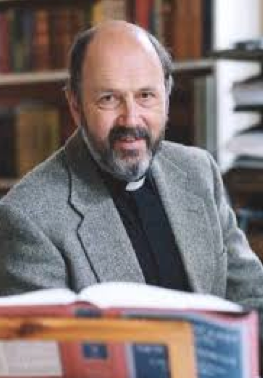
N.T. WrightNicholas Thomas Wright (born 1 December 1948) is an Anglican Bishop and a leading New Testament scholar. He is published as N. T. Wright when writing academic work, or Tom Wright when writing for a more popular readership (although this may also vary dependent upon publisher) Wright was the Bishop of Durham in the Church of England from 2003 until his retirement in 2010. He is currently Research Professor of New Testament and Early Christianity at St Mary’s CollegeUniversity of St Andrews in Scotland. We have often referred to him in this blog. We find his work quite valuable and relevant to today’s late modern cultural mood and cognizant of its roots. Wright remains one of the leading thinkers of our day, a highly integrated and sophisticated theologian, biblical scholar, while at the same time culturally sharp and good humoured. He is also quite interested in the dialogue between science and the Christian faith as per the video below. He has been involved in the production of some high quality DVDs on Evil and the Resurrection. He is publishing a new book on Paul this fall 2013.

Among modern New Testament scholars, Wright is an important representative of scholarly conservative Christian views compared to more liberal Christians such as his friend Marcus Borg, but he is associated with the Open Evangelical position and the New Perspective on Paul. He has, however, promoted more traditional views about Jesus’ bodily resurrection and second coming.

Wright was born in Morpeth, Northumberland. In a 2003 interview he said that he could never remember a time when he was not aware of the presence and love of God and recalled an occasion when he was four or five when “sitting by myself at Morpeth and being completely overcome, coming to tears, by the fact that God loved me so much he died for me. Everything that has happened to me since has produced wave upon wave of the same.”

https://www.youtube.com/watch?v=ukyNU51OcnA : After You Believe: why Christian Character Matters

Early Life and Credentials

In addition to his Doctor of Divinity degree from Oxford University he has also been awarded several honorary doctoral degrees, including from Durham University in July 2007, the John Leland Center for Theological Studies in April 2008,  the University of St Andrews in 2009 and Heythrop CollegeUniversity of London, in 2010. Read More…

Posted by: gcarkner | April 27, 2013

Navigating Critical Junctures

Critical Junctures in Navigating University as a Postgraduate Student

Screen shot 2013-04-27 at 7.33.39 PM

The spiritual sojourn of the aspiring scholar is, like all spiritual sojourns, unique.  Knowing the spiritual geography and topography of the road ahead–the peaks and valleys, the steep inclines, the potential pitfalls, the rocky and dry places, the dead ends, and the oases–can mean the difference between flourishing and wilting while en route.

Growth in the life of the Spirit takes patience, attention, deliberateness and discipline.  In other words, it takes practice.  To this end, we have provided a road-map of the critical junctures that grad students and young faculty will traverse as they follow Christ in the university. The map identifies the specific issues in spiritual formation which generally accompany those junctures and offers some suggested spiritual disciplines which can help along your way.  We have embedded in the chart links to resources that might prove helpful. Don’t miss this important resource.

Wisdom, Grace and Peace.

See the helpful chart produced by Bob Trube and shared with us by NYU grad support person David M. Williams:  http://resurrectingraleigh.com/spirituality-for-academics

Salut, Gordon @ Graduate Christian Union, UBC


Posted by: gcarkner | April 19, 2013

Transcendence and the Good…4

Tanscendence and the Good: Incarnation in the Church

There is a second aspect of incarnation, beyond Jesus’ particular bodily presence on earth; it is God the Son’s presence in his church. The church offers an historical and cultural presence, performance and embodiment of God’s goodness, socially locating divine goodness in a human community and narrative. Schwöbel (1992, p. 76) notes that divine goodness, a communion of love in itself, “finds its social form in the community of believers as the reconstituted form of life of created and redeemed sociality.”

D.W. Hardy (2001, p. 75) underlines that the task of the church is to face into “the irreducible density of the goodness that is God in human society” and elsewhere he (Hardy, 1996, p. 202) identifies “the existence of social being in humanity (the social transcendental), and the movement of social being through the social dynamic, as due to the presence of divine sociality and hence the trinitarian presence of God.”

Thereby, one’s own self-constitution is seen to involve the flourishing of the Other, the honouring of the Other, as well as receiving from the Other in mutuality, in a communion of love. The Other changes in significance: from a categorical threat (a potential dominator in the world of will to power and disciplinary practices) in Foucault’s ethics, to an esteemed opportunity of mutuality. This is a paradigm shift of relationship and identity (Romans 8). Read More…

Posted by: gcarkner | April 19, 2013

Transcendence & the Good…3

Transcendence & the Human Good: the Incarnation

Transcendent divine goodness is present and accessible in the human sphere through the incarnation of Jesus Christ. Transcendence does not therefore mean aloofness and indifference, or a burdensome or unreachable standard of perfection, but rather a creative, fruitful engagement with the world, society and its institutions. Transcendent divine goodness takes on an historical and christological determination in order to impact the human moral world.

By reading the moral life through the life of Christ, one cannot espouse a minimalist and juridical conception of the moral life that merely acts on what is permitted and forbidden. We find a moral life that makes sense in the light of a Christ who is full of goodness, who incarnates goodness in human flesh, and articulates it historically and culturally with integrity. D. S. Long (2001) appeals to the moral normativity of the life of Jesus.

“In Christian theology, Jesus reveals to us not only who God is but also what it means to be truly human. This true humanity is not something we achieve on our own; it comes to us as a gift … The reception of this gift contains an ineliminable element of mystery that will always require faith. Jesus in his life, teaching, death and resurrection and ongoing presence in the church and through the Holy Spirit … orders us towards God. He directs our passions and desires towards that which can finally fulfil them and bring us happiness … [and] reveal to us what it means to be human.” (pp. 106-7)

This immanence offers the option of life of the self, lived not autonomously but in cooperation with divine wisdom and goodness. In the incarnation of Jesus Christ, goodness is made accessible, personal and real; it is not left as an abstract unattainable ideal, or a wholly other reality alone; it is transcendent goodness expressed in immanent reality. Read More…

Posted by: gcarkner | April 15, 2013

Transcendence and the Good…2

Further Pressing Notes on Transcendence and the Human Good

Late modernity’s picture of a lone will choosing between good and evil, or embracing both in an aesthetic move of conscious moral self-mutilation constitutes a tragic distraction from a move into the goodness-which-is-God, being captivated and transformed by transcendent, epiphanic goodness. D. Stephen Long’s focus is to build one’s life-orientation, one’s identity, one’s lifestyle around this goodness. He suggests that it ought not to be reduced to an achievement of the human will alone. Goodness-making is not a faculty within the self that can be conjured. It requires something outside the self, calling us into a higher level of being.

Long writes that “Human freedom is not about the capacity to choose between good and evil. Human freedom occurs when our desires are so turned toward God and the good that no choice is necessary ….  Jesus shows us that such a life is possible in our humanity—not against it.” (D.S. Long, The Goodness of God. 2001, p. 46)

Moral transformation in this situation comes through a commitment to the good, not through seeking a controlling knowledge of good and evil, nor through creative strategies for self-control or manipulation of precarious power relations and truth games however important. Human creatures as self-legislating beings do not possess the moral resources within to enact true goodness. Acts of the will do not automatically constitute acts of goodness; it is discovered not invented. Read More…

Posted by: gcarkner | April 15, 2013

Transcendence and the Good

Transcendent Goodness & the Human  Potential for the Good

Following Charles Taylor’s lead, there must be a source of empowerment for living in a positive, inspiring relationship to the good, for the practices of the good, for mediating transcendent goodness in everyday life. Otherwise, it remains a fantasy. If one pursues it, how can transcendent goodness avoid the charge of unattainable ideal and thus discouragement (Nietzsche)? What is human possibility for mediating a good that is transcendent of self (i.e. not self-fabricated)? This argument follows the series on Quality of the Will.

With these questions in mind, it is crucial knowledge that the Holy Spirit is a key inspirational and transformational factor in human goodness, human actualization and mediation of divine goodness. To use Taylor’s language, this is the constitutive good. D. S. Long (The Goodness of God, 2001) is optimistic about the human quest for the good because of this. He believes that with the Holy Spirit, moral self-constitution can be intimately and fruitfully related to the goodness of God, and that this will rejuvenate ethics and moral self-constitution to a significant degree. Moral relativism leading to moral cynicism is not the only alternative for thinking people. The Holy Spirit offers a reconstitution of both goodness and freedom for the moral self. Dostoyevsky spoke of this in his idea of the circulation of grace.

The Holy Spirit infuses a goodness into us that makes us better than we know we are by ourselves. This better is what theologians mean by grace. People find themselves caught up in a journey that results in the cultivation of gifts and beatitudes they did not know were possible. They discover that this journey was possible only through friendship … The mission of the Holy Spirit is to move us towards the charity that defines the relationship between the Father and the Son, a charity so full that it is thoroughly one and yet cannot be contained within a single origin or between an original and a copy, but always, eternally, exceeds that relationship into another. The Holy Spirit is that relationship. (D. Stephen Long, The Goodness of God. 2001, pp. 302-3)

Divine goodness is made available as a gift by means of the Holy Spirit for the transformation of the self; the Holy Spirit offers relationship and empowerment towards both doing and promoting the good. Amazingly, humans can become entrepreneurs of divine goodness by this very means. Here lies incredible meaning and purpose for life and flourishing. Read More…

Posted by: gcarkner | April 5, 2013

Marilynne Robinson Impressive Author

Marilynne Robinson Award Winning Author

Marilynne Robinson

Robinson (née Summers) was born and grew up in Sandpoint, Idaho, and did her undergraduate work at Pembroke College, the former women’s college at Brown University, receiving her B.A.magna cum laude in 1966, where she was elected to Phi Beta Kappa. She received her Ph.D. in English from the University of Washington in 1977.

Robinson has written three highly acclaimed novels: Housekeeping (1980), Gilead (2004) and Home (2008). Housekeeping was a finalist for the 1982 Pulitzer Prize for Fiction (US), Gilead was awarded the 2005 Pulitzer, and Home received the 2009Orange Prize for Fiction (UK). Home is a companion to Gilead and focuses on the Boughton family during the same time period.

She is also the author of non-fiction works including Mother Country: Britain, the Welfare State, and Nuclear Pollution (1989),The Death of Adam: Essays on Modern Thought (1998), Absence of Mind: The Dispelling of Inwardness from the Modern Myth of the Self (2010), and When I Was a Child I Read Books: Essays (2012). She has written articles, essays and reviews forHarper’sThe Paris Review and The New York Times Book Review.

She has been writer-in-residence or visiting professor at many universities, including the University of KentAmherst, and theUniversity of Massachusetts Amherst‘ MFA Program for Poets and Writers. In 2009, she held a Dwight H. Terry Lectureship atYale University, giving a series of talks titled Absence of Mind: The Dispelling of Inwardness from the Modern Myth of the Self. On April 19, 2010, she was elected a fellow of the American Academy of Arts and Sciences. In May 2011 Robinson delivered Oxford University‘s annual Esmond Harmsworth Lecture in American Arts and Letters at the university’s Rothermere American Institute. She currently teaches at the Iowa Writers’ Workshop and lives in Iowa City. She was the keynote speaker for the Workshop’s 75th anniversary celebration in June 2011. On February 18, 2013, she was the speaker at the Easter Convocation of the University of the South, Sewanee, Tennessee and was awarded the degree of Doctor of Literature, honoris causa. Read More…

« Newer Posts - Older Posts »

Categories