Posted by: gcarkner | November 28, 2012

Rising Academic Star in Humanities

Jens Zimmermann

Canada Research Chair in
Interpretation, Religion and Culture, TWU

Screen shot 2012-12-07 at 7.42.05 AM

2013 UBC Graduate & Faculty Christian Forum Visiting Scholar [ubcgfcf.com]

A Common Humanity: The One True Path?

Newest Publications: Humanism & Religion: a call for the renewal of Western culture. Oxford University Press, 2012; and Incarnational Humanism: a philosophy of culture for the church in the world. IVP Academic, 2012

The philosophical climate of our times is encouraging a return to religion as the ethical and spiritual foundation of human culture. And the return of religion is coinciding with an emerging interest in the idea of a common humanity.

This renewed public recognition of religion as an essential part of our humanity and socio-political activity promises a new direction and purpose for the humanities. It also, however, poses problems because, along with religion, comes the spectre of fundamentalism and religiously motivated violence. How can we reconcile religion’s universal claims on human existence with the need for harmonious co-existence? Read More…

Posted by: gcarkner | November 25, 2012

Quality of the Will…10

Moral Sources: the Vital Constitutive Good

One vital dimension of the quality of the will in Taylor’s moral ontology is the constitutive good (Taylor, 1989, pp. 91-107). I had to grapple with this concept for years before I grasped it. This breakthrough insight has powerful cultural  impact. The moral framework operates at two levels. At one level, there are the general life goods, those that are valued by the individual self. The life goods are things that make life worth living or the virtues they advocate: such as reason, piety, courage, freedom, moderation, respect, all features of human life that possess intrinsic worth. At another, motivational level, Taylor reveals the important category of the constitutive good; this good he also calls the moral source. With this emphasis, Taylor wants to recover the category of moral motivation for the self.  Read More…

Posted by: gcarkner | November 23, 2012

Regent Bookstore Tour 2…Literature

Regent Bookstore Tour #2              Faith, the Arts and Literature
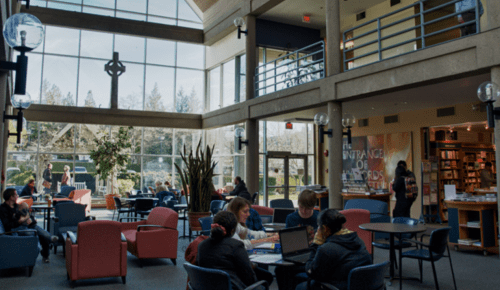
Screen Shot 2015-04-06 at 4.33.09 AM

Imagine this! Literature that could change you life, broaden your horizons. Again we return to the best bookstore in the Lower Mainland for inspiring spiritual and theologically driven literature, Regent College Bookstore (corner of Wesbrook Mall and University Blvd. UBC’s Gate One). This tour focuses on the Christian Literati and Writers equipped to open the universe of you imagination. If you are on a search for depth and meaning, this is a place to stop, linger, reflect: a soul building exercise. Take time out to browse, ask questions, have a coffee. There is also a very good chance of running into someone interesting. That happens to me all the time. Recently I met two Korean guys, one from a New York art school and one from Korea. They were exciting, curious people.

Below you will find some of the choice titles and authors to explore, books to rock your worldview. This is especially vital for people in the hard sciences, engineering, medicine, and business. In GFCF & GCU, we encourage students and faculty to invest in their core self while they are building their academic expertise and research skills, to search for bold sources to build inspiration and imagination. If you are suffering from the caricature that Christian literature is dull and lifeless, think again. Bookstore Manager Bill Reimer’s genius in providing this collection is second to none; he knows books; he can get you books … fast. In fact, the friendly staff at the store could become your best friends in terms of good literature. The selection is a wide ranging, robust, life-giving service to the whole UBC community.  There is also a great selection of CDs of talks by art, literary and film critics such as Alan Jacobs, Ralph Wood, Leland Ryken,  and Jeremy Begbie. You will be a poorer person for not visiting. Read More…
Posted by: gcarkner | November 21, 2012

Science & Theism in Concord?

Concord Between Science & Theism (Imago Dei)

Below are some summary thoughts by Alvin Plantinga (my summary notes) from his book Where the Conflict Really Lies., Chapter 9. “Deep Concord”. We encourage you to read the whole chapter, in fact the whole book to get the full impact of this brilliant philosopher. Specifically he is using an argument from coherence in this chapter.

Thesis: God created both us and our world in such a way that there is a certain fit or match between the world and our cognitive faculties: adequatio intellectus ad rem (the adequation of the intellect to reality). For science to be successful, there must be a match between our cognitive faculties and the world. These are his main points. Read More…

Posted by: gcarkner | November 17, 2012

Language as Speech Act

Watch Your Language!

We have had two posts on language in the past month. This one is about God Talk (D. Stephen Long), or God Speaking. This usage of language goes beyond description to engagement. Language is an important means of God’s prophetic communication with humans. Word was used in creation as speech act (John Searle, Wittgenstein). This is more like parole than langue. There is something quite significant about the impact of a Creator in dialogue with his creature, a significance we have yet to fathom. Jesus is claimed by Christians as God’s Word made flesh, dwelling among us. Here speech is embodied, full blooded, not flat and lifeless. It is a sign, communicative action (Kevin Vanhoozer, Jurgen Habermas), more than the mere letter. It is poetic, pedagogical, testimony, a guide to life, vitality. It rocks our world! Read More…

Posted by: gcarkner | November 16, 2012

Quality of the Will…9 The Hypergood

The Hypergood: a Moral Culture Driver

See the newly released book by Gordon E. Carkner for a fuller development of the following important ideas:  The Great Escape from Nihilism: rediscovering our passion in late modernity

https://ubcgcu.org/new-book-release-the-great-escape/

We continue our resistance (agonisme) to the idea that freedom can be reduced to a mere matter of the will alone: naked individual choice. According to philosopher Charles Taylor, the potential resolution of this dilemma of the plurality of goods, this tension between goods, comes by way of a highest good among the strongly-valued goods: within the moral framework, this is called the ‘hypergood’ (1989, pp. 63-73, 100-102, 104-106). “Let me call higher-order goods of this kind ‘hypergoods’, i.e. goods which are incomparably more important than the others, but provide the standpoint from which these [other goods] must be weighed, judged, decided about.” (1989, p. 63) The hypergood has hierarchical priority and dominance; it has a significant shaping power within the moral framework. It is the good that the individual self is most conscious of, is most passionate about, a good that rests at the core of one’s identity. Read More…

Posted by: gcarkner | November 13, 2012

Inquiry Concerning Human Self-understanding

Who Are We Late Moderns?

The following is an inquest into the possibilities for dialogue among us moderns, people with divergent philosophical positions and postures. Who indeed are we moderns? Where are our roots? What do we have to say to each other? How can we live and work together in a fruitful way amidst intense plurality and difference? In his 2007 award winnng tome, A Secular Age, top Canadian philosopher Charles Taylor offers a deep reflection on the history and current state of modernity in the West. He documents a major change in the social imaginary, the way things seem or make sense to us. This change is a shift in ethos, involving people’s basic sensibilities, their assumptions and perceptions about the way things really are. Taylor notes that human flourishing has become the main focus of life in a period of unbelief in the transcendent or divine. We have moved from a transcendent to an immanent worldview over the past five centuries, from a world picture where God was the ultimate good for the majority of citizens, to one where human flourishing in itself is the ultimate good and prime goal of human existence. Read More…

Posted by: gcarkner | November 13, 2012

Faraday Film & Faculty Panel on Origins

Faraday Institute Film & Faculty Panel on Biological Origins

Wednesday, November 14 @ 4:00 p.m, Woodward IRC Room 5 (UBC Gate One)

(Reading Material: Alvin Plantinga, Where the Conflict Really Lies.) 

UBC Regent & TWU Live Panelists (moderator Martin Barlow)

  • Bart van der Kamp, Professor Emeritus and Former Head of Forestry, UBC
  • Iain Provan, Professor of Ancient Hebrew Literature, Regent College
  • Judith Toronchuk,  retired Professor Biopsychology, Trinity Western University  Read More…
Posted by: gcarkner | November 11, 2012

A Mandate for Peace

Let’s Not Forget about Peace as a Verb

The wars and violence against innocents at work in our global village are staggering. Remembrance Day is a time to stop the clock, to step back from our aggressive pursuits and struggles, our grab for power and dominance at all costs, our climb up the many ladders of success. The biblical book of James chapter 3 is a place to dwell for a moment, especially verses 13-18 speaks of  Two Kinds of Wisdom, one of the most profound, watershed passages in Scripture, reminding us of the cry of wisdom in ancient Hebrew literature (Proverbs). There is deep and practical relevance here, a sounding of human depths. God is in the business of taming the tongue, sourcing and directing our hearts towards the higher good. With Rene Girard lenses, one realizes how mimetic rivalry (bitter envy, selfish ambition, rancour and partisanship) and violence is so close to the heart of the human condition (despite our continuous denial of it). There’s a pirate in us all if we dare look at our dark side. Science has no answers in this arena; it remains dumbfounded. Read More…

Posted by: gcarkner | November 9, 2012

The Einstein of Science & Religion

Sir John Polkinghorne: the Einstein of Science & Religion Dialogue

The Rev. John Charlton PolkinghorneKBEFRS (born 16 October 1930) is an English theoretical physicisttheologian, writer, and Anglican priest. He was professor of Mathematical physics at the University of Cambridge from 1968 to 1979, when he resigned his chair to study for the priesthood, becoming an ordained Anglican priest in 1982. He served as the president of Queens’ College, Cambridge from 1988 until 1996.

Read More…

« Newer Posts - Older Posts »

Categories