N.T.Wright, 1992. The New Testament and the People of God. Fortress Press, Minneapolis. 476 pages plus a 4-page Appendix and a 55-page Bibliography and Index.

This is the first volume in a planned 5-volume series entitled “Christian Origins and the Question of God”. Although Professor Wright’s scholarly specializations are Jesus and Paul, he comes to “hermeneutical and theological theory on the one hand, and to the study of first-century Judaism on the other, as an enthusiastic outsider.” His enthusiasm is infectious and to another “outsider” like myself, his writing in this volume is more accessible than, for example, his volume 2 in this series, entitled simply “Jesus”.

After setting the scene for his critical realist approach to history and a helpful discussion of his non-post-modernist perspective on the importance of stories, Wright launches into the two substantive parts of his book which are entitled “First-Century Judaism within the Greco-Roman World” and “The First Christian Century”.

The historical gap between the Minor Prophets of the Old Testament and the “burning of a bishop in the beautiful seaport of Smyrna, in Asia Minor” (ca. 155 AD) has been addressed by many authors both scholarly and popular, but rarely within the pages of a single, accessibly written book.

The reader is left with the impression of enormous complexity of worldviews, beliefs and hopes of first-century Judaism and the shining miracle of the evolution of the first-century Christian community of hope, within the context of internal challenges and controversies. Wright does not shy away from historical critique and engages seriously with gaps in the evidence. But neither does he withhold his personal forthright rejection of fanciful theories.

This book opens up new understandings of the context into which both Jesus and Paul were born. The book also assists in demonstrating the power of Jesus’ and the early church’s use of stories. For me, this book enhances my sense of God’s omnipotence overruling the incompetence of the people of God; it enhances my thankfulness for the way in which the simplicity of the Gospel, as projected by both Jesus and Paul, spoke to the confusion of the times; and it informs my Bible study and prayer life in surprising ways.

Because the scope of the scholarship is so vast, it is impossible for this brief review to do justice to the details. I simply recommend this book to your careful reading. You will find many parallels to the challenges we face in contemporary, multicultural Canada.

Dr. Olav Slaymaker, UBC Department of Geography

August, 2012.

Posted by: gcarkner | August 11, 2012

Graduate & Faculty Network

GCU Links to Lots of Good Resources & Discussions

Veritas Forum http://www.veritas.org/ university lectures, debates, etc. (Christian base) See the exciting Kelly Monroe books Finding God at Harvard and Finding God After Harvard

Faraday Institute on Science & Religionhttp://www.st-edmunds.cam.ac.uk/faraday/Multimedia.php Brilliant variety of lectures available for download; they also have summer one week courses.

Test of Faith Video Series (produced by Faraday)—order DVD from Wipf & Stock Publishers. Good resource for campus or church context.

Test of Faith Blog Site: http://www.testoffaith.com/events/us-tour.aspx

 American Scientific Affiliation (ASA)—God and Nature: http://www.asa3.org/godandnature

Canadian Science & Christian Affiliation (CSCA) ( local contact: Dr. Arnold Sikkema TWU Physics) http://www.csca.ca/

Christians in Science (UK)    http://www.cis.org.uk/ (affiliate of CSCA & ASA)

Biologos Dialogue on Science & Faith    http://biologos.org/

Center for Christian Study, University of Virginia   http://www.studycenter.net/

Kuyper Study Centre University of Western Ontario  http://www.kuypercentre.ca

Cardus Centre/ Convivium Magazine  http://www.cardus.ca/convivium/print_issues/3364/  (Public Policy)

IVCF USA Emerging Scholars Blog:  http://blog.emergingscholars.org/

Regent Bookstore Audio   http://www.regentaudio.com/  You can download free talks or buy some. Regent Bookstore is simply the best Christian bookstore in Canada and Bill Reimer its manager is very knowledgable and current. The store is set up in sections, so you will probably get to know your section well.

Regent College Library: with a UBC library card, you can take books out of Regent Library free, again one of the finest resources of its kind in Canada. Just talk to the librarian. There are also CD courses in the library which you can listen to for free. Imagine that!

Special Regent Lectures: Laing Lecture Series, various other free evening and daytime lectures, Tuesday Chapel Services (11:00 a.m.) http://www.regent-college.edu/

Visual Arts: ArtWay Meditations www.artway.eu         Marleen Hengelaar” <marleen@artway.eu> to receive these periodic reflections on your email.

Christians in the Visual Arts: http://civa.org/  Local consultants are Laurel Gasque & Dal Schindel. Also see Rob Des Cotes at Fairview Baptist, Vancouver and his Imago Project.

Christian Drama: Pacific Theatre Vancovuer for regular shows http://pacifictheatre.org/

Outreach Canada Ministries    http://en.outreach.ca/default.aspx

Canadian L’Abri    http://www.labri.org/canada/index.html

A Rocha  http://www.arocha.ca/

The Association of Christian Clubs at the University of British Columbia    www.ubcacc.org/

Graduate Student Society UBC    http://gss.ubc.ca/

C. S. Lewis Foundation www.cslewis.org

We will continue to add to this list….

Posted by: gcarkner | August 9, 2012

What Are We Reading?

GCU Students Read Unnecessary Books

Screen Shot 2015-01-04 at 6.40.02 PM

Sometimes one’s extracurricular reading is what really shapes a person; it matters much. Too many grad students don’t grow in their personhood (spiritual centre) or in their self-awareness even though they excel in skill and knowledge development. This was reported by a prof who interviewed a number of students at one of UBC’s grad colleges recently. So much of what we will need in life and future work is tied to emotional intelligence, social skill, knowledge of people and character, how to mobilize, inspire and motivate people to carry out their tasks with integrity and zeal (Don Page of Servant Empowered Leadership). Most graduates will eventually lead a group of some size. Will they be adequately prepared to do so? These books can offer some real perspective on one’s study and research.

Below find some of the things that we in the GCU community are reading (outside the box):

Jim Wallis, The (Un)Common Good.

Naomi Klein, This Changes Everything: Capitalism vs Climate.

Joseph Loconte, The Searchers: the quest for faith in the valley of doubt.

Richard Foster, Streams of Living Water.

C.S. Lewis, Mere Christianity.

Niall Ferguson, Civilization: the west and the rest.

Tim Keller, The Reason for God.

Eugene Peterson, Practice Resurrection.

Andy Crouch, Culture Making: recovering our creative calling.

Rene Girard, I See Satan Fall Like Lightning.

Brad S. Gregory, The Unintended Reformation.

Steven Bouma-Prediger, For the Beauty of the Earth.

Jim Houston, Joyful Exiles: life in Christ at the dangerous edge of things.

Ruth Haley Barton, Strengthening the Soul of Your Leadership.

Dr. Henry Cloud, Integrity: the courage to meet the demands of reality.

David Gill, Becoming Good.

Alvin Plantinga, Where the Conflict Really Lies.

Read on…

Reading is a Source of Life…

Posted by: gcarkner | August 8, 2012

Rethinking Jesus of Nazareth

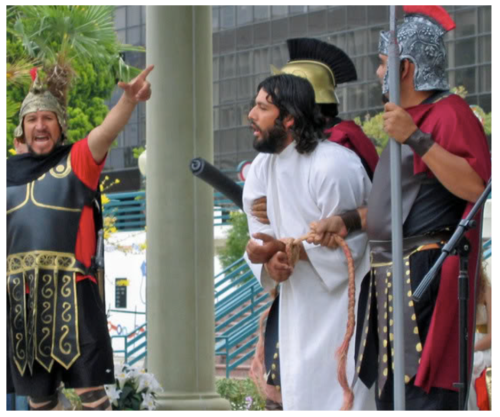
Was Jesus of Nazareth Just a Good Moral Teacher?
Screen Shot 2014-11-03 at 6.50.15 PM

What are we to make of this man? The joys and hardships of two thousand years of western history have been pinned on him. Controversy has constantly surrounded his claims. Religious life in the West has been dominated by allusions to his teachings. No self-aware, intelligent person should avoid this intriguing individual and his impact on society, in fact his shaping of history and culture.

Few people doubt any more that Jesus actually existed historically (N.T. Wright). Most people also agree that he was indeed a great moral teacher. Religious and political leaders throughout the world, including many of the great opponents of Christianity, hail the moral superiority of his life. Mohandas Gandhi aspired to the ideals of the Sermon on the Mount, a monument of justice combined with mercy,a trajectory of peace. The philosopher John Stuart Mill thought Jesus a genius and probably the greatest moral reformer who ever existed. Even Napoleon Bonaparte considered him a superior leader of men (although these two men were very different in character and ambition). Islam heralds him as a prophet.

The New Testament documents record the radical servant·like attitude which lent power and credibility to Jesus’ teachings. He has truly led humanity in the expression of compassion and humility , as well as in anger against evil, corruption and hypocrisy. Jesus combined a realistic understanding of human nature with a robust vision for what human beings could become by following him. His words have tested and challenged the minds and hearts of millions for centuries. He is today an international hero, a lighthouse for the good and true.

Of course, this isn’t the whole story. When we begin to consider Jesus’ claims about his identity, the controversy opens up. This is where people (including the world’s religious leaders) have problems and begin to back off, or even become aggressive. This where the label “moral teacher” is put to the test. It begins to sound inadequate and shrill, if not naive.

A thirty year old peasant carpenter turned itinerant teacher/rabbi, Jesus laid claim both by word and action to be much more than a mere man. He operated on the assumption that he was God himself, in the flesh. How do we know this? From his explicit statements and the very way he lived. His self·disclosed identity is interwoven in the very fabric of the New Testament. He claimed equality with God. He said he had lived before Abraham. He assumed the right to forgive sins. He accepted worship. There seems to be no escaping the controversy. His claims and his life are one fabric.

Jesus of Nazareth could not be simply a harmless moral teacher or philosopher. He cuts too deep and steps out too far from the crowd of moral teachers and philosophers. We can accuse him of fraud. We might even dissect his mental stability. But the tag of “mere great moral teacher” doesn’t have plausibility. It was not an option in first century Palestine. Some of his contemporaries thought him quite mad and dangerous; others loved him. He was regarded with disdain and sometimes even hatred by many authorities, or alternately with amazement and adoration. But he never garnered mild approval.

Neither it seems is it an option for today. We have to either shut him up or hear him out. What are we to make of this man? What of his moral integrity? His fulfillment of centuries of aspirations? His prediction of death and resurrection? His healings and his compassion for the poor and the marginal Other? What are we to make of his claims to be the one and only God-man (God Incarnate) of history? What are we to do with this very wise moral teacher who makes such tedious, radical and impossible claims? How do we grapple with such an unfathomable life?

Further Investigation: The Jesus I Never Knew by Philip Yancey; Mere Christianity by C.S. Lewis; The Challenge of Jesus by N.T. Wright (see Wright on YouTube “Search for the Historical Jesus”); John Dickson DVD “The Life of jesus”; Eugene Peterson, The Jesus Way.

Jesus as the Yes and Amen to it All

“His divine power has given us everything we need for a godly life through our knowledge of him who called us by his own glory and goodness. Through these he has given us his very great and precious promises, so that through them you may participate in the divine nature, having escaped the corruption in the world caused by evil desires. For this very reason, make every effort to add to your faith goodness; and to goodness, knowledge; and to knowledge, self-control; and to self-control, perseverance; and to perseverance, godliness; and to godliness, mutual affection; and to mutual affection, love. For if you possess these qualities in increasing measure, they will keep you from becoming ineffective and unproductive in your knowledge of our Lord Jesus Christ.” (II Peter 1: 3-8)

In II Corinthians 1, the Apostle Paul writes that Jesus is the Yes and the Amen to it all. What does this mean? Below are some reflections from our Study Group. Much more could be added.

  • Colossians 1: 15-20 speaks of Jesus as the source and “glue” of creation and the purpose or end (telos) of creation, both the alpha and omega. He is more than 13.8 billion light years of time. He is above all things in creation and at the same time the ground of creation (the very ground of being itself), without which nothing would exist. All the fullness of God dwells in him (he is God with us–Emmanuel). He is God incarnate (fully God and fully man as per the Athanasian view); in him, God’s eternity connects with creation’s temporality. It is through Christ that all things are reconciled to God—providing the source and basis of healing relationships, both divine and human, the prince (champion) of peace. He is the cornerstone or foundation of the church, through which he is present to the world by means of the Holy Spirit.


  • He is the fulfillment of all the promises made to the patriarchs (Abraham, Isaac, Israel, etc.) and the prophetic utterances and longings of the Old Testament, the Jewish Messiah, fulfilling the promise of redemption, renewal, justice and reform. He is the mysterious Son of Man spoken about in ancient Hebrew discourse. Jesus is prophet, priest and king. His is the final priestly sacrifice for the sins of mankind.He is also a poet, firing the imagination with his life-giving, inspiring teaching, causing us to rethink our identity and purpose. His represents both unique and universal story, real story, an anchor for a powerful human narrative. He calls humanity to a new level of existence, a journey upward, calling us to a new level of responsibility for the Other and for creation.
  • He is the wisdom of God and the power of God, the nexus of faith and reason. As logos (John 1), he is the divine word made flesh, the underwriter/guarantor of all human thought and all language. He is the raison d’etre of it all, the meaning of it all, the answer to the key question: Why are we here? Where are we going? We are called to take captive all thought to his Lordship, his oversight. He is the end point of every spiritual, moral and philosophical aspiration. He has renewed and healed the current broken semiotic relationship between word and world (James Davison Hunter). He is public truth (Newbigin) and this truth leads out into wider truth about all of reality. He makes sense of life itself revealing its purpose and telos. This wisdom provides a framework and a profound motivation for our thinking and reflection, our deeper calling.

Humanites Scholar Jen Zimmermann at Trinity Western University captures it:

Christ the creative wisdom of God, and God’s active Word in creation, is enfleshed in the temporal-historical dimension of our world as the concrete Jewish Messiah, Jesus the Christ…. This is the Word through whom all things were made, and the Word hid in the eternal bosom of God, the Word who spoke through the prophets, the Word whose mighty acts defined the history of Israel. In Jesus the Christ this Word has become flesh, and the eternal has become temporal, but without ceasing to be eternal…. In Christ temporality and eternity are conjoined…. In the incarnation, creation, the world, time and history have been taken up into the God-man, who is the center of reality…. Faith and reason are inseparable because their unity is in Christ. (J. Zimmermann, 2012a, pp. 264-5)

  • He is the complete human, a fullness of humanity, the true imago dei. He is a master exemplar, a gift to us to direct our passions and show us the way to live robustly. He came to take us higher, to show us the infinite goodness and agape love of God and to transform culture by it. He is this infinite goodness enfleshed in (communicated by) a human body, a bridge to divine goodness (D. Stephen Long). He is the renewed image that we long for in our honest moments, the most excellent representative of God on earth.


Dietrich Bonhoeffer broadens our relationship to culture:

To be realistic, to live authentically in the world and before God, is to live as if the whole of reality has already been drawn up into and held together in Christ…. [It is] a fundamental hermeneutical claim to participate realistically and responsibly in the reconciliation of humanity in Christ. (Bonhoeffer, DBWE, 6: 55, 223)

  • Jesus is perlocutionary speech act, God’s most powerful communication to human ears and lives (Kevin Vanhoozer). He addresses us, calls our name, calls us forward into an adventuresome life. His words (e.g. the Sermon on the Mount) are a phenomenal culture driver that has helped to shape the West. His compassion for the needy and broken is a sign that God has not given up on us. His resurrection is a starting point, a singularity that cannot be explained by anything else; it stands as a huge revelation, an epiphany, a new beginning. Through him, we have been identified and called into a new community, given a new identity as royal priests (I Peter) and the people of God. He is the hermeneutic of a new reconciled humanity, drawn from all the nations of the globe, committed to bless and make peace, to be compassionate, to live with integrity (shalom).
  • He is the Suffering Servant who empathizes with our human struggles, brokenness, alienation and pain, the wounded healer (Henri Nouwen). He has suffered and does suffer for individuals, society and the world (I Peter); it is a redemptive, deeply meaningful suffering. This suffering has deep and profound purpose. He is compassion, shedding tears for the city and the university. His Lordship is our home, our safe space or refuge from the challenges and transitions of life. His way will help make sense of, interpret, and exegete life; it will give us courage to live authentically on the moral high ground, to contribute moral capital to society, to the common good.

Marquette theologian D. Stephen Long wraps up this thought:

Jesus reveals to us not only who God is, but also what it means to be truly human. This true humanity is not something we achieve on our own; it comes to us as a gift … The reception of this gift contains an ineliminable element of mystery that will always require faith. Jesus in his life, teaching, death and resurrection and ongoing presence in the church and through the Holy Spirit … orders us towards God. He directs our passions and desires towards that which can finally fulfill them and bring us happiness … [and] reveal to us what it means to be human. (D.S. Long, 2001, pp. 106-7)

James Davison Hunter highlights its human implications of Jesus as Yes and Amen to it all:

Pursuit, identification, the offer of life through sacrificial love—this is what God’s faithful presence means. It is a quality of commitment that is active, not passive; intentional, not accidental; covenantal, not contractual. In the life of Christ we see how it entailed his complete attention. It was a whole-hearted, not half-hearted; focused and purposeful, nothing desultory about it. His very name, Immanuel, signifies all of this—“God with us”—in our presence. (J.D. Hunter, 2010, p. 243)

We commend to you this Jesus, this Christ, this Hope of the world, this Metaphor of robust, meaningful life, this Conduit of truth, this means to know and glorify God, this True Humanity, this Ultimate Reality, this Strong Purpose.

~Gordon E. Carkner PhD, UBC Graduate and Faculty Ministries

Posted by: gcarkner | August 8, 2012

Science or Scientism?

          Find GCU in Your Galaxy

Scientism is the notion that natural science constitutes the most authoritative worldview or form of human knowledge, and that it is superior to all other interpretations of life. It assumes an immanent, Closed World System, which rejects the validity of any transcendent elements: there exists a strong attraction to the idea that we are in an order of nature and do not and cannot transcend it. In scientism, the study and methods of natural science have risen to the level of an ideology, and so have morphed into a methodological imperialism. Scientism also indicates the improper usage of science or scientific claims in contexts where science might not properly apply, such as when the topic is perceived to be beyond the scope of scientific inquiry (e.g. to determine a worldview or final purpose). The stance of scientism thus may indicate in an overconfident fashion a scientific certainty in realms where this is actually impossible, overreaching its proper limits in a process which can thereby ironically discredit science.

Eric Mills UBC PhD student in Physics wrties:

The naturalist assumes that the universe is devoid of super-natural influence, without proving it, and indeed, without ever being able to prove it. Many science-minded-people are proud of the fact that they don’t have faith, that they can justify their beliefs. It comes as a shock to them when they slowly realize that, like everyone else, they start from a point of faith and build from there. Getting them to admit this is an important first step. In the current climate, it can often seem like science and God are permanently at odds; orthogonal concepts that cannot coexist. And if they are at war, it’s hard to avoid the conclusion that, for the past couple of centuries, science has been winning. That isn’t the case, though. Science allows us insight into the mind of God, and God gives us the purpose and motivation to do science.

Indeed, the issue is to get both science and Christian faith in perspective, to understand the worldview behind scientific atheism, and the nihilistic trajectory that often does result. Something to contemplate. For a full article on scientism by Dr. Gord Carkner, write gcarkner@shaw.ca.

Gord

References: Alister McGrath’s response to Richard Dawkins: The Dawkins Delusion and John Lennox insightful book: Did Science Bury God?

UBC Professor Dennis Danielson, Book of the Cosmos.

God and Nature: http://www.asa3.org/godandnature   The American Scientific Affiliation: magazine is Perspectives

Posted by: gcarkner | August 8, 2012

James Davison Hunter’s Concept of Faithful Presence

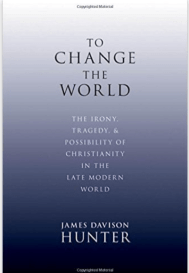
I have argued that there is a different foundation for reality and thus a different kind of binding commitment symbolized most powerfully in the incarnation. The incarnation represents an alternative way by which word and world come together. It is in the incarnation and the particular way the Word became incarnate in Jesus Christ that we find the only adequate reply to the challenges of dissolution and difference. If, indeed, there is a hope or an imaginable prospect for human flourishing in the contemporary world, it begins when the Word of shalom becomes flesh in us and is enacted through us toward those with  whom  we live, in the tasks we are given, and in the spheres of influence in which we operate. When the Word of all flourishing—defined by the love of Christ—becomes flesh in us, in our relations with others, within the tasks we are given, and within our spheres of influence—absence gives way to presence, and the word we speak to each other and to the world becomes authentic and trustworthy. This is the heart of the theology of faithful presence.

~from James Davison Hunter, To Change the World: the irony, tragedy and possibility of Christianity in the late modern world. OUP, 2010.

This quote from a book we studied together in GCU in 2010-11 speaks to  a deep impression left on us in the GCU community. Hunter in surveying the three major camps (Religious Right, Religious Left, and Neo-Anabaptism) in American Christianity, concludes that the challenges of a pluralistic society in late modernity can be met, not through power politics, but through Christian integrity and servanthood–what he calls “faithful presence”. It is an immensely challenging book, and we recommend especially Essay III “Towards a New City Commons: Reflections on a Theology of Faithful Presence” if you want to capture the core thought and impact. This book helps us understand something of our larger Christian context and the debates that are quite lively. In future I will write about a complementary book, Practice Resurrection by Eugene Peterson, which follows through in a very existential way from this challenge by Hunter.

Gordon Carkner

See also program “The Truth about Post-Truth” on CBC Ideas. We seem to be in for a rough ride ahead with the surge in the political far right. Hunter talks about this on pp. 101-131. Attention my friends. Lots is at stake.

screen-shot-2017-02-23-at-12-23-41-pm

Posted by: gcarkner | August 3, 2012

Faculty a Key Spiritual Influence

The Missing Link of Faculty Involvement in Campus Ministry

As we move towards a new academic year, it is important to step back and reflect more on the big picture of our vision and our context, and pray towards constructive, renewing, proactive developments on our campuses. Universities today need academic vision to stay relevant and on the innovative edge. But they also need fresh moral and spiritual vision, so they don’t become too narrow in their focus as they shape future leaders. The latter is where we find a clear deficit. Recently, I’ve been helped in this reflection by an article in the Vancouver Sun by our noted religion & ethics journalist Douglas Todd; he did his homework on this piece. He notes a major gap in the spiritual and meaning formation of students today–addressing the key life questions. It states clearly the problematic of ‘soul recovery’ that many UBC faculty and graduate students are attempting to address. My wife Ute and her partners in Ministry are also deeply concerned about these issues.

This is a link to a version of this articulate Vancouver Sun article (Can Higher Education Rediscover its ‘Soul’?) which appeared on June 9, 2012; it ran on Douglas Todd’s blog with the link below. It is provocative and ultimately thoughtful concerning student character shaping in the modern university. Worth some discussion over coffee I think. It fits well with the discourse articulated by philosopher Charles Taylor in his tome A Secular Age, and in the recent tome by Notre Dame European historian Brad Gregory called The Unintended Reformation; they each uniquely track how we arrived at our present secular university and Western culture over the past five hundred years. Here’s the blog link sent to me by Todd:

http://blogs.vancouversun.com/2012/06/10/higher-education-needs-to-explore-lifes-meanings/

There was also a major survey of students at UCLA on their spiritual development over a multi-year period (2003-2007). They clearly want more input from faculty on the important life questions.

http://spirituality.ucla.edu/docs/reports/Spiritual_Life_College_Students_Full_Report.pdf,

  Students show the greatest degree of growth in the five spiritual qualities if they are actively engaged in “inner work” through self-reflection, contemplation, or meditation. Students also show substantial increases in Spiritual Quest when their faculty encourage them to explore questions of meaning and purpose or otherwise show support for their spiritual development; that is very significant data. http://www.spirituality.ucla.edu./findings/

Gord Carkner

Reference: David Lyle Jeffrey’s talk at GFCF [Archives http://www.gfcf-ubc.ca]

« Newer Posts

Categories