Was Jesus of Nazareth Just a Good Moral Teacher?
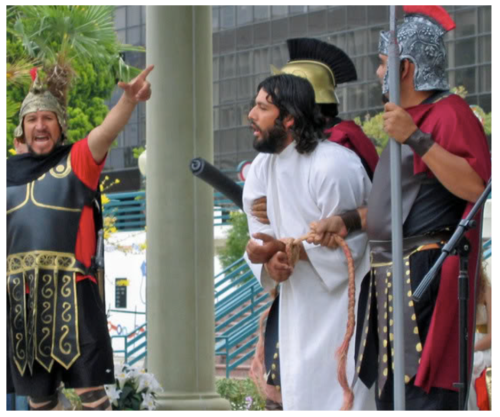
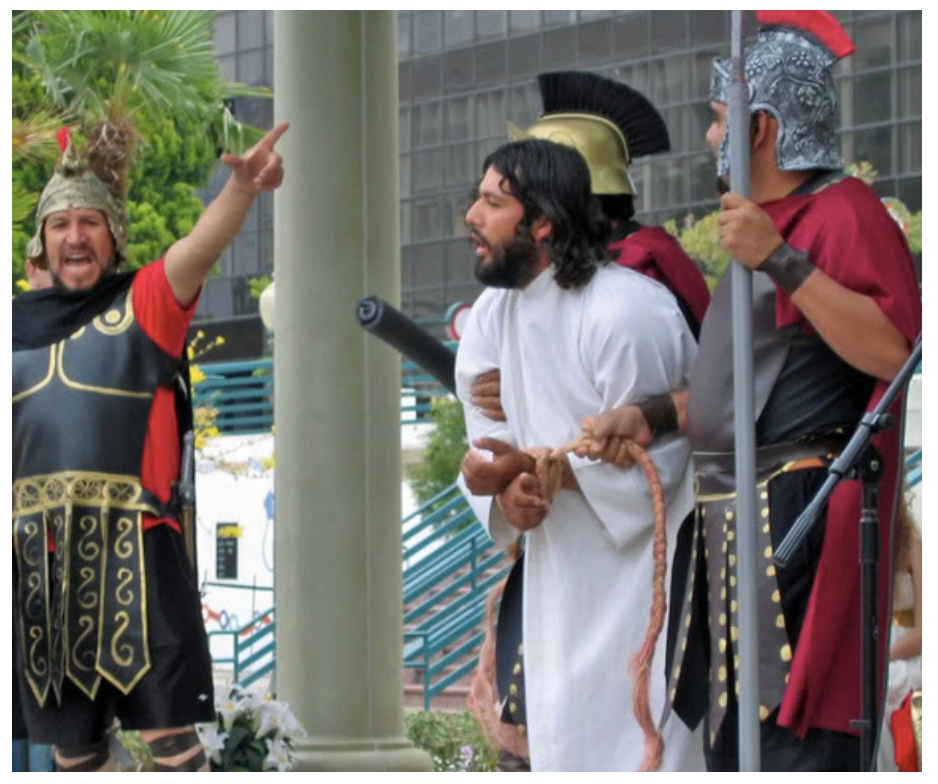
What are we to make of this man? The joys and hardships of two thousand years of western history have been pinned on him. Controversy has constantly surrounded his claims. Religious life in the West has been dominated by allusions to his teachings. No self-aware, intelligent person should avoid this intriguing individual and his impact on society, in fact his shaping of history and culture.
Few people doubt any more that Jesus actually existed historically (N.T. Wright). Most people also agree that he was indeed a great moral teacher. Religious and political leaders throughout the world, including many of the great opponents of Christianity, hail the moral superiority of his life. Mohandas Gandhi aspired to the ideals of the Sermon on the Mount, a monument of justice combined with mercy,a trajectory of peace. The philosopher John Stuart Mill thought Jesus a genius and probably the greatest moral reformer who ever existed. Even Napoleon Bonaparte considered him a superior leader of men (although these two men were very different in character and ambition). Islam heralds him as a prophet.
The New Testament documents record the radical servant·like attitude which lent power and credibility to Jesus’ teachings. He has truly led humanity in the expression of compassion and humility , as well as in anger against evil, corruption and hypocrisy. Jesus combined a realistic understanding of human nature with a robust vision for what human beings could become by following him. His words have tested and challenged the minds and hearts of millions for centuries. He is today an international hero, a lighthouse for the good and true.
Of course, this isn’t the whole story. When we begin to consider Jesus’ claims about his identity, the controversy opens up. This is where people (including the world’s religious leaders) have problems and begin to back off, or even become aggressive. This where the label “moral teacher” is put to the test. It begins to sound inadequate and shrill, if not naive.
A thirty year old peasant carpenter turned itinerant teacher/rabbi, Jesus laid claim both by word and action to be much more than a mere man. He operated on the assumption that he was God himself, in the flesh. How do we know this? From his explicit statements and the very way he lived. His self·disclosed identity is interwoven in the very fabric of the New Testament. He claimed equality with God. He said he had lived before Abraham. He assumed the right to forgive sins. He accepted worship. There seems to be no escaping the controversy. His claims and his life are one fabric.
Jesus of Nazareth could not be simply a harmless moral teacher or philosopher. He cuts too deep and steps out too far from the crowd of moral teachers and philosophers. We can accuse him of fraud. We might even dissect his mental stability. But the tag of “mere great moral teacher” doesn’t have plausibility. It was not an option in first century Palestine. Some of his contemporaries thought him quite mad and dangerous; others loved him. He was regarded with disdain and sometimes even hatred by many authorities, or alternately with amazement and adoration. But he never garnered mild approval.
Neither it seems is it an option for today. We have to either shut him up or hear him out. What are we to make of this man? What of his moral integrity? His fulfillment of centuries of aspirations? His prediction of death and resurrection? His healings and his compassion for the poor and the marginal Other? What are we to make of his claims to be the one and only God-man (God Incarnate) of history? What are we to do with this very wise moral teacher who makes such tedious, radical and impossible claims? How do we grapple with such an unfathomable life?
Further Investigation: The Jesus I Never Knew by Philip Yancey; Mere Christianity by C.S. Lewis; The Challenge of Jesus by N.T. Wright (see Wright on YouTube “Search for the Historical Jesus”); John Dickson DVD “The Life of jesus”; Eugene Peterson, The Jesus Way.
Jesus as the Yes and Amen to it All
“His divine power has given us everything we need for a godly life through our knowledge of him who called us by his own glory and goodness. Through these he has given us his very great and precious promises, so that through them you may participate in the divine nature, having escaped the corruption in the world caused by evil desires. For this very reason, make every effort to add to your faith goodness; and to goodness, knowledge; and to knowledge, self-control; and to self-control, perseverance; and to perseverance, godliness; and to godliness, mutual affection; and to mutual affection, love. For if you possess these qualities in increasing measure, they will keep you from becoming ineffective and unproductive in your knowledge of our Lord Jesus Christ.” (II Peter 1: 3-8)
In II Corinthians 1, the Apostle Paul writes that Jesus is the Yes and the Amen to it all. What does this mean? Below are some reflections from our Study Group. Much more could be added.
- Colossians 1: 15-20 speaks of Jesus as the source and “glue” of creation and the purpose or end (telos) of creation, both the alpha and omega. He is more than 13.8 billion light years of time. He is above all things in creation and at the same time the ground of creation (the very ground of being itself), without which nothing would exist. All the fullness of God dwells in him (he is God with us–Emmanuel). He is God incarnate (fully God and fully man as per the Athanasian view); in him, God’s eternity connects with creation’s temporality. It is through Christ that all things are reconciled to God—providing the source and basis of healing relationships, both divine and human, the prince (champion) of peace. He is the cornerstone or foundation of the church, through which he is present to the world by means of the Holy Spirit.
- He is the fulfillment of all the promises made to the patriarchs (Abraham, Isaac, Israel, etc.) and the prophetic utterances and longings of the Old Testament, the Jewish Messiah, fulfilling the promise of redemption, renewal, justice and reform. He is the mysterious Son of Man spoken about in ancient Hebrew discourse. Jesus is prophet, priest and king. His is the final priestly sacrifice for the sins of mankind.He is also a poet, firing the imagination with his life-giving, inspiring teaching, causing us to rethink our identity and purpose. His represents both unique and universal story, real story, an anchor for a powerful human narrative. He calls humanity to a new level of existence, a journey upward, calling us to a new level of responsibility for the Other and for creation.
- He is the wisdom of God and the power of God, the nexus of faith and reason. As logos (John 1), he is the divine word made flesh, the underwriter/guarantor of all human thought and all language. He is the raison d’etre of it all, the meaning of it all, the answer to the key question: Why are we here? Where are we going? We are called to take captive all thought to his Lordship, his oversight. He is the end point of every spiritual, moral and philosophical aspiration. He has renewed and healed the current broken semiotic relationship between word and world (James Davison Hunter). He is public truth (Newbigin) and this truth leads out into wider truth about all of reality. He makes sense of life itself revealing its purpose and telos. This wisdom provides a framework and a profound motivation for our thinking and reflection, our deeper calling.
Humanites Scholar Jen Zimmermann at Trinity Western University captures it:
Christ the creative wisdom of God, and God’s active Word in creation, is enfleshed in the temporal-historical dimension of our world as the concrete Jewish Messiah, Jesus the Christ…. This is the Word through whom all things were made, and the Word hid in the eternal bosom of God, the Word who spoke through the prophets, the Word whose mighty acts defined the history of Israel. In Jesus the Christ this Word has become flesh, and the eternal has become temporal, but without ceasing to be eternal…. In Christ temporality and eternity are conjoined…. In the incarnation, creation, the world, time and history have been taken up into the God-man, who is the center of reality…. Faith and reason are inseparable because their unity is in Christ. (J. Zimmermann, 2012a, pp. 264-5)
- He is the complete human, a fullness of humanity, the true imago dei. He is a master exemplar, a gift to us to direct our passions and show us the way to live robustly. He came to take us higher, to show us the infinite goodness and agape love of God and to transform culture by it. He is this infinite goodness enfleshed in (communicated by) a human body, a bridge to divine goodness (D. Stephen Long). He is the renewed image that we long for in our honest moments, the most excellent representative of God on earth.
Dietrich Bonhoeffer broadens our relationship to culture:
To be realistic, to live authentically in the world and before God, is to live as if the whole of reality has already been drawn up into and held together in Christ…. [It is] a fundamental hermeneutical claim to participate realistically and responsibly in the reconciliation of humanity in Christ. (Bonhoeffer, DBWE, 6: 55, 223)
- Jesus is perlocutionary speech act, God’s most powerful communication to human ears and lives (Kevin Vanhoozer). He addresses us, calls our name, calls us forward into an adventuresome life. His words (e.g. the Sermon on the Mount) are a phenomenal culture driver that has helped to shape the West. His compassion for the needy and broken is a sign that God has not given up on us. His resurrection is a starting point, a singularity that cannot be explained by anything else; it stands as a huge revelation, an epiphany, a new beginning. Through him, we have been identified and called into a new community, given a new identity as royal priests (I Peter) and the people of God. He is the hermeneutic of a new reconciled humanity, drawn from all the nations of the globe, committed to bless and make peace, to be compassionate, to live with integrity (shalom).
- He is the Suffering Servant who empathizes with our human struggles, brokenness, alienation and pain, the wounded healer (Henri Nouwen). He has suffered and does suffer for individuals, society and the world (I Peter); it is a redemptive, deeply meaningful suffering. This suffering has deep and profound purpose. He is compassion, shedding tears for the city and the university. His Lordship is our home, our safe space or refuge from the challenges and transitions of life. His way will help make sense of, interpret, and exegete life; it will give us courage to live authentically on the moral high ground, to contribute moral capital to society, to the common good.
Marquette theologian D. Stephen Long wraps up this thought:
Jesus reveals to us not only who God is, but also what it means to be truly human. This true humanity is not something we achieve on our own; it comes to us as a gift … The reception of this gift contains an ineliminable element of mystery that will always require faith. Jesus in his life, teaching, death and resurrection and ongoing presence in the church and through the Holy Spirit … orders us towards God. He directs our passions and desires towards that which can finally fulfill them and bring us happiness … [and] reveal to us what it means to be human. (D.S. Long, 2001, pp. 106-7)
James Davison Hunter highlights its human implications of Jesus as Yes and Amen to it all:
Pursuit, identification, the offer of life through sacrificial love—this is what God’s faithful presence means. It is a quality of commitment that is active, not passive; intentional, not accidental; covenantal, not contractual. In the life of Christ we see how it entailed his complete attention. It was a whole-hearted, not half-hearted; focused and purposeful, nothing desultory about it. His very name, Immanuel, signifies all of this—“God with us”—in our presence. (J.D. Hunter, 2010, p. 243)
We commend to you this Jesus, this Christ, this Hope of the world, this Metaphor of robust, meaningful life, this Conduit of truth, this means to know and glorify God, this True Humanity, this Ultimate Reality, this Strong Purpose.
~Gordon E. Carkner PhD, UBC Graduate and Faculty Ministries