William Lane Craig, PhD University of Birmingham, PhD University of Munich
Paul Gould, PhD Purdue University
Alvin Plantinga, PhD Yale University
James K. A. Smith, PhD Villanova University
Nicholas Wolterstorff, PhD Harvard University
Gary Habermas, PhD Michigan State University
Charles Taylor, PhD Oxford University
Jacques Maritain
Richard Swinburne, Fellow of the British Academy, taught at Oxford
Peter Kreeft, PhD Fordham University
Alasdair MacIntyre, one of the foremost professors of philosophy of ethics and politics
Jean-Luc Marion, student of Jacques Derrida
Eleanore Stump, PhD Cornell University
Peter Van Inwagen, PhD University of Rochester
J.P. Moreland, PhD University of Southern California
Jerry l. Walls, PhD University of Notre Dame
Alexander Truss, PhD UBC, PhD University of Pittsburgh
Follow Your Passion. You are not a Victim. You are a Visionary!
“Be who God meant you to be, and you will set the world on fire.” ~Catharine of Siena
UBC GFCF Distinguished Scholars for 2024-25
Wednesday, September 24, 2024 @ 4:00 PM William T. Cavanaugh, The Uses of Idolatry.
Abstract In this talk, our heavily researched speaker offers a sustained and interdisciplinary argument that worship has not waned in our supposedly “secular” world. Rather, the target of worship has changed, migrating from the explicit worship of God to the implicit worship of things. Cavanaugh examines modern idolatries and the ways in which humans become dominated and harmed by their own creations. While Cavanaugh is critical of modern idolatries, his argument is also sympathetic, seeing in idolatry a deep longing in the human heart for the transformation of our lives. Ranging widely across the fields of history, philosophy, political science, sociology, and cultural studies, Cavanaugh develops an account of modernity as not the condition of being disenchanted but the condition of having learned to describe the world as disenchanted.
Biography William T. Cavanaugh, PhD from Duke University, is Professor of Catholic Studies and director for the Centre for World Catholicism and Intercultural Theology at DePaul University. He is the author of The Myth of Religious Violence, Oxford University Press, 2009; and The Uses of Idols, Oxford University Press, 2024. His specialty is political theology, economic ethics, and ecclesiology.
2. November 7, 2024 @ 12:00 PM Denis Alexander. Finding God Through Dawkins: a Dramatic Irony
Abstract The so-called ‘New Atheism’ movement that came to prominence in the earlier part of this century has now declined. However, it has left in its wake an intriguing residue of religious and cultural consequences. One of the most prominent spokespersons for the movement has been Professor Richard Dawkins from Oxford University. The 2023 Kregel book, co-edited by Alister McGrath and Denis Alexander, Coming to Faith Through Dawkins, comprises twelve essays written by twelve different authors from five different countries and describes how the works of Dawkins and other New Atheist writers were influential in leading them from atheism or agnosticism to Christian faith. This lecture will review the roots of the New Atheism movement, and why it has led some former skeptics to Christian faith.
Biography Denis Alexander, a noted geneticist, biochemist, and cancer researcher is the Founding Director (Emeritus) of The Faraday Institute for Science and Religion, Cambridge, where he is Emeritus Fellow of St. Edmund’s College. He is past Chair of the Molecular Immunology Programme and Head of the Laboratory of Lymphocyte Signalling and Development at The Babraham Institute, Cambridge. Dr. Alexander’s latest books are: Is There Purpose in Biology? Oxford: Lion, 2018; and Are We Slaves to Our Genes? Cambridge University Press, 2020. He gave the 2012 Gifford Lectures at St. Andrew’s University.
3. Thursday, January 30, 2025 @ 4 PM Jeremy Begbie, Professor of Theology and Music, Duke University C. S. Lewis and Unfulfilled Longing: An Exploration through Music
Abstract C. S. Lewis famously spoke of fleeting experiences of joy he had early in life, a longing for something this world cannot satisfy. Dr. Begbie will creatively explore this through music, comparing this pre-Christian unfulfilled desire with Christian hope.
Biography Jeremy Begbie is the Thomas A. Langford Distinguished Research Professor of Theology at Duke Divinity School, and McDonald Agape Director of Duke Initiatives in Theology and the Arts. He teaches systematic theology, and specializes in the interface between theology and the arts. He is Senior Member at Wolfson College, Cambridge, and an Affiliated Lecturer in the Faculty of Music at the University of Cambridge. His books include Theology, Music and Time (Cambridge University Press); Resounding Truth: Christian Wisdom in the World of Music (Baker/SPCK); and Music, Modernity, and God (Oxford University Press); and Abundantly More (Baker). He is a very engaging speaker who has taught widely in the UK and North America, and delivered multimedia performance-lectures in many parts of the world.
4. Tuesday, March 4 @ 12:00 PM Quentin Genuis Rethinking Medical Ethics in Light of the Good.
Abstract What features define human life and the value of the individual? How do individuals and communities understand and withstand suffering and pain? What is good dying? In our time, the essential human questions are often viewed primarily as bioethics issues. In reality, these are not exclusively medical or bioethical inquiries. Rather they are complicated and challenging ethical questions with which all human beings and societies must grapple. How does Christian philosophy and theology inform these life and death questions at deeper, more foundational levels?
Biography Dr. Quentin Genuis MD is an Emergency Physician at St. Paul’s Hospital in Vancouver, and the Physician Ethicist for Providence Health Care. He holds a Master of Letters in Ethics from the University of St. Andrews, Scotland. He teaches in academic, clinical, professional, and lay settings on a variety of issues related to bioethics. His research and writing interests include the autonomy debates, end-of-life care, compassion, human dignity, addictions, and theological anthropology.
See: Towards an Incarnational Spiritual Culture: Grounding Our Identity in Christ by Gordon E. Carkner PhD, Wipf & Stock Publishing, 2024
Examining the Sources of Gender: Why Sexual Difference Matters
Two Resources as Follow-up to the Lecture:
1. First, an expert guide on youth gender medicine that Abigail co-wrote with a pediatric endocrinologist; this gives a thorough overview of the research on gender medicine for young people.
2. Second, the study from Finland on the question of suicide mentioned in the discussion, with an analysis of the study here.
Abstract How do contemporary theories of gender compare to the understanding of gender in the Christian imagination? This talk will provide a sketch of two distinct paradigms–the “gender paradigm” and the “Genesis paradigm”–and bring those two frameworks into conversation with one another, highlighting points of consonance and dissonance between them.
Biography Abigail Favale, Ph.D., is a professor in the McGrath Institute for Church Life at the University of Notre Dame. She has an academic background in gender studies and feminist theory, and writes regularly about these topics from a Catholic perspective. She is the author of The Genesis of Gender: A Christian Theory (Ignatius 2022) and Into the Deep: An Unlikely Catholic Conversion (Cascade 2018), as well as numerous essays and articles. Abigail’s essays and short stories have appeared in print and online for publications such as First Things, The Atlantic, Church Life, and Potomac Review. She was awarded the J.F. Powers Prize for short fiction in 2017.
See also Carl Trueman, The Rise and Triumph of the Modern Self; and Gordon E. Carkner, Towards an Incarnational Spiritual Culture https://ubcgcu.org/coming-soon/ .
Quotes from Favale’s Book
Difference between men and women have too often been used to justify a strict hierarchy of value and roles between the sexes. In the effort to reject this, feminists thought has typically regarded sexual difference itself with hostility and has downplayed difference in order to affirm equal dignity.
We must engage the vital questions of personhood, sex, identity, and freedom at the level of a worldview. The gender paradigm affirms a radically constructivist view of reality, the reifies it as truth, demanding that others assent to its veracity and adopt its language.
The Gender Paradigm (feminism’s offspring): According to the gender paradigm, there is no creator, and so we are free to create ourselves. The body is an object with no intrinsic meaning; we give it whatever meaning we want, using technology to undo what is perceived to be “natural”. We do not receive meaning from God or our bodies or the world–we impose it. What we take to be “real” is merely a linguistic construct; ergo we should consciously wield language to conjure the reality we want. To be free is to transgress limits continually, to unfetter the will. “Woman” and “man” are language-based identities that can be inhabited by anyone. Because truth is just a story we tell ourselves, all self-told stories are true.
Creation/Genesis/Biblical Paradigm: We are unities of body and spirit; our bodies are an integral part of our identity that connect us to the created order and serves as a bridge between our inmost being and the outer world, and a sacramental sign of the hidden mystery of God. Both man and woman are made in God’s image, and our sexual difference is part of the goodness of the created order, signalling that we are made for reciprocal love. We have been granted a share in the divine power of language in order to make words that reveal the truth about ourselves and our world.
Michel Foucault is the god-father of contemporary gender theory. Angela Franks aptly describes the Foulcauldian view of sex, which now holds supremacy in our culture. Sex for Foucault, is about “bodies and pleasures”…. Bodily sex has been divorced from procreative potential, reduced to appearance and pleasure-making.
John Money’s malleable and disembodied concept of gender swept through the academy, becoming thoroughly entrenched in feminist theory and the social sciences…. Sex refers to biology, and gender refers to social meanings attached to sex…. Ultimately the concept of gender has driven a wedge between body and identity.… This has paved the way to an even more fragmented and unstable understanding of personhood. Because gender is no longer anchored in bodily realities, it has become a postmodern juggernaut, impossible to capture, impossible to name. Unlike sex, gender can be continually altered and deployed, and we are witnessing a wide proliferation of its meaning.
Judith Butler, godmother of gender theory … argues that gender is an unconscious and socially compelled performance, a series of acts and behaviours that create the illusion of an essential identity of “man” and “woman”. In this view, gender is entirely a social construct, a complex fiction that we inherit and then repeatedly reenact.
In culture today, we are seeing a gnostic split between body (sex) and soul (gender). We now have an inherently unstable concept of gender. The concept of gender has driven a wedge between body and identity. “Gender” can be continually altered and redeployed, and we are witnessing in real time the wild proliferation of its meaning. From the trans definition, gender identity is seen to be located in the mind. Others see it as merely a social construct.
“The more I study what gender has become, the more it feels like an empty signifier, a word that is only a shell, conveniently waiting to be filled with whatever meaning is most useful. There is a gender category for every proclivity, every flick of mood, every possible aesthetic: Agender, Bigender, Trigender, Demigender, Demifluid, Demiflux, Pangender.” Abigail Favale
There are people in turmoil and the gender paradigm has become the dominant lens for interpreting that turmoil, and that’s not good. We are living in an era when our young women are increasingly deciding they would be better off as men. Many young women are rebelling against the hypersexulaization of the female body, but in doing so, they are turning against the body itself. The female body, in our shared imagination, no longer signals creation, nourishment, and primal compassion, but rather the prospect of sterile pleasure.
Medicalizing the Problem: The affirmation approach encourages violence to the healthy body rather than carefully working through underlying causes of psychological distress and considering ways of managing that distress that does not cause physical harm.
The new wave of pop gender theory offers a choose-your-own-adventure self. This framework, which has captured our cultural imagination, fragments personhood into mix-and-match categories of gender identity, gender expression, sexual orientation, and biological sex.
A Different Way of Seeing: Considering oneself as a being who is created moves the discussion of identity to new ground, setting the frame of a transcendent order–an order beyond the natural that sustains its existence and safe-guards its meaning. To be a creature rather than an accident, establishes the human person as a being-in-relation with the divine. We are not alone in the cosmos…. When we see the world as a created cosmos, this transfigures everything: embodiment, sex, suffering, freedom, desire–this is gathered up into an all-embracing mystery, an ongoing interplay between human and divine…. Once understood as created, selfhood, including one’s sex, becomes a gift that can be accepted, rather than something that must be constructed.
We are confronted in our time with two divergent understandings of freedom: on the one hand, freedom according to postmodernity, an open-ended process of self-definition whose only limit is death; on the other, freedoms an ever-deepening sense of belonging and wholeness, not only with oneself, but in relation to all that is.
Why Faith is Vital to Good Scholarship
Christian graduate students demonstrate their faith (of the richness and variety in Hebrews 11) every day on campus. This faith, which is deeply relevant for academic and personal life, is rooted in historical experience, in hope and in God-ordained promise. Christ-centered and incarnate faith is a fulcrum that can move the world and leverage the future. On one side it is a private treasure and pursuit; on the other hand it is public truth for all (Lesslie Newbigin).
In our journey at UBC, we maintain that Christian faith is good for everyone no matter their background (even the neo-atheist). Robust faith involves a persistent search for both understanding and wise integrity; it can open the doors of insight and improve one’s relational skill and sensibilities at the same time.
Dynamic faith, located in a quest to grow up into full maturity in Christ (Eugene Peterson, Practice Resurrection), will expand the horizons of academic research, and offer wisdom on managing projects, funding, time and talent. It is worth breaking a couple drill bits to get down into the deeper layers of weighty, God-honoring faith. It a faith worthy of testing.
Too many students miss out on the opportunity to grow as a person while doing their PhD; they are skill heavy and maturity light and and can leave UBC morally naive. The current public exclusion of faith from academic discourse is nothing short of a tragedy. So agrees Douglas Todd the Vancouver Sun religion and ethics editor in his June 9, 2012 piece called “Can Higher Education Recover its ‘Soul’?” University of Florida’s history professor John Sommerfield says that the secularization of the university has gone too far, to the detriment of its own stated purpose of training future leaders.
David Adams Richards, famous Canadian novelist, in his bold book God Is: my search for faith in a secular world., refuses the stifling of the Christian voice in public: Faith to him is the essential key to freedom (a sure way out of human violence and self-destruction), and a key to wholeness of mind and life. It prevents power from having the last say. At the end of the day, faith is a boon for academia and often used without proper credit; one cannot do proper science without faith in certain key assumptions.
Faith and reason, when discovered and used in creative synergy, are very complementary, innovative and powerful; they do not properly exist in separate realms (D. Stephen Long, Speaking of God) but together. Faith rejects fantasy and superstition; it ultimately wants all of reality, not a reduced version of it.
The certainties which the church has received as a gift require its participation in humanity’s ‘common struggle’ to attain truth. The human search for truth, which is philosophy’s vocation, is not in opposition to theology’s reception of truth as a gift. What we struggle to understand by reason we also receive by faith. No contradiction exists between the certainties of faith and the common struggle of humans to attain truth. The truths humanity seeks by common reason (philosophy) and the certainties of faith can be placed over against each other such that each illuminates the other and renders it intelligible until the two ultimately become one, which is of course what the incarnation does in reverse. The concretion of the one Person illumines the natures of both divinity and humanity. (D. Stephen Long p. 87)
Let’s enjoy the adventure of bringing faith and scholarship together in mutual enrichment.
Dr. Gary Habermas on Transformation in Scholarship on the Resurrection:
The question of the relationship between Christianity and culture increasingly takes centre stage in debates both within and outside the church today. This talk reflects on how a constructive, nuanced and—to many modern ears—fresh vision for contemporary society can be drawn from a rich engagement with the Bible’s storyline, guided by Augustine’s magisterial work City of God. What might it look like to reimagine Augustine’s mode of engagement with late Roman society in our own cultural moment of late modernity?
Biography
Christopher Watkin (PhD, University of Cambridge) is senior lecturer in French studies at Monash University in Melbourne, Australia. He is a scholar with an international reputation in the area of modern and contemporary European thought, atheism, and the relationship between the Bible and philosophy. His published work runs the spectrum from academic monographs on contemporary philosophy to books written for general readers, both Christian and secular, and include Difficult Atheism, From Plato to Postmodernism; Great Thinkers: Jacques Derrida. His recent impressive 2022 tome with Zondervan Academic is Biblical Critical Theory: How the Bible’s Unfolding Story Makes Sense of Modern Life and Culture.
Companion Volume: Towards an Incarnational Spiritual Culture
Now available on Amazon and local Bookstores.
The paradigm of the gift places us in the posture of recipients. We receive existence, we receive meaning, and we receive love. To be sure we are creative recipients, as we shall see in the chapters that follow, and receiving the gift of the universe certainly does not make us passive. But the fact remains that we are recipients nonetheless. The one thing we should not do with a gift is pretend we bought or made it ourselves. The giver is usually thanked, so our fundamental orientation to existence in the paradigm of the figure of gratuity is one of praise and thanksgiving.
To live and die by the dynamics of “making a name for ourselves” is to submit to a court of a public opinion which only allows certain achievements to count, and it is to give a warped view of life in which value is ascribed to our words and deeds according to the fickle tastes of the crowd.
Over the past century or so, as values of duty, collective identity, and conformity have been overtaken by a premium on nonconformity and what philosopher Charles Taylor calls “expressive individualism,” we have been increasingly told that we live our best life when we go our own way, in the face of what “they” tell us to do. And so we obediently obey this ubiquitous social command to be our own master and blaze our own trail. (Christopher Watkin, Biblical Critical Theory)
The incarnation acts as the pinpoint focus to which all time before it is drawn, and from which all time after it radiates out…. At the incarnation, the narrative that began with the heavens and the earth converges on a single baby as it “sharpens at last into one small bright point like the head of a spear”…. As we move forward in time past the incarnation, we will witness not a further restriction but an explosion in the scope of the narrative as, by the end of the Bible, God’s plans are again seen to encompass the whole universe…. The incarnation is an event that splits time in two…. Of all the biblical events that irreparably alter the course of history and create an indelible “before” and “after,” the incarnation is perhaps the one that has left the deepest mark on modern culture. It gives rise to today’s most widely celebrated Christian festival, Christmas, and the contrasting juxtaposition of almighty deity and fragile newborn has captured the minds of countless artists and poets, as well as the hearts and imaginations of many believers…. “What makes the form of Christ attractive,” writes William Cavanaugh, “is the perfect harmony between finite form and infinite fullness, the particular and the universal.”… Christ bridges Lessing’s ditch with his own universal particularity, forever uniting the immediate and the ultimate, life and reality, experience and truth. (C. Watkin, Biblical Critical Theory, 349-51)
Sources of Identity, Meaning, Relationship to the Moral Good
The Examined, Reflective, Whole, Deeper, Purposeful Life is Well Worth Living
Garibaldi Lake
my culture, country and family of origin, the history of my people, my mother tongue and color–where I was born, my early years, my roots
my personal passion, or more deeply, my sense of calling–what and where I want to contribute, my life trajectory, my life’s work
my educational and job experience/training–my leadership skill set derived from my many mentors, colleagues and friends
my priceless personal mentors, coaches, partners and life journey guides, people who have stretched my vision
my ongoing reading and lifelong learning–my quest to expand my horizons
my sexual orientation, the biology of my body, my gender socialization and choices about self-expression, wise management of sexual desires: My understanding of, respect for, and appreciation of, the opposite sex. What is sexual health and wholeness?
my religion, philosophy of life, worldview or ideological orientation, sources of inspiration and spirituality, my ideals, higher values, standards and principles–those meta-biological drivers
my experience of trauma, tragedy, abuse and suffering, failures, handicaps, plus how I cope with suffering and hard circumstances or personal loss
the friends I hang with–my social life and romantic life–network for personal sanity, meaning, and joy
my creative engagement with people who differ from me, either in background or convictions, my listening skills and ability to learn from others that I may disagree with, or who make me feel uncomfortable with my own assumptions–my teachability and openness to growth through dialogue
the community or charity projects where I volunteer and attempt to make a better, more equal playing field in the game of life
the larger story or narrative that makes sense of my life–clarifying what really matters, what constitutes being human at a higher level, what gives solidity, weight and substance to my biography
my children, their lives, their needs and aspirations–the creative sacrifice of giving them life, nurture, guidance and purpose, believing in them and their potential, championing them and their accomplishments
See My New Book: Towards an Incarnational Spiritual Cultureby Gordon E. Carkner, Wipf & Stock: available for order on February 24, 2024. For the latest update, see: https://ubcgcu/coming-soon/
Email: orders@wipfandstock.com
my commitment to the poor, the homeless, the marginalized–community service, social compassion, positive social change
my political affiliations, causes, debates and engagements–my sense of justice, human rights, concern for democracy, peace-making, the common good
my moral commitments to certain virtues and values (strong evaluations)–the good, the admirable and noble–leading to my growth in character and civility, my consistent relationship to my highest good, things that empower my moral agency and set me free to be more responsible. This is how I “become better through seeing better” (Charles Taylor).
my self-concept as a global citizen, commitments to the wellbeing of other people groups and nations–my ambassadorial role
my sense of calling on my life
my relationship to creation, to the land, air, and oceans, to the wellbeing of the planet for the long term–creation care and community justice regarding resources and food
my local social roots–my deeper experience of neighbourhood, church and community–positive agency and communion
my economic, career track potential and capacity–traction in applying my knowledge, being innovative, taking leadership, shaping culture, making art, leaving a positive legacy (Andy Crouch, Culture Making)
my prayer, worship and spiritual life practices, relationship with the divine–experience of the transcendent, my quest for wisdom towards a life worth living–my engagement with the Bible as a source of friendship with God
my music and aesthetic interests, loves, participation–seeking the good of my mental and emotional health, my creative artistic expression, the nurture of my aesthetic self, continually expanding my tastes seriously and not just for entertainment
how I deal with my personal addictions and obsessions–darker motives and habits–my inner chaos, my deceptiveness, dishonesty with self and others, my manipulative refusal to take responsibility, to admit where I have been wrong, to ask for forgiveness, to admit where I am not speaking the truth–confronting the charlatan and coward within who exploits others for personal gain
my means of recreation, relaxation, creative outlets, entertainment, fun and adventure–my quest for good health, reducing anxiety, for the long journey of contributing
my self-articulation or profile on social media, video, audio or print media, public speaking, book and article writing–Do I build others up, share vision, respond thoughtfully, help people make good connections, take the posture of a seeker after truth, harmony and goodness?
my relationship to the very transcendent, powerful and life-changing agape love, which helps heuristically to shape and interpret both my stance towards myself and my stance towards the larger world. Is love my first priority or power?
my relationship to the Incarnation of Jesus who they call the Christ: the transcendent & immanent God we celebrate at Christmas.
In SummationBe Real; Be Attentive; Be a Whole Person; Be Innovative; Be Resilient Amidst Your Suffering; Go For Depth; Live with Integrity; Take Care of Yourself; Work Towards Harmony Between Various Sectors of Your Life; Don’t Put All Your Eggs in One Identity Basket; Operate in Good Faith; Prioritize The Goods in Your Moral Life; Examine Your Motives and Conscience; Practice the Virtues; Tell the Truth; Invest in Community; Write Your Authentic Story; Appreciate the Many Gifts Given to You & Build Out Your Narrative From There; Practice Gratitude; Keep Poetry in Your Life; Take Robust Responsibility for Yourself and Your World; Marry the Quest for Freedom with Good Faith Responsibility; Love the Good, the True, and the Beautiful; Seek Friendship Wherever You Travel and Work; Help Out Those Less Fortunate and Be Generous to a Fault.
To have meaning is to stand for something other than oneself, to establish a link with a value, an idea, an ideal beyond oneself [a referent]. Life has meaning, for example, for those who spend their lives in search of a cure for a disease., or in the struggle against injustice, or just to show every day that society can be more than a jungle. The link one establishes with this value or idea confers a higher value on life…. A life that has meaning recognizes certain references…. In other words, it is paradoxically worth something only to the extent that it admits itself not to be of supreme value, by recognizing what is worth more than itself, by its ability to organize itself around something else. Everyone will admit that existence is at once both finite and deficient. We consider society to be mediocre, love insufficient, a lifespan too narrow. The person whose life has meaning is the one who, instead of remaining complacently in the midst of his regrets, decides to strive for perfection, however imperfectly, to express the absolute, even through his own deficiencies, to seek eternity, even if only temporarily. If he spends his life making peace in society or rendering justice to victims, he is effectively pointing, even if it is with a trembling finger, to the existence of peace and justice as such…. By pursuing referents, he points to them. He awkwardly expresses these impalpable, immaterial figures of hope or expectancy…. Individual existence, when it means something, points to its referent through its day-to-day actions and behaviours, the sacrifices it accepts and the risks it dares to take…. The seeker moves forward, all the while wondering, “What is worth serving?” Individual existence structures itself through the call for meaning. Existence is shaped by questions and expectations.
~Chantal Delsol, Icarus Fallen: The Search for Meaning in an Uncertain World (4-5)
Roger Scrutin on Virtue, Freedom & Accountability
Virtue consists in the ability take full responsibility for one’s acts, intentions, and avowals, in the face of all the motives for renouncing or denouncing them. It is the ability to retain and sustain the first-personal centre of one’s life and emotions, in the face of decentering temptations with which we are surrounded and which reflect the fact that we are human beings, with animal fears and appetites, and not transcendental subjects, motivated by reason alone….. Virtues are dispositions that we praise, and their absence is the object of shame…. It is through virtue that our actions and emotions remain centred in the self, and vice means the decentering of action and emotion…. Vice is literally a loss of self-control, and the vicious person is the one on whom we cannot rely in matters of obligation and commitment…. Freedom and accountability are co-extensive in the human agent…. Freedom and community are linked by their very nature, and the truly free being is always taking account of others in order to coordinate his or her presence with theirs…. We need the virtues that transfer our motives from the animal to the personal centre of our being–the virtues that put us in charge of our passions [because] we exist within a tightly woven social context. Human beings find their fulfilment in mutual love and self-giving, but they get to this point via a long path of self-development, in which imitation, obedience and self-control are necessary moments….. Let’s put virtue and good habits back at the centre of personal life.” (R. Scrutin, On Human Nature, 100, 103, 104, 111, 112)
The question of the relationship between Christianity and culture increasingly takes centre stage in debates both within and outside the church today. This talk reflects on how a constructive, nuanced and—to many modern ears—fresh vision for contemporary society can be drawn from a rich engagement with the Bible’s storyline, guided by Augustine’s magisterial work City of God. What might it look like to reimagine Augustine’s mode of engagement with late Roman society in our own cultural moment of late modernity?
Biography
Christopher Watkin (PhD, University of Cambridge) is senior lecturer in French studies at Monash University in Melbourne, Australia. He is a scholar with an international reputation in the area of modern and contemporary European thought, atheism, and the relationship between the Bible and philosophy. His published work runs the spectrum from academic monographs on contemporary philosophy to books written for general readers, both Christian and secular, and include Difficult Atheism, From Plato to Postmodernism; Great Thinkers: Jacques Derrida. His recent impressive 2022 tome with Zondervan Academic is Biblical Critical Theory: How the Bible’s Unfolding Story Makes Sense of Modern Life and Culture.
Winner of Christian Book of the Year Award in Australia
Two Ways of Seeing/Reading/Understanding the World
a. The Epistemological Way of Seeing:
The set of priority relations within this picture often tends towards a closed world position (CWS) within the immanent frame (Charles Taylor, A Secular Age, 2007, chapter 15). Its assumptions include proponents like Descartes, Locke, and Hume. Taylor calls this the modern buffered self. We find this approach rooted in Anglo-American philosophy. The connection between self and world is an I-It relationship.
Knowledge of self and its status comes before knowledge of the world (things) and others (cogito ergo sum).
Knowledge of reality is a neutral fact before the individual self attributes value to it.
Knowledge of things of the natural order comes before any theoretical invocations or any transcendence. Transcendence is often problematized, doubted or repressed—for example, in reductive materialism. This approach tends to write dimensions of transcendence out of the equation as a danger to wellbeing (superstition). Science morphs into scientism.
Human meaning is much harder to capture in this frame of reference—leading to disenchantment. It can cause alienation and lead to skepticism, or promote disengagment from a cold, mechanistic, materialistic cosmos.
Language is the Designative type (Hobbes, Locke, Condillac)—instrumental, pointing at an object, manipulating objects, and often in turn manipulating people as objects. It is a flattened form of language, which does not allow us to Name things in their depth of context, their embeddedness. Poetry, symbol, myth are missing. Scientific rationalism is dominant: evidence and justified belief.
Power and violence hides under the cloak of knowledge and techne: colonization, imperialism, war, environmental exploitation, Global North versus Global South. Hubris is an endemic problem.
Ethics is left to the private sphere of individual values, because of the fact-value split or dualism—moral subjectivism results. This often leads to loss of moral agency and nihilism, partly due to the loss of narrative and the communal dimension of ethics.
Human flourishing is a central concern within this immanent frame: reduction of suffering and increase of happiness/wellbeing. Health, lifespan, safety, entertainment, economic opportunity, consumer choice are key cultural drivers. This results in a thin self, focused on rights, entitlements, opportunities to advance one’s own personal interests.
b. The Hermeneutical Way of Seeing:
The working assumptions of this approach includes proponents like Heidegger, Merleau-Ponty, Gadamer, the later Wittgenstein, Charles Taylor and Jens Zimmermann. We find this approach rooted more in Continental philosophy. The connection between the self and the world is an I-Thou relationship.
Self is not the first priority: the world, society and the game/drama of life come first. We only have knowledge as agents coping with the world, and it makes no sense to doubt that world in its fullness. Taken at face value, this world is shot through with meaning and discovery.
There is no priority of a neutral grasp of things over and above their value. It comes to us as a whole experience of facts and valuations all at once, interwoven with each other.
Our primordial identity is as a new player inducted into an old game. We learn the game and begin to interpret experience for ourselves within a larger communal context. Identity, morality and spirituality are interwoven within us. We sort through our conversations, dialogue with interlocutors, looking for a robust and practical picture of reality.
Transcendence or the divine horizon is a possible larger context of this game. Radical skepticism is not as strong here as in the epistemological approach. There is a smaller likelihood of a closed world system (CWS—closed to transcendence as a spin on reality) view in the hermeneutical approach. In a sense, it is more humble, nuanced, embodied and socially situated.
Language use is the Expressive-Constitutive type (Herder, Hamann, Humboldt, Gadamer) The mythic, poetic, aesthetic, and liturgical returns. Language is rich and expressive, open, creative, appealing to the depths of the human soul. Language is a sign. See Charles Taylor, The Language Animal.
Moral agency is revived within a community (oneself as another) with a strong narrative identity, in a relationship to the good, within a hierarchy of moral goods and practical virtuous habits that are mutually enriching and nurturing. One is more patient with the Other, the stranger: hospitality dominates over hostility.
The focus of human flourishing is on how we can live well, within our social location—a whole geography of relationships that shape our identity, and which we in turn shape as well. This is a thick version of the self, open to strong transcendence, within a meaningful whole.
The Logic of Incarnation—Why God Took on Human Flesh Incarnation concerns both the Person and the Work of Christ…. Incarnation impacts salvation, theological anthropology, and the doctrine of God. It is about much more than mere remedy or repair. Christ is complete and characteristically distinct in his humanity. The divine Word does not change or evolve, but takes humanity up into divinity. Incarnation is grounded in the nature of God, even as it creates a whole new and profound relationship with humanity, and offers a gift to raise the dignity of human beings. The Word is eternally part of Jesus the man—who is both human and divine. But the Incarnation does not exhaust God of his plenitude. Like creation, it does not change or restrict the Creator. It rather shows the love and artfulness of God in a human mode, divine holiness in the course of a human biography, revealing the infinite God in finite ways. Jesus most fully bears the Image of God, restoring it from its corruption—an act of solidarity and redemption intended to restore key human capacities to know and to love (relationally, reflectively, with receptivity and agency), to do justice and love mercy. There is a deep coherence and beauty to all the dynamics of Incarnation. All that prepares for it and follows from it, is a drama into which human life, history, and culture is gradually drawn. Above all, Christian theologians would want to say that the Incarnation, even more than the presence of human life, crowns the extraordinary dignity of life on Earth, or the dignity of the entire cosmos.
Andrew P. Davison, Professor of Theology and Natural Science @ Cambridge University.
Annunciation by Cambridge Poet-Chaplain Malcolm Guise
Dialogue on key issues brings one’s graduate experience to life. Come and meet new friends at GCU & GFCF, stimulating interlocutors that could last a lifetime. Our biblical dialogue this fall will be from Paul’s letters to the Philippians and Colossians. Big Question as we enter the fall season of study, research, experimentation and debate, Can Faith & Reason Make Up and Become Friends? https://ubcgcu.org/2014/09/26/can-faith-and-reason-be-friends/
Abigail Favale, The Genesis of Gender
Christopher Watkin
Lecturer Monash University,Australia
Philosophy, Religion, Atheism, Humanity, Freedom
I make sense of how people make sense of the world
The Bible as a Tool for Changing Culture
Abstract
The question of the relationship between Christianity and culture increasingly takes centre stage in debates both within and outside the church today. This talk reflects on how a constructive, nuanced and—to many modern ears—fresh vision for contemporary society can be drawn from a rich engagement with the Bible’s storyline, guided by Augustine’s magisterial work City of God. What might it look like to reimagine Augustine’s mode of engagement with late Roman society in our own cultural moment of late modernity?
Biography
Christopher Watkin (PhD, University of Cambridge) is senior lecturer in French studies at Monash University in Melbourne, Australia. He is a scholar with an international reputation in the area of modern and contemporary European thought, atheism, and the relationship between the Bible and philosophy. His published work runs the spectrum from academic monographs on contemporary philosophy to books written for general readers, both Christian and secular, and include Difficult Atheism, From Plato to Postmodernism; Great Thinkers: Jacques Derrida. His recent impressive 2022 tome with Zondervan Academic is Biblical Critical Theory: How the Bible’s Unfolding Story Makes Sense of Modern Life and Culture.
Next in GFCF Abigail Favale, Professor in the McGrath Institute for Church Life, Notre Dame University on March 13, 2024. Topic: Examining the Sources of Gender: Why Sexual Difference Matters.
Abstract: How do contemporary theories of gender compare to the understanding of gender in the Christian imagination? This talk will provide a sketch of two distinct paradigms–the “gender paradigm” and the “Genesis paradigm”–and bring those two frameworks into conversation with one another, highlighting points of consonance and dissonance between them.
Biography: Abigail Favale, Ph.D., is a professor in the McGrath Institute for Church Life at the University of Notre Dame. She has an academic background in gender studies and feminist theory, and writes regularly about these topics from a Catholic perspective. She is the author of The Genesis of Gender: A Christian Theory (Ignatius 2022) and Into the Deep: An Unlikely Catholic Conversion (Cascade 2018), as well as numerous essays and articles. Abigail’s essays and short stories have appeared in print and online for publications such as First Things, The Atlantic, Church Life, and Potomac Review. She was awarded the J.F. Powers Prize for short fiction in 2017.
Andrew Paul Davison
Professor of Theology and Natural Science
Cambridge University
Abstract
Widespread scientific confidence in there being a natural origin of life, rather than a supernatural one, is a latecomer in the history of thought, held back as much by scientific considerations as by belief that this is more the purview of religion. Yet, over the course of the past century, a natural origin has become the default position. Surprisingly little theological thought has been given to that, with the mainstream churches taking a natural origin for granted, while some more conservative traditions hold out against the possibility. In this talk, Professor Davison will sketch this history, and argue that while Christian theology can take a natural origin to life in its stride, that deserves more attention than it often gets.
Biography
One of the founders of the Cambridge Leverhulme Centre for Life in the Universe, Andrew Davison is the Starbridge Professor of Theology and Natural Sciences at the University of Cambridge, and Fellow in Theology and Dean of Chapel at Corpus Christi College. He is the author of many books, including Participation in God: A Study in Christian Doctrine and Metaphysics and Astrobiology and Christian Doctrine: Exploring the Implications of Life in the Universe (both Cambridge University Press).
Astrobiology and Christian Doctrine available at Regent Bookstore.
“This is not a book that predicts the future. It asks only ‘What if there is life in the Universe, beyond the bounds of Earth?’ Does such a postulate influence Christian doctrine? There are two motives in the mind of the author: (i) to prepare the human community to be ready to receive and process future signs of life elsewhere and (ii) after a journey in unfamiliar territory, to return home with fresh eyes. In nineteen tightly packed chapters, Andrew Davison, a metaphysical realist, addresses theological implications of the 1995 discovery of an exoplanet orbiting another star like our own sun. Our understandings of creation, revelation, uniqueness, Christology, eschatology and much else are given a fresh coat of paint. This is a must read for all of us.” (Dr. Olav Slaymaker, Professor Emeritus Geography, UBC)
p.s. I am fascinated by Andrew’s book both in terms of it’s intellectual honesty and it’s identification with metaphysical realism. His careful discussion of the contemporary relevance of Aquinas is also new for me.
Regarding Life: “The emergence of life within the realm of the non-living is a shift of the highest significance. It is so profound, on a qualitative level, as to render quantitative comparison otiose…. Above all, Christian theologians would want to say that the Incarnation, even more than the presence of human life, crowns the extraordinary dignity of life on Earth, or the dignity of the entire cosmos.” (Astrobiology and Christian Doctrine, 81)
Regarding Knowledge: “Something objective underlies any true sense of things, whether in knowledge of a creature, or in a creature’s witness to God. It does not require a denial of contingency, however, or mediation when it comes to knowing…. However, none of those elements of contingency, mediation, or particularity need undo the realist sense that, at root, knowledge is a witness to reality, based on a reception from that reality. To be true, knowledge need only to be a faithful participation in it, a faithful reception from it.” (A. Davison, Astrobiology and Christian Doctrine, 129-30)
“[Life] infuses [the living thing] with an increased perfection, a more intense degree of being. We may say, therefore, that living things exist more intensely; they have a higher pitch of being: they are more. The flower growing unobserved and hidden in a crevice upon the highest mountain has greater interiority and intensity of being: it is more than the mountain, greater in its interior perfection than the giant and majestic beauty of the physical universe: it is more. In this light we may read Acquinas’ remark: nobilis cuiuscumquerei est sibi secundum sum esse [Every excellence in any given thing belongs to it according to its being].” (Fran O’Rourke, ‘Virtus Essendi: Being in Pseudo-Dionysius and Acquinas,’ Dionysius 15 (1990): 68-9.
“The distinction and multitude of things come from the intention of the first agent, who is God. For he brought things into being in order that goodness might be communicated to creatures, and be represented by them; and because his goodness could not ne adequately represented by one creature alone, he produced many and diverse creatures, that what was wanting to one in representation of divine goodness might be supplied by another. For goodness, which in God is simple and uniform, in creatures is manifold and divided and hence the whole universe together participates the divine goodness more perfectly, and represents it better than any single creature whatever.” (Thomas Acquinas, Summa Theologica, I.47.1)
New Books in 2024:
Gordon Carkner, Towards an Incarnational Spiritual Culture: Grounding our Identity in Christ. Wipf & Stock, 2024. See: https://ubcgcu.org/coming-soon/
Ross Hastings, God and Molecules: Chemical Evolution and Divine Providence. IVP Academic, 2024.
October 3, 2023 @ 12:00 noon John Lennox, Professor Emeritus Mathematics, Oxford University. Artificial Intelligence and the Future of Humanity.
Response from Dr. Craig Gay, Regent College.
Abstract: Dr. Lennox offers a probing conversation centered on the current and future impact of artificial intelligence technology. He will discuss the current state of AI, its benefits, dangers and future implications. He will explain the current capacity of AI, its advantages and disadvantages, the facts and fiction. Will Artificial Intelligence usher in a new utopia or a surveillance society dystopia? How do we protect our privacy in an age of digitalization of everything and deep machine learning? He authored the book, 2084: Artificial Intelligence and the Future of Humanity (Zondervan, 2020).
Biography: John Lennox is Emeritus Professor of Mathematics at the University of Oxford. He is a bioethicist, philosopher, author, and Christian apologist. He has written many highly-regarded books on religion, ethics and the relationship between science and faith, which covers key developments in technological enhancement, bioengineering and AI. Over the past 15 years, Lennox has been part of numerous public debates defending the Christian faith, including debates with Christopher Hitchens, Michael Shermer and Richard Dawkins. He has lectured and given courses to enthusiastic audiences on science and Christian faith around the globe.
Are we happy with AI surveillance capitalism?
How does ethics catch up with the speed of technological innovation? What is morally essential to all humans?
What are the implications of moving beyond ‘Narrow’ AI to Artificial General Intelligence (transhumanism)?
How are we to understand the AI Religion of Neil MacCarthur?
Do we like Yuval Noah Harari’s idea of humans as ‘hackable animals’, with the potential of becoming like gods?
What kind of moral capacity is AI ever to have?
How does utopian ideology operate in the AI space?
3. February 7, 2024: Christopher Watkin, French Studies, Monash University, Melbourne, Australia. The Bible as a Tool for Changing Culture.
Abstract: The question of the relationship between Christianity and culture increasingly takes centre stage in debates both within and outside the church today. This talk reflects on how a constructive, nuanced and–to many modern ears–fresh vision for contemporary society can be drawn from a rich engagement with the Bible’s storyline, guided by Augustine’s magisterial work City of God. What might it look like to reimagine Augustine’s mode of engagement with late Roman society in our own cultural moment of late modernity?
Biography: Christopher Watkin (PhD, University of Cambridge) is senior lecturer in French studies at Monash University in Melbourne, Australia. He is a scholar with an international reputation in the area of modern and contemporary European thought, atheism, and the relationship between the Bible and philosophy. His published work runs the spectrum from academic monographs on contemporary philosophy to books written for general readers, both Christian and secular, and include Difficult Atheism, From Plato to Postmodernism; Great Thinkers: Jacques Derrida. His recent impressive 2022 tome with Zondervan Academic is Biblical Critical Theory: How the Bible’s Unfolding Story Makes Sense of Modern Life and Culture.
4. March 13, 2024, Abigail Favale, Professor in the McGrath Institute for Church Life, Notre Dame University. Examining the Sources of Gender: Why Sexual Difference Matters.
Abstract: How do contemporary theories of gender compare to the understanding of gender in the Christian imagination? This talk will provide a sketch of two distinct paradigms–the “gender paradigm” and the “Genesis paradigm”–and bring those two frameworks into conversation with one another, highlighting points of consonance and dissonance between them.
Biography: Abigail Favale, Ph.D., is a professor in the McGrath Institute for Church Life at the University of Notre Dame. She has an academic background in gender studies and feminist theory, and writes regularly about these topics from a Catholic perspective. She is the author of The Genesis of Gender: A Christian Theory (Ignatius 2022) and Into the Deep: An Unlikely Catholic Conversion (Cascade 2018), as well as numerous essays and articles. Abigail’s essays and short stories have appeared in print and online for publications such as First Things, The Atlantic, Church Life, and Potomac Review. She was awarded the J.F. Powers Prize for short fiction in 2017.
Definition of Identity It involves a sense of self (Who am I?) and a sense of worth (validation). We need approval by persons that we admire or esteem; this is how we make it through life and flourish. The wrong people, of course, can lead us astray, drag us down, hurt our progress in life. Our late modern culture works very hard to shape our identity and set our gaols. This is highly consequential with lots of pressure (often hidden from view) to conform to its agenda and its hegemonic ideologies.
Christians have some advantage. They do not have to conform totally to culture in general or to their generation (Boomers, Gen X, Y, Z), its values or attributes, or to the market commodification of identity. They can see it more objectively, critically, circumspectly because of espousing and indwelling a different worldview or social imaginary (Charles Taylor). Transcendence of culture is offered by a critical biblical perspective (Christopher Watkin, Biblical Critical Theory). They can enjoy culture, dialogue and debate with culture, without being entrapped by it. In addition, they are free from its idols of nationalism, personality cults, consumerism, identity politics. Believers are free to be accountable, virtuous, offering constructive alternative, redemptive ways of flourishing. Their faith offers creative distance as we find among immigrants in a new country. Faith can also help them to self-critique: to shed false aspects of identity, confronting the false self and ignoble motives.
A. The Late Modern Culture Quest Within this ethos, our self is created/invented or chosen strictly by us (not society, church or parents). We are radically individualistic or autonomous, self-determined and self-grounded. We have mostly an internal identity; we must self-validate: “I am who I am.” We find the answers to our identity questions within ourselves, with a heavy emphasis on how we feel or aesthetics (Carl R. Trueman, The Rise and Triumph of the Modern Self). It tends to produce solipsism (my values are unique to me). I must carve out my own path, become a closed off self-sufficiency. I am free to define myself and manage my identity. I must sacrifice much in order to be myself uniquely, and sometimes I feel like attacking others who disagree with my choice. We know too well that the politics of identity can be weaponized. Relationships give us a network, fulfil or amuse us, but perhaps we discard them if we get bored or irritated. Obligation to the other is tentative, often utilitarian. This ideological posture paradoxically reveals a cultural ‘conformity to non-conformity’.
Problems with this Stance It is virtually a dark mission, one impossible to accomplish in and of itself. It simply does not work in reality and requires various forms of abstraction, constriction and manipulation. As novelist David Foster Wallace starkly put the effects of such self-diminishment in a commencement address, “It will eat you alive.” Below are five key concerns about such expressive individualism.
It is incoherent, volatile and ultimately self-deceptive. My emotions take me in a wide variety of directions, so my feelings about myself are not a good judge of reality. It makes me unstable, undisciplined and radically alone. We simply cannot validate ourselves adequately, and the process or trying will inevitably lead to narcissism. All is constantly in flux with no solid ground or frame for identity—creating obsessions and addictions. Such idolatry tragically self-entails the resistance of self to the truth.
This approach makes me far too consumeristic (William Cavanaugh), too vulnerable to the fluctuations of the marketplace (style, trends, ideologies). My identity is monetized; it can be bought, sold, exchanged and valued by the brands that I consume, or the company for which I work. I construct myself out of a range of market options. In the world of social media, I compete for the currency of attention (one million views on YouTube or Tik Tok). This puts enormous pressure on me to excel, stand out or pushes me to extremes for the sake of originality. Continual reinvention of myself can be exhausting in this commodity-conscious world. Those who set the rules of the marketplace love this game, the power, especially the wealth that it garners.
It is creative but exhausting to perform as outstanding or special continuously. Existential anxiety goes through the roof as we see in half of today’s youth. We will not be able to handle constructive criticism, nor to receive proper encouragement and support. Enough is never enough: I cannot keep proving myself as exceptional day after day without a breakdown. It is too much pressure, and it sadly tends to lead me into the abuse of performance-enhancing drugs such as Ritalin.
This brazen self-assertion kills relationships: romance, family and friendship alike. We become incredibly selfish, proud, divided—we cannot trust each other because of intense competition, depersonalization and instrumentalization. The quest for uniqueness can mean that it is much harder to achieve consensus and peace with others. Solipsism means that I make up my own values for my purposes, with a strong utilitarian bent toward you. It often leads to multiple partners over time, combined with the obsessive search for the one who will truly make me happy. The Pew Foundation shockingly found that 63% of males 18-30 are cynically giving up on romance, marriage and family entirely. This concern went viral on the internet.
In the end, it is literally impossible to save yourself, to fix yourself without support and accountability from others and God—see Alcoholics Anonymous. We are dialogical, social, spiritual creatures. Thus, to live in denial of this reality is dysfunctional and harmful—even self-destructive (It will eat you alive). You never find peace within yourself; self-management and self-validation is never enough to keep life or self-concept in balance. Sociologist Robert Bellah captures the problem succinctly: “It is a powerful cultural fiction that we not only can, but must, make up our deepest beliefs in isolation of our private selves.” Max Weber once quipped that we are oppressed by the gods of our own making.
B. Christian Incarnational, Communal or Gospel Identity Quest
The deepest kind of identity is love, to be loved by God. He loves us deeply to the end of the age. Identity for the believer begins in the love of God, in being loved by God, full immersion in this love. We are in the end ‘who we are loved into being’; we become who we are in the gaze of the divine. This is God’s logos, his order to the universe: Love precedes/trumps power and influence. Love is a powerful communicable attribute of God—it leads to our ability and motivation to naturally love others (agape). See the classic statement on this by Henry Scougal, The Life of God in the Soul of Man.
We are made in the Image of God, not our own image, or the image of culture (J. Richard Middleton, The Liberating Image). He gifts this to us, but we have to explore what it means. The Imago Dei is the ground of our true identity and destiny, the very centre of our calling. We are called to ‘mirror God to each other’ (I John 3:2, Judith Wolfe), not to isolate ourselves; we are to become living icons of charity and humility.
Thus in this register, our identity is received from God, not achieved by us. It is a gift, within a relationship. We become, by his grace, new creatures in Christ; it is based on his work of redemption (I Corinthians 5:21). He is in the business of taking a deep interest in us, making all things new. It is a radical encounter with God-incarnate that throws us off our individualistic game, that throws our life pursuits into question in a good way.
Salvation is not based on having it all together (or faking that we do through a fragile, fabricated image), or by our performance (cool, clever, successful, rich, creative-artistic). See Mark 8:35-37; Matthew 16:25-27. These verses show that possessing oneself is an illusion according to Jesus. We discover our true self through giving ourselves and our highest affections to God in worship and to others in service and compassion. We are transformed by and into who or what we worship (James K. A. Smith, You Are Who You Love). To worship the true God is to encounter joy and discover a powerful connection with others. St. Augustine became a coherent self when he let go of trying to possess himself and lost himself in praise, lost himself in God.
God is our ultimate validator/saviour and judge. Life is all about exploring what he can do for us (heal us, straighten us, give us hope and a new future), and how he can change our desires to what he wants from us in terms of a life of holiness. He wants us to take his truth to heart in obedience and generosity, practicing the virtues (II Peter 1:3-11). Thus, our identity is irreducibly dialogical (Galatians 2:20), folding otherness into its core. This is how Christ is formed in human beings. Christ ruptures the very concept of an absolute, self-determined subject.
Our focus should be on discerning and being faithful to our calling versus performance to impress others. This is wisdom that stabilizes us and takes us into the deeper life. What is our purpose under heaven? How do we put our gifts and giftedness to work in making a better world? How do we meet and be with people in their pain and suffering? There is endless creativity, curiosity and potential discovery within this posture. We subsist in Christ—our righteousness, identity, our meaning, is not intrinsic but extrinsic. We in turn become a grace-filled (agape) gift to others: family, friends, colleagues, neighbourhood, the poor and marginalized. The arc of the moral leads us to love that fulfils.
Grace is superabundant all through our lives. God never, never gives up on us, so we don’t have to be perfect, unique or original (Psalm 91). He is our refuge: we can always run to him in times of stress. We can recover from our mistakes and poor judgments and evaluations. Identities are right now being transformed in Christ from one degree of glory to the next in real time (II Corinthians 3:18). Therefore each of us can cultivate a friendship with God which results in creative, eye-opening vision. God’s grace creates the continuity in our fragile selves: By his grace, “I am who I am” (I Corinthians 15:10) scribes the Apostle Paul.
We are known by God (Galatians 4:9; I Corinthians 8:3). He knows our name as a loving Father. This is a powerful realization. We are compelled by a spiritual intimacy-desire not consumption-desire. Our deepest longing (sehnsucht) is for him, fulfilled in his presence, in walking with him daily. This is where the warp of self is woven together with the woof of God—communion and comradeship. Then we move into the space of trust. Our highest love can find its fulfilment in our good and wise God, and we can leave our idols of self behind.
The Incarnation offers a potent antidote to idolatry of self. Christian discipleship, at the end of the day, is like late modern culture’s social imaginary turned upside down. Late modern culture puts a heavy burden on selves to become transparent and fully actualized in the present, the here and now. In the current vernacular, “Do or die; publish or perish; score big or go home.” It is the opposite of Christianity regarding our necessary quest for identity. See Colossians chapters 1-3 for a most beautiful discourse on the richness, the fullness, the at-home-nature of dwelling in Christ. So the ultimate goal of life for the Christian is dialogue and communion with God and community with fellow travellers. It is neither self-assertion nor self-abnegation; it is God-affirmation at its core. All things are under God, in God, promoting God’s glory.
In conclusion, God wants to transform us into a new transcultural spiritual culture, where we have multi-cultural flexibility to follow God’s way of holiness as our life journey towards Christ-likeness. The ethos is bold, humble, confident, generous, filled with gratitude and joy. Our security is grounded in Christ: Gospel practices are key to such a resilient identity as for example in practicing God’s presence (James Davison Hunter, To Change the World) and shalom (the art of being a blessing to others, fighting for the common good). The self is truly eschatological, writes Christopher Watkin: “It will burst out in its full blossom come the spring of the eschaton…. It remains in the mode of anticipation” (Colossians 3:2-4). Again, he notes the profundity of our identity status potential: ‘The prospect of my true identity being revealed in Christ on the last day means I am not faced with the choice of either realizing and actualizing all aspects of myself now or having them lie dormant forever. I as a Christian need not be crushed by the obligation of having fully to express, or even fully to understand myself here and now.” There is so much more surprise and delight that awaits the Christian, fulfilling her in ways of which she cannot even yet dream.
*This thought experiment was inspired in part by Tim Keller, Christopher Watkin and Charles Taylor. It also emerges from my PhD work. My wife and children, of course, have given me acute insights into this topic. I suggest that we need more teaching in our churches and on campus on our identity formation in Christ. Further reading in an old Scottish classic: Henry Scougal, The Life of God in the Soul of Man.
In late modernity, we are all involved in pedagogies of desire. There is no escape. See James K.A. Smith’s series Desiring the Kingdom; especially You Are What You Love. The church is the incubator and the epicentre of counterdesire, writes Christopher Watkin in Biblical Critical Theory. (473-76)
What are the rhythms of our hearts? The contrast below constitutes a veritable manifesto for an alternative outlook and lifestyle. Chris Watkin contrasts consumption-desire and biblical intimacy-desire in a most helpful manner.
Consumption-desire is centred in the consumer, who is always right and votes with the wallet. Intimacy-desire has two poles, the lover and the beloved, who both shape the relationship. Here freedom is defined by the ability to love and give life to one another.
Consumption-desire is cyclical: lack, desire, consumption, satisfaction, dissatisfaction, repeat. Intimacy-desire forges a cumulative depth of relationship over time, investing over and over again continuously.
Consumption-desire is fuelled by the noble lie of ultimate fulfilment–every product and pleasure contributes to the good life. Intimacy-desire is driven by the promise of ultimate fulfilment when “the kingdom of the world has become the kingdom of our Lord and his Messiah.” It seeks to fan into flame, develop and cultivate existing desires to meet the deepest human needs–servanthood-oriented.
Consumption-desire is economic, obeying the laws of scarcity, equivalence, merit, and performance. It is motivated by debt. Intimacy-desire is aneconomic, running free in world of bounty, superabundance, gift, and grace. It is motivated by thankfulness and generosity. The more I give away, the more I have.
Consumption-desire is mediated by corporations who like monetizable assets like labour, money, our data. It is based on an investment of capital. It calculates and focuses on your use value. Intimacy-desire is unmediated: God and church do not want your monetizable assets; they want you, yourself as an end, a member of a family. It is based on an investment of character and wants your full enjoyment.
Consumption-desire tends towards restlessness; Intimacy-desire tends towards rest.
Consumption-desire understands pain as lack, to be remedied by further consumption. Intimacy-desire sees pain as growth, to be worked through and harnessed to deepen the relationship.
Consumption-desire is indexed by possessions. Growth comes through accumulating more things, more money and assets. Intimacy-desire is indexed by dispossession–I lose my life in order to save it. My liberation is through self-forgetfulness, kindness and generosity.
“The power and wisdom we desire, the love and freedom, the rest and satisfaction, the justice and fullness…. The cross of Christ is the narrow road to the transfigured fullness of every human desire.” (Christopher Watkin, Biblical Critical Theory, 2022, 433)
Mentally Strong People Do These Things Consistently
Reflect on their progress; they are willing to pivot to improve outcomes; they develop healthy self-critical skills.
Tolerate discomfort, fear and even suffering for the long goal. They are willing to take the necessary (not foolish) risks to grow or improve the world.
Think big; think productively; watch for new opportunities; open doors; associate with eagles.
Examine their core beliefs with a view to staying in touch with reality, and doing what is best for others as well. They take time out to rest and reflect on what is really important in life, to gain clarity.
Do not play victim or complain about circumstances or colleagues; they are prepared to work and succeed on their own merits, while being open to grace and gifts from others who like their project and vision. They have staying power because they know what they want and are bigger than their problems. They are reliable and accountable.
Practice kindness and discretion; they manage emotions, thoughts and behaviour despite success or failures of the moment. They accept full responsibility for past behaviour: good and bad.
They are outrageously generous to the less fortunate and care about and celebrate the success of others.
They are constantly learning new things that improve their skill set and make themselves better human beings.
Stay out of debt which can enslave, oppress and depress.
Develop healthy habits: prayer, Bible reading, worship, compassion, community building. They are willing to go the second mile to help others.
Take care of their health, get exercise and regular medical checkups.
We become healthy persons as we learn to balance freedom with accountability, autonomy with responsibility. Personhood is a way of becoming expressive as an individual within a social context of other persons. My freedom is a product of my social condition, and it brings with it the full responsibility of proper response to others, which includes a recognition of and respect for the voice of the other person. Personal relations are a calling to account for myself and my behaviour. I am answerable to you for what I say and do. You are likewise accountable to me. I recognize you and your autonomy and you recognize me and mine. But we also hold each other accountable for what we are, say and do–social realism.
Unfortunately libertarians emphasize freedom of choice to an extreme degree, but give less head to accountability within a social context. Nor do they really understand the origins of healthy freedom or its metaphysical basis. Subject to subject encounter is one of mutual recognition, in which each recognizes the other’s autonomy; it also holds the other responsible for what they are and do: the game of life that they play.
Virtue consists in the ability take full responsibility for one’s acts, intentions, and avowals, in the face of all the motives for renouncing or denouncing them. It is the ability to retain and sustain the first-personal centre of one’s life and emotions, in the face of decentering temptations with which we are surrounded and which reflect the fact that we are human beings, with animal fears and appetites, and not transcendental subjects, motivated by reason alone….. Virtues are dispositions that we praise, and their absence is the object of shame…. It is through virtue that our actions and emotions remain centred in the self, and vice means the decentering of action and emotion…. Vice is literally a loss of self-control, and the vicious person is the one on whom we cannot rely in matters of obligation and commitment…. Freedom and accountability are co-extensive in the human agent…. Freedom and community are linked by their very nature, and the truly free being is always taking account of others in order to coordinate his or her presence with theirs…. We need the virtues that transfer our motives from the animal to the personal centre of our being–the virtues that put us in charge of our passions [because] we exist within a tightly woven social context. Human beings find their fulfilment in mutual love and self-giving, but they get to this point via a long path of self-development, in which imitation, obedience and self-control are necessary moments….. Let’s put virtue and good habits back at the centre of personal life.” (R. Scrutin, On Human Nature, 100, 103, 104, 111, 112)
Skill Set for Wisdom & Healthy Dialogue: Take the time to become wise (Proverbs 8)
Able to pursue ideas amidst diversity and think for yourself.
Champion a continual search for the truth, and disagreement with lies and deception, propaganda, poor scholarship. Constantly upgrade your views.
Beware: too much choice can be harmful to one’s psychological and sociological wellbeing.
Don’t buy into relativism or subjectivism (unfortunately, 70% of Canadians do just that). It cannot be lived well—it is definitely not good for human flourishing, communal wellbeing.
Remember that your personal opinion might be poorly examined and ill-informed, weak empirically, bigoted or seriously biased. Hold your position in a humble manner. Don’t be arrogant.
Celebrate high values/virtues/ideals: honesty, trustworthiness, compassion, decency, respect for life, good environmental stewardship, taking responsibility for your behaviour and for others (inclusive humanism).
Shun dishonesty, cheating, abuse, exploitation, theft, fraud, plagiarism, violence, things causing emotional pain and suffering to others, the not-so-good or dark side of human character.
Ask yourself what leads to a truly good life? Set your radar on that.
Learn to distinguish between good, better, and best decisions. Not all theories or worldviews, not all friends or interlocutors are of equal value. There is a hierarchy among the moral goods.
Think about the consequences of your actions and decisions, including the unintended ones.
Let a high view of love guide your choices: love God first and also your fellow travellers.
The scientific revolution in the seventeenth century owes much to the new techniques of empirical science: important advances in mathematics and the telescope are just two impressive examples. Radical empiricism, on the other hand, derives from John Locke and David Hume of Britain in the eighteenth century. This is the origin of sentiments towards scientism. Hume claimed that an idea was meaningless unless it had empirical grounds. He attempted to reduce all knowledge to scientific knowledge and even suggested the burning of all books that contained no quantities or matters of fact. The irony here is that Hume was also the first skeptic of scientific induction.
Our brief historical overview next finds us in the late nineteenth century with the positivist philosopher Auguste Comte, probably the most significant representative of scientism. The father of modern sociology, Comte claimed that humanity had entered a new age—the age of science. Thus, he ruled out anything of a theological or metaphysical type, which he saw as passé. Science was seen to be the door to the future and it must replace religion, in Comte’s view. He also contributed much to the myth of progress. He (and others such as sociologist Emile Durkheim) looked forward to a day when religion would actually disappear (See British Victorian Naturalist T. H. Huxley and German Materialist Ernst Haeckel as two who saw science as the new religion of the late nineteenth century). Current scholar Mikael Stenmark of Uppsala University in Sweden wonders whether scientism isn’t taken as some sort of religious oultook by advocates of New Atheism (E.O. Wilson for example thinks science should replace religion as a framework of meaning).
The twentieth century formulation of scientism is best seen in A.J. Ayer (the father of logical positivism) with his famous Verifiability Criterion of Meaning . Briefly stated, this meant that we should treat as nonsense or irrelevant any statement which transcends statements of fact about the physical world (i.e. all ethical, metaphysical and theological statements). What we notice here is the development of scientism’s superiority complex or epistemological imperialism. Science is elevated and praised as the only way to solid, reliable truth, with a corner of the market (hegemony) on valid knowledge. Ayer later recanted from this kind of naivete. Philosopher Thomas Nagel more recently has raised serious questions about science as the last word on knowledge.
The spirit of the early twentieth century welcomed science as the cure for all evils and the ripe solution to all religious and political questions. It became a kind of ‘comprehensive scientism’. Astronomer Sir Bernard Lovell captures the ethos of the day. “For people of the interwar era, science and technology became the God through which man was seeking the road to economic and intellectual salvation.” (Sir Bernard Lovell, In the Centre of Immensities. (Harper & Row, 1978, p. 157). Scientists were venerated as gods. The faith in science was very high, exhibiting a hard core scientism.
Reason can never be the absolute dictator of man’s mental or moral economy.
This optimism about science and its powers lasted until the first atomic bomb at Hiroshima, the bloodshed and massive carnage issued in by technological advances in World War II, where cities lay in ruins and some 50 million lives were cut short. There were huge advances in technology and science during the war to help both sides get the edge on the global battle (radar, code-breaking, rocket engines, tanks, ships, submarines and incendiary bombs, and finally at its apex the nuclear bomb). It was as if we humans re-invented evil on a mass scale using our brightest scientists. People were left in utter shock at how destructive science’s powers could be, especially when backed by a huge political agenda of imperialism and conquest. A recent review of some World War II film footage sickens the stomach at the terrible losses on all sides. The world witnessed graphically and first hand how instrumental reason could reduce human beings to cattle, slaves or objects of experimentation, and ultimately elimination in the Buchenwald and Auschwitz concentration camps. It could reduce their life’s work to rubble. This was scientism at its worst. It led many to nihilism, giving up on humanity in toto.
In the early 1990’s at the end of the long Cold War, we took a deep breath, stepped back from the abyss of nuclear holocaust, and took on more awareness of the tremendous environmental costs of science, technology, industry and excessive Western consumerist lifestyles. The environmental movement made significant advances in this decade. We became acutely aware that, just because we could do something with scientific know-how, it did not necessarily imply that it was good for us and good for the planet. It often was not. Postmodern sentiments grew strong in this decade with heavy questioning of the scientific outlook and perceived hegemony in culture. This is when for many, science began to look more like a poisoned chalice. We became ambivalent; science was good but no longer a panacea; it could be employed to produce both good and evil. And look at how much damage it can do so quickly.
In the early twenty-first century, we have seen the rise of religion rather than the demise predicted by Durkheim. No longer can we say, after the tragic events of September 11, 2001 that religious discernment is not both relevant and vital. We have also witnessed some of the worst corruption and greed in human history; this was achieved by powerful people of a utilitarian, self-interest mindset (e.g. the Enron and Worldcom fiascos and sub-prime mortgage scandals erupting in a massive recession in 2008). Mathematical geniuses exiting Cold War nuclear weapons jobs offered to show us the magic of logarithms applied to the stock market and derivatives were invented to insure against losses.
Thus, over three centuries, we have moved from elation over the power and advances of science to the sheer arrogance and hubris of scientism, to the dogmatic, closed philosophical worldview spin of Naturalism. Early in the twenty-first century, scientism is held under hermeneutical suspicion, heavily questioned and deconstructed, shown to be wanting. There exist many who believe that science is not sufficient and that religious, aesthetic and ethical questions must be raised and examined once again, and that science needs ethical checks and balances. Postmodernists have revealed the destructiveness of scientism’s outlook, although they often go too far and question science as a whole, throwing the proverbial baby out with the bath water: i.e. that all claims to truth are suspected for power-interest. Some writers reduce science to a sociology of knowledge; others reduce it to an aesthetic enterprise–both are extreme views. A whole group of scholars today are asking whether good reason requires scientific materialism in our post-secular age. (Philip Blond (ed.), Post-Secular Philosophy. Routledge, 1998.) Top philosophers do not believe that a secular outlook is a necessary consequence of scientific discovery (Charles Taylor, A Secular Age, 2007).
Where do we go from here? Senior Political Science Professor John Redekop notes that the preservation and accumulation of knowledge and the transmission of a common heritage (including the moral-social-political) is the work of both the contemporary church and university. He welcomes all that science can offer us and all the ways that it can sharpen our epistemic skills, but appeals that academic openness to supernatural sources of knowledge is also a high priority in the road ahead. We should face all the important questions of our human existence.
~ Dr. Gordon E. Carkner, Educator with UBC Graduate Students


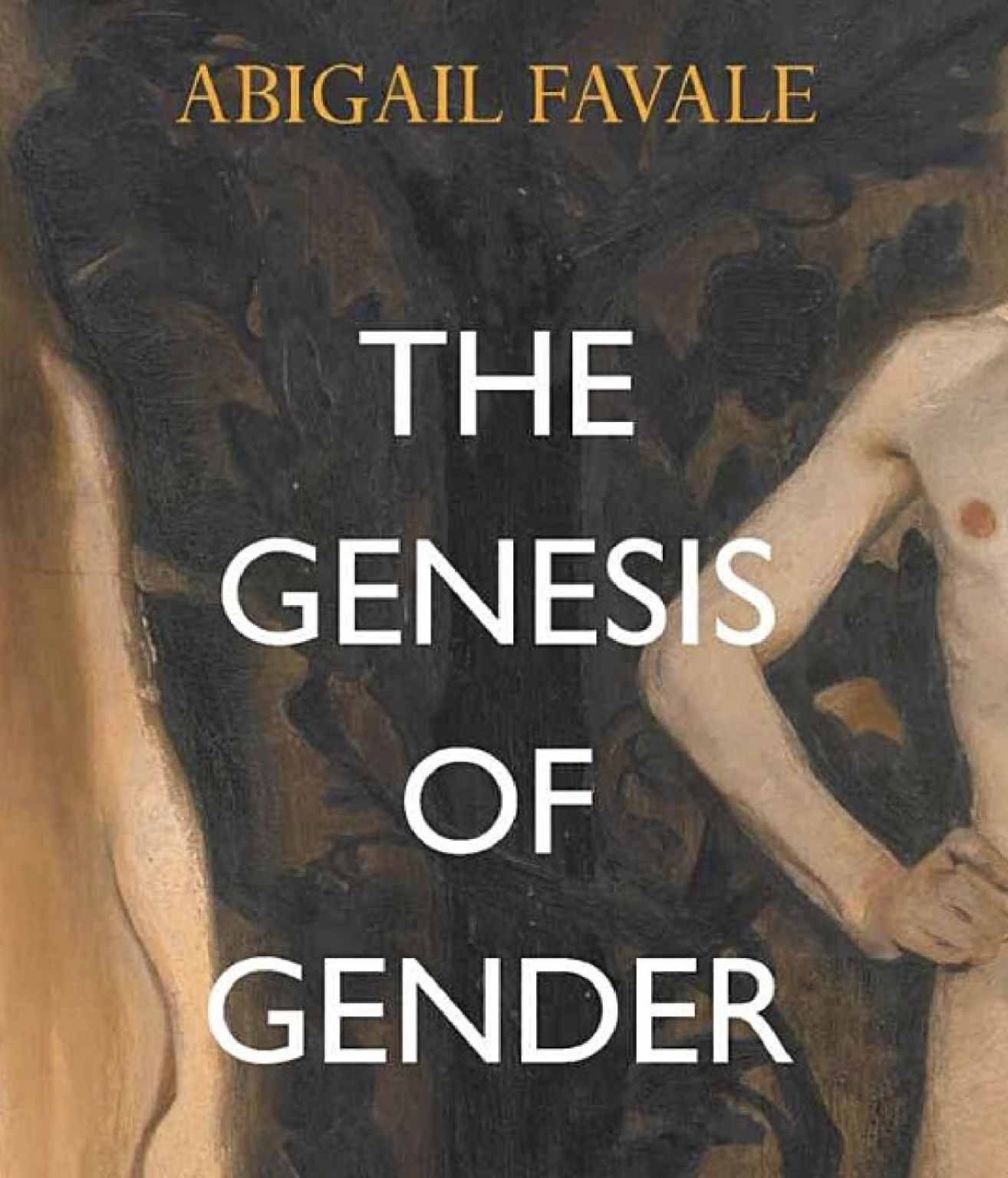
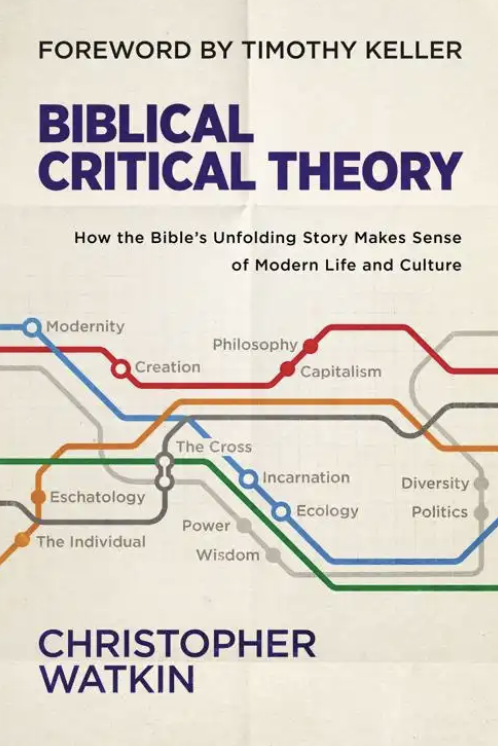
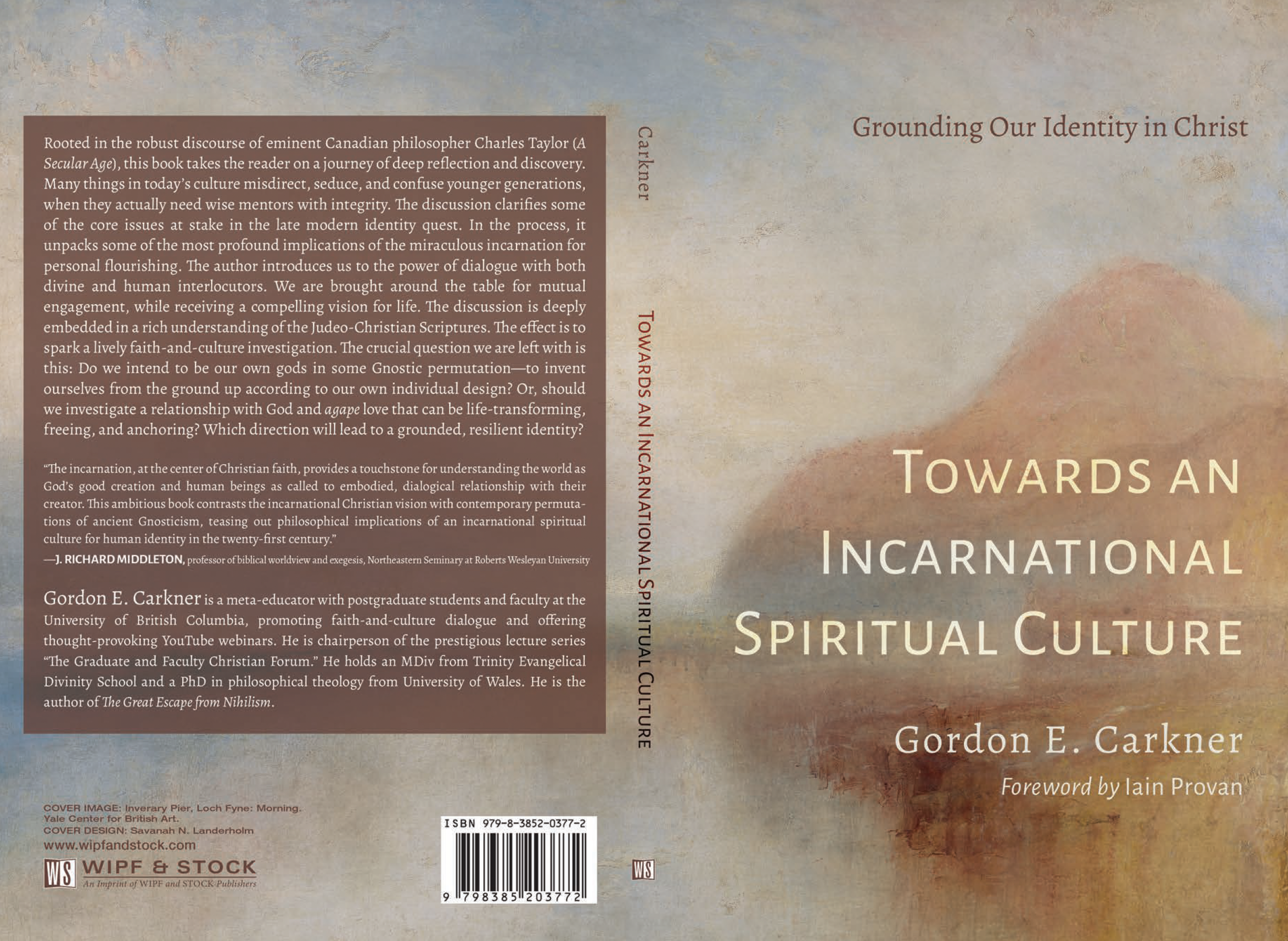









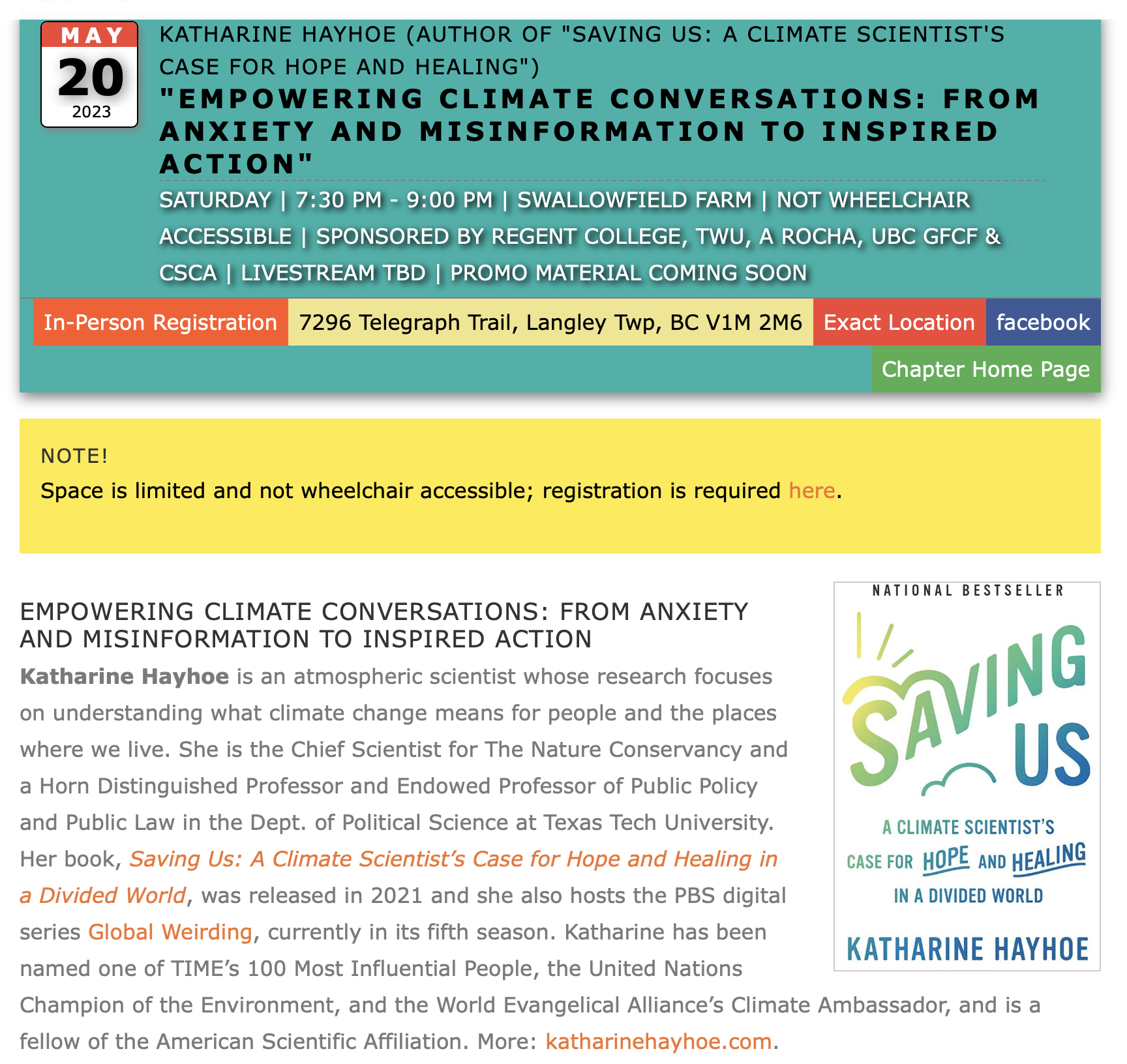
 ubcgcu