Posted by: gcarkner | April 11, 2020

René Girard on Deep Easter

The Gospel According to René Girard

~ Peter Barber, former UBC Ph.D. Student in Religious Studies~

The two principal assertions of Girard’s hermeneutical model are ‘mimetic desire’ and ‘scapegoating’. Mimetic desire is the idea that humans do not experience being and identity autonomously, but always only through an Other, a model for one’s desire. This could be an older sibling, an exemplar or a mentor. Desire and by extension ‘being’ is borrowed. This essential feature of human nature accounts for the enormous learning capability (the physical apparatus for which is now identified as the brain’s mirror neuron system), and is a positive basic feature of human existence. And yet, since desiring and being is through a model other, two or more persons desiring the same object(s) or things could end in rivalry over the object(s). This can and often does result in occasioning conflict and seeming to necessitate, in the estimation of the rival(s), the need for sacrifice of the Other, in order to gain the being blocked or inhibited by the model.

It is in this way that scapegoating regularly results from mimetic desire going sideways, as just described. Positive learning descends into destructive violence, the desire to destroy what you admire. The term scapegoat is chosen by Girard because it encapsulates our cultures’ reception of the spirit of Christ’s revelation throughout history, that sacrifice of the other is not ‘good’, is not even necessary, but is the false transfer of responsibility for rivalry and violence off of oneself and entirely onto the Other. The transferal is followed by destruction of the Other for his/her guilt, and for the danger or social pollution they still pose, in blocking access to the desired object(s). It threatens social chaos, and the scapegoat is sacrificed to restore peace and order. 

Girard applies this view of anthropology and social psychology as an interpretive lens for the Gospels. He asserts that all human cultures, being religious (including our own) insofar as they are defined and maintained by the three religious pillars – myth (group-formed narrative), sacrifice, and law – are subverted and conquered, both ideologically and practically, by Jesus Christ’s actions and words recorded in the Gospel accounts. In his reading of these texts Girard disagrees sharply with much mainstream scholarship by (a) asserting the historical and compositional unity of the texts, and (b) arguing that the Gospels themselves return to myth (culture) in order to decode and conquer it, rather than being the receptacles of mythical accretions over time.

The Gospels’ conquest of myth is perceptible in their structure and content, which as Girard observes is framed as God stepping into the ‘eternal return’ or sacrificial cycle of culture with the mission of dismantling it, and more, of providing freedom from the perceived need for it, freedom from the violence (sin) that scapegoating contains. The plot, or events, of the Gospels have therefore been summarized as ‘a redemptive return to the pattern of myth, as well as its overcoming’. Historical criticism and the historical Jesus movements have missed completely, then, the role and nature of the mythological content in the Gospels. The mythical pattern undergirding the accounts is known as the combat myth or hero pattern, and is common to foundational narratives of cultures all over the earth. I have engaged in detailed study of the Gospels’ systematic subversion of this pattern, and have concluded that it is performed in a manner comparable to the subversive Hebrew chiastic parallelism found throughout the Old Testament. Each phase is overturned along the way, and ultimately scapegoating is revealed and condemned by the Cross, with the Resurrection setting humans free – only a few culturally marginal persons at first, but the movement grows: freedom from identity and being via the Other, for real being and identity in Christ, in God. Girard concludes that culture is a tomb that God calls his children out of through Christ. This demythologization of scapegoating culture involves a fundamental commitment to protection of the victim and the innocents.

~Peter Barber

See also Link to Interview with Rene Girard on the CBC Ideas Series https://www.youtube.com/watch?v=g8Y8dVVV4To  This five part interview gives a rich understanding of the thought of this brilliant mind. See also Girard’s depiction of the profound impact of the death and resurrection of Jesus in  I See Satan Fall Like Lightning (2001)
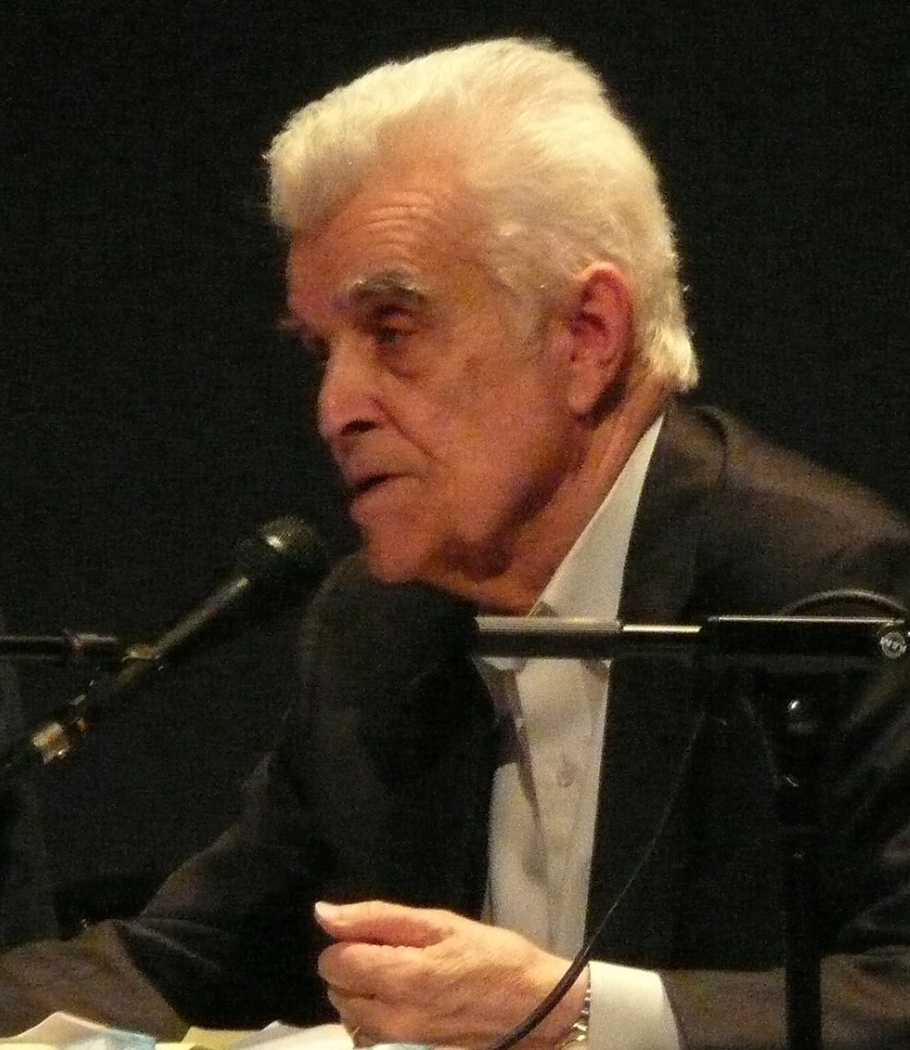
Screen Shot 2015-03-30 at 8.17.56 AMRené Noël Théophile Girard is a Franco-American historianliterary critic, and philosopher of social science whose work belongs to the tradition of anthropological philosophy. Girard is the author of nearly thirty books, including Things Hidden Since the Foundation of the Earth, with his writings spanning many academic domains. Although the reception of his work is different in each of these areas, there is a growing body of secondary literature on his work and his influence on disciplines such as literary criticismcritical theoryanthropologytheologypsychologymythologysociologyeconomicscultural studies, and philosophy.

Girard’s fundamental ideas, which he has developed throughout his career and provide the foundation for his thinking, are that desire is mimetic (all of our desires are borrowed from other people), that all conflict originates in mimetic desire (mimetic rivalry), that the scapegoat mechanism is the origin of sacrifice and the foundation of human culture, and religion was necessary in human evolution to control the violence that can come from mimetic rivalry, and that the Bible reveals these ideas and denounces the scapegoat mechanism. Old and New Testament step apart from the ancient cultures to maintain the innocence of the victim.

The way to end violence is to answer/resist with non-violence; refuse to play the game of escalating violence and scapegoating. See Ghandi as an example in India or Martin Luther King Jr. in the American civil rights movement. Although Jesus puts himself forward as a scapegoat on the cross, he also ends scapegoating by exposing the evil game of scapegoating (previously hidden to human consciousness). When he said, “They know not what they do.” he meant they did not understand that Jesus, the victim of hate, was an innocent. The entire mob, the authorities and the disciples were guilty of scapegoating Jesus–they placed the evil of the whole community/world on him. Only the centurion among the institutional authorities understood that Jesus was innocent. They were all caught up in the thrall of the scapegoating phenomenon.

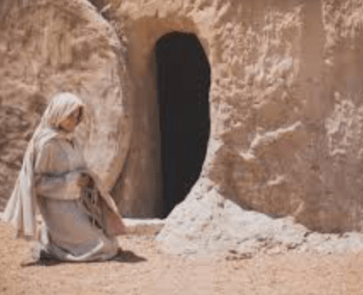
The resurrection, although convincing only to a few at the time, proved Jesus innocence before God. The preaching in Acts 2 begins with a claim that “we were all fooled (self-deceived, under a spell)  to hound him, the innocent good son (Messiah), to the cross.” Paul admits his own self-deception at his Damascus conversion; he had been a master scapegoater of young Christians. To become a Christian, one has to realize that one is a persecutor of Christ. The Passion of Christ shows the ugliness of such violence (it is not heroic but savage); Satan’s schema of mimetic rivalry and violence is exposed and broken; he is duped by the cross. While thinking he had won, he actually lost the game. Jesus stepped outside the circle of violence; his self-giving sacrifice ended violence, and provided for reconciliation. A new hermeneutic emerges that takes the power out of ritual sacrifice, a new morality and a new culture. Martin Luther King Jr. understood this at a deep level in his efforts to establish human rights for Black Americans in the 1960s: see the movie Selma. Once the cycle of violence is revealed/exposed, the alternative to violence and chaos for any culture is Christian love–Agape and justice. Even Nietzsche understood this.

Jimmy Myers, Can Beauty Save Us? This is the image of a Jewish man from Nazareth, crucified. In fact, his is the face of “the King of the Jews” and yet, it is supremely grotesque, bearing all the marks of suffering. His face reveals real forsakenness; his body aches of real bodily torture and real agony. His corpse lies mangled and bloodied, and his eyes, like Hippolite’s detestable physiognomy, proclaim the dreadful word that causes all who hoped in him to shudder: death. There is nothing at all glamorous, desirable, or romantic about this image of the crucified One.

But, of course, what is so profound about the face of this human is that his is also the face of God. His face radiates the Beauty of divinity, for he is Light from Light uncreated, the perfect image of the Father. He is, as Hebrews 1:3 says, “the radiance of the glory of God and the exact imprint of his nature . . .” The beauty of this person, wholly man and wholly God, lies in the mystery that he brings salvation to the world not by excluding suffering but by uniting himself to it. He refuses to recoil from a world that has become repellent; he does not laugh at the dereliction of others; he does not look at all that is bad and conclude, “all is well.” He does not stand far off. In his beauty, he comes near and embraces the “ugly” ones. He associates with strange and lonely and exiled folk, bringing the outcast in. He is the servant who suffers, and, protesting against “the way things are,” he takes up Hippolite’s lament and cries out, “My God, my God, why have you forsaken me?” He exemplifies and creates a people committed to what David Hart calls “strange, impractical, altogether unworldly tenderness” to those whom Nietzsche would have annihilated. Even to those who, like the dinner guests in The Idiot, laugh and mock and forsake the stranger he says, “Father, forgive them, for they know not what they do.” He brings the whole festival of divine grace to a world that has excluded itself from it and invites Hippolite and the rest of humanity to take part, to enjoy a feast of resurrection where all divisions, segregation, and exclusion are transcended, where all have their place at the supper of the Lamb, where all, who see the face of the Beautiful One and in that seeing are transformed, are inundated and radiated by Beauty itself. In a word, to paraphrase St. Athanasius, he becomes the Ugly One so that we, the original ugly ones who have made this world ugly with our violence, might become beautiful.

See Gill Bailey, Violence Unveiled.

New Book: Weaponized Lies: How to Think Critically in a Post-Truth Era by Daniel Levitin

Rene Girard, I Saw Satan Fall Like Lightning.

Other Blogs on Mimetic Rivalry: https://andrewmarrosb.wordpress.com/posts-collected-by-topic/mimetic-desire-and-mimetic-rivalry/

Who Am I? Casting Crowns https://www.youtube.com/watch?v=mBcqria2wmg

https://ubcgcu.org/2013/03/25/evidence-of-a-resurrection/ Why it is still important to discuss a genuine resurrection

Easter Poems by Malcolm Guite

Posted by: gcarkner | March 21, 2020

Quality of the Will Series: Post 4.

Intuitions of the Qualitative

Western man at the beginning of the twenty-first century is the descendant of Icarus. He wanders into the world into which he has fallen. It is as if someone has thrown him into a game without giving him rules. When he asks around for instructions, he is invariably told that they have been lost. He is amazed that everyone is content to live in a world without meaning and without identity, where no one seems to know either why he lives or why he dies. (Chantal Delsol, Icarus Fallen)

This is a provocative quote on our state of being and contains a lot of truth. Charles Taylor, however, recognizes the existence of a plurality of moral positions, principles and constructions in the West. In tension with relativism, he is convinced that some features of the self are universal regarding moral self-constitution. This is an aspect of his critical moral realism–he detects a common human moral infrastructure. He contends that there are certain features of the moral self and its world that are endemic/common to all healthy humans. While he recognizes plurality in the shape of human moralities and choices, he does not accept the ideology of pluralism-relativism as such, a position where all values are of equal value– a Weberian concept. Moral agency is not reducible to mere choice, or the positing of one’s individual values onto the world. Ruth Abbey (2000, p. 29), a Charles Taylor scholar,  comments on this point:

He [Taylor] does not suggest that in trying to explain morality we imagine a moral world devoid of humans and attempt to separate its subject-dependent properties from its objective or real properties.

In terms of real properties, he claims that all humans have certain moral intuitions, and all make moral judgments, including judgments about the behaviour of others. Such phenomena are ubiquitous across cultures, across difference.

All persons have a qualitative sense of their moral choices and deliberations. For example, he points out that respect for human life is one of the deepest and most universally held moral instincts across cultures (Taylor, 1989, 8, 11- 12), which includes a heartfelt concern for the Other. It is not merely a characteristic of self-survival, but comes from a feeling of one-anotherness. For example, “Human beings command respect in all societies; the West articulates this in the language of rights” (Taylor, 1989, p. 11). All societies around the globe condemn murder and lesser forms of abuse. When this respect is not shown to a person, gender, class or race, it is judged negatively as harmful. This entails moral conviction, an intuition about such behaviour. One exercises or engages a qualitative evaluation of  a situation, appealing to some higher moral standard or moral good, one which transcends the situation and the parties involved. We participate in a sense of justice or fairness that is greater than us. We feel it as a call. We say to ourselves, “That’s not right. Something must be done to correct this situation. Someone has to protect the innocent, the victim.”

Taylor further claims that these strong (non-arbitrary) evaluations are humanly inescapable and textured.

Our moral reactions have two facets … On the one side, they are almost like instincts, comparable to our love of sweet things, or our aversion to nauseous substances … on the other, they seem to involve claims, implicit or explicit, about the nature and status of human beings. From the second side, a moral reaction is an assent to, an affirmation of a given ontology of the human … The whole way in which we think, reason, argue, and question ourselves about morality supposes that our moral reactions have these two sides: that they are not only “gut” feelings but also implicit acknowledgments of claims concerning the objects. (C. Taylor, 1989, 5 & 7)

Reasons, beliefs, values and emotions are all real, part of the palette of our psyche. Taylor’s form of falsifiable moral realism means that the emphasis includes both objective and subjective aspects (poles) of self and morality, a subjective and objective givenness. Humans do not just act, but regularly evaluate, praise and condemn one another’s actions and motives, and reflect on their own speech and conduct, always appealing to certain objective standards, even if they do it intuitively or subconsciously. Think of your average courtroom drama. The denial of such standards does harm to human flourishing, causing the pain of anomie. According to Taylor, humans are strong evaluators by nature; strong evaluation is an essential feature of identity and a permanent feature of moral life (C. Taylor, 1989, 3-4, 14, 15). He sees this capacity for evaluating or judging desires to be a distinctively and universally human one. This self-reflective judgment of one’s desires is called “second order desires” by Harry Frankfurt. Ruth Abbey captures the nuance of Taylor’s view:

The best account of morality must be one that incorporates the fact that individuals experience goods as being worthy of their admiration and respect for reasons that do not depend on their choice of them. Beginning with humans and the way they experience morality, Taylor claims that the most plausible explanation of morality is one that takes seriously humans’ perception of the independence of the goods. (R. Abbey, 2000, 28)

Taylor believes that human beings experience these goods that command their respect in a non-anthropocentric way, as not deriving solely from human will or choice. Nor does such experience depend only on the fact of an individual’s affirmation of their value. He challenges the projectivist hypothesis (C.Taylor, 1989, 342) of people like Max Weber. Human interpretation is involved (moral convictions are human convictions after all), but there is also an important objective element in this evaluation process, and Taylor wants to highlight this, make this aspect quite explicit and clear.

How do we actually think, evaluate and act morally? Is there an objective pole or standard to which we intuitively appeal, even unconsciously sometimes? Taylor asks us to dig deeper in our self-examination. What are these objective goods that we intuitively appeal to, and where do they come from? What are their sources? How can these sources and these goods empower us as moral agents? Here’s a parallel thought from brilliant French philosopher Chantal Delsol:

To have meaning is to stand for something other than oneself, to establish a link with a value, an idea, an ideal beyond oneself. Life has meaning, for example, for those who spend their lives in search of a cure for a disease., or in the struggle against injustice, or just to show every day that society can be more than a jungle. The link one establishes with this value or idea confers a higher value on life…. A life that has meaning recognizes certain references…. In other words, it is paradoxically worth something only to the extent that it admits itself not to be of supreme value, by recognizing what is worth more than itself, by its ability to organize itself around something else. Everyone will admit that existence is at once both finite and deficient. We consider society to be mediocre, love insufficient, a lifespan too narrow. The person whose life has meaning is the one who, instead of remaining  complacently in the midst of his regrets, decides to strive for perfection, however imperfectly, to express the absolute, even through his own deficiencies, to seek eternity, even if only temporarily. If he spends his life making peace in society or rendering justice to victims, he is effectively pointing, even if it is with a trembling finger, to the existence of peace and justice as such…. By pursuing referents, he points to them. He awkwardly expresses these impalpable, immaterial figures of hope or expectancy…. Individual existence, when it means something, points to its referent through its day-to-day actions and behaviours, the sacrifices it accepts and the risks it dares to take…. The seeker moves forward, all the while wondering, “What is worth serving?” Individual existence structures itself through the call for meaning. Existence is shaped by questions and expectations. ~Chantal Delsol, Icarus Fallen, (4-5)

Chantal notes a fear of the good in the West due to the impact of dangerous and destructive ideologies in the twentieth century that ravaged our world. She says that we are often left with a negative morality–what we are afraid of, disgusted by, or the terror we want to avoid–and lack the positive side of the equation. But this is an over-reaction and far too cynical. This independence of goods, or qualitative discriminations, is a vital concept to contemporary ethical and political debates. It is because we can thereby identify our goods, as well as those of others, and discuss/debate/refine them in a rational manner, examine and weigh them, grapple with their priority and their individual merits. Taylor sees ethics and morality as intimately connected, not independent arenas. He is calling us to grow up morally as a Western culture.

Furthermore, as Flanagan (1996, 147) notes in his commentary on Taylor, this concept of strong evaluations is both descriptive of how people are and act, and also normative regarding what is required for full personhood. Individuals operate according to these working moral assumptions, says Taylor, even if they are not conscious about relating to, evaluating, sorting and ordering goods. This reveals their inescapability. The process is often tacit, unconscious or intuitive. Taylor (1985a) emphasizes this essential point and this fine distinction about the existential power of the good, its draw on an individual moral agent:

I want to speak of strong evaluations when the goods putatively identified are not seen as constituted as good by the fact that we desire them, but rather are seen as normative for desire. That is, they are seen as goods which we ought to desire, even if we do not, goods such that we show ourselves up as inferior or bad by our not desiring them. (C. Taylor, 1985a, 120)

Moral realism for him, means that (C. Taylor, 1989, 4, 20) strongly valued goods command the respect of individuals because of their intrinsic value, not one’s choice to value them. These goods increase our net worth. They are experienced as making calls or demands upon individuals, rather than being freely or arbitrarily chosen. This is why someone can feel existentially guilty about something they did or said, even if they have rationalized it in their own mind. Humans are often prone to do just that.

Charles Taylor takes moral experience of the good very seriously, imputing ontological significance to it. The good (unlike the weaker language of values) is by no means arbitrary, and it matters greatly. It is part of a moral landscape, and a web or skein of meanings. The good is a robust, heavyweight concept for both ancients and moderns. He resists the slide towards moral subjectivism: this questionable view suggests that one’s choice among the various goods on offer can only be justified according to individual preferences or inclinations. This is to over-emphasize the subjective pole.

He contests this posture as illegitimate and weak; it disempowers us morally and spiritually. These preferences, claims Taylor, can be critiqued and judged objectively, evaluated for their merit, and discussed rationally. Taylor claims that there is an inherent quality (goodness) to the moral good that individual selves ought to recognize and they should be impressed by it, or it is not a higher good. Taylor (1989, 42) offers a key test of a good: “Can it be the basis of attitudes of admiration or contempt? It raises questions about what kind of life is worth living … what would be a rich, meaningful life, as against an empty one?” For example, one can easily discern the difference in the hierarchy/quality of the following goods: between medical relief work (Doctors Without Borders), housing the homeless (Habitat for Humanity); and abuses like  international sex trafficking of minors or child pornography. One can discern between benevolence to the poor and corporate fraud or enslavement. The former garners admiration; the latter draws contempt as it causes harm to people.

He wants the moral individual/agent to affirm this healthy capacity for evaluating or judging their own desires, claiming that there is a capacity within the human self (discernment/wisdom/phronesis) which can be revived in us and can help us examine critically our own desires and behaviour. This phenomenon is a vital aspect of our self-transcendence and thereby personal liberation. He resists the stance of the nihilist, where the good is demoted to subjective choice or group values—the will to power. His Oxford mentor, Iris Murdoch, helps us at this juncture:

Briefly put, our picture of ourselves has become far too grand, we have isolated, and identified ourselves  with an unrealistic conception of the will, we have lost the vision of a reality separate from ourselves, and we have no adequate conception of original sin…. In the moral life, the enemy is the fat, relentless ego. Moral philosophy is properly … the discussion of the ego and of the techniques for its defeat.

Some important qualifications are helpful at this juncture for understanding these qualitative distinctions.  Individuals are not always aware of the hierarchy of competing goods that is in play. It can be invisible to consciousness, held pre-articulately or tacitly as a background to moral understanding. Secondly, the language of strong speaks more about quality than force or power. Thirdly, Taylor believes that all individuals are strong evaluators, but does not believe that they all value the same things strongly–plurality of convictions (difference) is a human local and global reality. He does, however, believe that some goods feature in all moral codes and are strongly valued by all cultures: for example, support for human life, wellbeing, and the dignity of the person, protecting the innocent, the vulnerable and the victim, supporting the family ties. For further reflection on this point, see Dennis Danielson, The Tao of Right and Wrong. Vital to the whole moral realism discussion is the claim that “strong value is both logically and ontologically prior to strong evaluation” (C. Taylor, 1989, 99). Intrinsically high value calls forth our strong evaluation.

Some values that we would not classify as moral goods in the high, Taylorian sense:

  • View that life is a jungle and that the assertive, aggressive, Alpha winner takes home the prize.
  • Gratuitous Greed: always putting my own interests and success above everything and everyone else. This can become utterly sociopathic.
  • Innate Narcissism: I need to be admired at all costs, by everyone. You exist to feed my ego and improve my wealth. Suck it up.
  • Systemic Inequity: the assumption that it is your fault, not my responsibility, that you are poor, handicapped, brokenhearted, unhealthy or marginalized. We’ve always had haves and have-nots. Accept your lot in life or work harder, get stronger, tougher.
  • Exclusive Exceptionalism (Élitism): strong leadership means that working people need to know and be kept in their place. Only a select few make it into the inner circle of power and privilege. This can lead to corruption after following the greed, justifying deception, power and  lust.
  • Consumerism: I need maximum freedom to choose what I want in life, according to my budget and ability to pay. It is my right. We are all essentially selfish after all. Work harder and you’ll get a bigger piece of the pie. The environment will take care of itself.

Sadly, writes Chantal Delsol:

The contemporary era, as the end-product of the modern attempt to suppress morality, has created individuals who no longer raise the question of good and evil, and who are entirely ignorant of what used to be called “the examination of conscience”…. The attempt to eliminate the antinomy between good and evil through a denial of their differences should logically lead to carefree indifference towards these categories. Modernity has replaced the objective category of the good with what it calls values, that is, a smattering of subjective goods, each of which derives from individual judgment. By their subjectivity, values spell the death of the good, even if language confers upon them the majesty of the defunct good….Values are a form of solipsism or mere whim, depending on the degree of clarity of thought one might find in them. A purely subjective “good” is binding on no one but oneself, and can be differentiated only with some difficulty from sentiments, affections, or self-interest.  (Chantal Delsol, Icarus Fallen, 22, 27)

We are beginning to get some equipment to distinguish between good and evil, a line which Solzhenitsyn says “runs dow the centre of every man’s heart”. Professor Delsol pushes us our thinking forward:

Definition of Evil: the Greek concept of diabolos–“he who separates, divides through aversion and hate; he who makes unjust accusations, denigrates, slanders; he who envies, admits his repugnancy.” The absolute Evil identified by our contemporary takes the form of racism, exclusion or totalitarianism. The last in fact appears as the epitome of separation, since it atomizes societies, functions by means of terror and denouncement, and is determined to destroy human bonds (examples: apartheid and xenophobia (Chantal Delsol, Icarus Fallen, 61). See also  How Fascism Works by Jason Stanley.

Definition of the Good: For contemporary man, the notions of solidarity and fraternity, and the different expressions of harmony between classes, age groups, peoples, are still associated with goodness. The man of our time is similar to the man of any time insofar as he prefers friendship to hate and indifference, social harmony to internal strife, peace to war, and the united family to the fragmented family. In other words, he seeks relationship, union, agreement, and love, and fears distrust, ostracism, contempt, and the destruction of his fellow…. The good has the face of fellowship, no matter what name it is given, be it love, the god of Aristotle, or the God of the Bible. (Chantal Delsol, Icarus Fallen, 62)

Community emerges out of self-giving for the other, enriching trust and creativity  in relationships. It also provides healing from brokenness.

The certitude of the good finds its guarantee in the attraction it induces. The separation of the diabolos occurs constantly, but one day or another it will be pursued by mortal shame…. By experience, we know that evil lies in the excesses of [a particular] good. That is why we refuse to search for the rational [truth] foundations of the good, why we voluntarily allow our conception of the good to remain purely instinctual. (Chantal Delsol, Icarus Fallen, 62, 63)

~Gordon E. Carkner, PhD Philosophical Theology. (Meta-educator)

Abbey, R. (2000) Charles Taylor. Teddington, UK: Acumen.

Delsol, C. (2010). Icarus Fallen: the search for meaning in an uncertain world. Intercollegiate Study Institute.

Danielson, D. (2018). The Tao of Right and Wrong: rediscovering humanity’s moral foundations. Regent College Publishing.

Posted by: gcarkner | March 11, 2020

Quality of the Will Series: Post 3.

Charles Taylor Confronts the Low Quality Will

Many people attempt  to operate on the assumption of moral neutrality. They want a morality that does not offend anyone–with a tone a bit like elevator music. They promote a live and let live attitude, their moral language is a bit undeveloped. But is that realistic, helpful and liveable, especially amidst the difficult challenges of our day? Don’t we need a higher quality will? The weakness of our twenty-first century morality is at the very heart of many of our current existential crises, including that of our identity. It has left us virtually naked in a wind storm, ill-equipped for life. The focus of this weak view is on the centrality of the autonomous individual, unqualified, creative will.  It is problematic because of its thinness and lack of substance, content and sensibility to context.  It seems that this conception of the will is hollowed out, reduced to negative freedom of autonomous choice (freedom from any restrictions or limitations). It tends to include freedom from responsibility for others, for the common good, for the health of the planet, and our cultural heritage. This naked will does not like duty, obligation or long-term commitments, the costlier aspects of relationships.

Ethics is reduced to pragmatic, lived experience as one chooses to live and stylize one’s life day by day, like the aesthetic solipsism in Michel Foucault or Oscar Wilde. Such subjectivistic autonomy can lead to moral autism–a loss of moral language of any substance and merit. So writes Matthew Crawford in The World Beyond Your Head (2015, 183f); it makes us vulnerable to the only value left in such a society–performance with its consequent workaholism. We are sent into life, work and marriages with no proper tools of moral and ethical engagement, so we default to elevator music morality. We have no discipline/depth of thought or action, no foundation for discernment in our decisions. We don’t even know how to ask the right questions in an argument or debate. Morality is defined, not through the conformity or guidance of behaviour via codes, norms, traditions, principles, wisdom of the ages, precepts or virtues, but in reference to my rights, my desires, my goals, my freedom of consumption of goods and experiences. This often boils down to the way in which an individual naked will determines and justifies itself. We should be suspicious of such self-justification and its tendency towards psychopathy. It calculates as a form of entitlement or even narcissism, celebrating the good of oneself alone, often to the exclusion of the good of the other, the community or the planet.

In this post, we are calling this whole project into question as a legitimate moral modus operandum. Charles Taylor raises serious questions regarding assumptions about a moral self that does not have any relationship to the higher/greater good (even acts in denial of that relationship). It becomes an abstract reflexive self focused on its own desires.  Such an individual lobbies the government to protect the personal right to express those desires and indulge decisions in line with one’s own private self-interest and personal expression. See our complementary blog series ‘Critique of the Aesthetic Self’.

In his short book The Malaise of Modernity (the condensed version of Sources of the Self), Taylor sets out a helpful template of self-construction to assist us in our understanding of the problem that is at work in this outlook. 

   Taylor’s Moral Self-Construction Diagnostics

Category A (Creativity)

(i) Creation and construction (as well as discovery) of the self.

(ii) Pursuit of originality in one’s self-crafting.

(iii) Opposition to the rules of society and even potentially to what one recognizes as morality, or the moral order.

Category B (Social and Moral Accountability)

(i) Openness to horizons of significance prevents one’s self-creation from losing the background that can save it from insignificance and trivialization.

(ii) Self-definition needs to be developed in dialogue with significant Others, that is, fellow moral interlocutors. (Taylor, 1991, pp. 65, 66)

Taylor’s concern with Neo-Nietzscheans and Post-Romantics is the extreme emphasis that people like Michel Foucault place on Category A (Creativity), to the near exclusion of any emphasis on Category B (Accountability and Mutuality). And why should, according to A (iii), one’s creative identity development include a form of social or moral anarchy (Foucault calls it transgression)?  This seems rebellious to an extreme rather than displaying any depth of critical realism reflection. Here’s how Taylor puts it:

What must be wrong is a simple privileging of one over the other (e.g. A over B) … That is what trendy doctrines of “deconstruction” involve today … they stress (Ai) the constructive, creative nature of our expressive languages, while altogether forgetting (Bi). They capture the more extreme forms of (Aiii), the amoralism of creativity … while forgetting (Bii), its dialogical setting, which binds us to others … These thinkers buy into the background outlook of authenticity, for instance in their understanding of the creative, self-constitutive powers of language … while ignoring some of its essential constituents. (Taylor, 1991, pp. 66, 67)

By abolishing all extra-self horizons of significance, and demoting the significance of dialogue with other moral interlocutors, morality can become a virtual monologue, an abstract self-projection imposed onto the world, rather than a source of communal conversation, appropriate debate and cooperation. It lacks the social dialectic element of self, sports a reductionistic hermeneutic of self. Is there not more to life than love of oneself or self-fulfilment?

Characteristics of the Post-Romantic Aesthetic Self as gleaned from Taylor, 1989, pp. 434-455: see also blog post ‘Can Beauty Save Us?’

  1. Art is superior to morality, and sees itself in conflict with the social moral order.
  2. Humans live in a chaotic or fallen natural and social world, rooted in chaos and the will to power. One can take an affirmative stance towards the world through seeing it as beautiful—seeing the world through an aesthetic lens. This is the only remaining basis for its justification.
  3. Being itself is not good as such, nor is human being per se taken as good.
  4. Hope resides in a strong belief in the power of the creative imagination to transfigure or transform the world and the self, or to reveal it afresh as beautiful (aesthetic).
  5. Constitutive language is a key means of changing the world, or at least the way one sees the world—key to one’s poetic self-expression, and re-writing or re-inventing the self.
  6. This tends to result in an aesthetic amorality, a move beyond good and evil, an embrace or affirmation of violence and cruelty as well as patience and care. There can be no logical or moral distinction between them.

Taylor, while sympathetic with the expressive aspect of self, raises hard questions about this kind of aesthetic self. He wants to open up the discussion of ethics to new and fresh philosophical examinations and investigations. His discussion centres around the possible recovery of the ancient concept of the quality of the will, and the importance of re-examining sources of human motivation (his concept of the constitutive good). He believes that there are higher and lower motivations, and that individual can move toward growth in moral maturity–seeing better, thinking better, living better. There is insight here on crossing the moral gap between knowing what is wise or right and doing it–a perennial human problem. He is asking us to take a step back from life as it is lived as moral praxis, back from self-actualizationto reflect on the values of our choices and actions, to look at our second order desires. He suggests that there might even be a way to recover a fruitful connection between religion and ethics, meaning and moral agency. God and agape love is at least one traditional source of the good or goodness in human society down the centuries. Oxford scholar Larry Siedentop writes brilliantly about its transformative power in his The Invention of the Individual.  

Now, through the story of Jesus, individual moral agency was raised up as providing a unique window into the nature of things, into the experience of grace rather than necessity, a glimpse of something transcending death. The individual replaced the family as the focus of immortality…. Paul spoke of the Christ as offering salvation to all humanity. ‘The Christ’ stood for the presence of God in the world…. Paul felt he had discovered something crucial—the supreme moral fact about humans—which provided the basis for reconstructing human identity, opening the way to what he called ‘a new creation’…. In Paul’s eyes, the Christ reveals God acting through human agency and redeeming it…. Through an act of faith in the Christ, human agency can become the medium of God’s love—which Paul sometimes calls ‘faith acting through love’. The faith accepting that love amounted to an inner crucifixion, from which could emerge a transformed will, embodied in the person of Jesus. For Paul it was a personal transaction, the creation of another, better self…. It is an invitation to see a deeper self, an inner union with God. It offers to give reason itself a new depth. Rationality loses its aristocratic connotations. It is associated not with status and pride but with a humility which liberates. (Larry Siedentop, Inventing the Individual: The Origins of Western Liberalism, 2014, 58-60)

This makes sense historically, since ‘God’/theology has composed a major contribution to Western moral identity. Theology has a long-standing, fruitful history with ethical reflection. It is also Taylor’s claim that many of the goods that are commonly aspired to in the West have their roots in the constitutive good of Christian theism (R. Abbey, 2000, pp. 50-51, 98-99; and Taylor, 1999, Part IV; Morgan, 1994, p. 49). This is hinted at in Sources of the Self (Taylor, 1989), but becomes more overt in A Catholic Modernity? (Taylor, 1999) and he further develops it in A Secular Age (2007). Taylor believes that there is real fruitfulness in reconnecting many contemporary moral goods to their historical roots in theism in order to empower them once again. Consciousness of the source of these goods boosts their impact on individual lives and in society, grounding a person morally, offering clothing for this naked will. Part of the moral guilt and frustration we carry is that we lack empowerment to do what we know is right, constructive or ethically appropriate.  Taylor asks us to re-examine the value of moral goods and how they might re-empower, re-clothe late moderns.

He attempts to retrieve something lost in Western moral consciousness in this important constitutive language of moral sources. From his perspective, moral sources are not about highest principles, but about the quality of the will, a concept which has been tragically absent in moral philosophy for over a century. For instance, the primary question for Taylor’s moral ontology is: ‘What or whom do I love?’ (motivation), rather than ‘What am I obliged to do?’ (right action). He wants to broaden the domain of morality, and come to grips with high moral desires, ideals that drive humans at their best or noblest. This is also hope for moral growth through the course of one’s life as a kind of quest. The second obligation question, to him, is the last one to ask (even though it is often the main concern of contemporary ethical debates). The second key question is ‘What do I want to become?’ (character), a question that is in recovery to some degree in the late twentieth century through virtue ethics, heralded by such intellectuals as Alasdair MacIntyre and positive psychology (with roots going all the way back to Aristotle). This will lead to what Taylor calls a thick self. More on this in future posts in this series.

Modern man is not a zombie or a monster, but a drifter with an unhappy conscience, because, having a right to everything, he is fulfilled with nothing, and due to this dissatisfaction, he does not even know the name of what he is looking for. He is in self-exile from his own universe…. But periods of metamorphosis hold within themselves the hope of meaning. (Chantal Delsol, Icarus Fallen, xxvii)

~Dr. Gordon E. Carkner, PhD in Philosophical Theology, University of Wales

Taylor, C. (1978). Language and Human Nature. Plaunt Memorial Lecture, Carleton University, 1978

Taylor, C. (1979). Hegel and Modern Society. Cambridge: Cambridge University Press.

Taylor, C. (1985a). What’s Wrong With Negative Freedom? In C. Taylor (Ed.), Philosophy and the Human Sciences: Philosophical Papers, Vol. 2. Cambridge: Cambridge University Press.

Taylor, C. (1985b). Foucault on Freedom and Truth. In C. Taylor (Ed.), Philosophy and the Human Sciences: Philosophical Papers, Vol. 2. Cambridge: Cambridge University Press. [also in Political Theory 12, 2 1984.]

Taylor, C. (1985c). Connolly, Foucault, and Truth. Political Theory 13  377-85

Taylor, C. (1989). Sources of the Self: The making of the modern identity. Cambridge, MA: Harvard University Press.

Taylor, C. (1989b). Taylor and Foucault on Power and Freedom: a reply.  Political Studies 37  277-81.

Taylor, C. (1991). The Malaise of Modernity. Concord, ON: Anansi.

Taylor, C. (1994). Charles Taylor Replies. In J. Tully (Ed.) Philosophy in an Age of Pluralism: The philosophy of Charles Taylor in question (pp. 213-57). Cambridge: Cambridge University Press.

Taylor, C. (1999).   In J.L. Heft (S.M.). (Ed.). A Catholic Modernity?  Oxford: Oxford University Press.

Taylor, C. (2017). A Secular Age. Cambridge, MA: The Belknap Press of Harvard University Press.

Taylor, C. (2016). The Language Animal: the full shape of the human language capacity. Cambridge, MA: The Belknap Press of Harvard University Press.

Adams, R. M. (1999). Finite and Infinite Goods: a framework for ethics.  Oxford: Oxford University Press.

Crawford, M. (2015) The World Outside Your Head: on becoming an individual in an age of distraction. Toronto, ON: Allen Lane/Penguin.

Gill, D. (2000). Becoming Good: Building Moral Character. Downers Grove, IL: InterVarsity Press.

Wallis, J. (2014). The (Un)Common Good: how the gospel brings hope to a world divided. Grand Rapids, MI: Brazos Press.

Top Expert from NIH on COVID-19 Francis Collins
Posted by: gcarkner | March 4, 2020

Quality of the Will Series: Post 2.

Charles Taylor Wagers on (Critical) Falsifiable Moral Realism

Indeed, who are we late moderns and where are we headed as a culture? Charles Taylor challenges the current superficiality regarding moral convictions with its over-emphasis on living one’s desires on a philosophical trajectory of freedom-choice-self-interest. Some call this the cult of self. Can we not aspire to higher ideals? His argument for moral realism is five-fold. In terms of moral givens, he argues that certain perennial features of the self are present irrespective of culture or the way they are expressed or understood. He starts his analysis with the question of how humans operate as moral beings in their actual moral experiences, and how they actually reflect upon those experiences. So he is interested in praxis (behavioural practices) as well as moral theory. Beginning with humans and the way they experience morality (the moral phenomenon), he claims that the most plausible explanation of morality is one that takes seriously a human’s perception of the independence of moral goods. It has been my privilege to wrestle with Taylor’s engaging ideas for more than a decade and I find them weighty and full of resonance with my experience and observations. There is real depth and nuance to his take on morality. It ought to captivate the best minds and the most genuine hearts.

He does not feel it appropriate to substitute a philosophical abstraction (for example utilitarianism) for how people live and think. Firstly, he argues for the ubiquity of moral intuitions and judgments in human experience. These are intuitions that transcend basic human desires for survival, sex, or self-realization. They are also referred to as second-order desires, strong evaluations or qualitative discriminations. One notes the important reference to the quality of the will. This concept of second-order desires invokes the ancient idea of the good. It is one which, although interwoven with the self, transcends the self in significant ways. It is higher and deeper, so to speak, not reducible to choice.

Secondly, he argues that there is a need for a larger moral picture to facilitate the task of making sense of moral experience (debates, deliberations, decisions and actions). He calls this picture (or map) a moral framework. Each framework is made up of several goods held together in a coherent relationship with one another, producing a moral worldview. The individual moral self discovers a dialectical relationship with its framework. It is not a static set of conditions, but rather dynamic and developmental. It matures over time.

There are three consequential axes of moral frameworks that are not properly defined by natural laws of science. They are meta-scientific:

  1. Beliefs about the value of human life, the respect that is due to others, and what this will cost us, demand from us.
  2. Beliefs about what kind of life is worth living. This permeates all our choices and actions.
  3. The dignity we afford ourselves and others, based on how we understand our role and usefulness to society, and our place or calling within the larger scheme of things.

Thirdly, he recognizes that there is a key defining good within each moral framework, which he calls the hypergood. The hypergood is the preeminent good and operates as a controlling influence and organizer of the other goods within the hierarchy of the framework. It is a driver, sets the moral tone and defines the overall character of the framework.  Thus, it is quite central to the discussion of the moral agency and to understanding a person at depth.

Fourthly, Taylor recognizes a significant narrative and communal texture to the pursuit of the good in moral self-constitution. Humans tend to interpret their lives in narrative and communal terms as they pursue moral goods. These goods give the individual a vision and mission to life, a trajectory for life. This important narrative-articulate dimension of self helps one find a unity amidst the complexity of moral experience and the plurality of goods vying for one’s attention. It offers a sound basis for evaluating one’s progress in life. Taylor dedicates a whole chapter to this concept in his 2016 book The Language Animal. Moral goods are also contained and maintained by a community of persons and this defines the community’s identity.

Fifthly, Taylor speaks of the sources of the moral or sources of the self, which he refers to as the constitutive good. The constitutive good (a category of moral motivation) gives meaning to and empowers the hypergood and the other life goods within the moral framework: it acts as a moral driver. It provides the ground of the worth or value of the life goods, and allows the individual to live the good life. This is a very significant, core idea for Taylor, one worth pondering more deeply. He expands on this idea of constitutive language in The Language Animal (chapter 6)–it acts as a complement to scientific language.

Thus, moral identity is intricately interwoven with the pursuit of the good in life in Taylor’s moral ontology. Healthy people build an intimate, passionate relationship with the good asa source of inspiration and motivation. Psychopaths and sociopaths, on the other hand, deny the relevance of any moral framework or good: narcissists and pathological liars follow this path (5% of the population). They are the hard core of the cult of self-interest, but they do not discredit the power of moral frameworks for most people.

Taylor discerns these five categories as givens, structural features that are common to the life of all morally and psychologically healthy human beings. He wants to problematize the occlusion or exclusion of such parameters, such qualitative distinctions for moral reasoning, because he believes that within the life of the self, there is a multiplicity of goods to be recognized, acted upon and pursued. These goods animate our lives and enhance culture. Taylor emphasizes the importance of being wise and self-conscious/circumspect about these goods. It is quite a challenging and enlightening proposal, a moral ontology of the self at its best, noblest or most whole. It also offers a positive, constructive, open platform for dialogue on moral self-constitution and ethics.

I will further unpack Taylor’s view in future posts. The nuances are exceedingly important. Clearly, this approach pushes back against current forms of ethical relativism and moral subjectivism which often lead to nihilism, moral autism (Matthew Crawford), confusion and anxiety/depression, decreased moral power/agency and tribalistic divisiveness within society. The cult of self leads to auto-intoxication (Camus) and results in a collective moral suicide, a tear in the social moral fabric. Taylor offers a healing paradigm for our contemporary Western moral brokenness, our estrangement/alienation from self, others and the sacred, from the forces that give us ultimate meaning and purpose. To live well/nobly, he suggests, is a high human achievement, a form of resistance to radical evil (anti-humanism). One can apply his critical moral realism to a range of issues: everyday life to the biggest ethical conundrums.

Gordon E. Carkner, PhD in Philosophical Theology, University of Wales

Key Readings/Dialogue with Taylor:

Posted by: gcarkner | March 2, 2020

Quality of the Will Series: Post 1.

The Recovery of Positive, Constructive Ethical Dialogue

Many people today are discouraged and confused by the moral drift in Western society and wonder if they can have any voice or influence in a world with such a strong emphasis on individual choice, subjectivist approach to values, aesthetic taste in ethics and radical, self-defining (self-justifying) concepts of freedom. Freedom currently in the West is often claimed as an ontological position, a reality within which one can justifiably choose one’s own moral parameters and construct or re-invent the self. In his important book, Sources of the Self (1989), and followed by A Secular Age (2007), Canadian philosopher Charles Taylor attempts to track and understand the moral soul of early and late Western modernity, especially what he calls the North Atlantic viewpoint. The narrative is a complex one, but vital to comprehend if we are to truly understand ourselves and our friendsThere are many ideological forces at work and many experiments in promoting an ethics of happiness, or consequence, or situation, one of pleasure or principle. The focus of ethics can be radically varied.

Religiously-oriented  people today can feel powerless and a bit odd, even guilty, for holding any moral convictions at all, that is, besides a consumeristic will that follows its self-interest desires. On this important topic, visiting Notre Dame Early Modern European History scholar Brad S. Gregory has a most profound Chapter 4. “Subjectivizing Morality” in his 2012 publication The Unintended Reformation. Many today feel themselves caving in or abandoning their inherited standards of behaviour under the weight of the cultural slippage–towards nihilistic relativism and radical individualism. Where can people turn for assistance, discernment and wisdom on this matter?


McGill University, MontrealMcGill University where Taylor taught

In the West, is there any basis left for normativity, for accountability, even for responsibility for the Other? Is it all just about my agenda, my choice, my naked will, or my aesthetic self-invention and personal fulfilment? “What is the quality of this choice, this will?” asks Taylor as he retrieves an ancient idea of qualitative discriminations in ethics–the language of the moral good or goods (See Part 1. of Sources of the Self). In what is  choice grounded, and how is it guided? We late moderns can be very naive about our Faustian deals when we make choice or expressivism an absolute within an ideology of unshackled freedom and self-determination. Post-Romantic philosophers like Michel Foucault offer an Art of Self or an ethics as aesthetics as a morality substitute in an age of nihilism and anomie (transgressive, norm-less existence).

This twelve part blog series on the Quality of the Will  suggests that pre-eminent Canadian philosopher of the self Charles Taylor can be a very strategic assistance on the issue at hand in his discussion of moral frameworks as a source of identity. He wants to recover/retrieve a robust moral grounding in order to avoid contemporary solipsism (think Julia Roberts in the movie Eat, Pray Love). He believes that these goods can empower us as moral beings once again. They need not remain buried in contemporary moral discourse. Following in the footsteps of one of Oxford’s greatest philosopher Iris Murdoch, this project (Malaise of Modernity; Sources of the Self) entails a dynamic, adventurous and exciting recovery of the ancient language of the good and a renewal of a fresh social normativity–a renewal of moral discourse in the polis. Taylor is highly skilled in employing an engaging language that a pluralistic audience can understand, both at the intellectual and practical choice/moral agency level. It resonates with many in a significant way! One has to be willing to think harder and go much deeper than much contemporary thought on ethics and morals. We attest to the fact that is worth the effort, the grappling with unfamiliar vocabulary. It offers fresh hope for Western pluralistic cultures and sub-cultures.

This twelve part series outlines his monumental contribution to moral and ethical thinking (the ontology of the good). It reveals a phenomenological aspiration to the good inherent in most humans if they are willing to reflect more deeply with Taylor, an aspiration which can be a robust challenge to the ethical solipsism and Zarathustra will-to-power outlook so common today.

Dr. Gordon E. Carkner’s UBC Lecture on Charles Taylor and the Modern Quest for Identity: Dialogue on a Great Mind.

What are the valid and sustainable parameters of our current moral quest, our current quest for freedom, wholeness, identity, happiness within our various spiritual journeys, the quest for meaning and identity in our lives? How do we map this in today’s world and put it to work for positive change? Taylor is an avid moral geographer. Moral ontology is deeply important and central to all other discussions about the moral self. It offers real insight into the inner landscape (infrastructure or deep structure) of the self. Therefore it remains central to engage the current debates of our day in the midst of a cultural loss of moral consensus, as astutely noted by virtue philosopher Alasdair MacIntyre. Moral autism is not an acceptable or stable place to rest.

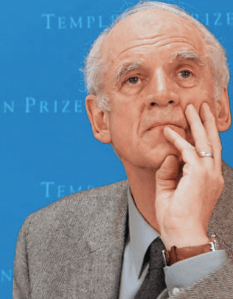
http://www.youtube.com/watch?v=5XC6DK1WkR4  Conversation (2012-06-16) with Charles Taylor rooted in A Secular Age (his Templeton Prize winning tome).

We trust you will enjoy reading and reflecting upon, perhaps debating with, this series of posts as much as we enjoyed writing them.

~Gordon E. Carkner, PhD in Philosophical Theology, University of Wales

Dissertation: “A Critical Examiniation of Michel Foucault’s Concept of Moral Self-constitution in dialogue with Charles Taylor.” Find it in the British Library in London, Oxford University Library, or Oxford Centre for Mission Studies Library.

See also Notre Dame sociologist Christian Smith, Moral Believing Animals.


Posted by: gcarkner | February 22, 2020

Dr. Raymond Aldred on Truth and Reconciliation

Meeting Postponed Until Further Notice due to Covid-19 Safety Concerns

Samples of Ray’s Perspective from YouTube

Abstract

In the wake of the Truth and Reconciliation Commission report on residential schools, Canadians have often viewed Christianity as the enemy of Indigenous people. But there is another side to the story, claims Professor Raymond Aldred. Almost two-thirds of Indigenous people in Canada actually call themselves Christian and appreciate what they have learned from Christian leadership over the years. Aldred notes that there is currently real hope for a better day, a way forward for our Indigenous people. This hope begins in community, in rethinking our identity, who we are and where we have come from. In this address, he will show the need to tell the truth and use human imagination to heal relationships with the land/creation, with family, clan and community, and with the Creator. At the heart of Indigenous peoples’ quest for healing is a shift in identity from shame to dignity of heritage. Mohawk writer Patricia Monture notes that key to this shift is a decision to take responsibility for all relationships, “Responsibility is at the heart of Indigenous freedom and self-determination.” We must strive to live in harmony with all things and all peoples, including the new visitors. We also wish to heal our treaty covenant relationships: through the threefold strategy of telling the truth, listening to one another, and seeking a common plan to repair the damage of abuse. Employing the principles of restorative justice, the difficult task of retelling our stories offers an important, creative way forward. These stories help us revisit the pain, face reality, and rediscover the good roots of our heritage. These vital steps constitute the effective direction of hope, as Ray has discovered through much experience.


Biography

Reverend Dr. Raymond C. Aldred holds a Master of Divinity from Canadian Theological Seminary,  and a Doctor of Theology from Wycliffe College, Toronto School of Theology. Currently, he is the Director of the Indigenous Studies Program, whose mission is to partner with the Indigenous Church around theological education. He is professor of Theology: Narrative, Systematic, Indigenous at the Vancouver School of Theology on the UBC campus. A status Cree, he is ordained with the Christian and Missionary Alliance Church in Canada. Born in Northern Alberta, he now resides with his wife in Richmond. Formerly Ray served as the Assistant Professor of Theology at Ambrose Seminary in Calgary, Alberta. He is former Director for the First Nations Alliance Churches of Canada, now a committee member, where he works to encourage Indigenous churches. Ray also has had the privilege of addressing several college conferences and meetings to raise awareness of these issues. He and his wife, Elaine, are involved in ministry to help train people to facilitate support groups for people who have suffered abuse.

Posted by: gcarkner | February 5, 2020

Sources of Identity: Thomas Merton

From: Seeds of Contemplation by Thomas Merton

Screen Shot 2020-02-05 at 9.43.00 AM

In all the situations of life, the “will of God” comes to us not merely as an external dictate of impersonal law but above all as an interior invitation of personal love. (15)

We must learn to realize that the love of God seeks us in every situation, and seeks our good. His inscrutable love seeks our awakening. (15)

Our vocation is not simply to be, but to work together with God in the creation of our own life, our own identity, our own destiny…. We are even called to share with God’s work of creating the truth of our identity….. To work out our own identity in God, which the Bible calls “working out our salvation,” is a labor that requires sacrifice and anguish, risk and many tears. It demands close attention to reality at every moment, and great fidelity to God as he reveals himself, obscurely, in the mystery of each new situation. (32)

The secret of my full identity is hidden in Him. He alone can make me who I am, or rather who I will be when at last I fully begin to be. But unless I desire this identity and work to find it with Him and in Him, the work will never be done…. Not to accept and love and do God’s will is to refuse the fullness of my existence. (33)

To say I was born in sin is to say I came into the world with a false self…. My false and private self is the one who wants to exist outside God’s will and God’s love—outside of reality  and outside of life. And such a self cannot help be but an illusion…. The secret of my identity is hidden in the love and mercy of God…. Ultimately, the only way I can be myself is to become identified with him in whom is hidden the reason and fulfilment of my existence. (33-35)

The true inner self must be drawn up like a jewel from the bottom of the sea, rescued from confusion, from indistinction, from immersion in the common, the nondescript, the trivial, the sordid, the evanescent. (38)

People who know nothing of God and whose lives are centered on themselves, imagine that they can only find themselves by asserting their own desires and ambitions and appetites in a struggle with the rest of the world. (47)

To say that I am made in the image of God is to say that love is the reason for my existence, for God is love. Love is my true identity. Selflessness is my true self. Love is my true character. Love is my name. If, therefore, I do anything or think anything or say anything or know anything that is not purely for the love of God, it cannot give me peace, or rest, or fulfilment, or joy. To find love I must enter into the sanctuary where it is hidden, which is the mystery of God. And to enter into his sanctity I must become holy as he is holy, perfect as he is perfect. (60, 61)

I who am without love cannot become love unless Love identifies me with himself. But if he sends his own love, himself, to act and love in me and in all that I do, then I shall be transformed, I shall discover who I am and shall possess my true identity by losing myself in Him. (63)

Posted by: gcarkner | January 31, 2020

Existential Identity Crisis of Millennials

__________________

Millennials are claiming that life is hard and often exhausting. Life today is like climbing a bare rock face, without instruction or ropes, as per this young man at Joshua Tree National Park in California. The feel vexed by self-worth issues and deeply lonely, even though they are heavily networked on social media. They are overwhelmed with diversity and pluralism and are crying out for mentorship and guidance (discernment) as to how to do life in a high tech age, one which overwhelms them with far too much information to process.  They also long for orientation, inspiration and transformation, personal growth and meaning. This talk attempts to map some of the Millennial burdens/struggles (the clouds or vexing problems and addictions that hover over them) and offers a trajectory for solutions, actions and engagement towards a more resilient, healthy identity growth, a more mature diversity. It shows an exit from our contemporary existential despair or dread that Kierkegaard opined about, and helps point the way to recovery.

~Dr. Gordon E. Carkner, Meta-Educator with UBC Postgrad students. Author; Blogger; YouTube Webinar Producer.

See also on topic of identity James K.A. Smith, You Are What You Love.

Faithful Presence: I have argued that there is a different foundation for reality and thus a different kind of binding commitment symbolized most powerfully in the incarnation. The incarnation represents an alternative way by which word and world come together. It is in the incarnation and the particular way the Word became incarnate in Jesus Christ that we find the only adequate reply to the challenges of dissolution and difference. If, indeed, there is a hope or an imaginable prospect for human flourishing in the contemporary world, it begins when the Word of shalom becomes flesh in us and is enacted through us toward those with  whom  we live, in the tasks we are given, and in the spheres of influence in which we operate. When the Word of all flourishing—defined by the love of Christ—becomes flesh in us, in our relations with others, within the tasks we are given, and within our spheres of influence—absence gives way to presence, and the word we speak to each other and to the world becomes authentic and trustworthy. This is the heart of the theology of faithful presence.

~from James Davison Hunter, To Change the World: the irony, tragedy and possibility of Christianity in the late modern world. OUP, 2010.

Posted by: gcarkner | January 20, 2020

Charles Taylor and the Modern Quest for Identity

Charles Taylor and the Modern Quest for Identity: Dialogue on a Great Mind

Dr. Gordon E. Carkner &  Dr. Marvin McDonald

4:00 pm, Wednesday, January 22, 2020

______________________

Dr. Carkner

 https://www.youtube.com/watch?v=DfMHXFjEXys 

____________________


Question Period

Abstract 

Pre-eminent McGill University Emeritus Philosopher Charles Taylor is an iconic international scholar in the field of the late modern self. His critical thinking bridges Continental and Anglo-American thought. Millennials are currently facing a significant existential identity struggle and Taylor’s work can help.

Dr. Carkner will trace the contribution of Charles Taylor on the question of identity, drawing on his three major tomes: Sources of the Self(1989); A Secular Age (2007); The Language Animal (2016). Throughout his work, Taylor offers a highly sophisticated approach; he helps the individual to develop a strong consciousness that avoids identity crisis and collapse of meaning, with its accompanying anxiety (angst). For the reflective person, he believes that identity, morality and spirituality are inescapably interwoven. But the quest for identity also involves a quest to recover lost or repressed human language capacity—in particular, constitutive language. This recovery can open whole new worlds for Millennials and others as they wrestle with identity and purpose. In The Language Animal, Taylor reveals the various contours of language necessary for this recovery of a robust identity. Significant to this perspective are the moral sources within one’s moral framework that are discovered through building a relationship to the good.  The best account of life makes sense of these moral sources of metabiological (human) meaning. Taylor notes that as we grow morally, our maturing meanings involve us in “seeing better, believing better and ultimately living better”. Dr. Carkner will apply these insights to one current existential dilemma in the West, the crisis of affirmation.

Dr. McDonald will focus on the application of Taylor’s idea of moral footing and its implications for dialogue across difference within the celebrated Canadian cultural mosaic. He will show how this insight applies, with special reference to the Gerard Bouchard-Charles Taylor Commission Report of 2008 called “Building the Future: a Time for Reconciliation.” https://www.cpac.ca/en/programs/public-record/episodes/14595692/ Taylor gives us deep insight into this dynamic identity question. It is critical for fruitful dialogue and bridging between groups who represent diversity to each other. Discernment is required for mature integration. What is the respect and dignity that is due others? What will it cost us and how will it benefit all concerned? Taylor’s astute understanding increases our ability to reframe this important discussion.

Biographies

Gordon E. Carkner holds a PhD in philosophy of late modern culture from University of Wales, UK (2006). His dissertation is entitled “A Critical Examination of Michel Foucault’s Concept of Moral Self-Constitution in Dialogue with Charles Taylor.” He has been invested in the work of Charles Taylor for over two decades. His own writing and research interacts regularly with the Taylor’s thought including the 2016 publication, The Great Escape from Nihilism: Rediscovering Our Passion in Late Modernity, a critique of Western culture which analyses the quest for identity. In the context of the UBC’s Graduate Christian Union and The Forum, Gordon  is passionate about questions of meaning and identity, faith and culture, science and religion. His work as a chaplain and meta-educator helps to shape young leaders for a strong future contribution. He offers graduate students extracurricular space to reflect on their work and their lives at UBC, feeding them targeted resources and faculty support. His research interests are in the area of freedom, identity and the moral good, secularity and philosophical anthropology.

Marvin McDonald is a professional psychologist, Associate Professor of Counselling Psychology and he also teaches in the Gender Studies Program at Trinity Western University. He directed the MA in Counselling Psychology during 2001-2017. He is a writer whose work engages theoretical psychology and positive psychology. A gracious interlocutor, Marvin loves dialogue across worldview perspectives. He believes in a creative interface between philosophy and psychology, and articulates responses to his graduate student inquiries from a vast landscape of knowledge and insight. https://www.twu.ca/profile/marvin-mcdonald

__________________________
Posted by: gcarkner | January 9, 2020

Provocative Quotes on Identity from Charles Taylor

Provocative Quotes from Charles Taylor on Language, Morality and Identity

A society of self-fulfillers, whose affiliations are more tentative, revocable (without covenant) and mobile, cannot sustain a strong identification with community.

[M]y discovering my own identity doesn’t mean that I work it out in isolation, but that I negotiate it through dialogue, partly overt, partly internal, with others. We define our identity always in dialogue with, sometimes in struggle against, the things our significant others want to see in us. Even after we outgrow some of these others—our parents, for instance—and they disappear from our lives, the conversation with them continues within us as long as we live.

To know who I am is a species of knowing where I stand. My identity is defined by the commitments and identifications which provide the frame or horizon within which I can try to determine from case to case what is good, or valuable, or what ought to be done, or what I endorse or oppose. In other words, it is the horizon within which I am capable of taking a stand. (Sources of the Self)

I want to defend the strong thesis that doing without moral frameworks is utterly impossible for us; otherwise put, that the horizons within which we live our lives and which make sense of them have to include these strong qualitative discriminations. Moreover, this is not meant just as a contingently true psychological fact about human beings … Rather the claim is that living within such strongly qualified horizons is constitutive of human agency, that stepping outside these limits would be tantamount to stepping outside what we would recognize as integral, that is, undamaged human personhood. (Sources of the Self)

Our language has lost its constitutive power. This means that we can deal instrumentally with realities around us, but their deeper meaning (the background in which they exist), the higher reality which finds expression in them, is ignored and often invisible to us. Our language has lost the power to Name things in their embedding, their deeper, richer and higher reality. The current incapacity of language is a crucial factor in our incapacity of seeing well and impacts our flourishing. Our language, our vision and our lives often remain flattened in late modernity. (A Secular Age)

We become full human agents, capable of understanding ourselves, and hence of defining our identity, through our acquisition of rich human languages of expression. (The Language Animal)

Language changes our world, introducing new meaning into our lives, open to the domain it encodes. Language doesn’t simply map our world but creates it. (The Language Animal)

We can come to see the growth of civilization, or modernity, as synonymous with the laying out of a closed immanent frame; within this civilized values develop, and a single-minded focus on the human good, aided by the fuller and fuller use of scientific reason, permits the greatest flourishing possible of human beings. … What emerges from all this is that we can either see the transcendent as a threat, a dangerous temptation, or an obstacle to our greatest good. Or we can read it as answering to our deepest craving, need, fulfilment of the good. … Both open and closed stances involve a step beyond available reason into the realm of anticipatory confidence. (A Secular Age)

Constitutive language can open new spaces for human meanings and identity: new terms, new expressions, enactments, new fields of articulacy and how to recognize and bring to expression new domains of meaning. The disciplined languages of objective description suitable for science are comparatively late achievements of human culture.  In light of all this, it is clear that the regimented, scientific zone can only be a suburb of the vast, sprawling city of language, and could never be the metropolis itself.  (The Language Animal)

Language can only be understood if we understand its constitutive role in human life…. Language is the domain of right and wrong motives. (The Language Animal)

We make these meanings exist for us by enacting them, then expressing them, naming them, critically examining them, arguing about them, fighting (sometimes) about them.  (The Language Animal)

Hermeneutics (interpretation) helps us make sense of human actions and reactions, responses and attitudes, behavioural causes and effects. This kind of reflection makes these humanly understandable, graspable and palpable or real for us. Such interpretation of self happens against the backdrop of a whole “landscape of meaning” within which an agent operates. This includes a whole constellation of motives, norms and virtues. Such packages of interpretation are rooted in an overall philosophical anthropology. This process of searching for coherence within ourselves, within our moral framework, is essential to a healthy, robust identity and essential to our own integrity. Whatever meaning we attribute to the part has to make sense within the whole, whose meaning it also helps to determine. (The Language Animal)

Our moral reactions have two facets … On the one side, they are almost like instincts, comparable to our love of sweet things, or our aversion to nauseous substances … on the other, they seem to involve claims, implicit or explicit, about the nature and status of human beings. From the second side, a moral reaction is an assent to, an affirmation of a given ontology of the human … The whole way in which we think, reason, argue, and question ourselves about morality supposes that our moral reactions have these two sides: that they are not only “gut” feelings but also implicit acknowledgments of claims concerning the objects. (Sources of the Self)

The best account of morality must be one that incorporates the fact that individuals experience goods as being worthy of their admiration and respect for reasons that do not depend on their choice of them. Beginning with humans and the way they experience morality, Taylor claims that the most plausible explanation of morality is one that takes seriously humans’ perception of the independence of the goods. (Sources of the Self)

We generally reproduce the society in which we are brought up because we have been trained in certain “habituses”, which are not at all stereotyped reactions, but flexible modes of improvisation. A habitus is basically the reembodied sensibility which makes possible structured improvisation. To take on a habitus  is to embody certain social meanings. (The Language Animal)

I want to claim that a complex of key human phenomena, norms, footings, institutions, social orders, political structures and the offices that figure in them are constituted and transformed in discourse, often in rhetorical speech acts which purport to refer to established values, or invoke existing structures, but which in fact bootstrap [such values]…. The animals were indeed there before their names were ever uttered, but the language we have to describe the political life of Athens is the precipitate of  the constitutive discourse in which this life came to be. (The Language Animal)

Stories give us an understanding of life, people, and what happens to them which is peculiar (i.e., distinct from what other forms, like works of science and philosophy, can give us), and also unsubstitutable…. It is through story that we find or devise ways of living bearably in time…. We must have a take on reality and what constitutes progress, or we entertain an identity crisis…. How I tell my story defines my identity, which is central to being a self.  Each of us has an inner biographer—linking past, present and future mental states. This kind of temporal (diachronic) mapping is essential to a healthy identity…. It is imperative that I care about my future self as much as my present self…. As we grow morally, our maturing meanings involve us in seeing better, believing better and ultimately living better. (The Language Animal)
______________________
God’s love is one active contemporary source of the good, the love of which has empowered people to do the good and exemplify the good in their character, social life and politics. Taylor suggests that to avoid nihilism, we need a transcendent turn to avoid the extremes of self-hatred, guilt and shame; or alternatively the extremity of hating morality itself—spiritual lobotomy. The transcendent turn to agape becomes vital: “The only way to escape fully the draw toward violence”, he writes, “lies somewhere in the turn to transcendence—that is, through the full-hearted love of some good beyond life” (Taylor, A Catholic Modernity?, 1999, 28).
Diversity Skill Set & Wisdom for Dialogue
  • Able to pursue ideas amidst diversity and think for yourself.
  • Champion a continual search for the truth, and disagreement with lies and deception, propaganda, poor scholarship.
  • Beware: too much choice can be harmful to one’s psychological and sociological wellbeing.
  • Don’t buy into relativism or subjectivism/solipsism (unfortunately, 70% of Canadians do just that). It cannot be lived well, is definitely not good for human flourishing.
  • Remember that your personal opinion might be poorly examined and ill-informed, weak empirically, bigoted or seriously biased.
  • Celebrate high values/virtues/ideals: honesty, trustworthiness, humility, compassion, decency, respect for life, good environmental stewardship, taking responsibility for your behaviour and for others (inclusive humanism).
  • Shun dishonesty, cheating, abuse, exploitation, theft, fraud, plagiarism, things causing emotional pain and suffering to others, the not-so-good or dark side of human character.
  • Ask yourself what leads to a truly good life?
  • Learn to distinguish between good, better, best decisions. Not all theories or worldviews are of equal value. There is a hierarchy among the moral goods.
  • Think about the consequences of your actions and decisions, including the unintended ones.
___________________________

Charles Taylor’s Moral Ontology of Frameworks:  Taylor’s Moral Ontology.current

« Newer Posts - Older Posts »

Categories