Posted by: gcarkner | October 29, 2019

Identity in Community: Charles Taylor versus Michel Foucault

Communal Identity: Charles Taylor versus Michel Foucault
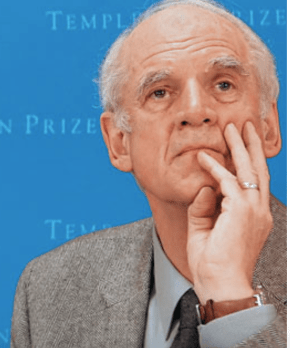
How do we map our identity onto the communal landscape? Such a map is actually an articulation of one’s moral ontology. Taylor believes that we are vitally linked to our moral framework. How is identity formation interwoven with the constitution of the good life? How do we become a good person? A strong qualification in Taylor’s notion of the moral self is the communal or inter-subjective aspect of self-constitution. The good is not a free-floating ideal, but truly something embedded in human story and community. This aspect of his moral ontology stands in stark contrast to Foucault’s individualistic (rebellious) moral subjectivity. In Taylor’s view, the self is partly constituted by a language, one that necessarily exists and is maintained within a language community, among other selves.

There is a sense in which one cannot be a self on one’s own. I am a self only in relation to certain interlocutors: in one way in relation to those conversation partners who are essential to my achieving self-definition; in another in relation to those who are now crucial to my continuing grasp of language of self-understanding … a self exists only within …‘webs of interlocution’. (C. Taylor, 1989, 36)

These webs of interlocution prove significant for Taylor; the Other is critical to one’s moral self-constitution. In his view, there is a necessary, ongoing conversation with significant others which is critical to one’s moral identity development. In Taylor’s terms, there is a myth in Foucault’s moral self, which says that one can define self in terms of a relationship with oneself alone, and more explicitly in relation to no communal web, that true creativity and originality demands that one should work out their own unique identity (C. Taylor, 1989, 39). For Taylor, this is not possible at a practical level. It is rather an artificial and unhealthy abstraction of what it means to be human. Thus, against the backdrop of Taylor’s convictions about the play of the good in moral ontology, the character of Foucault’s quest for freedom can lead in an unhealthy direction, towards the isolation of self, and painful loneliness. It opens a key question of what is important to moral constitution and what fuels healthy agency and subjectivity.

These two grande pensée philosophers are in fundamental disagreement on this issue of self-definition with respect to the community: Taylor’s communal self contrasts starkly with the Foucault’s radically individualistic self. Taylor (1989) contests that:

I define who I am by defining where I speak from, in the family tree, in social space, in the geography of social statuses and functions, in my intimate relations to the ones I love, and also crucially in the space of moral and spiritual orientation within which my most important defining relations are lived out. (35)

The first half of my PhD dissertation outlined Foucault’s ethics of freedom and the aesthetic self. For him, moral self-constitution means that one defines oneself over against the social matrix. Taylor disagrees and sees the benefits of a self which is integrated into a social matrix, even if withdrawn temporarily for perspective. Foucault sees the need for disruption; Taylor pursues integration. Taylor notes that even from one’s earliest years, one’s language for the moral must be tested on others. Matthew Crawford agrees with this (M. Crawford, 2015, 183-85), and contends that the lack of such dialogue can lead to moral autism. Gradually through this sort of relational-moral-conversation, the individual self gains confidence in what it means and in who she/he is as moral being. This is no small thing, but quite a profound aspect of what it means to be human and to have metabiological meaning. The Other must also be granted her intrinsic integrity, voice and presence for this dialogue/interlocution to be effective.

One is moved, even transformed, by the lives, the wisdom and the deeper understanding of the Other. Taking his picture of moral ontology a step further, Taylor argues for self as socially embedded in its moral constitution. One relates to the good, not only as an individual self, but within a communal context, where the community also relates to and incarnates some good or goods, some ideals. Some today would use the language of values or moral convictions. This stands in contrast to the distinct lack of we (communal) language in Foucault’s grammar of the moral self. He instead promotes a more decontextualized, aesthetic self, which embraces an agonisme with respect to the social sphere of life. He is especially sceptical of social constructions of the good. The communal and narrative dimensions of self are not on Foucault’s map. He makes a move to return to agency, and yet lacks a full, robust version of healthy subjectivity. Here’s telling quote from William Connolly:

Foucault … cannot endorse this quest for attunement and self-realization. He proceeds at the second level, as a genealogist, deploying rhetorical devices to incite the experience of discord or discrepancy between the social construction of self, truth, and rationality and that which does not fit neatly. And the recurrent experience of discord eventually shakes the self loose from the quest for a world of harmonization, a world in which institutional possibilities for personal identity harmonize with a unified set of potentialities in the self, and the realization of unity in the self harmonizes with the common good realized in the social order. This quest for identity through institutional identification becomes redefined as the dangerous extension of “disciplinary society” into new corners of modern life. Genealogy exercises a claim upon the self that unsettles the urge to give hegemony to the will to truth. (W. Connolly, 1985, 365)

Community in Taylor does not necessarily entail uniformity, or a dull conformity and conventionalism, but rather can be a dynamic, growing economy of being-with-others. Community occurs even where there is disagreement between interlocutors. He opens this theme up beautifully and profoundly in his The Language Animal, chapters 6-8 (C. Taylor, 2016). But one cannot have community without some sort of normativity, some common commitment to the good. There is no value-neutral inter-subjective state of affairs. There should be no surprise that there is a notable link between Foucault’s avoidance of community and his transgressive attitude towards normativity.

Genuine, authentic community cannot exist without the normative–there must be a good or goods, virtues or values that we hold in common. This promotes a certain culture in the workplace, family, or society. This element is essential to trust and mutual respect. The interpretation of self in terms of its relation to the good can only proceed in recognition of self’s interdependence with other selves. Taylor (1989, 37) presses Foucault here: “The drive to original vision will be hampered, will ultimately be lost in inner confusion, unless it can be placed in some way in relation to the language and vision of others.” Foucault’s thin version of self is abstracted out of community, and out of narrative continuity, because of a concern to avoid domination, and a need to resist power relations. This is a classic overplay of his power relations and truth games discourse. It is overreach.

~Gordon Carkner PhD Philosophical Theology.

https://www.youtube.com/watch?v=kPZF933GZIo  James K. A. Smith @ Regent College on Augustine and Late Modernity

Taylor, C. (1989). Sources of the Self: the making of the modern identity. Cambridge, MA: Harvard University Press.

Connolly, W.  (1985) Michel Foucault: An Exchange: Taylor, Foucault, and Otherness. Political Theory 13 3 Aug.  365-76.

Crawford, M. (2015). The World Beyond Your Head: one becoming an individual in an age of distraction. New York, NY: Allen Lane Press.

Simon Sinek on Communal Identity and Wellbeing: Example of US Marines.

Simon Sinek, Practicing the Good

Part II is on Narrative Identity

Posted by: gcarkner | October 11, 2019

2019 Nobel Prize in Chemistry: Goodenough


The Award of the 2019 Nobel Prize in Chemistry to John Goodenough is noteworthy

He is aged 97 and still active in research!

His autobiography describes his fascinating scientific and spiritual journey.

https://revelation4-11.blogspot.com/2014/05/a-scientist-testifies-to-gods-grace.html

****

Canadian Climate Scientist Katherine Hayhoe wins Prestigious UN Award

2019 Champions of the Earth Award


https://www.unenvironment.org/news-and-stories/press-release/canadian-professor-katharine-hayhoe-named-un-champion-earth


https://www.ctvnews.ca/sci-tech/canadian-professor-named-un-champion-of-the-earth-1.4595565

****

Screen Shot 2019-10-11 at 2.55.24 PM

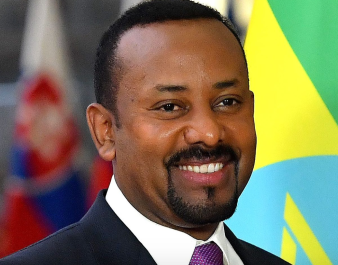
Nobel Peace Winner Abiy Ahmed, Ethiopian PM, also a Christian 

https://www.idea.de/gesellschaft/detail/christlicher-premierminister-erhaelt-den-friedensnobelpreis-110696.html?fbclid=IwAR0TJBmjmb-JQOjV5CazpjvsHwNzL5UGuPn7vxf2NF6w3vGeNQEYjm8lzss

Posted by: gcarkner | September 22, 2019

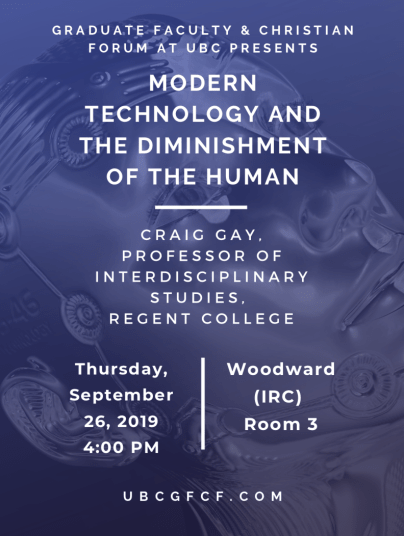
Special Lecture This Week September 26, 2019

Audio Recording of LectureL

Other Scholars Interested in Technology and Culture

Quentin Schultze

George Grant

Albert Borgmann

Jacques Ellul

Sherry Turkle

Bob Doede

From the beginning, machine technology was developed to function automatically…. designed and deployed  to function independently of unauthorized human interference and unimpeded by human frailties, inconsistencies, and irrationalities…. Modern technological development has as a result been moving away from ordinary embodied human existence for some time…. From within the technological worldview, human embodiment is simply not a particularly high priority. This, I want to suggest, betrays serious confusion about the nature of the created order as well as confusion about the human place and task within the created order.

~Craig Gay

Posted by: gcarkner | July 25, 2019

Welcome to Graduate Christian Union

Join the GCU Community Adventure

Time Well Spent

Follow us on Twitter, Facebook and Instagram

Graduate Christian Union welcomes you to UBC

Inspired by your curiosity

Faculty Mentor Support

Cool Lectures, Debates and Forums

Promoting Christian Scholarship Excellence

Apologetics and the Tough Questions

Bible Study on Romans: “The Journey Home” (Oxford Tutorial Style)

Prayer Support and Spiritual Direction (Ute @ GCU Prayer)

Thought Provoking Articles

Multiple Resources

Bibliography on Meaning, Identity, Purpose, Wholeness, and More…

Let’s have coffee!

Dr. Gordon E. Carkner and Associates

We Add Value to Your Educational Experience

Screen Shot 2019-08-28 at 12.49.22 PM

Reading the great books; exploring the deeper questions of life

RSVP gcarkner@shaw.ca      t. 604.222.34549

Fall Hike in Local Mountains: September 28

First GFCF Lecture: September 26, 2019 Craig Gay, Professor of Interdisciplinary Studies, Regent College. Modern Technology and the Diminishment of the Human, 4:00 pm, Woodward, Room 3


Nothing worth doing can be achieved in our lifetime; therefore we must be saved by hope. Nothing which is true or beautiful or good makes complete sense in any immediate context of history; therefore we must be saved by faith. Nothing we do, however virtuous,  can be accomplished alone; therefore we must be saved by love. No virtuous act is quite as virtuous from the standpoint of our friend or foe as it is from our standpoint. Therefore we must be saved by the final form of love, which is forgiveness.

~ Reinhold Niebuhr


We highly recommend this service for posters, banners, printing your thesis, etc.


Why is GCU Studying Romans this Academic Year?

Romans is the uncontested most important letter of Paul the Apostle to the early church. It has impacted many great thinkers over the centuries:  for example, Augustine of Hippo in North Africa, Martin Luther of Wittenberg Germany, John Wesley of England, and Swiss theologian Karl Barth, to name a few. As N.T. Wright says, it is a peak of philosophical thought/theology, a majestic articulation of the central focus of God’s plan for humanity. Both dense and rich, it draws on the history of Israel with extensive  reference to ancient Hebrew text, following a strong trajectory of hope. Touching on Adam (Genesis 1-3) and Abraham (Genesis 15), the Exodus, Deuteronomy 32, Psalms 2, 8, 44, 110 and Isaiah 40-55, Paul draws together various themes to show how unique Jesus of Nazareth really is. He is the long awaited Messiah for Israel and for the whole world, through whom God has revealed himself, his purposes and  intentions. He is the one through whom all believers discover true identity. Jesus is the focal point, central to understanding the depth and breadth of God’s love and grace, God’s purposes, God’s justice, God’s people, God’s future.

In our pluralistic age, sometimes we feel disoriented, lonely and depressed amidst a myriad of choices. We feel the angstof intellectual, spiritual, and existential homelessness. We are in search of a vision for life. Romans offers a profound discourse, a moral footing, that can empower our lives, fill us with identity, hope and purpose. Playing the infinite game, it points us in the direction of home and meaning, grounds and centres us, raises the deeper questions of the human condition, and reveals a solid way forward for contemporary culture, offering prospects for healing our broken world. Woven throughout is a robust worldview or social imaginary, one that can move and reshape our imagination. One might call it a masterpiece or great symphony, one that has inspired much human creativity over the centuries.

Join us on Thursday evenings on campus to fathom the insights of this great book.

Contact: gcarkner@shaw.ca   t. 604.349.9497


What Can I Hope to Get Out of this Grad Community Group?

  • friendship, collegiality, dialectical thinking skills, interdisciplinary intellectual stimulation, potential collaboration
  • prayer support and a growing sense of community among graduate students
  • get to know the gospel at a deeper level–see how radical it is actually in terms of its implication for life and culture
  • get to know the God of the Bible better (as opposed to a lesser god, an idol or some kind of syncretism or gnosticism)
  • critical skills in analyzing culture
  • get to know yourself better: your humanity, your calling, your identity, the meaning of your life, your fullest vocation
  • experience the existential momentum of Paul’s argument for Jesus as Israel’s long promised Messiah–but for the whole world
  • a strong sense of how God can help you flourish as a whole person, and how you can experience personal transformation
  • the eschatological thrust of the Bible: future hope brought alive in the present–the glory of God to fill the whole earth
  • learn how justice and mercy embrace within the covenant: righteousness as right standing within the covenant
  • learn how Paul’s doctrine of justification works hand in hand with his idea of transformation by the Spirit


Suggested Reading

Screen Shot 2019-08-22 at 12.50.53 PM


Paraphrased from the Book p. 70  Worldview is storied vision of life. It gets at the implicit depth of orientation that gives meaning and directs our lives. Our communal orientation involves habitual ways of experiencing the world: these habitual ways are constitutive of all human life and shape our understanding of what the world is, and how we should comport ourselves in it. As an imaginative construal of reality, a worldview tells us what is of ultimate significance at the heart of human life. This is true especially in terms of a grounding  and directing narrative or  myth that is encoded in symbols and rituals and embodied in a way of life. In the book of Romans, we see a clash of worldview, a conflict of gospels at the heart of the discourse. Biblical faith has always been shaped in the shadow of empire, and Paul is fully conscious that he is writing a subversive letter to young believers, to help them grow into their new identity in Christ.

Key worldview questions

Where are we?

Who are we?

What’s wrong?

What’s the remedy?

What time is it?

A Word to the Wise from UBC Professors

The twenty-first century university campus can be a scary place if you don’t know anyone well enough to be able to ask for help. Many of us recall that we learned more from our fellow students, both as undergraduates and as graduates, than from our professors because we knew our friends, trusted them and were open enough to ask them questions when we felt intimidated by professors. Never be afraid to ask questions. There really is no such thing as a stupid question when you are seeking answers seriously and with integrity. Make sure that you have at least one  friend who will listen to your questions, no matter what. Ultimately, this is what prayer is all about: asking someone who can be totally trusted your most troublesome questions.

~Dr. Olav Slaymaker, Professor Emeritus,  Physical Geography

Long hours in the laboratory, thesis proposals, the weight of comprehensive exams means that a grad student needs a support infrastructure. I can’t speak highly enough about getting involved with a group on campus like GCU, and also finding a good church home base. Also as you are walking into your office or biking into campus, try praying for your profs, fellow students, or admin staff; this can help stimulate surprisingly fruitful conversations. And don’t forget that you are here to serve undergrads with grace. Feel free to track me down for coffee; I love ideas exchange.

~Dr. Craig Mitton, Associate Professor, School of Population and Public Health

As a graduate student several decades ago I found the Grad Christian Union community at my university uplifting spiritually and socially. In an often chilly secular environment, it was a great venue to meet other grads outside my own field and cultural background and develop friendships and join in events with those who shared the same core values. I am still in contact with several of these friends 30 years later. With some other faculty and graduate students, I helped to launch the Graduate & Faculty Christian Forum a number of years ago. Gord has been a solid advisor to this group as well 

~Dr. David Ley, Professor Emeritus, Department of Geography

There is no more important bellwether for our society and our culture than the university — and yet Christians within academia often travel incognito, which isn’t good for them, isn’t good for the university, and isn’t good for other Christians, who often feel alone when really they’re not. A ministry to grad students and thus provides a vital venue where Christians can connect, show their colours, and stimulate each other to play the full role they’re called to play as fully alive and “out” followers of Christ. Decide to be a public Christian at UBC.

~Dr. Dennis Danielson, Professor Emeritus, English

Graduate research is often like looking for a lightswitch in a totally dark room. It can be frustrating at times. It certainly was for me! It was invaluable for me to have close connection with other Christians whom I could share that load with, and who were praying for me.

~Dr. Bé Wassink. Instructor, Materials Engineering


Academic Virtues Worth Preserving
  • Integrity of scholarship, protection against the evil of cheating and plagiarism, preserving the value of a liberal education
  • introduce students to bodies of knowledge and traditions of inquiry
  • equip students with analytical skills that will enable them to move confidently within those traditions and to engage in independent research
  • be current in the literature of the field, teach well and be available for consultation with students
  • in publishing, one should acknowledge predecessors and contributors, provide citations to the sources and give accurate account of the material presented, show methodology and evidence
  • thoroughness, perseverance, intellectual honesty, conscientious in the pursuit of truth
  • avoid politicizing the classroom
  • interrogation of ideas and events: history, why are they thought significant, prevailing answers for questions it raises, where do the answers come from
  • pursuit of truth wherever it may be found and wherever it may lead, combined with wisdom on how to use it
  • believing in Christ as Veritas, the incarnation of God’s wisdom brings us to the assumption that all truths ultimately cohere, and can therefore be explored critically, without limit or fear
  • confidence to investigate different narratives and worldview paradigms
  • love is the foundational fact of existence and essential to the pursuit of truth: belief in the hermeneutic of love and the importance of transcendence to intellectual creativity
  • love, as a core virtue of virtues, must be central to academic work
  • honesty and transparency in claims and reporting
  • critical rigour–all people are finite and fallible
  • open to correction of error–use the stress test of criticism
  • intellectual fearlessness: willingness to drill down into an issue in the pursuit of truth, even when it is unpopular or risky
  • truth discovered should be applied to the common good of society: application of innovation and insight should take the moral high ground
  • humility to learn from others, and often especially those who disagree with you most sharply; commitment to collegiality
  • promotion within academia and beyond by merit and equality of opportunity for men and women of various backgrounds
Posted by: gcarkner | May 29, 2019

Key Titles to Move Your World


GCU Reading List: Quest to Inform, Empower and Inspire

Screen Shot 2019-08-07 at 9.15.00 AM

Articulation Can Move Your World

Twelve Books to Change Your Life, and Shape Your Outlook

  • David Bentley Hart, The Experience of God.
  • Jim Wallis, The (Un)Common Good.
  • Gordon Carkner, The Great Escape from Nihilism.
  • Jens Zimmermann, Incarnational Humanism.
  • Eugene Peterson, Practice Resurrection.
  • James Sire, The Universe Next Door.
  • David Brooks, The Road to Character.
  • Jonathan Sacks, Not in God’s Name.
  • Miraslov Volf, Flourishing.
  • Mark McMinn, The Science of Virtue.
  • James K. A. Smith, You Are What You Love. 
  • Charles Taylor, A Secular Age; The Language Animal

More Great Reads

Tom McLeish, The Music and Poetry of Science: comparing creativity in science and art. Oxford, 2019.

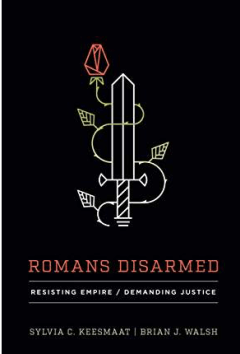
Keesmat, Sylvia & Brian Walsh (2018) Romans Disarmed: Resisting Empire, Demanding Justice. Brazos Press.

Conway Morris, Simon (1998) The Crucible of Creation: the Burgess Shale and the Rise of Animals. Oxford University Press; Life’s Solution.

Gore, Al (2013) The Future: Six Drivers of Global Change. Random House.

Hallesby, Odd (1950) Conscience. Inter-Varsity Fellowship.

Harris, Peter (2008) Kingfisher’s Fire: a Story of Hope for God’s Earth. Monarch Books

Hindmarsh, Bruce (2018) The Spirit of Early Evangelicalism: True Religion in a Modern World. Oxford University Press

Pattengale, Jerry and Ream, Todd (editors) (2018). The State of the Evangelical Mind: Reflections on the Past, Prospects for the Future. IVP Academic.

Houston, James (2006) Joyful Exiles: Life in Christ on the Dangerous Edge of Things. IVP Books

Houston, James and Zimmerman, Jens (editors) (2018) Sources of the Christian Self: a Cultural History of Christian Identity. William B. Eerdmans.

Lewis, C.S. (1944) The Abolition of Man. (Harper One Edition, 2001)

McLeish, Tom (2014) Faith and Wisdom in Science. Oxford University Press

Polanyi, Michael (1958) Personal Knowledge: Towards a Post-Critical Philosophy. Harper Torchbooks.

Zimmerman, Jens (2019) Dietrich Bonhoeffer’s Christian Humanism. Oxford University Press.

Makoto Fujimura, (2014) Culture Care: Reconnecting with beauty for our common life.

Walter Bruggemann, A Gospel of Hope.

Jerry L. Wallis and Trent Dougherty (eds.), Two Dozen Arguments for God.

David O. Taylor & Taylor Worley (eds.), Contemporary Art and the Church: a conversation between two worlds.

Bob Goff, Everybody Always: Becoming Love in a World Full of Setbacks and Difficult People.

James K.A. Smith, Awaiting the King: Reforming Public Theology.

Brian J. Walsh, Kicking at the Darkness: Bruce Cockburn and the Christian Imagination.

Frances E. Jensen, MD, The Teenage Brain: a neuroscientist’s survival guide to raising adolescents and young adults.

Rowan Williams, Christ the Heart of Creation.

Mark Noll and Carolyn Nystrom, Clouds of Witnesses: Christian Voices from Africa and Asia.

James Davison Hunter, Science and the Good: The Tragic Quest for the Foundations of Morality.

Luci Shaw, Eye of the Beholder: Poems.

Jason Byassee, Surprised by Jesus Again: Reading the Bible in Communion with the Saints. 

Bradley P. Holt, Thirsty for God.

David Brooks, The Road to CharacterThe Second Mountain: Quest for the Moral Life.


Charles Taylor and the Late Modern Search for Identity

University students today are obsessed with finding, copying or creating an identity. Their lives are in major transition, with the responsibilities of adulthood looming on the horizon. One’s identity can feel quite fragile and cross-pressured, especially under the strain of final exams or thesis defence. Students swim in a sea of multiple declared identities, and this can be deeply challenging. One might indeed ask, Who am I?  For students in the humanities, social sciences and education, identity politics is a ubiquitous concern. Cynicism about the whole prospect of shaping one’s identity is not really an option for the flourishing, whole individual, the examined life. How do I give account of myself amidst a vast universe and a complex global situation, with its intense competition? How do I insert myself into the larger scheme of things?

Pre-eminent McGill University philosopher Charles Taylor is an iconic figure in this field of defining what exactly constitutes identity. He can introduce us to new language and new concepts that build substance into our story. This super scholar has written three weighty tomes on the subject: Sources of the Self, 1989; A Secular Age, 2007; and The Language Animal, 2016. We have the highest respect for his work and his ability to analyze the depth and breadth of forces and ideas that have shaped the West, with its multiple identities and many social imaginaries. Much scholarship has branched off from his work, including the various human flourishing projects (for example, Miraslov Volf at Yale), and his brilliant insights concerning rethinking the secular. Perhaps our grande penseé can help us grapple with this important aspect of development, lest we feel totally out of our depth. The current existential identity crisis among Millennials is impacting so many, so we have good reason to pursue the inquiry.

Identities are constituted from moral sources, claims Taylor, sources that nurture the inner person (aka the soul). Identity, morality and spirituality are inescapably interwoven in our lives, our experience and our consciousness, if we take time to think about it. We intuitively grasp this. Central to an account of human existence is the moral sources which appear within one’s moral framework (aka moral horizon). These moral frameworks are often invisible to people, pre-articulate realities that we nevertheless depend upon, and interact with, daily.  Our education is partly to blame, rendering us illiterate or confused on the most important identity categories and questions. For Taylor, these categories and the reality they represent are absolutely vital to our sanity and wellbeing. Our relationship to our moral framework has deep significance. If we are not careful, our negligence can also handicap or even cripple us. For example, if we do not grapple with the framework of others, dialogue and mutual understanding can be very difficult to accomplish, leading to conflict and alienation. We are out of sync with a very important aspect of life.

Taylor notes that there exists a hierarchy of moral goods within each framework, and it is up to the individual to order these goods in priority.  As a key aspect of one’s identity, there must be qualitative distinctions between the value of each of these goods. The highest, controlling good within a framework Taylor calls the hypergood–also seen as a person’s core passion. We have a deep personal and emotional connection to our hypergood–it orders the other goods in priority within the hierarchy of the moral frame. Identity is the understanding of oneself as a person within family, a story, a religion, a profession, a country, in fact all one’s significant relationships. Sometimes these goods come into conflict with one another (work and family, for example) and need to be negotiated, but these qualitative distinctions are intrinsic to the way we conduct our lives. Critically, they inform our orientation towards the world, help us set our goals, and plan our future. The best account of human experience has to make sense of these moral sources which, at the end of the day, become sources of meaning and identity.

Three axes of moral frameworks: these are not properly defined by natural laws of science

  1. Beliefs about the value of human life, the respect that is due to others, and what this will cost us, demand from us.
  2. Beliefs about what kind of life is worth living. This permeates all our choices and actions.
  3. The dignity we afford ourselves and others based on how we understand our role and usefulness to society, and our place or calling within the larger scheme of things.

~Dr. Gordon E. Carkner

What exactly is a moral good in Taylor’s definition?

Read More…

Posted by: gcarkner | April 20, 2019

Easter Poems by Malcolm Guite

Gord Carkner on How We Grapple with the Empty Tomb
 
_________________
 
 
XI Crucifixion by Malcolm Guite
 
See, as they strip the robe from off his back
And spread his arms and nail them to the cross,
The dark nails pierce him and the sky turns black,
And love is firmly fastened onto loss.
But here a pure change happens. On this tree
Loss becomes gain, death opens into birth.
Here wounding heals and fastening makes free
Earth breathes in heaven, heaven roots in earth.
And here we see the length, the breadth, the height
Where love and hatred meet and love stays true
Where sin meets grace and darkness turns to light
We see what love can bear and be and do,
And here our saviour calls us to his side
His love is free, his arms are open wide.
 
 
—————————


_________________-
 
XV Easter Dawn by Malcolm Guite
 

He blesses every love which weeps and grieves

And now he blesses hers who stood and wept

And would not be consoled, or leave her love’s

Last touching place, but watched as low light crept

Up from the east. A sound behind her stirs

A scatter of bright birdsong through the air.

She turns, but cannot focus through her tears,

Or recognise the Gardener standing there.

She hardly hears his gentle question ‘Why,

Why are you weeping?’, or sees the play of light

That brightens as she chokes out her reply

‘They took my love away, my day is night’

And then she hears her name, she hears Love say

The Word that turns her night, and ours, to Day.

Posted by: gcarkner | April 13, 2019

Some Thoughts: Good Friday and Easter

Faith in God includes one’s ongoing resolve to receive God’s moral character in Christ inwardly, and to belong to God, in the reverent attitude of Gethsemane; Christ in you is the inward agent-power of Christ working, directing at the level of psychological and motivational attitudes, towards a cooperative person’s renewal in God’s image as God’s beloved child; furthermore Gethsemane union with Christ as Lord calls for volitional cooperation and companionship with Christ, who empowers and guides how we think, not just what we think.

~Dr. Paul Moser, Philosopher Loyola University, Chicago

How are we to understand Good Friday and Easter from such a distance? How does it relate to our experience? Is it mere sentiment or something more profound? Andy Crouch in his book Culture Making: recovering our creative calling, (Chapter 8 “Jesus as Culture Maker”) has some brilliant insights into the difference that Jesus life, death and resurrection have for shaping the horizons of possibility (shalom and human flourishing) for societies, ancient and modern. He helps us grapple with the various dimensions of this sorrow and celebration. See also I Corinthians 15 and reflect on the meaningful quotes by other authors and leaders.

~Gordon Carkner

The Cross

He suffered the full weight of the human story of rebellion against God. He was literally impaled on the worst that culture can do–an instrument of torture that stood for all the other cultural dead ends of history, from spears to bombs, gas chambers to waterboards. Like all other instruments of violence, a cross is cultural folly and futility at its most horrible. (141)

The core calling of [Jesus] life is not something he does at all in an active sense–it is something he suffers. The strangest and most wonderful paradox of the biblical story is that its most consequential moment is not an action but a passion–not a doing but a suffering. (142)

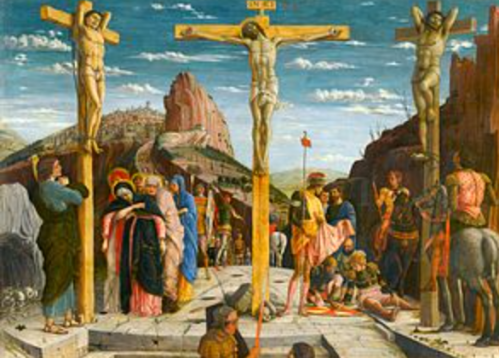
On Good Friday, love embraced suffering as Jesus drank the bitter cup. Dr. Martin Luther King Jr. self-consciously followed the same journey of the suffering death of Jesus, the way of the cross, as he promoted civil rights for African-Americans in the Southern USA in the 1960s. He worked hard to replace the perverted symbol of the cross which was used as a justification for aggression, hate and violence—e.g. as an instrument of the Ku Klux Klan. His life quest was to restore the cross as a symbol of love, mercy, justice and non-violence. He incarnated a form of extreme love, a committed non-violent protest against systemic injustice.

~Iwan Russell-Jones, former BBC Filmmaker and Professor of Faith and the Arts, Regent College

https://ubcgcu.org/2014/04/17/good-friday-by-malcolm-guite/ Good Friday Poem by Malcolm Guite

Can Beauty Save Us? 

This is the image of a Jewish man from Nazareth, crucified. In fact, his is the face of “the King of the Jews” and yet, it is supremely grotesque, bearing all the marks of suffering. His face reveals real forsakenness; his body aches of real bodily torture and real agony. His corpse lies mangled and bloodied, and his eyes…proclaim the dreadful word that causes all who hoped in him to shudder: death. There is nothing at all glamorous, desirable, or romantic about this image of the crucified One. But, of course, what is so profound about the face of this human is that his is also the face of God. His face radiates the Beauty of divinity, for he is Light from Light uncreated, the perfect image of the Father. He is, as Hebrews 1:3 says, “the radiance of the glory of God and the exact imprint of his nature.” The beauty of this person, wholly man and wholly God, lies in the mystery that he brings salvation to the world not by excluding suffering but by uniting himself to it. He refuses to recoil from a world that has become repellent; he does not laugh at the dereliction of others; he does not look at all that is bad and conclude, “all is well.” He does not stand far off. In his beauty, he comes near and embraces the “ugly” ones. He associates with strange and lonely and exiled folk, bringing the outcast in. He is the servant who suffers, and, protesting against “the way things are,” he laments “My God, my God, why have you forsaken me?” He exemplifies and creates a people committed to what David Hart calls “strange, impractical, altogether unworldly tenderness” to those whom Nietzsche would have annihilated…. He brings the whole festival of divine grace to a world that has excluded itself from it and invites…humanity to take part, to enjoy a feast of resurrection where all divisions, segregation, and exclusion are transcended, where all have their place at the supper of the Lamb, where all, who see the face of the Beautiful One and in that seeing are transformed, are inundated and radiated by Beauty itself. In a word, to paraphrase St. Athanasius, he becomes the Ugly One so that we, the original ugly ones who have made this world ugly with our violence, might become beautiful. This reveals the scandalous message of the Christian aesthetic regime, an alternative regime to that of our time: Beauty saves the world, but only by facing the Ugly head on and actually uniting himself to the regime of the Ugly. We cannot be saved by beauty as long as “beauty” is held captive by immanent attempts to achieve transcendence. The thought that we can be saved by immanent beauty is the presumption of a contemporary secularity that thinks that humanity can ever slowly, by carefully putting one foot above the other, ascend the ladder towards infinite beauty that awaits an enlightened race of humans. The truth that will always confront all of us at the top of that ladder, however, is the face of the God who, beyond history, came into history and became ugly, mangled, and ripped apart by deep dereliction and thorns, a face that unbearably whispers: you can only be saved by the beautiful one who has become the ugly one. In other words, the Ugly one alone can save us, the man of sorrows, acquainted with grief, whose divine Beauty is manifest in his descent to become—Jesus of Nazareth. (Jimmy Myers, Can Beauty Save Us?www.firstthings.com)

The Aftershocks of the Resurrection

The New Testament writers speak as if Christ’s achievement in rising from the dead was the first event of its kind in the whole history of the universe. He is the “first fruits,” the “pioneer of life.” He has forced open a door that has been locked since the death of the first man. He has met, fought, and beaten the King of Death. Everything is different because He has done so. This is the beginning of the New Creation: a new chapter in cosmic history has opened. ~C.S. Lewis, Miracles

The resurrection was a culture-shaping event…. If indeed it happened as Jesus’ followers proclaimed, [it] changed more of subsequent human history, for more people and more cultures, than any other event one can name. See N.T. Wright, The Resurrection of the Son of God. which examines it using the tools of historical research. (143)

The resurrection of Jesus is like a cultural earthquake, its epicenter located in Jerusalem in the early 30’s [C.E.], whose aftershocks are being felt in the cultural practices of people all over the world, many of whom have never heard of, and many more of whom have never believed in, its origins. (145)

The resurrection is the hinge of history–still after two thousand years as culturally far-reaching in its effects as anything that has come since. (145) It is a cultural triumph–an answer, right in the midst of human history, to all the fears of Israel in the face of its enemies. (146)

Indeed one of the most dramatic cultural effects of the resurrection is the transformation of that heinous cultural artifact known as a cross. An instrument of domination and condemnation becomes a symbol of the kingdom that Jesus proclaimed; an alternative culture where grace and forgiveness are the last word…. The cross, the worst that culture can do, is transformed into a sign of the kingdom of God–the realm of forgiveness, mercy, love and indestructible life. (146)

Adrienne von Speyr, a 20th century Swiss mystic, offers a reflection:

The Lord knows that all is now finished. His life is finished, what will succeed it is also finished. In the course of his sojourn on earth, he has put in place everything out of which the later Church will arise in the many-sidedness of her life; he has trusted his disciples and all those who believe in him with their special task. After he has then given his Mother to his favorite disciple, nothing further remains for him but to suffer; he can devote himself exclusively to suffering, plunge once and for all into suffering. It is in Christ’s isolation from the Father, where the center point of his suffering lies. To be separated from a love from which one has lived since eternity, one which constitutes the entire substance of one’s being, that is lethal.

Alister McGrath captures Easter’s impact: “The resurrection declares in advance of the event God’s total victory over all evil and oppressive forces—such as death, evil and sin. Their backbone has been broken, and we may begin to live now in light of that victory, knowing that the long night of their oppression will end.” ~What Was God Doing on the Cross?

Kari Jobe, Forever  https://www.youtube.com/watch?v=XnKhPypW-Co

Jesus is perlocutionary speech act, God’s most powerful communication to human ears and lives (Kevin Vanhoozer). He addresses us, calls our name, calls us forward into an adventuresome life. His words and teaching (e.g. the Sermon on the Mount) are a phenomenal culture driver that has helped to shape the world in positive ways. His compassion for the needy and broken is a sign that God has not given up on us, that he is there for us and that he cares deeply what happens to us. His resurrection is a starting point, a singularity that cannot be explained by anything prior; it stands as a huge revelation, an epiphany, a new beginning, a brilliant hope for change, for forgiveness and renewed relationships. It is hope for renewal of all our loves. He speaks for God from a powerful, dynamic center, a communion of love within the Trinity. This communion is the ground of being itself, the ground of human community. Through him, we have been identified and called into a new community, given a new identity as royal priests (I Peter) and the people of God, his loved ones. He is the hermeneutic of a new reconciled humanity, drawn from all the nations of the globe, committed to bless and make peace, to be compassionate, to live with integrity (shalom), to shine as moral light. He is the sign, the signifier and the signified. He calls us to practice resurrection, to move into resurrection life.  ~Gord Carkner from Jesus is the Yes and Amen to It All

If Jesus is risen, then – and only then – has something truly new happened, something that changes the state of humanity and the world. Then He, Jesus, is someone in whom we can put absolute trust; we can put our trust not only in his message, but in Jesus himself, for the Risen One does not belong to the past, but is present today, alive. ~Pope Francis

Andy Crouch, Playing God

Love transfigures power. Absolute love transfigures absolute power. And power transfigured by love is the power that made and saves the world. (45)

Sin and death, and the twin systems they create, idolatry and injustice, are already umasked and have lost the critical battle. Creative love was always stronger and more real—and in the community of the resurrection, the first and latest followers of Jesus find that the reality living, breathing and working powerfully through us. (53)

Within a few more generations, the news of Jesus’ resurrection had indeed “turned the world upside down,” just as the early reports from Thessalonica suggested (Acts 17:6). The proclamation that the true Image Bearer had lived, had not been vanquished by the powers of idolatry and injustice but had risen victorious over them, and had now poured out his spirit on flesh, turned out to be the pivot point of history, the hinge on which the whole story turned. The promise that human beings were not destined to be ground under the history of idols and god players like Caesar, but to lie and rise to participation in the divine nature, set in motion the most wide-ranging social movement in history.” (93-94)

When a man [woman] truly and perfectly says with Jesus, and as Jesus said it, “Thy will be done,” he [she] chooses the everlasting life-cycle. The life of the Father and the Son flows through him [her]. He [she] is part of the divine organism. Then is the prayer of the Lord in him [her] fulfilled: “I am in them and thou in me, that they may be made perfect in one.”

~George MacDonald, from Creation in Christ

Made for spirituality we wallow in introspection. Made for joy, we settle for pleasure. Made for justice, we clamor for vengeance. Made for relationship, we insist on our own way. Made for beauty, we are satisfied with sentiment. But new creation has already begun. The sun has begun to rise. Christians are called to leave behind in the tomb of Jesus Christ, all that belongs to the brokenness and incompleteness of the present world. It is time, in the power of the Spirit, to take up our proper role, our full human role as agents, heralds, and stewards of the new day that is dawning. That, quite simply, is what it means to be Christian: to follow Jesus Christ into the new world, God’s new world, which he has thrown open before us.

~N.T. Wright, Simply Christian

Dr. Gary Habermas on Transformation in Scholarship on the Resurrection:

http://www.youtube.com/watch?v=ay_Db4RwZ_M

See also blog on Evidence of a Resurrection https://ubcgcu.org/2013/03/25/evidence-of-a-resurrection/

Rene Girard, I See Satan Fall Like Lightning (commentary of the New Testament unmasking of evil and scapegoating in the Easter Narrative)  https://ubcgcu.org/2015/03/30/rene-girard-on-deep-easter/

Posted by: gcarkner | March 20, 2019

Malcolm Guite Lectures on The Imagination

Live streaming available at Regent YouTube Channel
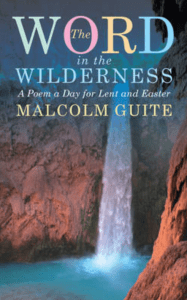
See online Guite’s Sonnets of the Christian Year.

As an appetiser, and to give you an idea of my reasons for compiling this anthology here are the opening paragraphs of my introduction: ~Malcolm Guite

Why might we want to take time in Lent, to immerse ourselves in poetry, to ask for the poets as companions on our journey with the Word through the wilderness? Perhaps it is one of the poet’s themselves who can answer that question. In The Redress of Poetry, the collection of his lectures as Oxford Professor of Poetry, Seamus Heaney claims that poetry ‘offers a clarification, a fleeting glimpse of a potential order of things ‘beyond confusion’, a glimpse that has to be its own reward’ (p. xv). However qualified by terms like ‘fleeting’, ‘glimpse’ and ‘potential’, this is still a claim that poetry, and more widely the poetic imagination, is truth-bearing; that it offers not just some inner subjective experience but as Heaney claims, a redress; the redress of an imbalance in our vision of the world and ourselves. Heaney’s claim in these lectures, and in his Nobel Prize acceptance speech, is that we can ‘Credit Poetry’, trust its tacit, intuitive and image-laden way of knowledge. I have examined these claims in detail elsewhere (Faith Hope and Poetry) and tried to show, in more academic terms, how the poetic imagination does indeed redress an imbalance and is a necessary complement to more rationalistic and analytical ways of knowing. What I would like to do in this book is to put that insight into practice, and turn to poetry for a clarification of who we are, how we pray, how we journey through our lives with God and how he comes to journey with us.

Lent is a time set aside to re-orient ourselves, to clarify our minds, to slow down, recover from distraction, to focus on the values of God’s Kingdom and on the value he has set on us and on our neighbours. There are a number of distinctive ways in which poetry can help us do that and in particular the poetry I have chosen for this anthology.

Heaney spoke of poetry offering a glimpse and a clarification, here is how an earlier poet Coleridge, put it, when he was writing about what he and Wordsworth were hoping to offer through their poetry, which was

“awakening the mind’s attention to the lethargy of custom, and directing it to the loveliness and the wonders of the world before us; an inexhaustible treasure, but for which, in consequence of the film of familiarity and selfish solicitude, we have eyes, yet see not, ears that hear not, and hearts that neither feel nor understand.”

(Coleridge, Biographia Literaria, Vol. II, pp. 6−7)

Posted by: gcarkner | March 7, 2019

Dennis Danielson Grapples with Moral Discourse


Beyond Paralysis: Radical Hope for Morality in a Cynical Age

Dennis Danielson

Professor Emeritus English UBC


Wednesday, March 13 at 4 pm,  

UBC Mathematics Building, Room 100

Audio Recording File: Z0000008

Abstract

Three quarters of a century after the publication of C. S. Lewis’s The Abolition of Man, moral relativism remains the approach to ethics that dominates the public square. The reductionist (even nihilist) approach to morality and other things that give meaning to human life also continues to shape what our children are taught in school. In the face of this ongoing dominance, it is imperative that we reassert a case for moral realism and cultivate hope for an ethics transcending a mere exercise of power.

Biography

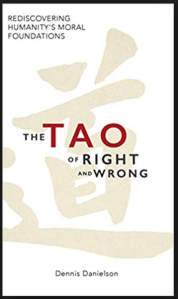
Dennis Danielson (PhD Stanford) is Professor Emeritus and former Head of English at the University of British Columbia. His interests have ranged across literature, religion, the history of science, and ethics. He is a past recipient of UBC’s Killam Prize for research in the humanities, and of the Alexander von Humboldt Foundation’s Konrad Adenauer Research Award. His articles have appeared in Mind, Milton Studies, Nature, American Journal of Physics, Journal for the History of Astronomy, and Scientific American. His books include Milton’s Good God: A Study in Literary Theodicy (1982), The Book of the Cosmos: Imagining the Universe from Heraclitus to Hawking (2000), The First Copernican: Georg Joachim Rheticus and the Rise of the Copernican Revolution (2006), Paradise Lost and the Cosmological Revolution (2014), and, most recently, The Tao of Right and Wrong: Rediscovering Humanity’s Moral Foundations (2018).


On The Tao of Right and Wrong:

“Dennis Danielson’s message in The Tao of Right and Wrong needs to be urgently heeded. … This book should be on every teacher’s reading list.”

—Margaret Somerville, Professor of Bioethics, University of Notre Dame Australia


The Tao of Right and Wrongis a remarkably compressed and equally lucid exposition of the truths that really count. … The debate in which this book engages is, in the full sense of the term, a fundamental one.”

—Rex Murphy, Commentator for The National Post and formerly for the Canadian Broadcasting Corporation


“Dennis Danielson marks the 75thanniversary of C.S. Lewis’s classic work The Abolition of Manby updating it for our present situation and applying it to current concerns in a skilful and thought-provoking way. Timely, deft, impressive.”

—Michael Ward, University of Oxford, co-editor of The Cambridge Companion to C.S. Lewis; author, Planet Narnia.

In The Tao of Right and Wrong, Dennis Danielson offers a vigorous primer on moral realism, asserting that humans can and should exercise ethical judgments—and that these judgments are not reducible to subjective opinion, animal instinct, or cultural “construction.” The book is a twenty-first century call for the virtuous cultivation of “humans with hearts,” for a rejection of moral nihilism, and for a life-affirming embrace of moral realism founded in the Tao—the transcultural fund of ultimate postulates that form the very ground of moral judgment, codes of ethics, and standards of right and wrong.

The point is not that animal behaviours have no relevance to our understanding of human nature, but rather that we  require a standard  of judgment above and beyond that offered by bare biology as a guide to what is morally permissible, advantageous, or obligatory. (39)

The very fabric of our lives is teleological–purpose-driven–in ways that far transcend the disseminating of our genes (though perhaps that is part of it). Therefore, a failure to account for that strong sense and experience of purpose, of goal-directedness, of moral worthwhileness, is a serious failure indeed. It points decisively to a limitation of science as naturalistically conceived and practical….So the inability of naturalistic science to account for the “goods and shoulds” of human moral life might accordingly be treated less as a failure than as blameless omission–a mere innocent incapacity to achieve something that was never part of its competence or job description in the first place. (58, 59)

[Human rights codes] embody, or should embody, or at least reflect, a vision of what it means for human beings to flourish, to fulfill their potential, to cultivate their gifts, to pursue good purposes, to live lives of meaning and justice….Rights codes by themselves, however, are inadequate as a moral foundation….They are no substitute for the cultivation of virtue. (63, 75)

What assumptions are you making about the nature and purpose of human beings, about what constitutes the good life? How does your moral framework promote virtues of beneficence and magnanimity? How does it cultivate human happiness? (76)

Great selection of C.S. Lewis books at Regent Bookstore (Wesbrook @ University Blvd.) Gate One

Other Scholars Who Hold to a Form of Moral Realism

Charles Taylor, Sources of the Self; A Secular Age; The Language Animal.

Alasdair McIntyre, After Virtue; Three Versions of Moral Inquiry

R. Scott Smith, In Search of Moral Knowledge.

Russ Shafer-Landau, Moral Realism: a Defense.

Miraslov Volf, Flourishing: Why We Need Religion in a Globalized World.

Jim Wallis, The (Un)Common Good.

Dennis Hollinger, Choosing the Good: Christian Ethics in a Complex World..

David Brooks, The Road to Character.

Glenn Tinder Atlantic Monthly 1989 article “Can We Be Good Without God?” which morphed into his book The Political Meaning of Christianity.

Jordan Peterson, 12 Rules for Life. (read in parallel with Gordon Carkner’s The Great Escape from Nihilism)


Read More…

« Newer Posts - Older Posts »

Categories