Posted by: gcarkner | October 21, 2016

Tom McLeish @ St. John’s College

screen-shot-2016-10-21-at-5-08-17-am

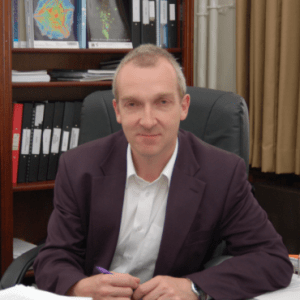
PROFESSOR TOM MCLEISH, FINSTP, FRS

Durham University

Pro-Vice-Chancellor for Research (2008-14)

Professor in the  Department of Physics and Department of Chemistry

Member of the  Biophysical Sciences Institute and the  Centre for Materials Physics

Durham Centre for Soft Matter (DCSM) and Institute of Medieval and Early Modern Studies

Awarded Weissenberg Medal and Bingham Medal for Molecular Rheology of Polymers

Currently Chair of the Royal Society’s Education Committee

Published over 180 scientific Papers and Reviews

PhD in Polymer Physics Cambridge University

Research Interests: (i) Molecular Rheology of Polymeric Fluids);

(ii) Macromolecular Biological Physics; (iii) Issues of Theology, Ethics and History of Science

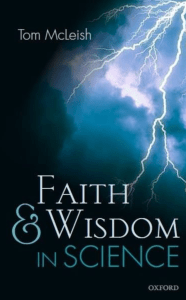
Author of Faith & Wisdom in Science OUP 2014

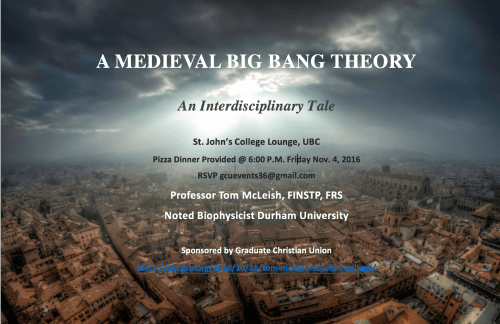
A Medieval Big Bang Theory – an Interdisciplinary Tale.

St. John’s College Lounge, UBC

Free Pizza Dinner at 6:00 p.m.

Sign up now at:  gcuevents36@gmail.com!

http://www.csca.ca/mcleish-2016/ 

VIDEOS TO COME TO https://www.youtube.com/c/CscaCa
Faith and Wisdom in Science blog: 
http://tcbmcleish.wordpress.com

screen-shot-2016-10-23-at-1-03-02-pm

Tom McLeish also speaks at GFCF on Wednesday, November 2 at 4 pm

Woodward (IRC) Room 6

Topic: The Deep Structure of Modern Science: the Search for Wisdom

Durham University Biophysicist Tom McLeish @ UBC Early November


Abstract

For the English polymath, Robert Grosseteste, light was the fundamental first form that gave dimensionality and stability to the material world. In a dozen scientific treatises written in the early 13th Century, he postulated a physics of light, colour and the rainbow.  In his De luce (on light) he extends it to the origin of the Universe in what has been referred to as the ‘Medieval Big Bang’. His arguments are so taut that they can be translated into mathematics – our resulting numerical simulations show that Grosseteste’s model does actually work. He also described the method for developing a universal principle from repeated observations under controlled conditions and argued that the explanation needing fewer suppositions and premises was the best.  In his theory of colour, we have found through close examination of the manuscript evidence for his De colore (on colour) and his De iride (on the rainbow) and a mathematical analysis of their content, that he presents the first three-dimensional theory of perceptual colour space. In this talk, Tom McLeish introduces Robert Grossteste (ca 1170-1253), the scientist, teacher, theologian and bishop and describes how a unique collaborative research approach has revealed new insights into his thought, particularly on light. An interdisciplinary team of historians, scientists, linguists and philosophers has developed techniques of joint reading of the medieval texts that have shown them to be logically consistent and founded on mathematically based models. We reflect on how a study of this extraordinary medieval science can help throw fresh light on the history of scientific thought, and bridge the current perception gap between the study of science and humanities.

Biography

Tom McLeish is a very accomplished prize-winning biophysics professor and Pro-Vice-Chancellor for Research (2008-2014) at the highly ranked University of Durham in the UK. In 2011 he was elected a Fellow of the Royal Society.  He served as Vice-President of Science and Innovation in the Institute of Physics 2012-2015, and is currently chair of the Royal Society’s Education Committee. Tom did a first degree in physics and PhD (1987) in polymer physics at Cambridge University.  A lectureship at Sheffield University in complex fluid physics was followed by a chair at Leeds University from 1993.  He has since won several awards both in Europe (Weissenberg Medal) and the USA (Bingham Medal) for his work on molecular rheology of polymers, and ran a large collaborative and multidisciplinary research program in this field from 1999-2009 co-funded by EPSRC and industry. His research interests include: (i) molecular rheology of polymeric fluids); (ii) macromolecular biological physics; (iii) issues of theology, ethics and history of science.  He has published over 180 scientific papers and reviews. Throughout, he has also maintained an interest in public engagement with science, science policy and public values including the underlying, but often hidden, public narratives of science. He has been especially interested in the potential for theological narratives to inform debates in science and technology, both explicitly and implicitly. In 2014, he published a ground breaking book called Faith and Wisdom in Science (Oxford University Press). He has been a Reader in the Anglican Church since 1993, in the dioceses of Ripon and York. 

Support and Sponsorship: Templeton World Charity Foundation, UBC Murrin Fund, Oikodome Foundation, Canadian Science & Christian Affiliation, Graduate & Faculty Christian Forum, Graduate Christian Union

Tom McLeish’s scientific research over the last 25 years has contributed to the formation of the new field of ‘soft matter physics’. Interdisciplinary work with chemists, chemical engineers and biologists has sought to connect molecular structure and behaviour with emergent material or biological properties. He has also worked intensively with industrial researchers developing molecular design tools for new polymeric (plastic) materials, leading large national and international programs, with personal contributions mostly theoretical. Throughout he has also maintained an interest in public engagement with science, science policy and public values including the underlying, but often hidden, public narratives of science. He has been especially interested in the potential for theological narratives to inform debates in science and technology, both explicitly and implicitly.

About Tom McLeish’s Book: Faith & Wisdom in Science

screen-shot-2016-01-22-at-8-22-45-am

Faith and Wisdom in Science presents science as the current flourishing of a very old and deeply human story. Weaving material from the modern science of the unpredictable together with ancient biblical and historical material it takes a fresh approach to the ‘science and religion’ debate – taking a scientist’s reading of the enigmatic and beautiful Book of Job as a centrepiece, and asking what science might ultimately be for. It makes the case for a story as human as any other – pain, love, desire, reconciliation, risk and healing emerge as surprising ingredients without which science is rootless. Rather than conflicting with faith, science can be seen as a deeply religious activity. There are urgent messages for the way we both celebrate and govern science.

McLeish delivers a picture of science as a questioning discipline nested within a much older, wider set of questions about the world, as represented by the searches for wisdom and a better understanding of creation in the books of Genesis, in Proverbs, in the letters of St Paul, in Isaiah and Hosea but most of all in that wonderful hymn to earth system science known as the Book of Job.

“This unique book is for those who are tired of the usual debates over science and religion. It is an intriguing read that includes stories from the lab about the quirkiness of scientific discovery, a deep meditation on the book of Job, and reflections on the current role of science in society. McLeish offers a thought-provoking view of the place of chaos and suffering in a universe under God’s control.”  ~Deborah Haarsma, President of BioLogos

“Tom McLeish’s engaging passion for science is matched by his unique ability to help the reader locate science in a complex and enriching relationship with ancient texts and stories, contemporary culture and the big questions of human existence.” ~David Wilkinson, Durham University

Other Key Books on Science & Religion

Polkinghorne, Sir John, One World: The Interaction of Science & Theology. Princeton. (physicist/theologian—leading light)

Polkinghorne, Sir John, Exploring Reality: The Intertwining of ScienceReligion, Science and Providence.

Plantinga, Alvin. Where the Conflict Really Lies: science, religion and naturalism. OUP, 2012.

Gingerich, Owen, God’s Universe.

http://johnlennox.org/  Oxford Mathematician/Philosopher Dr John Lennox

Collins, Francis, The Language of God. Free Press.

Sir Karl R. Popper & John C. Eccles, The Self and its Brain. Routledge.

Pascal, Blaise.  Pensees.  Trans. A. J. Krailsheimer.  Harmondsworth, U.K.: Penguin, 1966.

Capell & Cook eds., Not Just Science: Questions Where Christian Faith and Natural Science Intersect. Zondervan

Jaki, Stanley, The Road to Science and the Ways to God. Chicago (Gifford

Lectures on history of science)

Russell, Colin, Crosscurrents: Interactions Between Science & Faith. Eerdmans

Danielson, Dennis ed., The Book of the Cosmos. Perceus.

Posted by: gcarkner | October 19, 2016

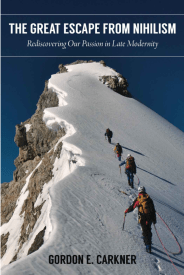
October Book Release: The Great Escape from Nihilism

screen-shot-2016-10-18-at-10-50-11-am

Does Nihilism Have the Last Word?

Available at Regent College & Amazon

This book is about a journey: out of nihilism into the heart of meaning. It begins by raising the question whether nihilism should have the last word. The following discussion addresses a crisis of faith, a crisis of identity, and a sense of lostness in late modernity. Our companions on the journey are a fine, seasoned group of writers, poets, social reformers, scientists, scholars and public intellectuals. Among the notables are Alvin Plantinga, Miralslov Volf, Jürgen Habermas, David Bentley Hart, Michel Foucault, Calvin Schrag, Jim Wallis, Tom McLeish and Jens Zimmermann. Special mention goes to eminent Canadian philosopher of modernity Charles Taylor. They have made their mark, shaped the public mind and continue to impact Western culture. They are people who dig deep and bring substantial answers to the dilemma of our time.

The Great Escape from Nihilism is about a courageous and somewhat dangerous journey, but ultimately a path towards hopeful alternatives to the forces that weigh down our spirits, and the tensions that divide us. We must decide in our minds and our hearts whether the quest to escape outweighs the risks. The ten conversations in the book are modeled on real, ongoing discussions and debates over several years on university campuses across Canada, the United States and Europe. Through the span of ten conversations, the book aims to encourage the development of the art of effective dialogue. It also illustrates that, despite their importance, there is so much more to life than science, technology, business and algorithms. Our journey involves the quest for the Holy Grail of human flourishing, the deeper life, the thick self.

“Through the complex cultural lens of Charles Taylor and the writings of some of the most influential philosophers and theologians of our time, Dr. Carkner provides wise and persuasive suggestions of ways forward in navigating the landscape of late modernity. The transcendent turn to agape love is the most challenging concept he exposits. This project is a rare and provocative contribution of high integrity.”

 ~Olav Slaymaker, Professor Emeritus Geography, UBC

“As a graduate student from the Middle East, this book has helped me understand how unlike eastern culture where community is central in their worldview, in Western culture the human seems the centre of the universe. In a Christian worldview God is the centre of the universe. I highly recommend this book to anyone wanting to learn more about the clash between Western and Christian worldview.”     ~Mary Kostandy, UBC Educational Studies PhD student (from Cairo, Egypt)

“The journey through graduate school is one of intellectual curiosity, but to what end? A university education opens up a world of new opportunities, but for what purpose? The Great Escape from Nihilism is essential reading for students seeking to add meaning to their academic pursuits, to become counter-cultural agents in an intimidating world, and to truly flourish along this challenging journey – and beyond. It really is a wonderful resource, a fantastic book, and has proven to be very useful and thought-provoking.” ~Jamie Pow, PhD Student in Political Science, Queens’ University, Belfast

Gordon E. Carkner Ph.D., works at the University of British Columbia as a meta-educator and networker, where he seeks to complement and engage the regular discourse among graduate students and faculty. Supporting and mentoring postgraduate students towards wholeheartedness in the UBC Graduate Christian Union, his work is sponsored through Outreach Canada. His work as a team leader in the notable UBC Graduate and Faculty Christian Forum lecture series brings together great minds and noble souls from around the globe for serious academic interchange, linking persons of common vision.


Keywords:  Nihilism, Secular Age, Search for Meaning, Apologetics, Scientism, Radical Individualism, Aestheticism, Recovery of the Good, Agape Love, Incarnational Humanism, Communal Responsibility, Late Modernity


Paperback   $14.99 USD on Amazon.com; $20 Cdn on Amazon.ca      Kindle $9.99 Cdn; $7.61 USD
Read More…

Posted by: gcarkner | October 8, 2016

Shame, Courage and Vulnerability

Quotes by Brené Brown, Daring Greatly: How the Courage to Be Vulnerable Transforms the Way We Live, Love, Parent, and Lead

Screen Shot 2014-11-18 at 4.53.20 PM.png

Courage starts with showing up and letting ourselves be seen.

Because true belonging only happens when we present our authentic, imperfect selves to the world, our sense of belonging can never be greater than our level of self-acceptance.

Vulnerability sounds like truth and feels like courage. Truth and courage aren’t always comfortable, but they’re never weakness.

If we can share our story with someone who responds with empathy and understanding, shame can’t survive.

Vulnerability is the birthplace of love, belonging, joy, courage, empathy, and creativity. It is the source of hope, empathy, accountability, and authenticity. If we want greater clarity in our purpose or deeper and more meaningful spiritual lives, vulnerability is the path.

When I look at narcissism through the vulnerability lens, I see the shame-based fear of being ordinary. I see the fear of never feeling extraordinary enough to be noticed, to be lovable, to belong, or to cultivate a sense of purpose.

What we know matters but who we are matters more.

The willingness to show up changes us, It makes us a little braver each time. Read More…

Posted by: gcarkner | October 7, 2016

Incarnation Identity

The Identity that Endures and Grows

~Gord Carkner~

img_3480

What are the implications of the incarnation (God with us) for graduate students, one of the central doctrines of the Christian faith.  What of their identity, their posture and their voice on campus? Incarnation is “where God’s eternity and creation’s temporality meet” (D. Stephen Long, Speaking of God, p. 86). There is no simple answer, but it is great territory to explore, good sod to turn over. There is a language to recover, golden insight and a new experience of self to be discovered.

Silence is clearly not the answer, although it is often our default position. We drop down into silence, dumb down our views and shrink inside. Sometimes, it seems that we need to offer one another the permission to think and speak religiously, biblically and theologically at UBC (while in language exile), to open the intellectual windows on a Closed World Order or ethos.  Why is God talk so unpopular, so hush hush? What is the point of this? We propose to offer some resistance to the policing of the supernatural by a secular outlook in our language usage and thought processes. Do you feel that you have to self-edit your comments in seminars, lab and class—to avoid the offense of theistic references. Is this a good, appropriate or just situation?

http://vancouversun.com/opinion/columnists/douglas-todd-the-great-professors-blind-spot

Many university folks think that religious conversation should be kept to the private or personal sphere (keep it in church), since religious language is seen to be beyond reason (mere emotion/sentiment or for some superstition), while our university linguistic currency is evidence, reason, statistics and science. Is this a legitimate state of affairs or one to which we should submit? Many Christian students do just this; they believe that they cannot speak about God in a sophisticated world like UBC, University of Victoria or SFU without being marginalized by peers or professors. I sympathize; it happened to me  as a first year undergrad in science at Queen’s. Read More…

Graduate and Faculty Christian Forum Announces

its November Feature Presentation

screen-shot-2016-01-22-at-6-48-54-am

PROF TOM MCLEISH, FINSTP, FRS

Durham University

Pro-Vice-Chancellor for Research (2008-14)

Professor in the  Department of Physics

Professor in the  Department of Chemistry

Member of the  Biophysical Sciences Institute

Member of the  Centre for Materials Physics

Member of the  Durham Centre for Soft Matter (DCSM)

Member in the  Institute of Medieval and Early Modern Studies


Investigating the Deep Structure of Modern Science: the Search for Wisdom

Wednesday, November 2 @ 4:00 p.m., Woodward (IRC) Room 6, UBC

http://www.csca.ca/mcleish-2016/


Abstract

Tom McLeish takes a scientist’s reading of a historical series of texts (the oldest is the celebrated nature poem from the ancient Middle-Eastern ‘wisdom’ text – the Book of Job) describing the search for understanding of nature.  He makes the case for science as a deeply human, social and ancient activity, embedded in some of the oldest stories told about human desire to understand the natural world.  Drawing on stories from the modern science of chaos and uncertainty alongside these medieval, patristic, classical and Biblical sources, this narrative approach challenges much of the current ‘science and religion’ debate as operating with the wrong assumptions and in the wrong space. It also develops a natural critique of the cultural separation of sciences and humanities, suggesting an approach to science, or in its more ancient form natural philosophy – the ‘love of wisdom of natural things’ – that can draw on theological and cultural roots that remain highly relevant today. McLeish suggests that deriving a human narrative for science in this way can transform the way political discussions of ‘troubled technologies’ are framed, the way we approach science in education and the media, and reframe the modes in which faith traditions engage with science.

Biography

Tom McLeish is a very accomplished prize-winning biophysics professor and Pro-Vice-Chancellor for Research (2008-2014) at the highly ranked University of Durham in the UK. In 2011 he was elected a Fellow of the Royal Society.  He served as Vice-President of Science and Innovation in the Institute of Physics 2012-2015, and is currently chair of the Royal Society’s Education Committee. Tom did a first degree in physics and PhD (1987) in polymer physics at Cambridge University.  A lectureship at Sheffield University in complex fluid physics was followed by a chair at Leeds University from 1993.  He has since won several awards both in Europe (Weissenberg Medal) and the USA (Bingham Medal) for his work on molecular rheology of polymers, and ran a large collaborative and multidisciplinary research program in this field from 1999-2009 co-funded by EPSRC and industry. His research interests include: (i) molecular rheology of polymeric fluids); (ii) macromolecular biological physics; (iii) issues of theology, ethics and history of science.  He has published over 180 scientific papers and reviews, and is in addition regularly involved in science-communication with the public, including lectures and workshops on science and faith.  He has been a Reader in the Anglican Church since 1993, in the dioceses of Ripon and York. In 2014, he published an important book called Faith and Wisdom in Science (Oxford University Press).

screen-shot-2016-01-22-at-8-22-45-am

https://tcbmcleish.wordpress.com

Tom McLeish’s scientific research over the last 25 years has contributed to the formation of the new field of ‘soft matter physics’. Interdisciplinary work with chemists, chemical engineers and biologists has sought to connect molecular structure and behaviour with emergent material or biological properties. He has also worked intensively with industrial researchers developing molecular design tools for new polymeric (plastic) materials, leading large national and international programs, with personal contributions mostly theoretical. Throughout he has also maintained an interest in public engagement with science, science policy and public values including the underlying, but often hidden, public narratives of science. He has been especially interested in the potential for theological narratives to inform debates in science and technology, both explicitly and implicitly.


Support and Sponsorship Gratitude to: Oikodome Foundation, Canadian Science & Christian Affiliation, Templeton Foundation, UBC Murrin Fund, Regent College

New Book Now Available: The Great Escape from Nihilism

Posted by: gcarkner | September 23, 2016

Power: a Re-boot for the Twenty-first Century

A Re-evaluation of Power 

The cross offers a meta-critique, and an alternative vision, of ‘power through weakness’. Biblical Christianity promotes a renunciation of privilege, but this is not passivity. Philosopher-Theologian Anthony Thisleton talks about the cross as a ‘meta-critique’ in New Horizons in Hermeneutics, (614-619) a paradigm of God’s self-giving love. Nietzsche’s will-to-power is transformed into a will-to-love under this critique. Contrary to the entitlement expectations of the late modern self, the ethic of the cross in principle shatters the boundaries and conflicts between tribes, Jew and Gentile, female and male, free person and slave (Galatians 3:23; Ephesians 2). It is anti-hegemony.

Biblical Christianity is counter-cultural, calling for love where there is conflict, service where there are power-interests, and trust where there is suspicion. Nietzsche’s ‘solution’ of will-to-power, must be confronted and critiqued. People like Foucault are right when they exposes power-bids which are rooted in self-interest, but it is very wrong (extreme) to assume that all truth-claims are in essence nothing but a power-play. Truth cannot be subsumed or fully defined under power-knowledge. We must never give up on the genuine search for the truth of a matter. Sometimes it leans in the opposite direction to power or resists power interests. This is what the quest for justice is all about. Without truth that transcends interest, we have no basis upon which to confront the abuse of power. Biblical discourse offers a means of separating disguised self-interest from statements with integrity. Read More…

Posted by: gcarkner | September 19, 2016

Book Review: Faith & Wisdom in Science

Book Review: Faith and Wisdom in Science by Tom McLeish (OUP, 2014)

~Dr. Olav Slaymaker, UBC Geography

Tom McLeish is Professor of Physics and Pro-Vice-Chancellor for Research at the highly ranked University of Durham in the UK.. With this book he has initiated a new genre of writing about the relation between science and faith. I have a raft of books on theology AND science; this book is the first one of which I am aware that attempts a theology OF science. It is an exciting book in so many ways and is marked by great originality. For some readers the case for the identicality of the scope of theology and science will be too radical to contemplate. Yet the argument is succinct and equally well grounded in Biblical exegesis and experiential empirical and theoretical science. I expect to continue to mine this book for several years to come.

 The central theme of the book is that the scope of science and theology is identical and that therefore there must be insights that are worthy of exploration and exchange between the two disciplines. Both science and theology are built on faith; they are both more about imagination and creative questions than about method, logic and providing answers and they both involve pain and love as their central emotions. Perhaps the most revelatory part of his thinking is his view that order and chaos are equally part of God’s world and his refusal to accept the simplistic argument that God’s existence is proven from the fine tuning of the universe. He insists that we must grapple with the chaos and disorderliness of much of creation and incorporate this into our theology beyond simply throwing up our arms and declaring that the disorder is caused by the Fall. And he bases his view on an original exegesis of parts of Proverbs, Psalms, Jeremiah, Isaiah, Hosea, Job (especially Job) and Genesis 1 and 2 and bolsters his argument with insights from Romans, I Corinthians, the Gospel according to John and the Revelation of John. Read More…

Posted by: gcarkner | September 14, 2016

New Book Now Available: The Great Escape from Nihilism

As of October 18, Available on Amazon

Screen Shot 2016-10-18 at 10.50.11 AM.png

Kindle e-book

https://www.amazon.ca/dp/B01MCV1LQC/ref=sr_1_1?ie=UTF8&qid=1476802183&sr=8-1&keywords=the+great+escape+from+nihilism

Paper Version on Amazon.com

https://www.amazon.com/Great-Escape-Nihilism-Rediscovering-Modernity/dp/0995096821/ref=sr_1_1?ie=UTF8&qid=1476802301&sr=8-1&keywords=the+great+escape+from+nihilism

Book Description This book is about a journey: out of the confines of nihilism into the heart of meaning. It presses the question: Does nihilism have the last word? The book addresses a contemporary crisis of faith, a crisis of identity, and a sense of lostness in late modernity. Our companions on the journey are a fine, seasoned group of writers, poets, social reformers, scientists, scholars and public intellectuals. Among the notables are Alvin Plantinga, Miralslov Volf, Jürgen Habermas, David Bentley Hart, Michel Foucault, Calvin Schrag, Jim Wallis, Tom McLeish and Jens Zimmermann. Special mention goes to eminent philosopher of modernity Charles Taylor for his deep, insightful cultural lens. He brings a major contribution to the discernment of our circumstances and our critical choices. The Great Escape from Nihilism is about a courageous and somewhat dangerous journey, but ultimately it is a path towards hopeful alternatives to the forces that weigh down our spirits, and the tensions that divide us. We must decide whether the quest to escape outweighs the risks. After mapping the contours of nihilism and the immanent frame in Part 1, the story proceeds with diagnosis and then prognosis. The ten substantial conversations that follow in Part 2 are modeled on real, ongoing discussions and lively debates over several years on university campuses across Canada, the United States and Europe. Despite how practical they are, there is more to life than science, technology, business and algorithms. Our journey involves the quest for the Holy Grail of human flourishing, the deeper life, the thick self.

Keywords  Nihilism, Secular Age, Search for Meaning, Scientism, Apologetics, Radical Individualism, Ideology of the Aesthetic, Recovery of the Good, Agape Love, Incarnational Humanism, Communal Responsibility, the Common Good, Late Modernity

Through the complex “lens” of Charles Taylor and the writings of some of the most influential philosophers and theologians of our time, Dr. Carkner provides wise and persuasive suggestions of ways forward in navigating the landscape of late modernity. The transcendent turn to agape love is the most challenging concept he exposits. This project is a rare and provocative contribution of high integrity.

~Olav Slaymaker, Professor Emeritus, UBC Geography

As a graduate student from the Middle East, this book has helped me understand Western culture better. I highly recommend it.

~Mary Kostandy, UBC Education PhD student (from Cairo, Egypt)

Screen Shot 2016-06-27 at 12.24.10 PM.png

Posted by: gcarkner | July 26, 2016

Welcome to GCU Fall 2016

 GCU Fall Term Welcome 2016

This group exists to help you reach your fullest potential as a graduate student. You help us build community among other grad students on campus and respond to those pursuing the deeper life.

Screen Shot 2016-01-14 at 4.48.51 PM 

UBC is a Great Opportunity to Expand Your Horizons and Sharpen Your Skills

 Welcome to UBC! GCU sponsors a reception for new students second week of classes Wednesday, September 14 at 6:00 pm at the home of Professor Emeritus Dr. Ed and Anne Jull, 1828 Western Parkway. Our study group begins in September on Thursday evening at 7 p.m.: rooted in the book of Philippians. Our hikes begin on September 10 and 17. Our Fall Retreat will be held at A Rocha Centre in White Rock on September 23, 24. We are all on a journey both academically and spiritually. We hope that GCU can add fun, spice, wisdom and colour to that adventure.

Our updates are on the GCU Blog Site www.ubcgcu.org We post important lectures, social events and study group information, places to intersect with others who can build your imagination. It is a great network of creative minds and you add much with your background experiences, academic passion and searching questions. We hope that you will find it a home away from home in a community of mutual support. You can also ask questions or get more information from Gord at gcarkner@shaw.ca or  Ute at ucarkner@shaw.ca

Key Words to Capture the GCU Narrative Curiosity, Community, Digging Deeper into Faith and Reason, Integration, Science-Religion Dialogue, Identity Capital, Big Questions, Meta-Biology, Meaning and Calling, Adding Value to Education, Culture Making, Justice and the Common Good, Creative Imagination, Good Scholarship, Innovation, Christo-centric Inspiration, Incarnational Humanism, Adventure and Fun, Celebrating Creation, Re-thinking the Secular, Social Relevance.

GCU is interdisciplinary and international, it creates a lively conversation as people bring their wealth of knowledge, experience and expertise to the table. They also bring their heart, humour and their joy to community. Let’s get to know each other and explore new horizons together during this important journey of postgraduate education. GCU helps you keep perspective on your studies and career development.

screen-shot-2016-09-20-at-5-07-45-pm

Long hours in the laboratory, thesis proposals, the weight of comprehensive exams means that a grad student needs a support infrastructure. I can’t speak highly enough about getting involved with a group on campus like GCU, and also finding a good church home base. Also as you are walking into your office or biking into campus, try praying for your profs, fellow students, or admin staff; this can help stimulate surprisingly fruitful conversations. And don’t forget that you are here to serve undergrads with grace. Feel free to track me down for coffee; I love ideas exchange.

~Dr. Craig Mitton, PhD

Associate Professor

School of Population and Public Health

As a graduate student several decades ago I found the Grad Christian Union community at my university uplifting spiritually and socially. In an often chilly secular environment, it was a great venue to meet other grads outside my own field and cultural background and develop friendships and join in events with those who shared the same core values. I am still in contact with several of these friends 30 years later. With some other faculty and graduate students, I helped to launch the Graduate & Faculty Christian Forum a number of years ago. Gord has been a solid advisor to this group as well 

~Dr. David Ley

Professor Department of Geography

University of British Columbia

There is no more important bellwether for our society and our culture than the university — and yet Christians within academia often travel incognito, which isn’t good for them, isn’t good for the university, and isn’t good for other Christians, who often feel alone when really they’re not. A ministry to grad students and thus provides a vital venue where Christians can connect, show their colours, and stimulate each other to play the full role they’re called to play as fully alive and “out” followers of Christ. Decide to be a public Christian at UBC.

~Dr. Dennis Danielson

Professor of English

University of British Columbia

Graduate research is often like looking for a lightswitch in a totally dark room. It can be frustrating at times. It certainly was for me! It was invaluable for me to have close connection with other Christians whom I could share that load with, and who were praying for me.

~Dr. Bé Wassink

Instructor, Materials Engineering

University of British Columbia

We will buy you a free coffee of your choice. Looking forward to hearing your story and your aspirations for grad school.

Screen Shot 2016-09-04 at 3.46.24 PM.png

Graduate Christian Union Fall Orientation

 Fall Dinner Reception for New UBC Students

Wednesday, September 14 @ 6:00 p.m. home of Dr. Ed and Anne Jull, 1828 Western Parkway: Find out about the GCU program and meet other students and UBC faculty.

Hikes and Coffee on Saturday, September 10 and 17    Contact Ute: ucarkner@shaw.ca Get to know the natural beauty of the local mountains.

screen-shot-2016-09-12-at-5-54-55-am

screen-shot-2016-09-20-at-5-06-08-pm

GFCF Scholarly Lecture Series with Durham University Biophysicist Tom McLeish: November 1- 4 Includes fall book study on Faith & Wisdom in Science http://www.ubcgfcf.com

screen-shot-2016-01-22-at-8-22-45-am

First Study Group Meeting, Thursday, September 22, 7:00 pm @ 277 west 16th ave. (near Cambie) on the Book of Philippians under the theme Daring Greatly. T: 604-349-9497


Screen Shot 2015-11-10 at 9.00.19 AM


How You Can Flourish with GCU

  • Building a Christian Voice with Integrity in Academia: faith and reason as partners
  • GCU Blog org   reaching students in 92 countries. Spark a conversation.
  • Scholarly Christian Lectures: UBC Graduate and Faculty Christian Forum
  • New Book: The Great Escape from Nihilism: rediscovering our passion in late modernity by Gordon E. Carkner, Ph.D.
  • Providing Cutting Edge Resources for Students and Faculty:    Mentorship and support by senior UBC faculty and Gordon Carkner
  • Apologetics Training and Resources: Ravi Zacharias Conference Sept 6 & 7; Apologetics Canada Conference March 5 & 6.
  • Hospitality and Friendship at our Bible Study in the Book of Philippians (Thursdays)
  • Prayer and Spiritual Direction: Contact GCU Staff Ute Carkner ucarkner@shaw.ca
  • Join our Listserv Today for information on future events and opportunities: Contact Gord Carkner, GCU Director and Mentor gcarkner@shaw.ca  


Our Core Values

  • Students engaging and encouraging fellow students on the cutting edge of thought and research.
  • Courage and integrity in the pursuit of excellence in research and noble personal character.
  • Winsome exploration of fullness and joy in our work and life, to live large with humility.
  • The agape love posture of respect in relationships with high goals for collegiality and friendship.
  • In preparation for global citizenship and pursuing hope for a better and more just world.
  • A stance of intellectual openness in the pursuit of a reasoned faith and faithful, responsible, virtuous reasoning, handling the pursuit of knowledge wisely.
  • A constructive contribution to campus discourse, raising important questions, and exploring fresh ideas and horizons.
  • Drilling down into the richest heritage of Judeo-Christianity, leaving no stone unturned. Exploring how this can inspire and open up channels for academic investigation.
  • Develop a deep identity in Jesus Christ and the biblical narrative while respecting difference in convictions of others, promoting a responsible spiritual quest for truth, beauty, goodness and community.
  • Encouraging intense curiosity that draws from the wisdom of faculty across the disciplines and scholarship from around the globe.
  • Advocating for others who are less fortunate or less privileged, pursuing their empowerment and freedom from oppression and grinding poverty. Pursuit of the common good towards an integral humanism.


Screen Shot 2016-01-25 at 7.55.48 PM

GCU Staff Gordon Carkner is a visionary, passionate about dialogue on salient questions of meaning and identity, faith and culture.  He has worked as a meta-educator, a networker, and campus pastor for over 30 years in Canadian universities. As a voracious reader, his vision is to mentor future leaders within academia with excellent resources: to keep them on the cutting edge and to broaden their horizons. Together with his team of university faculty and graduate students, he has sponsored countless book studies, lectures, panels, discussions and debates on the connection between a wide range of academic scholarship and Christian faith, helping people find their voice, grow their identity, and develop a spirit of curiosity. His present work is located in Vancouver, Canada at the University of British Columbia. He is also keen to feed relevant scholarship intelligence and critical thinking insights to church leaders. He is joined in his work by his lovely wife and ministry partner Ute and their two charming daughters. As a family, they enjoy getting out in the mountains of British Columbia, Alberta, and the Austrian and Swiss Alps. Gordon and Ute together have hiked the Grand Canyon and Ute joined an Australian expedition in Nepal.

Dr. Carkner holds a B.Sc. in Human Physiology from Queen’s University in Kingston, Ontario, Canada; a Masters of Divinity from Trinity Evangelical Divinity School in Deerfield, Illinois; and a PhD in philosophical theology from University of Wales, with a strong emphasis on the moral self and the making of the modern identity. His curiosity and expertise lies in the arena of questions concerning freedom and the good, secularity, meaning, worldviews, and philosophical anthropology, as they get articulated, discussed and debated within late modern Western culture. His current intellectual hero is Canadian McGill University philosopher, Professor Emeritus Charles Taylor. He is also well read in history and philosophy of science, science and theology. Gordon co-authored with Michael Green the popular book Ten Myths about Christianity, which sold over 200,000 copies in twenty languages and assisted many people around the world to reconsider what faith offers to their journey in life. He has also authored a number of key papers on scientism, individualism, worldviews and pluralism, tools for effective dialogue, and Charles Taylor’s recovery of the good for moral discourse. He hosts an active blog for postgraduate students, which reaches people in 92 countries, at http://www.ubcgcu.org.

Dr Carkner has just finished a book to be released this fall called The Great Escape from Nihilism.


Posted by: gcarkner | July 17, 2016

Summer Good Reading

Gord’s Summer Reading 2016

Screen Shot 2016-06-11 at 11.38.53 AM


If we encounter a person of rare intellect, we should ask what books they read

Brené Brown (2012). Daring Greatly: How the Courage to be Vulnerable Transforms the Way We Live, Love, Parent and Lead. Avery. This is a surprisingly insightful book on human and family relationships; you might have seen her popular TED Talk on vulnerability or shame. She is a shame researcher in Texas who offers pearls of wisdom. We know a family of a GCU Alumnus in the UK that has been totally transformed by her teaching. Shame is the big elephant in the room for many of us.

Companion Volumes

Curt Thompson, The Soul of Shame: Retelling the Stories We Believe About Ourselves. (IVP, 2015)

Andy Crouch (2016). Strong and Weak: embracing a life of love, risk and true flourishing. IVP His books Culture Making and Playing God have been a huge hit for Christians looking to engage culture and find a creative, biblical way forward.

________________________

Timothy Jackson (2015). Political Agape: Christian Love and Liberal Democracy. Eerdmans. This is part of a trilogy on agape theology; there is a great final essay on Martin Luther King Jr.

Dallas Willard. The Allure of Gentleness: defending the faith in the manner of Jesus. Harper One. Willard has encouraged many young Christian philosophers in his time, and is also well-known for his work on Christian spirituality.

Two Great Books on Globalization

Miraslov Volf (2015). Flourishing: why we need religion in the age of globalization. Yale

Chief Rabbi Jonathan Sacks, The Dignity of Difference: how to avoid the clash of civilization. Continuum

Two Books on Science & Religion

Fraser Fleming (2016). The Truth about Science and Religion: From the Big Bang to Neuroscience. Wipf & Stock Fraser is a former PhD student in Chemistry at UBC and one of the early members of GCU and the GFCF Committee.

Tom McLeish (2014). Faith and Wisdom in Science. Oxford University Press. (upcoming speaking tour at UBC, SFU and TWU first week of November 2016)

James K.A. Smith, You Are What You Love: The Spiritual Power of Habit.  (a very popular speaker, writer and philosopher from Calvin College).

Christian Artist Makato Fujimura, Silence and Beauty.

Sherry Turkle, Reclaiming Conversation: the power of talk in a digital age.

Brian Fikkert & Russell Mask (2015). From Dependence to Dignity: how to alleviate poverty through church-centered microfinance. Zondervan

Books are food for the soul. They can be like a journey into another world. Some become our best friends. They can make a huge difference in our perspective. These authors can also be our mentors. Read outside your discipline to maximize your creativity. 

Good Reading  ~Gord

Screen Shot 2016-07-18 at 9.54.09 AM

« Newer Posts - Older Posts »

Categories