Trinity Western University’s Distinguished Lecturer Series
Evening Public Lecture
Climate Change: Facts, Fictions, and our Faith
Northwest Building Auditorium, Trinity Western University in Langley, BC
Wednesday, October 8 @ 7:00 p.m.
Dr. Hayhoe has been identified by TIME as one of the 100 most influential people in the world for 2014.
Early Reflections on the Talk @ TWU
Katharine Hayhoe had an important message (mixed in with good humour) last evening at TWU. We have found the problem in global warming and the problem is us, especially high consumers using lots of carbon-based energy since the industrial revolution. 97% of climate scientists believe that there is a significant human factor/human causes to global warming. For her, the science speaks loud and clear. Climate instability is rapidly becoming one of our biggest global problems. She gave several examples from Canada, USA and elsewhere: unusual killer heat waves, flash floods in Toronto and Calgary, the pine beetle menace to our forests, island communities being swallowed by the sea, extremely fast melting of sea ice and glaciers, the immense threat to the livelihood of millions in Bangladesh, etc.She ended with the moral/values/faith Question: What are we going to do about it? Do we really love our neighbour who is suffering the worst impact of climate change? Do we care about the future of our children? She left us with a sense of urgency–the need to act now, especially in the next few years. We all need to take responsibility for our part in the problem and all need to work towards solutions. The same message came through Jeremy Rifkin in a Google talk www.youtube.com/watch?v=5-iDUcETjvo He notes that climate change, water and food shortage could highjack the whole future of the planet. This is a serious concern for future leaders and educators the 10,000 graduate students at UBC. Also graduate students around the globe.
Report on the TWU Lecture by Dr. Judith Toronchuk, Biopsychology TWU
See also Naomi Klein, This Changes Everything: Capitalism versus the Climate.
Climate scientist and evangelical Christian Dr. Katherine Hayhoe presented this year’s Distinguished Lecture Series at Trinity Western University. The combination of respected speaker and controversial topic generated so much interest in the wider Christian community that the evening lecture on Oct 8 required two overflow rooms. Hayhoe, a Canadian, is associate professor at Texas Tech and director of its Climate Science Center. Combining her roles as scientist and committed Christian who is also the wife of a pastor, she sought to unwind the tangled relationship between politics, science and faith. After presenting evidence for the human role in global warming and the resulting influence on weather patterns and sea levels, she delved into the disruption of populations and agriculture faced by low-lying countries, along with the spread of disease in a warmer world. The greatest impact will be had precisely on the countries with the least economic resources, and as people of faith we are called to respond to this increased poverty and suffering. At the same time, investing now in alternative forms of energy will ultimately serve our own best economic interests as well. Hayhoe traced the increasingly strong relationship between conservative politics and conservative religion. The growing distrust of science among American evangelicals is a reaction to the acceptance of evolution by scientists and the common belief that science and faith are incompatible. This distrust, encouraged by political and economic forces that resist change, has led to denial among many evangelicals of the evidence for climate change. Faith provides evidence of things not seen, Hayhoe claims, whereas science provides evidence of the observable. In her view these are two sides of the same coin and must together lead us to seek appropriate compassionate solutions for the future.
Abstract
Climate change is one of the most hotly debated scientific issues of today. But, is the evidence solid? Are proposed solutions viable? And why would anyone care? Join Katharine Hayhoe as she untangles the complex science behind global warming and highlights the key role our faith and values play in shaping our attitudes and actions on this crucial topic.
Biography for Katharine Hayhoe, Ph.D
Recently named to TIME magazine’s 100 Most Influential People in the World list for 2014, Katharine Hayhoe is an atmospheric scientist who studies climate change and what it means for people and the natural environment. But Hayhoe may be best-known to many people because of how she’s bridging the broad, deep, gap between scientists and Christians— work she does in part because she’s a Christian herself. Together with her husband Andrew Farley, a pastor, professor of applied linguistics, and best-selling author, Hayhoe wrote “A Climate for Change: Global Warming Facts for Faith-Based Decisions,” a book that untangles the complex science and tackles many long-held misconceptions about global warming. Her work as a climate change evangelist is featured on the documentary series “Years of Living Dangerously” and “The Secret Life of Scientists and Engineers.” In 2012 she was honored to be named one of Christianity Today’s 50 Women to Watch.
Katharine Anne Scott Hayhoe (born 1973) is an atmospheric scientist and associate professor of political science at Texas Tech University, where she is director of the Climate Science Center. She has authored more than 60 peer-reviewed publications, with an h-index of 28, and wrote the book A Climate for Change: Global Warming Facts for Faith-Based Decisionstogether with her husband, Andrew Farley, a pastor. She also co-authored some reports for the US Global Change Research Program, as well as some National Academy of Sciences reports,including the 3rd National Climate Assessment, released on May 6, 2014. Shortly after the report was released, Hayhoe said, “Climate change is here and now, and not in some distant time or place,” adding that “The choices we’re making today will have a significant impact on our future.”
Professor John Abraham has called her “perhaps the best communicator on climate change.” Time Magazine listed her among the 100 most influential people in 2014. The first episode of the documentary TV series Years of Living Dangerously features her work and her communication with religious audiences in Texas.
Mythology Currently Haunting the Relationship between Fides et Ratio
The Discourse on Faith and Reason Revisited
or
Athens in Dialogue with Jerusalem
We suggest that our current state of skepticism in Western late modernity stems from a significant confusion about the relationship between various types of faith and certain types of reason. There is more than one type of reasoning or knowledge, and more than one type of faith. Alasdair McIntyre notes three massively different paradigms of reason in Three Version of Moral Inquiry: pre-modern, modern and postmodern. This important insight helps us understand the breadth of discourse at our universities. Faith is also a multivalent concept and applies equally to the hard sciences as well as relationships or the study of Holy Scripture or one’s personal spiritual journey and quest for meaning. There are several assumptions that have to be made in all these cases which cannot be proven by science. These are meta-scientific, yet crucial for our work in various disciplines. They are part of our hermeneutical grid or framework.
God, in the classical sense, asks humans to the table of reason, he proposes intellectual hospitality and dialogue. He asks them to test his wisdom and revelation against the reality of their lives and their best thinking, against their deepest aspirations and worst fears and anxieties. He asks them to pay attention to reality by all possible means, at all levels, to come to grips with the mystery of their humanity and the mystery of being itself. Brilliant biochemist turned philosopher, Michael Polanyi (see a separate post on his work), revealed that faith is operative at all stages of scientific research and discovery, both theoretical and experimental science. For Polanyi, scientific inquiry is above all a practice best understood as a kind of craft. Philosophical theologian Jens Zimmermann has added significant and accessible insight on this subject of science and the humanities in his recent publication: Hermeneutics: a very short introduction (Oxford University Press, 2015). The big issue is how we frame our convictions and thoughts, plus the kind of stance we take on reality, towards ourselves and other people, the world at large.
We want to face the hard question: Are we entering a post-truth society where spin doctors and fake news producers are taken seriously, despite the ‘facts’, where rage gives us an audience? This is fideism combined with blind loyalty cultic tribalism. Oxford scholar Terry Eagleton would call it the ideology of the aesthetic.The current attempts towards a pure reason or pure faith are really impossible to actualize. There are no pure domains of reason or faith. They are intertwined. One cannot get rationalism without the other extreme of fideism. Both rationalism and fideism are abstract categories and don’t exist in real life. Sadly, rationalism needs good faith to be reduced to fideism for its very survival. For example, Nietzsche claimed that all the way down there are only interpretations; positivists claimed that there are only facts.
What should we believe whatever our starting point or prejudgments? It is perhaps a life-long quest to understand the nuances of this faith-reason, knowledge-religion relationship. Nothing is more important for balance in our lives and our thinking. Accomplished philosophical theologian D. Stephen Long helps our quest giving us much to ponder in his profound book Speaking of God: theology, language and truth. Stephen was a past guest speaker a few years ago at UBC in the GFCF series.I have chosen some priceless quotes below to help re-imagine a truce between faith and reason.
~ Dr. Gordon E. Carkner, meta-educator with postgraduate students at UBC
Two Ways of Seeing Reality/the World
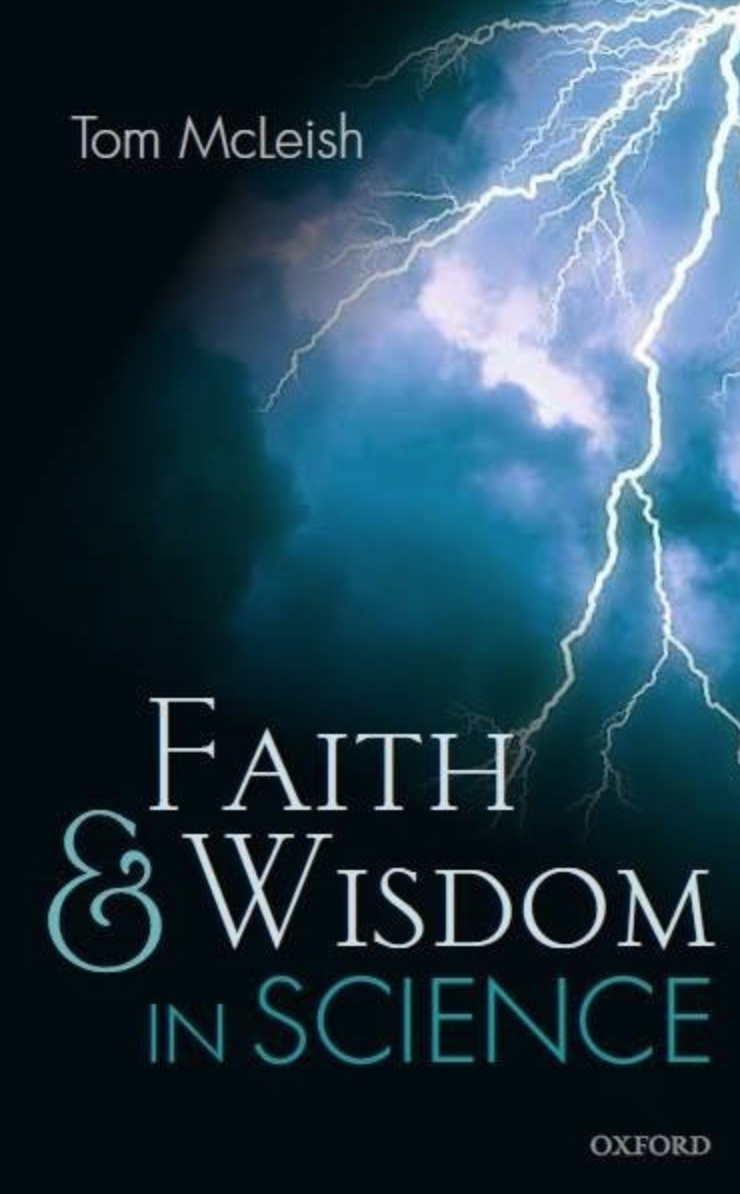
Below are listed ten of the most common myths (misconceptions) about the relationship between reason and Christian faith. Perhaps it can help awaken us from our studied naivety, our intellectual slumber. These assumptions need to be re-examined as to their cogency and coherence, their soundness, their sense. It is critical that we transcend the hard, abstract (often confusing) categories of fideism and rationalism. Both are a form of harmful dogmatism. There are good ways to reason and bad ways to reason (talk to a professor of logic), and this matters immensely today. The following myths (misconceptions and misconstruals) are commonly believed, even by PhDs who are well published, and some of the top intellectuals in various fields. In this following discussion, we appeal to some of the sharpest minds to confront these confusions. In the end, clear thinking does matter. The unexamined assumption can lead one astray, even into harm’s way, and into violence. It is not an accident of history that many of the top modern universities, (e.g. Harvard, Queen’s, McGill, Oxford, Cambridge, Princeton, the Sorbonne) have their roots in Christian faith, have been inspired by such faith (John O’Malley, Four Cultures of the West). Their campus mottos reveal this fact. Religious belief is no friend of ignorance nor the enemy of knowledge. Christian faith involves the mind as well as the heart (the whole person), reason as well as intuition, all types of human perception, employing the full human linguistic capacity (Charles Taylor, The Language Animal). See the pursuit of wisdom in both science and theology in Tom McLeish’s Faith and Wisdom in Science. (OUP 2014) Psalm 110:10: “The Fear of the Lord is the beginning of wisdom.”
Below, we take a stance of intellectual openness in the pursuit of a reasoned faith and faithful, responsible, noble reasoning. I think we can we handle the pursuit of knowledge wisely, astutely and carefully.
~Gordon E. Carkner, PhD Philosophical Theology, University of Wales, Seeker After Truth and Wisdom as Best We Can Discern It
Ten Myths about Faith and Reason Worth Rethinking
Myth #1. Faith and reason are inherently incompatible, or in opposition.
“Philosophy should be the love of wisdom that prompts persons to use reason in the quest for truth, goodness and beauty…. Philosophy and theology have distinct tasks, but those tasks cannot be delineated solely in terms of nature and or reason and faith.” ~D. Stephen Long (statement about non-overlapping magisteria)
“The question of God… is one that can and must be pursued in terms of the absolute and the contingent, the necessary and the fortuitous, potency and act, possibility and impossibility, being and nonbeing, transcendence and immanence…. Evidence for or against God, if it is there, saturates every moment of the experience of existence, every employment of reason, every act of consciousness, every encounter with the world around us.” ~David Bentley Hart, philosopher, writer
“As I try to discern the origin of that conviction [that the universe is orderly], I seem to find it in a basic notion discovered 2000 or 3000 years ago, and enunciated first in the Western world by the ancient Hebrews: namely that the universe is governed by a single God, and is not the product of the whims of many gods, each governing his own province according to his own laws. This monotheistic view seems to be the historical foundation for modern science” Melvin Calvin, Nobel Prize for Biochemistry (Chemical Evolution. Oxford: Clarendon Press, 1969, 258).
Myth #2. Reason does not involve faith at any level of its operation.
“Modern rationalism makes us choose truth against beauty and goodness. Only a permanent, living unity of the theoretical, ethical and aesthetic attitudes can convey a true knowledge of being.” ~D. Stephen Long on the relationship of the culture spheres
“Philosophy has its limits, but it must be redeemed, and a place must be made for it within the gift we receive in sacred doctrine. Philosophy has its own integrity when it does not exceed its proper limits and seek to police the questions asked. The limits Wittgenstein placed on philosophy for the sake of a life worth living is similar to the limits Acquinas put on philosophy for the sake of the Christian life as a way of following Jesus into the truth of God.” ~D. Stephen Long
Understanding the nature of reason is central to our conception of human existence. We have to resist a narrow conception of human rationality that excludes religion as irrational because such a view cripples our ability to analyze correctly the current state of Western culture. As Rodney Stark has argued in his book The Victory of Reason, Christianity’s ability to combine faith and reason with a progressive view of human nature laid the foundation for Western science and technological progress…. Building on Judaism, Christianity also allowed for the concepts of human dignity, personhood and individuality that have decisively shaped Western views of society…. Neither the best nor the worst features of modernity are comprehensible without the transformative influence of Christianity on Greco-Roman culture. Without religion, the West would not be what it is, and without understanding the religious roots of Western culture and their continuing influence on Western thought, we lack the self-understanding necessary to address our current cultural crisis (J. Zimmermann, 2012a, 25 & 26).
Albert Einstein once observed that “science can help human beings attain some of their goals; science cannot, however, supply the goals.”
See Roy Clouser, The Myth of Religious Neutrality; An Essay on the Hidden Role of Religious Belief in Theories (rev. ed.; University of Notre Dame Press, 2005).
Faith as underlying rationality: In this view, all human knowledge and reason is seen as dependent on faith: faith in our senses, faith in our reason, faith in our memories, and faith in the accounts of events we receive from others. Accordingly, faith is seen as essential to and inseparable from rationality (Alvin Plantinga, philosopher). Furthermore,
“A theology of science — situates our exploration of nature within a greater task. Science becomes, within a Christian theology, the grounded outworking of the ‘ministry of reconciliation’ between humankind and the world.” ~ Tom McLeish (2014). Faith and Wisdom in Science, 209.
Myth #3. Modern reason has made Christian faith redundant; faith is a primitive disposition of our medieval ancestors.
“The certainties which the church has received as a gift require its participation in humanity’s “comom struggle” to attain truth. The human search for truth, which is philosophy’s vocation, is not set in opposition to theology’s reception of truth as gift. What we struggle to understand by reason we also receive by faith. No dichotomy exists between the certainties of faith and the common struggle by human reason to attain truth. … the truths humanity seeks by common reason (philosophy) and the certainties of faith can be placed over against each other such that each illuminates the other and renders it intelligible until the two ultimately become one, which is of course what the incarnation does in reverse. The concretion of the one Person illumines the natures of both divinity and humanity. Faith seeks reason and reason assists faith. They mutually enrich each other.” ~D. Stephen Long
“The common belief that . . . the actual relations between religion and science over the last few centuries have been marked by deep and enduring hostility is not only historically inaccurate but actually a caricature so grotesque that what needs to be explained is how it could possibly have achieved any degree of respectability.” ~Colin Russell, Reputable UK Historian of Science.
“Science is simply incapable of supplying answers in the realm of ethics, theology, and the purpose of life. In dealing solely with observable and measurable phenomena, modern science actually has nothing to say about love, compassion, beauty, self-centredness, altruism or cruelty. It concentrates on secondary causes and questions. Unfortunately, some scientists conclude that since the scientific method cannot handle non-material matters, they have little legitimacy in a university curriculum. They argue that because non-material issues cannot be scientifically proven, there is no point in investigating primary causes and questions. From within their closed system of reasoning this may make sense, but they gloss over or ignore the most important questions of human existence…. Even the most brilliant scientist, after all, has no inherent competence in ethics or other non-scientific matters.” ~John R. Redekop, Political Scientist
What if, as Oxford mathematician John Lennox says, faith in a transcendent God helps make better sense of human experience, human reason and science itself?
It is idle to talk always of the alternative of reason and faith. Reason is itself a matter of faith. It is an act of faith to assert that our thoughts have any relation to reality at all. ~G.K. Chesterton (1908). Orthodoxy.
For the scientist who has lived by his faith in the power of reason, the story ends like a bad dream. He has scaled the mountains of ignorance; he is about to conquer the highest peak; as he pulls himself over the final rock, he is greeted by a band of theologians who have been sitting there for centuries.– Robert Jastrow, an astronomer who worked for NASA.
This subtraction view of secularity is contested by top Canadian philosopher Charles Taylor in his Templeton Award-winning book, A Secular Age (especially Chapter 15, “The Immanent Frame”).
The change I want to define and trace is one which takes us from a society in which it was virtually impossible not to believe in God, to one in which faith, even for the staunchest believer, is one human possibility among others. I may find it inconceivable that I would abandon my faith, but there are others, including possibly some very close to me, whose way of living I cannot in all honesty just dismiss as depraved, or blind, or unworthy, who have no faith (at least not in God, or the transcendent). Belief in God is no longer axiomatic. There are alternatives. And this will also likely mean that at least in certain milieux, it may be hard to sustain one’s faith.” ~Charles Taylor, A Secular Age
Myth #4. Faith is a credulous assent to unfounded premises, a belief in something that is untrue or at least suspect.
“Faith not only seeks and presumes reason, it converts it. Every account of reason assumes something beyond it, some enabling condition that makes it possible but cannot be accounted for it within its own systematic aspirations… Likewise faith can never be pure; it will always assume and use reason even as it transfigures it.” ~D. Stephen Long on the interdependency of faith and reason
“There is a difference between seeking to know things for the sake of knowledge itself and being willing to undergo renunciation to be possessed by truth.” ~ James Houston, Joyful Exiles
“Newton argued that the regulation of the solar system presupposed the ‘counsel and dominion of an intelligent and powerful being’ and indeed hoped that his Principia would convince the thinking person of the existence of a Deity.” ~John Lennox, Mathematician/Philosopher
Clearly there exists both good faith and bad faith. Believing a lie or promoting a falsity, as in a Ponzi scheme, for the sake of an advantage or con is bad faith. Sophism is the application of good rhetoric in bad faith. Evidence is vitally important to good faith; clarity, consistency, coherence and unity are important to good faith. Exposing fantasy, superstition or Gnosticism is an essential goal of good faith. One needs good faith integrity in signing a major contract for a merger of two businesses. Faith is a form of knowing that can go beyond the evidence but should not contradict it, or be hopelessly uncritical or unexamined. Does the Christian narrative have resonance, or make good sense of our experience? That’s a key question. ~Dr. Gordon Carkner, philosophical theology
Because God is the God of the universe there is, at the deepest level, no secular learning for Christians. There is no secular subject matter. Indeed, in this perspective the only secular learning is the effort of these scholars and students who deny the existence of God. Second, there is no area of human existence or history which lies outside the realm of Christian inquiry. Third, the church has much to offer the university because it challenges the university to acknowledge the historic and continuing contributions of Christianity and to establish inclusive curricula. Fourth, the university has much to offer Christian because it helps them to develop critical thinking, to enlarge their understanding of options, to improve their learning skills, and to approach intellectual pursuits systematically and efficiently. ~John R. Redekop, Political Scientist (In this light see John W. O’Malley, Four Cultures of the West.
In Scripture, faith involves placing trust in what you have reason to believe is true. Faith is not a blind, irrational leap into the dark. So faith and reason cooperate on a biblical view of faith. They are not intrinsically hostile. ~J.P. Moreland, Christian philosopher
Wonder (awe) rather than doubt is the root of all knowledge. Our goal should be to live life in radical amazement … get up in the morning and look at the world in a way that takes nothing for granted. Everything is phenomenal; everything is incredible; never treat life casually. To be spiritual is to be amazed. ~Abraham Joshua Heschel
Critical realism is the attempt to find a middle way between the heroic optimism of the failed modernist search for certain truth, and the intellectual pessimism that so often leads postmodernism into a slough of relativistic despond.” ~ John Polkinghorne and M. Welker (2001). Faith in the Living God: A Dialogue.
Myth #5. Reason is a pure, disinterested obedience to empirical fact; methodological naturalism implies/requires belief in philosophical naturalism.
Moral Subjectivism, Ethical Relativism and the Failure of Practical Reason
“Naturalism, alone among all considered philosophical attempts to describe the shape of reality, is radically insufficient in its explanatory range. The one thing of which it can give no account, and which its most fundamental principles make it entirely impossible to explain at all, is nature’s very existence. For existence is most definitely not a natural phenomenon; it is logically prior to any physical cause whatsoever…. In fact, it is impossible to say how, in terms naturalism allows, nature could exist at all.” ~ David Bentley Hart, Philosopher
“Note that I am not postulating a ‘God of the gaps’, a god merely to explain the things that science has not yet explained. I am postulating a God to explain why science explains; I do not deny that science explains, but I postulate God to explain why science explains. The very success of science in showing us how deeply ordered the natural world is provides strong grounds for believing that there is an even deeper cause for that order”. The issue here is that, because God is not an alternative to science as an explanation, he is not a God of the gaps. On the contrary, he is the ground of all explanation: it is his existence which gives rise to the very possibility of explanation, scientific or otherwise.” ~Richard Swinburne, top Oxford Philosopher. Swinburne examines the credibility of Christian faith using Bayes Theorem of Probability.
“An admirably severe discipline of interpretive and theoretical restraint [modern empirical science] has been transformed into its perfect and irrepressibly wanton opposite: what began as a principled refusal of metaphysical speculation, for the sake of specific empirical inquiries, has now been mistaken for a comprehensive knowledge of the metaphysical shape of reality; the art of humble questioning has been mistaken for the sure possession of ultimate conclusions. This makes a mockery of real science.” ~David Bentley Hart
Alvin Plantinga raises major questions about the compatibility of materialistic naturalism with science (Where the Conflict Really Lies, 2012, especially Chapter 10)
Myth #6. Reason is morally and ideologically neutral, the same for all thinking human beings, therefore universal—unifying society.
“The good characterizes a public, successful performance of truth; it refuses fideism….Truth is an activity, a judgment inextricably linked to the good, and therefore to moral transformation. When I am pursuing truth I am pursuing goodness…. This truth both an undying fidelity and love, and at the same time a generosity towards others. By refusing to subordinate itself to ‘power’, understood as willful self-assertion, it best serves the tradition of democracy.” ~D. Stephen Long
Charles Taylor’s contention is that the power of materialism today comes not from scientific “facts”, but has rather to be explained in terms of the power of a certain package uniting materialism with a moral outlook, the package we call “atheistic humanism” or exclusive humanism. (C. Taylor, A Secular Age, p. 569) It works off an ontological thesis of materialism: everything which is, is based on “matter”, without explaining why this is taken as true.
Read Alasdair McIntyre, Whose Justice? Which Rationality?; also see Roy Clouser, The Myth of Religious Neutrality; An Essay on the Hidden Role of Religious Belief in Theories (rev. ed.; University of Notre Dame Press, 2005).
All science is both theory and value-laden as Michael Polanyi notes in his book Personal Knowledge. It is personal knowledge held passionately by persons. Without a code of virtues and ethics, science could not be considered reliable knowledge.
Myth #7. Faith & reason exist as separate incompatible arenas; reason deals in physical causes only, while faith deals with supernatural/spiritual/magical causes.
“Polanyi probably criticised Popper, as most philosophers of science reject falsificationism. Duhem and Quine showed, for example, that theories only make predictions when combined with a framework of background assumptions. So when a prediction is false, the problem could be with the framework, not the theory itself. Kuhn showed that all theories, even the best ones, are inconsistent with some of the data. Hempel showed that many scientific statements aren’t falsifiable. Bayesians (who are now the dominant group) reject Popper’s fundamental claim that theories are never probably true. Popper is much more popular among scientists than among philosophers of science. Also, while there is disagreement among Bayesians and others, present views don’t allow such a sharp separation between science and religion. Kuhn for example says that the present “paradigm” isn’t open to rational scrutiny, but shielded from criticism, and paradigm shifts are only partially rational. Bayesians say that science depends on subjective judgements of plausibility in addition to logic and data, etc.”
-Dr. Richard Johns, Philosopher of Science, Langara College
“The church reminds the university that the two share a joint task–the preservation and accumulation of knowledge and the transmission of a common heritage. Both institutions need to rethink the past, question the present, and anticipate future revision of human understanding. Both need also to acknowledge that if they are faithful to their purpose, both will frequently find themselves in tension with society, in part for the same reasons: dissatisfaction with the status quo, challenging injustices, and raising controversial questions. Such commonality is to be expected given that both institutions emphasize the mind and both search for new insights. When the university acknowledges the limitations of the scientific method and the church concedes that it cannot provide final scientific answers, their two endeavours will increasingly overlap.” ~John R. Redekop, Political Scientist
Faith and Reason as Essential Together: This is the Christian view that faith without reason leads to superstition, while reason without faith leads to nihilism and relativism.
Jesus as the Wisdom and Truth of God, a Reading
It’s not just Christian scholars and pastors who need to be intellectually engaged with the issues. Christian laymen, too, need to be intellectually engaged. Our churches are filled with Christians who are idling in intellectual neutral. As Christians, their minds are going to waste. One result of this is an immature, superficial faith. People who simply ride the roller coaster of emotional experience are cheating themselves out of a deeper and richer Christian faith by neglecting the intellectual side of that faith. They know little of the riches of deep understanding of Christian truth, of the confidence inspired by the discovery that one’s faith is logical and fits the facts of experience, of the stability brought to one’s life by the conviction that one’s faith is objectively true. – William Lane Craig, philosopher
Myth #8. Faith is the irrational belief in the opposite direction of where scientific evidence leads us.
“Faith adds less a material content to geology, physics, mathematics, evolutionary science, economics, etc., than the form within which they can be properly understood so that they are never closed off from the mystery that makes all creaturely being possible.” ~ D. Stephen Long
“There is no such thing, at least among finite minds, as intelligence at large: no mind not constrained by its own special proficiencies and formation, no privilege vantage that allows any of us a comprehensive insight into the essence of all things, no expertise or wealth of experience that endows any of us with the wisdom or power to judge what we do not have the training or perhaps the temperament to understand. To imagine otherwise is a delusion…. This means that the sciences are, by their very nature, commendably fragmentary and, in regard to many real and important questions about existence, utterly inconsequential. Not only can they not provide knowledge of everything; they cannot provide complete knowledge of anything. They can yield only knowledge of certain aspects of things as seen from one very powerful but inflexibly constricted perspective. If they attempt to go beyond their methodological commissions, they cease to be sciences and immediately become fatuous occultisms.” ~David Bentley Hart
Living in a postsecular world means that secularism is no longer the standard for reasonable thought. If indeed it is true that Western culture continues to experience a crisis of identity and purpose, the dogmatic exclusion of sources of transcendent purpose (i.e. religion) seems unwise…. Such dogmatism is not secular thinking, if secular is taken at its root meaning of “this worldly”. Rather, the arbitrary exclusion of religion from reasonable discourse is secularist ideology, a fundamentalist rejection of all interpretation of the world, except the materialist one that excludes religion. (J. Zimmermann, 2012a, p. 41)
“The most pervasive error one encounters in contemporary arguments about belief in God–especially, but not exclusively, on the atheist side–is the habit of conceiving of God simply as some very large object or agency within the universe, or perhaps alongside the universe, a being among other beings, who differs from all other beings in magnitude, power, and duration, but not ontologically, and who is related to the world more or less as a craftsman is related to an artifact….. Beliefs regarding God concern the source and ground and end of all reality, the unity and existence of every particular thing and the totality of all things, the ground of the possibility of anything at all.” ~David Bentley Hart
Faith as addressing issues beyond the scope of rationality: In this view, faith is seen as covering issues that science and rationality are inherently incapable of addressing, but that are nevertheless entirely real. Accordingly, faith is seen as complementing rationality, by providing answers to questions that would otherwise be unanswerable. This is true of many purpose, identity and meaning questions (why? questions). It offers a richer landscape to human rationality and includes the poetic, the story, the human narrative. See Alister McGrath, A Fine-Tuned Universe: the search for God in science and theology (2009) for a strong statement on complementarity of scientific rationality and theological reason.
Myth #9. Faith is seated in the emotions or sentimentality; reason is a non-emotional, cool operation of the disinterested mind.
We may define “faith” as the firm belief in something for which there is no evidence. Where there is evidence, no one speaks of “faith.” We do not speak of faith that two and two are four or that the earth is round. We only speak of faith when we wish to substitute emotion for evidence. The substitution of emotion for evidence is apt to lead to strife, since different groups, substitute different emotions. ~Bertrand Russell, atheist philosopher
“The existence of consciousness is both one of the most familiar and one of the most astounding things about the world. No conception of the natural order that does not reveal it as something to be expected can aspire even to the outline of completeness. And if physical science, whatever it may have to say about the origin of life, leaves us necessarily in the dark about consciousness, that shows that it cannot provide the basic form of intelligibility for this world.” ~Thomas Nagel, Atheist Philosopher
“God alone has necessity in and of himself. That is, if the word “God” has any meaning at all, it must refer to a reality that is not just metaphysically indestructible but necessary in the fullest and most proper sense; it must refer to a reality that is logically necessary and that therefore provides the ultimate explanation of all other realities, without need of being explained in turn…. God is absolute being as such, apart from whom nothing else could exist, as either a possibility or an actuality…. It is God’s necessity, as the unconditional source of all things, that makes any world possible in the first place.” ~David Bentley Hart
“In another important respect, still related to the scope of inquiry and learning, Christianity and the university share an agenda. To a large degree both address societal problems, express moral outrage when warranted, believe that many problems can be solved, and insist that society can and should be improved. Both frequently express a sense of responsibility and undertake societal activism. Over the years the areas of intentional involvement have included literacy, health care, social housing, immigration reform, assistance to refugees, care for the blind and aged, the preservation of historical records and documents, promotion of the arts, and much more. In many of these activities, I suggest, it has been the church and at times even government, rather than the university, that has taken the lead. There is no ultimate incompatibility between the two; the basic assumptions of Christianity and the basic assumptions of the university, including its emphasis on scientific methodology, are fundamentally complementary, not contradictory.” ~ John R. Redekop, Political Scientist
Faith as based on warrant (Alvin Plantinga): In this view, some degree of evidence provides warrant for faith. To explain great things by small. To find coherence within a worldview that holds to the supernatural or transcendent. Empirical and historical evidence can also be involved. Warrant is a very important concept of credibility.
Faith and Reason are like two wings of the human spirit by which it soars to the truth. ~Pope John Paul II
Myth #10. Good reason requires a materialistic universe; materialism is a fact of deductive logic.
” There simply cannot be a natural explanation of existence as such; it is an absolute logical impossibility. The most a materialist account of existence can do is pretend that there is no real problem to be solved (though only a tragically inert mind could really dismiss the question of existence as uninteresting, unanswerable, or intelligible).” ~David Bentley Hart
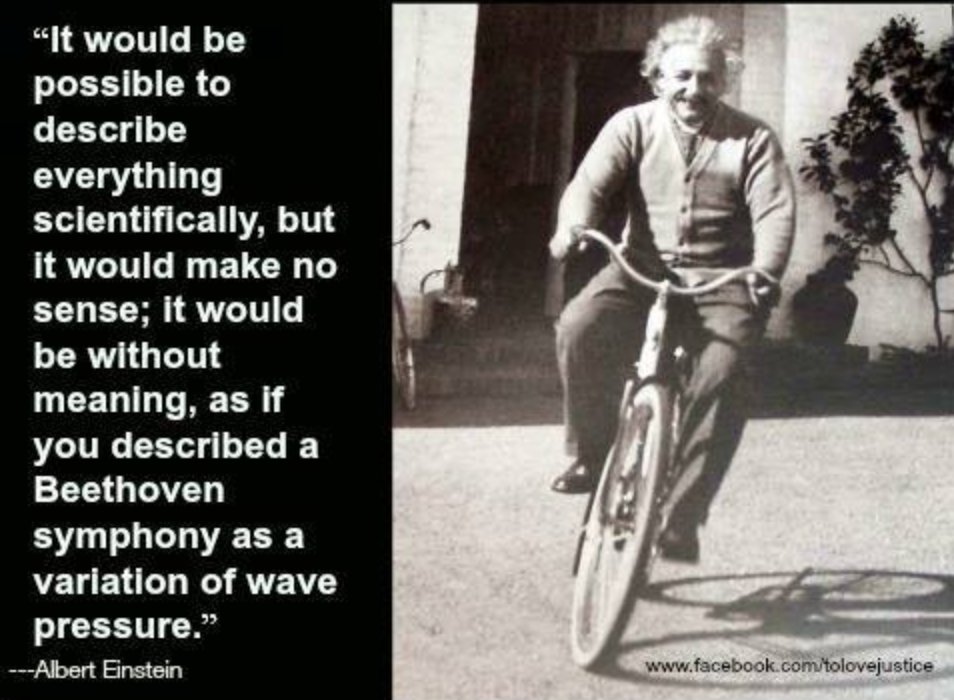
“It would be possible to describe everything scientifically, but it would make no sense; it would be without meaning, as if you described a Beethoven symphony as a variation of wave pressure” ~Albert Einstein
Christian spokespersons, thus, actually perform a praiseworthy role when they insist that there must be openness to supernatural sources of knowledge and that a particular methodology ought not to delineate the limits of reality. Christians argue with credibility, I suggest, that a healthy, heuristically productive skepticism, which lies at the heart of scientism, must also be applied to the scientific method itself. Consistency requires nothing less. ~ John Redekop, Political Scientist
Leading Philosopher Alvin Plantinga argues that naturalism (which includes materialism) is in conflict with evolution, a main pillar of contemporary science. The argument centers on the status of our cognitive faculties: those faculties, or powers, or processes that produce beliefs or knowledge in us (e.g. perception, memory, a priori intuition, introspection, testimony, induction). His argument concerns the question of the reliabilityof cognitive faculties (reliability of cognitive content)if we espouse naturalism and unguided evolution together. The probability is very low. Can we get to true belief, reliable knowledge by this path? Again it is an argument from coherence (or rather, in this case, incoherence). See Plantinga’s Where the Conflict Really Lies, Chapter 10.
Reductive materialism is a major philosophical problem in contemporary academia. One can study constitutive components (physics and chemistry) of a larger reality such as biological life, but this is never a fulsome explanation. The real danger is that methodological reduction morphs into ontological reductionism in the mind. This is a dangerous logical non-sequitor.
NASA Astronomer Jennifer Wiseman doesn’t see the many unanswered questions of space or the enormous nature of our universe as a reason to doubt her faith. Instead, she sees it as a reason to strengthen it. … “Let us praise God for the Universe and let us praise God for the gift of science that lets us explore and understand our Universe.”
Insights on Critical Realism by Alister McGrath and Roy Bhaskar
“My aim is not so much to argue against reductionism as to investigate the consequences of rejecting it—to present the problem rather than to propose a solution. Materialist naturalism leads to reductionist ambitions because it seems unacceptable to deny the reality of all those familiar things that are not at first glance physical. But if no plausible reduction is available, and if denying reality to the mental continues to be unacceptable, that suggests that the original premise, materialist naturalism, is false, and not just around the edges.” ~Thomas Nagel, Philosopher
Therefore we need a critical assessment of current metaphysical, epistemological and anthropological assumptions in our day to find the liberation from the Materialistic/Reductionistic world picture has taken us captive, the one that drives a wedge between faith and reason, or religion and science. We propose that it is possible to think critically and wisely within a different framework or horizon, to offer a new plausibility structure for robust and critical thought. We want to know all that is available for humans to know. We suggest that one can discover a richer understanding of reason when we open the discussion to the transcendent. We are adjured to be good stewards of both faith and reason by some of the greatest minds in the history of academia–Copernicus, Galileo, Tycho Brahe, Blaise Pascal, Peter Medawar, Michael Polanyi, Denis Alexander, Sir John Polkinghorne, Alvin Plantinga, Nicholas Wolterstorff, and a host of others around the world.
Scholars work with grammar, figures of speech, assumptions, dispositions, theories and a whole variety of linguistic practice. We ought to explore and enjoy this language to the full, for the common good of society, to build up moral capital, to promote shalom. We give thanks to God for offering us mere mortals access to this high level of calling and community, this high level of international, inter-collegiate interlocution. We need to find our voice and our full identity within the incarnational Word made flesh, the Word that underwrites all human language and speech. This will provide us with an edge in our work, new interlocutors that can free us from the grip of too narrow a perspective on research, life, self and relational reality. ~Gordon Carkner, PhD Philosophical Theology
To close ourselves off, to implode into a minimalist or reductionist language game, or to try to articulate all aspects of life with scientific language alone, to refuse theological, poetic, artistic and philosophical speech is a sad tragedy of the intellect. It is to be in denial of this richer, common human heritage, this larger brilliant linguistic and moral horizon, these thicker perceptions of human identity, to refuse our full humanity. It is to deprive us of the full academic and personal adventure.
Christian scholars embrace the emphasis on quantification and laboratory testing but without reducing the universe, with all of its complexities of genesis, extent, and operation, solely to test tube measurement. Further “the Christian habit of mind combines openness to truth with skepticism…. Skepticism is important but without some commitment to the objective existence of truth, it devours the whole world and then must consume itself.” (Gene Edward Veith)
Christian skepticism, observes Gene Veith, “sees knowledge in terms of ever larger circles of meaning, related finally to the revealed truths of Scripture.” (Ibid., 138) Such skepticism, while rejecting the notion of relativism as a key value for its own sake, does, nevertheless, still affirm the place of skepticism. In this regard the great Christian novelist, Flannery O’Connor, makes a noteworthy point. “What kept me a skeptic in college was precisely my Christian faith. It always said: wait, don’t bite on this, get a wider picture, continue to read.” (O’Connor, The Habit of Being, p. 477) In a letter to a student who was questioning his faith, O’Connor wrote that faith is more valuable, more mysterious, altogether more immense than anything you can learn or decide upon in college. Learn what you can, but cultivate Christian skepticism. It will keep you free – not free to do anything you please, but free to be formed by something larger than your own intellect or the intellects of those around you. (O’Connor, Ibid., p. 478).
Understanding the nature of reason is central to our conception of human existence. We have to resist a narrow conception of human rationality that excludes religion as irrational because such a view cripples our ability to analyze correctly the current state of Western culture. As Rodney Stark has argued in his book The Victory of Reason, Christianity’s ability to combine faith and reason with a progressive view of human nature laid the foundation for Western science and technological progress…. Building on Judaism, Christianity also allowed for the concepts of human dignity, personhood and individuality that have decisively shaped Western views of society…. Neither the best nor the worst features of modernity are comprehensible without the transformative influence of Christianity on Greco-Roman culture. Without religion, the West would not be what it is, and without understanding the religious roots of Western culture and their continuing influence on Western thought, we lack the self-understanding necessary to address our current cultural crisis (J. Zimmermann, 2012a, 25 & 26).
Veith writes further, “Christians will thus often find themselves to be gadflies in their fields. They will not accept the conventional wisdom of their field, nor hold to all of its values. Their attitudes and practices will be similar to those of Blaise Pascal, the mathematical genius and Christian thinker whose explorations of the paradoxes of the human soul show the Christian mind at its best.” (Veith, Ibid., pp. 138-139) Ostensibly both scholarly Christians and secular academics are committed to the notion that research and investigation should always press beyond what is at the moment believed to be true. Christians are, of course, fully prepared to join with any other academics in investigating questions and weighing evidence and to follow wherever the evidence leads (John Redekop).
On the other hand, the university has a right to expect Christianity, and the institutions defending and promoting it, to be open to new questions, new answers, and new methods in developing both. It has a right, even a duty, to challenge Christians when they indulge in unreasoned credulity. The church, for its part, has a right to expect the university to stop privatizing and marginalizing Christianity. It is arguably the most consequential social movement in history. This socio-religious movement kept learning alive in the dark Ages, and has produced many of the world’s greatest artists, musicians, philosophers and scientists. In fact, it gave rise to the university itself. See Charles Malik, A Christian Critique of the University; G. Makdisi, Roots of the Modern University.
Dr. Dennis Alexander, Faraday Institute on Dawkins
Post-Event Commentary on Helfand-Danielson Dialogue
A. Dr. Bert Cameron, former Head of Nephrology UBC
I thought Dennis Danielson’s contribution was helpful
– rejection of the “non-overlapping magisterium” approach
– accepting God as an agent but more interest in what kind of God
– faith supported by scripture, history and experience
– pointing out that roots of science inspired by theological insight (I would add health care to that)
Professor Helfand’s presentation took me by surprise so I have had to think about it. He claims to be a complete sceptic. He begins with the premise that “there is absolutely no meaning to life whatsoever” therefore he claims not to be looking for meaning but only for understanding of mechanism. From this starting point he is convinced that the methods of science provide the best basis for understanding. Even here however, all findings are tentative, he claims to have “no faith” in any theory. “Subjective evidence is not a category” for him. Even the fact that the universe is explicable is just a “contingent hypothesis”. He would give little credence to any theory, including the “multiverse”, until there was some empirical evidence for it.
Thus, though Dawkins and Prof. Helfand both claim to be atheists, he isn’t particularly a Dawkins fan. In this, he is in company with a number of other non religious intellectuals such as Terry Eagleton, John Gray and Thomas Nagel. We really didn’t question Prof. Helfand on this, but he does not seem to be driven by the same moral imperative of Dawkins and some others such as Hitchins and Harris, that religion is so harmful it needs to be driven from the world.
He seemed rather to be expressing a personal perspective that might be summarized like this: “At this point in my life I have come to the conclusion that there is no overarching or ultimate meaning. I look at this fascinating and strangely intelligible universe that I love to explore but I am not inclined to consider the possibility of a designer. I find sufficient personal meaning in exploring and understanding the mechanisms of the cosmos which the physical and evolutionary sciences seem to be in the process of elucidating while recognizing that this understanding is based on a ‘contingent hypothesis’.”
It seems to me, that unless Prof. Helfand takes some moral conclusion from this, such as “others ought to think as I do” or “people who find meaning in the universe are deluded and doing harm”, there is little to discuss. Prof. Helfand’s statement that the universe is meaningless, reflects his subjective conclusion based on his personal experience and reasoning. As such, according to his own criteria, this opinion should not be given weight as scientific evidence.
Most of our understandings and decisions in life are based on data that would be considered “subjective” since it is not empirically tested or testable. However, that does not mean that it is unreasonable to accept it. As far as Christian faith is concerned, as Dennis quoted, Christians are called to “give a reason for the hope that is within them.”
David Helfand, a prestigious Columbia astronomer, placed his whole position behind Karl Popper and the falsification doctrine. He took the position of mechanism and claimed that meaning is in the realm of religion which he rejects. From is perspective life is meaningless. He held to a non-overlapping magisterium between science and religion. He didn’t totally agree with Dawkins on all points. Danielson does not see this sharp distinction between the realm of science and the realm of religion. He believes in both God and good science; religion and science are two ways of understanding one world as physicist Jon Polkinghorne might say.
B. Dr. Richard Johns, Philosophy of Science and Logic at Langara College writes: “Most philosophers of science reject falsificationism. Duhem and Quine showed, for example, that theories only make predictions when combined with a framework of background assumptions. So when a prediction is false, the problem could be with the framework, not the theory itself. Kuhn showed that all theories, even the best ones, are inconsistent with some of the data. Hempel showed that many scientific statements aren’t falsifiable. Bayesians (who are now the dominant group) reject Popper’s fundamental claim that theories are never probably true. Popper is much more popular among scientists than among philosophers of science.
Also, while there is disagreement among Bayesians and others, present views don’t allow such a sharp separation between science and religion. Kuhn for example says that the present “paradigm” isn’t open to rational scrutiny, but shielded from criticism, and paradigm shifts are only partially rational. Bayesians says that science depends on subjective judgements of plausibility in addition to logic and data, etc.”
See also Roy Clouser, The Myth of Religious Neutrality; An Essay on the Hidden Role of Religious Belief in Theories (rev. ed.; University of Notre Dame Press, 2005).
Big West Coast Canadian Welcome to New Postgraduate Students
Welcome to UBC! We look forward to meeting you. Please join us at our Fall Dinner Reception on September 18 at 6:00 p.m. in the Graduate Student Centre, Thea’s Lounge. Or we could meet for coffee at your convenience. GCU draws people from many countries and many disciplines to create a home away from home. A good support group is essential. It was delightful to meet so many wonderful people at the GSS Clubs Fair on Friday. We had some very interesting conversation amidst the excitement of a new adventure in education. Did you know that there are now 10,000 postgraduate students at UBC, virtually a university within a university? You have made a good choice to study here with great mentors and excellent libraries. It is one of the premier research institutions in Canada. Now it is your home for the next few years. Well done!
Within GCU, we are here to develop a strong network, new friendships and help you flourish as a grad student. We believe in both a robust Christian faith journey and a dedicated academic pursuit. We also love dialogue with people of different persuasions. This combination can be quite dynamic and inspiring. The questions from academic life can be brought to the Scriptures and the study of the Bible can inform our academic work in surprising and life-giving ways.
We work to develop a community of mutual support, where vision and ideas are shared and cherished. GCU wants to be a resource of good reading and support from faculty as well. On our Blog ubcgcu.org, we post articles from faculty, other students and Dr. Gordon Carkner to stimulate reflection and discussion, along with suggestions for further exploration. It can be a tremendous boon for your thinking and work. Because we are interdisciplinary, that creates a lively conversation as people bring their wealth of knowledge and experience of the world together. Overall, we work towards a better (more human) world and becoming better people (grow in the virtues) as a result of our time at UBC. Our previous university president, Stephen Toop, reminded us that graduate students are in preparation for global citizenship, which is both exciting and a deep personal challenge.
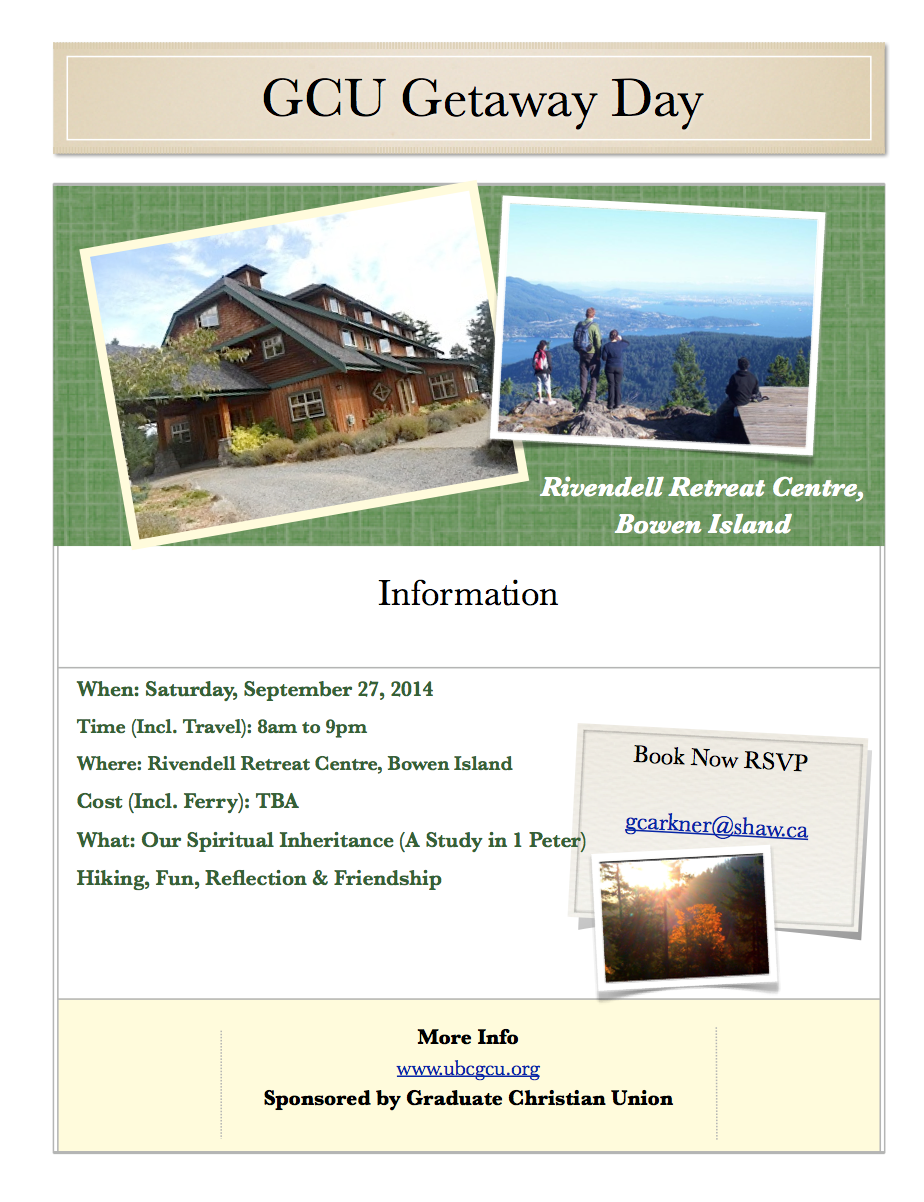
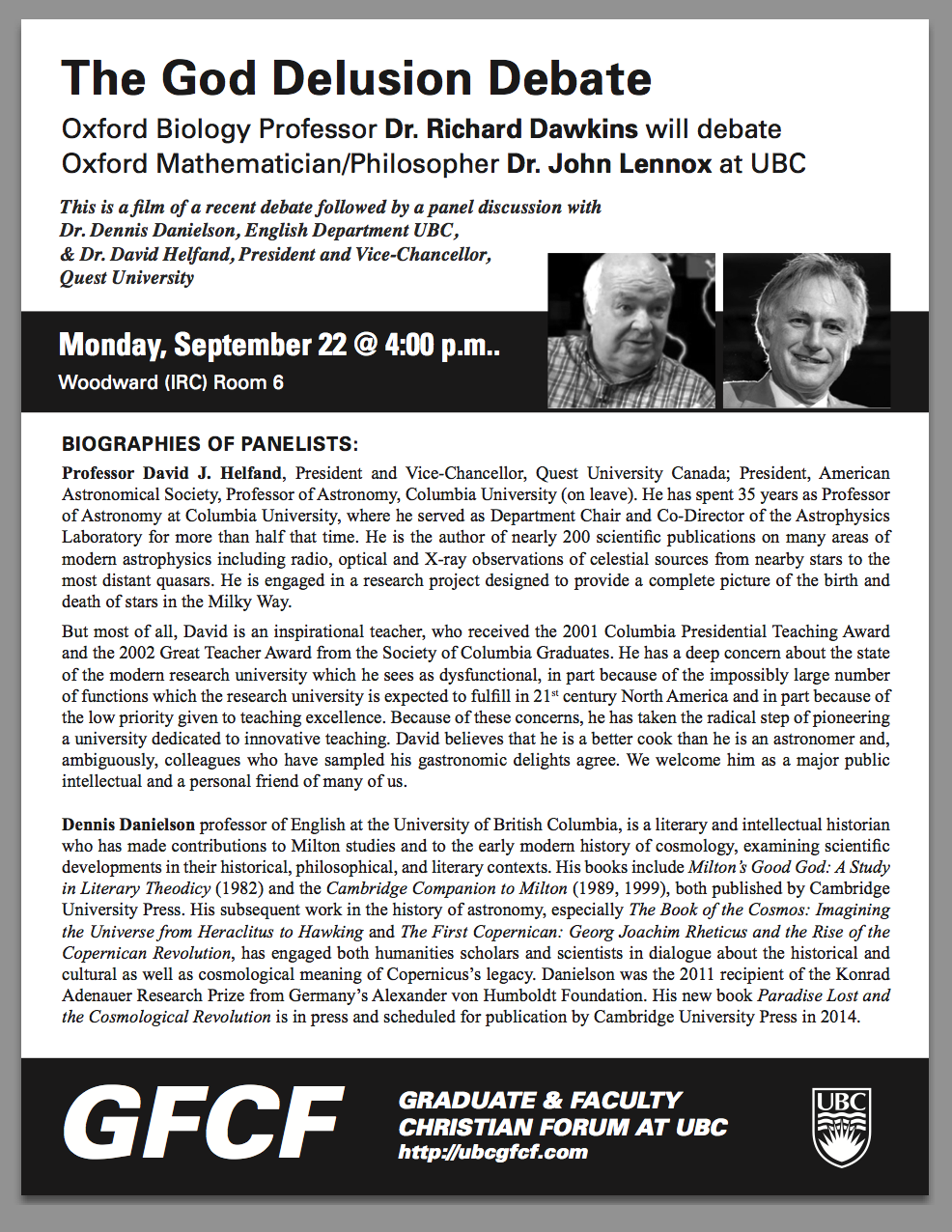
GCU September Events: We mentioned the Fall Reception at Thea’s Lounge, Grad Student Center on Thursday, September 18 at 6 pm. We have a Getaway Day planned for September 27 on nearby beautiful Bowen Island, Rivindell Retreat Center. That will include a hike and an intensive study of I Peter. Our first public forum in on September 22, at 4:00 p.m. in Woodward 6: a debate on the relationship between science and religion by Richard Dawkins and John Lennox, two prominent Oxford University professors. We begin a Thursday night Bible discussion in our home on September 25 on the book of II Corinthians. Of course, as people get to know each other and share interests, other fun things automatically emerge: brunches, bike rides, book studies, coffee discussions, and prayer. We think GCU can be a significant strategy for you while at UBC.
Let us know if you would like to join our listserv or create a fun activity: gcarkner@shaw.ca; or gord.carkner@gmail.com
We look forward to hearing about your research passion and the questions you are exploring. You know that you have so much to add to this dynamic environment and conversation.
Have a super start at UBC,
Gord & Ute Carkner
For Ute: ucarkner@shaw.ca
GCU Facilitating Staff
778.840.3549
Friends & Affiliates of Graduate Christian Union
Pascal Lectures, University of Waterloo
IVCF Grad & Faculty Ministries USA (Bob & Debbie Clark)
The Veritas Forum
International Fellowship of Evangelical Students
Graduate Christian Union Oxford, UK
SFU Christian Leadership Initiative
Regent College
Trinity Western University & ACTS
Faculty Ministry, Western Washington University (Paul Chen)
UBC Graduate & Faculty Christian Forum
Oxford Centre for Mission Studies
Several UBC Faculty Members & Vancouver Pastors
A Note from Faculty to Incoming Graduate Students
A word of welcome and advice. This is my 46th year at UBC and I want to welcome you warmly to one of the top research universities in Canada. UBC is a highly competitive place and it takes some effort to make friends and to achieve a sense of belonging. The fact is that professors and graduate students alike are serious minded and dedicated people who often forget (and some have never known) that the fear of the Lord is the beginning of wisdom. Don’t be discouraged by the secularism of the university community and its apparent lack of interest in people of faith.
Take the time to get to know your supervisor and recognize that a significant part of your future is in her (or his) hands. Whether he (or she) is a person of faith, they will have much to offer in terms of expertise and experience and the sooner you can develop a relationship of mutual trust the better. Seek out Christian friends and steward your time rigorously.
Your time as a graduate student is privileged, but oh so short, and you will need to be deliberate in planning your daily schedule.
May your time at UBC be rich in learning and rich in sharing. In this way, you will always look back on your time at UBC with gratitude.
Philosopher Dr. Paul K. Moser of Loyola University Rethinks Our Search for God
Philosophy raises some really pertinent questions about the current approach to the debate on the evidence for God’s existence, that is, a God worth worshipping, a morally superior God. Dawkins et al want God to be a clown, to dance or juggle before atheistic scrutiny. They make a mockery of genuine spiritual search and do great damage, not least to their own integrity. Here are some tough and insightful questions raised by Paul Moser a bright philosopher at Loyola University in Chicago.
Are we willing to consider a morally demanding definition of God as part of our quest for the elusive divine?
What if God would be perfectly loving even in offering to humans any divine self-manifestation and corresponding evidence of divine reality?
How might one’s lacking evidence of divine reality then concern primarily one’s own moral character and attitudes before God rather than the actual availability of such extant evidence? We know from the history of science that a lack of openness, or the wrong approach or methodology, or an inadequate theory, can hamper the advancement of knowledge. Think of the recent breakthrough discovery of gravitational waves–predicted by Einstein 100 years ago. You have to know what you are looking for, and also reduce the noise or the distraction in your observation/listening, says Bill Unrau of UBC Physics in a February 24 lecture.
Recommended Reading: The Evidence for God: Religious Knowledge Reexamined by Paul K. Moser (Cambridge University Press, 2010)
Cognitive Barrier Today’s cynic has trouble reading or registering this divine love language. Many late moderns have a problem believing in such a love, such spiritual fuel. Read some of the blog posts on Nihilism. Those proud and cynical skeptics want to treat evidence of agape love and evidence for God like a laboratory investigation. It cannot work. They cannot see the sign in the Advent, cannot discern the import of the storyline of the woman at the well. They cannot understand why scholars would travel the globe to investigate such signs, or why thousands would gather to partake of this bread, this pedagogy. There is no feeling of wonder at the Advent miracle, no wonder at the carpenter’s compassion for the marginalized. Handicapped by moral blockage, or blinded by science, our cynic cannot perceive or receive divine love prima facie. Read More…
Noted Physicist Paul Davies asserts: “There is now broad agreement among physicists and cosmologists that the Universe is in several respects ‘fine-tuned’ for life.” Astronomer and mathematician SirFred Hoyle at Cambridge University was in complete astonishment when he discovered the resonance in the carbon atom, a basic building block of the biological life, and also discovered that carbon along with other heavy elements were made in the nuclear furnace of stars.
Barrow, John and Tipler, Frank. The Anthropic Cosmological Principle. Oxford: Oxford University Press, 1986. Classic book dealing with almost all aspects of the Anthropic Principle, with extensive calculations regarding fine-tuning.
Carr, B. J., and Rees, M. J. (April, 1979). “The Anthropic Cosmological Principle and the Structure of the Physical World.” Nature, Vol. 278, 12 April 1979, pp. 605 -612. This is the first major article extensively discussing the way in which the constants of nature are set just right for life to occur.
Paul Davies (Physicist and Philosopher, Professor at Arizona State University): “Scientists are slowly waking up to an inconvenient truth – the universe looks suspiciously like a fix. The issue concerns the very laws of nature themselves. For 40 years, physicists and cosmologists have been quietly collecting examples of all too convenient “coincidences” and special features in the underlying laws of the universe that seem to be necessary in order for life, and hence conscious beings, to exist. Change any one of them and the consequences would be lethal. The crucial point is that some of those metaphorical knobs (of which there are 40) must be tuned very precisely, or the universe would be sterile. Example: neutrons are just a tad heavier than protons. If it were the other way around, atoms couldn’t exist, because all the protons in the universe would have decayed into neutrons shortly after the big bang. No protons, then no atomic nucleus and no atoms. No atoms, no chemistry, no life.”
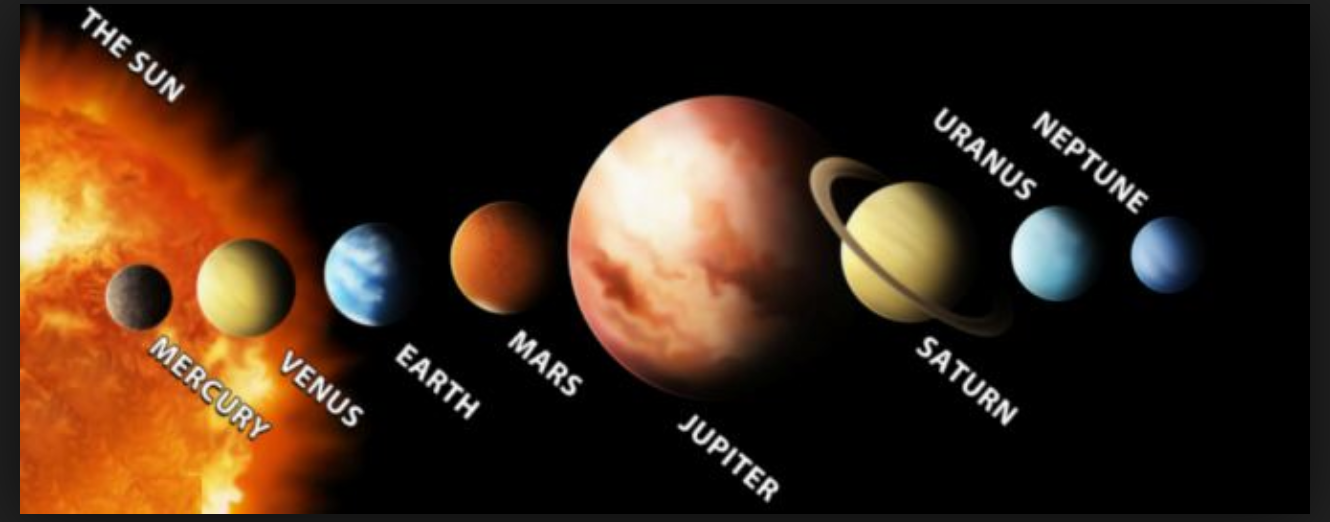
Amazing Facts 200 billion stars in our Milky Way home galaxy alone; 100 billion galaxies; 13.8 billion years of cosmic history. Cosmology fuels the bigger questions.
Christian Smith Sociologist Notre Dame University: Souls in Transition
Current generation heavily influenced by a new religion which he labels Moralistic Therapeutic Deism
Christian Smith exposed the sub-cultural ethos of Moralistic Therapeutic Deism (MTD) which he considers a new religion in America (exploitive of Christianity and Judaism). This outlook rules the minds and hearts of teens and young people 18-23 in huge numbers. This online article below is quite revealing and offers a serious concern for church and campus workers alike.
Something heretical lies at the level of deep structure in people’s thinking. It contains a defeater belief for orthodox Christian faith as we preach. Some think that it could be part of the explanation for the exodus (see the EFC report Hemorrhaging Faith pdf) of many teens (3/5) from the church after age fifteen. This is something to ponder and discuss: adolescents may have bought into a different religion ( a therapeutic mythology) while sitting in our pews and Christian education classes! Here’s a link. Christian Smith is a reputable scholar and expert on teen and young adult culture in North America, so he is worth attending to.
MTD is a revisionist faith, which colonizes established religious traditions like Christianity; it is parasitic on orthodoxy. It offers a divinely underwritten personal happiness and interpersonal niceness. Smith writes, “We have come with some confidence to believe that a significant part of “Christiainty” in the United States is actually only tenuously connected to the actual historical Christian tradition, but has rather substantially morphed into Christianity’s misbegotten cousin Moralistic Therapeutic Deism.” I’m going to look into it in more detail.
General American 18-23 Values from Souls in Transiition
soft ontological antirealists
epistemological skeptics
perspectivalists (various ways to see this; mine is only one)
in subjective isolation (my path)
constructivists
moral intuitionists (feel about a situation or decision)
“Faith is the great cop-out, the great excuse to evade the need to think and evaluate evidence… Faith is belief in spite of, even because of, the lack of evidence…Faith is not allowed to justify itself by argument… Faith being belief that isn’t based on evidence is the principal vice of any religion”
~Richard Dawkins
“There is something infantile in the presumption that somebody else has a responsibility to give your life meaning and point… The truly adult view, by contrast, is that our life is as meaningful, as full and as wonderful as we choose to make it.”
― Richard Dawkins, The God Delusion
“Do you really mean to tell me the only reason you try to be good is to gain God’s approval and reward, or to avoid his disapproval and punishment? That’s not morality, that’s just sucking up, apple-polishing, looking over your shoulder at the great surveillance camera in the sky, or the still small wiretap inside your head, monitoring your every move, even your every base though.”
― Richard Dawkins, The God Delusion
“Indeed, organizing atheists has been compared to herding cats, because they tend to think independently and will not conform to authority.”
― Richard Dawkins, The God Delusion
“The existence of consciousness is both one of the most familiar and one of the most astounding things about the world. No conception of the natural order that does not reveal it as something to be expected can aspire even to the outline of completeness. And if physical science, whatever it may have to say about the origin of life, leaves us necessarily in the dark about consciousness, that shows that it cannot provide the basic form of intelligibility for this world.”
Thomas Nagel Philosopher in Mind and Cosmos
“The common belief that . . . the actual relations between religion and science over the last few centuries have been marked by deep and enduring hostility is not only historically inaccurate but actually a caricature so grotesque that what needs to be explained is how it could possibly have achieved any degree of respectability. “ ~Colin Russell, Historian of Science
“Note that I am not postulating a ‘God of the gaps’, a god merely to explain the things that science has not yet explained. I am postulating a God to explain why science explains; I do not deny that science explains, but I postulate God to explain why science explains. The very success of science in showing us how deeply ordered the natural world is provides strong grounds for believing that there is an even deeper cause for that order”.
~Oxford Philosopher Richard Swinburne
[The issue here is that, because God is not an alternative to science as an explanation, he is not a God of the gaps. On the contrary, he is the ground of all explanation: it is his existence which gives rise to the very possibility of explanation, scientific or otherwise.]
“Because there is a law of gravity, the universe can and will generate itself from nothing”.~Stephen Hawking and Mlodinow in “The Grand Design”.
Arno Penzias (Nobel prize-winning discoverer of the cosmic background microwave radiation): “Astronomy leads us to a unique event, a universe which was created out of nothing, one with the very delicate balance needed to provide exactly the right conditions required to permit life, and one which has an underlying (one might say “supernatural”) plan” (Cosmos, Bios and Theos,Margenau and Varghese eds., Open Court, La Salle III,1992 p.83).
“You, your joys and sorrows, your memories and ambitions, your sense of personal identity and free will are in fact no more than the behaviour of a vast assembly of nerve cells and their associated molecules”. ~Francis Crick
“There is not the slightest shred of scientific evidence that life is anything other than a stupendously improbable accident. It’s often said that life is written into the laws of physics; well, it’s not – any more than houses or television sets are. It is consistent with those laws, but they alone will not explain how it came to exist….For a hundred years the debate has been dominated by chemists, who think it’s like baking a cake: if you know the recipe, you can just mix the ingredients, simmer for a million years, add a pinch of salt, and life emerges. I don’t think that is ever going to be the explanation, because life is not about stuff, about magic matter; it’s about a very special type of information processing system. And the whole subjects of information theory and complexity theory are very much in their infancy… A law of nature of the sort we know and love will not create biological information, or indeed any information at all. Ordinary laws just transmit input data into output data. They can shuffle information about but they cannot create it … I have come to the conclusion that no familiar law of nature could produce such a structure from incoherent chemicals with the inevitability that some scientists assert” (Paul Davies, op cit, p.20).
“A common sense interpretation of the facts suggests that a superintellect has monkeyed with physics, as well as chemistry and biology, and that there are no blind forces worth speaking about in nature. The numbers one calculates from the facts seem to me so overwhelming as to put this conclusion beyond question” ~Cambridge astronomer Sir Fred Hoyle, The Universe: past and present reflections(regarding the resonances in energy levels in H, Be and C).
Sir John Polkinghorne, for instance, himself an eminent quantum theorist, rejects the many-universe interpretation. “Let us recognise these speculations for what they are. They are not physics, but in the strictest sense, metaphysics. There is no purely scientific reason to believe in an ensemble of universes. By construction these other worlds are unknowable by us. A possible explanation of equal intellectual respectability – and to my mind greater economy and elegance – would be that this one world is the way it is, because it is the creation of the will of a Creator who purposes that it should be so” (One World, SPCK, London, 1986 p. 80).
“Natural selection, the blind, unconscious, automatic process which Darwin discovered …is the explanation for the existence and apparently purposeful form of all life, has no purpose in mind… is the Blind Watchmaker” (Richard Dawkins).
The tendency towards a pure reason or pure faith are really impossible to actualize; there are no pure domains of reason and faith. They are intertwined. One cannot get rationalism without the other extreme of fideism; both are forced categories; rationalism needs faith to be fideism for its very survival. Nietzsche claimed that there are only interpretations; positivists claim that there are only facts. What should we believe whatever our starting point or prejudgments? It is perhaps a life-long quest to understand the nuances of this relationship. Marquette intellectual D. Stephen Long helps our quest offering fresh insight and much to ponder in his profound bookSpeaking of God: theology, language and truth. Stephen was a past guest speaker at UBC in the GFCF series.
~Gord Carkner
See also posts within this blog on A Fine-Tuned Universe? and on Alvin Plantinga, Where the Conflict Really Lies, Markers of Scientism
Key Insights from a Course by John Lennox Summer of 2014
DNA is a language, a semitic code. It involves billions of bits of information (3.5 billion base pairs).
Scientists are beginning to accept that there is a ‘singularity’ at the origin of life–they are giving up on a scientific transition from inanimate matter to biological life. The attempt to see how a chemical soup can emerge into life has failed. Emergence is not the answer. Evolution must start with biological life.
Many top biologists (e.g. James Shapiro, William Provine, Robert Reid, Lima de Faria, Eric Davidson) are having doubts or second thoughts about the mechanism of natural selection. They are joined by atheist philosopher Thomas Nagel (Mind & Cosmos).
Insight about Information in a System: information must be inputted; a biological system doesn’t create info; information is not physical or material. Structures that bear information cannot arrive by emergence.
Our Two Distinguished Panelists
Professor David J. Helfand, President and Vice-Chancellor, Quest University Canada; President, American Astronomical Society, Professor of Astronomy, Columbia University (on leave). He has spent 35 years as Professor of Astronomy at Columbia University, where he served as Department Chair and Co-Director of the Astrophysics Laboratory for more than half that time. He is the author of nearly 200 scientific publications on many areas of modern astrophysics including radio, optical and X-ray observations of celestial sources from nearby stars to the most distant quasars. He is engaged in a research project designed to provide a complete picture of the birth and death of stars in the Milky Way.
But most of all, David is an inspirational teacher, who received the 2001 Columbia Presidential Teaching Award and the 2002 Great Teacher Award from the Society of Columbia Graduates. He has a deep concern about the state of the modern research university which he sees as dysfunctional, in part because of the impossibly large number of functions which the research university is expected to fulfill in 21st. century North America and in part because of the low priority given to teaching excellence. Because of these concerns, he has taken the radical step of pioneering a university dedicated to innovative teaching. David believes that he is a better cook than he is an astronomer and, ambiguously, colleagues who have sampled his gastronomic delights agree. We welcome him as a major public intellectual and a personal friend of many of us.
Dennis Danielson professor of English at the University of British Columbia, is a literary and intellectual historian who has made contributions to Milton studies and to the early modern history of cosmology, examining scientific developments in their historical, philosophical, and literary contexts. His books include Milton’s Good God: A Study in Literary Theodicy (1982) and the Cambridge Companion to Milton (1989, 1999), both published by Cambridge University Press. His subsequent work in the history of astronomy, especially The Book of the Cosmos: Imagining the Universe from Heraclitus to Hawking and The First Copernican: Georg Joachim Rheticus and the Rise of the Copernican Revolution, has engaged both humanities scholars and scientists in dialogue about the historical and cultural as well as cosmological meaning of Copernicus’s legacy. Danielson was the 2011 recipient of the Konrad Adenauer Research Prize from Germany’s Alexander von Humboldt Foundation. His new book Paradise Lost and the Cosmological Revolution is in press and scheduled for publication by Cambridge University Press in 2014.
Further Reading on Science & Religion
Polkinghorne, Sir John, One World: The Interaction of Science & Theology. Princeton. (physicist/theologian—leading light on Science & Religion)
Polkinghorne, Sir John, Exploring Reality: The Intertwining of Science: Religion, Science and Providence.
McGrath, Alister. A Fine-Tuned Universe: the quest for God in Science and Theology. (Gifford Lectures)
Hutchinson, Ian. Monopolizing Knowledge.
Craig & Meister (eds.). God is Great; God is Good.
Gingerich, Owen, God’s Universe.
Collins, Francis, The Language of God. Free Press.
Pascal, Blaise. Pensees. Trans. A. J. Krailsheimer. Harmondsworth, U.K.: Penguin, 1966.
Capell & Cook eds., Not Just Science: Questions Where Christian Faith and Natural Science Intersect. Zondervan
Jaki, Stanley, The Road to Science and the Ways to God. Chicago (Gifford Lectures on history of science)
Russell, Colin, Crosscurrents: Interactions Between Science & Faith. Eerdmans
Danielson, Dennis (ed.), The Book of the Cosmos. Perceus.
Plantinga, Alvin, Where the Conflict Really Lies: science, religion and naturalism. (a critique of the new atheist and the hegemony of Philosophical Naturalism)
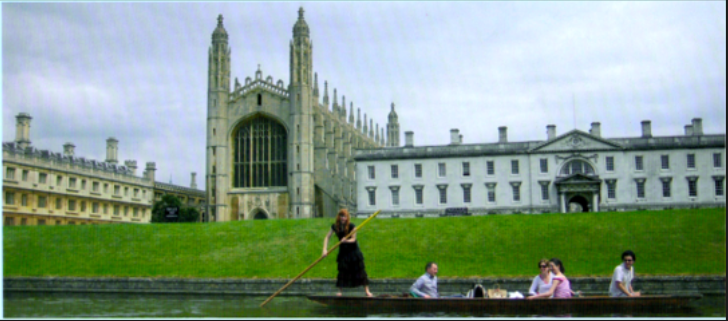
King’s College Cambridge
Lewis, C.S., Miracles. Macmillan (a classic)
Waltke, Bruce, “Gift of the Cosmos” (article on Genesis 1:1-2:4) Chapter 8 in An Old Testament Theology, Zondervan, 2007.
Alexander, Denis, Rebuilding the Matrix: Science & Faith in the 21st Century. Zondervan (director of Faraday Institute in Cambridge, UK)
Why is postmodernism a good thing for Christian graduate students? Cornel West writes that “truth-claims about descriptions in science and religion are contextual, and for Christians, ‘Truth-talk’ precludes disinterest, detachment, and distance because Jesus Christ is the Truth, the Truth which cannot be theoretically reified into a property of an abstract description, but only existentially appropriated by concrete human beings in need.” Rather than having to shoehorn Christianity into our academic work in a way that presents some parochial Christian idea as The Right Way to Think About X, we have the freedom to approach our work joyfully as an outgrowth of our position as followers of Christ.
The applied linguist Suresh Canagarajah notes that postmodernism or post-positivism in the social sciences is hospitable to those with strong political or religious commitments because it unsettles the “old platform” of scientific inquiry, calling into question constructs of rationalism, objectivity, empiricism, disinterested knowledge, and so on. On the other hand, Canagarajah also writes: “postmodernism has only limited uses for me as a philosophical paradigm. I am prepared to abandon postmodernist discourses when my spiritual walk reveals richer orientations that illuminate faith and life better.” Read More…






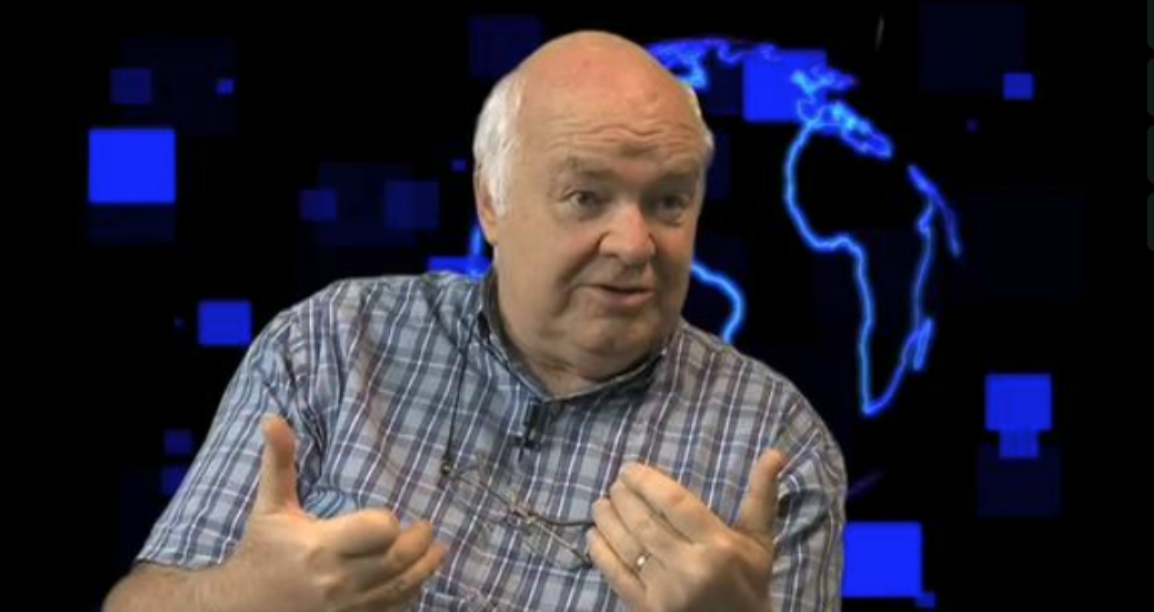 John Lennox in a Debate with Richard Dawkins