C. S. Lewis famously spoke of fleeting experiences of joy he had early in life, a longing for something this world cannot satisfy. Dr. Begbie will creatively explore this through music, comparing this pre-Christian unfulfilled desire with Christian hope.
Biography
Jeremy Begbie is the Thomas A. Langford Distinguished Research Professor of Theology at Duke Divinity School, and McDonald Agape Director of Duke Initiatives in Theology and the Arts. He teaches systematic theology, and specializes in the interface between theology and the arts. He is Senior Member at Wolfson College, Cambridge, and an Affiliated Lecturer in the Faculty of Music at the University of Cambridge. His books include Theology, Music and Time (Cambridge University Press); Resounding Truth: Christian Wisdom in the World of Music (Baker/SPCK); and Music, Modernity, and God (Oxford University Press); and Abundantly More (Baker). Jeremy is a very engaging speaker and performer who has taught widely in the UK and North America, and delivered multimedia performance-lectures in many parts of the world.
Concerning Abundantly More: The Theological Promise of the Arts in a Reductionist World,
Late-modern culture has been marred by reductionism, which shrinks and flattens our vision of ourselves and the world. Jeremy Begbie believes that the arts by their nature push against reductionism, helping us understand and experience more deeply the infinite richness of God’s love and the world God has made. Begbie in this work analyses and critiques reductionism and its effects. He shows how the arts can resist reductive impulses by opening us up to an unlimited abundance of meaning. And he demonstrates how engaging the arts in light of a trinitarian imagination (which itself cuts against reductionism) generates a unique way of witnessing to and sharing in the life and purposes of God. This trajectory keeps our culture open to the possibility of God.
“In this book, Jeremy Begbie achieves a remarkable double feat: a quietly devastating critique of engrained reductionist tendencies in Western modernity and, in dialogue with his profoundly humane theological insight, an inspiring manifesto for fundamental value of the arts as part of what makes us human.” ~Bettina Varwig, University of Cambridge
Below are some mind-expanding thoughts from Begbie’s book, Abundantly More. May you discover more of the unfathomable depths of Christ and the richness of your faith: Christ in you, between you, your family, and your friends. This is the kind of theology that makes a big difference. Chapter 9 is very helpful on the Arts and your local church.
God is Uncontainable or Unlimited by time and space. “There is always more to God than we could ever think or say, always more than could be thought or said.” (J. Begbie, 2023, 129). “God is other than the world, and in this sense transcendent, but transcendent in a manner that transcends all creaturely types of transcendence. As transcendent, God is present to, upholds, and carries forward the entire contingent order with all its levels.” (J. Begbie, 2023, 127) “God cannot be circumscribed by the finitude of this world…. God cannot be encompassed or confined by any object or event in the world of space and time, nor by the space-time continuum as a whole…. God exceeds all human systems of representation, and that of course includes human thought and language—exceeding our cognitive grasp or the limitations of human speech.”
God is Infinity—in relation to time, God’s eternity; in relation to space, God’s immensity. God cannot be confined by the time-space continuum. God is incomparable as articulated in the encounter and calling of Moses: “I Am that I Am.” God is not a member of a quantitative series, like a first cause within creation. He is the very ground of being. God is incomparable re: power as both quality and quantity. “The created order does not contain its own explanation, its deepest secret lies beyond itself. Because of its dependence on and openness to the agency of the infinite God, it is possessed of an inexhaustible depth. There is always more that can be discovered, thought, and spoken.” (J. Begbie, 2023, 155) “All zero-sum views of divine and human freedom—views that assume the two are inherently competitive—will also be put in question; divine freedom will be reimagined as freedom for the love and freedom of the other.” (2023,156)
God is Uncontainable re: glory, goodness, excellence, truth, beauty, personal warmth and sacrificial love (agape). He is the greatest good imaginable, the most splendid beauty, the Logos of all truth.
He is, in balance, a Covenant-Keeping God: He is with you, for you, among you (past, present and future). This love is an active pressure within the godhead, dedicated to our human good. It is a resilient, steadfast love and faithfulness—articulates often as the God of Abraham, Isaac, & Jacob … (a multi-generational, promise-keeping God). This involves a grand narrative scope and trajectory of God’s involvement with our world. Begbie speaks of the “Unbounded pressure of covenantal goodness, other-directed faithfulness.” It is infinite, eternal, immense. John Webster speaks of: “God’s boundless capacity for nearness.” The results for us are an incomprehensible, ineffable expression of the Lord’s steadfast love: “He is resolved not to let God’s gracious purposes for creation come to nothing.” He is God-for-God’s-people & God-for-God’s world. (J. Begbie, 2023, 136)
God is the Eternal and the supreme architect and possessor of life and the source of all life: i.e., God’s energizing and life-giving power, sustaining created existence in relation to its Creator. (Deut 5:26; Jer 10:2-16; Matt 16:16; Heb 3:12). Patristic Theology states that: The world is possessed of a pattern of divine rationality by virtue of which all finite forms of this world are related to their ultimate origin. All creatures find their primordial coherence and ground in the logos. (J. Begbie, 2023,168)
Mary Ponders her Situation at the Epicentre of Immensities
Mary’s encounter with the angel Gabriel has to be one of the most profound experiences of any human being. She was chosen for a special task that was outside the imagination of her calling in life as a recently engaged young Palestinian woman. She becomes a ‘most highly favoured lady’. Can we learn from this striking event in ancient history?
Epiphanies are suggestive of transcendence. Michael Morgan (1994, 56f)) points out that Charles Taylor sees a parallel between the epiphanies of art and poetry in the nineteenth and twentieth centuries and the I-Thou epiphany of religious encounter with the divine. Taylor elaborates the idea of epiphanies (1989, 419f, and especially 490-93). He sees Post-Romantic and modernist art as oriented to epiphanies, episodes of realization, revelation, or disclosure. Epiphanies and epiphanic art are about a kind of transcendence, about the self coming in touch with that which lies beyond it, a ground or qualitative pre-eminence. One might call it a gift of the imagination or a re-enchantment.
Taylor reviews various ways of articulating epiphany in Sources of the Self (C. Taylor, 1989, 419-93). He articulates how God, inserted into this idea of epiphany, fits as a moral source (Sources of the Self, 449-52). Epiphanies can be a way of connecting with spiritual and moral sources through the exercise of the creative imagination: sources may be divine (Taylor), or in the world or nature (Romantics like Thoreau), or in the powers of the imaginative, expressive self (Michel Foucault).
These epiphanies are a paradigm case of what Taylor calls recovering contact with moral sources. A special case of this renewal of relationship between the self and the moral source is religion and the relation to God, which he sees in the work of Dostoyevski. The relationship to art parallels the relationship to religion. The self is oriented in the presence of the inaccessible or sublime, that which captures one’s amazement or awe, for example, when one’s eyes are riveted to a certain painting like Monet’s Lillies, and one’s inner emotions are deeply engaged by a brilliant poem. The individual person is taken beyond self, in an experience of transcendence. The experience involves both elements of encounter and revelation. Light breaks into one’s darkness. It can come in a discovery such as finding out the chemicals in our bodies were once part of the death of a star. We are literally stardust, embedded in creation itself and we owe the stars our very biological life.
When innocent, young teenage Mary hears from an angel that she is to become the vessel of a most profound turn of events in history, she is in awe, overwhelmed. It is truly an epiphany, an encounter with radical alterity. Heaven and earth collide with each other, something dramatic occurs, like lightning. Time stands still in this kairos moment. She allows transcendence and immanence to come together in her body and in her life. It is utterly profound. She knows intuitively that she has been chosen to make history in the great salvation narrative. Her story is punctuated by the incursion of the eternal into the temporal, informed by the descent of transcendence into a young girl’s life. This encounter changed her, everything. We know it as the incarnation.
Dare we be open to such encounters, such moments of inbreaking epiphany? He comes to us as well to call us to the higher vocation of image bearing in our career and family and society.
Mary Considers Her Situationby Luci Shaw
What next, she wonders, with the angel disappearing, and her room suddenly gone dark.
The loneliness of her news possesses her. She ponders how to tell her mother.
Still, the secret at her heart burns like a sun rising. How to hold it in— that which cannot be contained.
She nestles into herself, half-convinced it was some kind of good dream, she its visionary.
But then, part dazzled, part prescient— she hugs her body, a pod with a seed that will split her.
It is a strong transcendence to use philosopher Calvin Schrag’s language. Transcendence means more than a selfless exposure or reorientation alone, but also a receiving that deeply involves the self, its imagination, its inner resources, its visions and revisions. In this calculus, for religion and art, the self remains autonomous and becomes fulfilled as it opens to the impact of the high otherness, goodness, truthfulness, and beauty beyond our imagination.It powers the sensus divinitatis. The human soul is enlarged. Morgan elaborates through the example of Jewish writer, Martin Buber, on this concept of religious epiphany or I-Thou encounter (Morgan, 1994, 60-61). Taylor appreciates (1994, 226-29) his use of Buber in relation to his (Taylor’s) concept of epiphany. For Buber, the religious event, revelation, involves a meeting between the self and the divine Other, an encounter that depends upon both receptiveness in both parties, but initiated by the divine Trinity. It is an act of self-affirmation, even as it is a giving over of the self to the Other. Life is enhanced, empowered, filled full. What occurs is revelation, high thought, deep realization, kairos time.
The self is receiver, but it is a receiver, not of a content, a proposition, a truth, but rather of a ‘Presence, a Presence as Power’. Furthermore, that Presence provides ‘the inexpressible confirmation of meaning’, a meaning that calls out to be done, to be confirmed by the self in this life and in this world … This confirmation and this affirmation of God and self in the world are what Taylor calls a “changed stance towards self and world, which doesn’t simply recognize a hitherto occluded good, but rather helps to bring this about” (M. Morgan, 1994, 60).
This brings the emergence of a supreme good in one’s experience. Thus, the concept of transcendence through epiphany, that has currency for artists and poets of the twentieth century, provides a category for us to extend to the transcendence of God. May this epiphanic realization continue this Advent Season and open up our world to horizons beyond our imagination, a re-enchantment, a re-visioning. Mary is a model to us. She allowed epiphany and grace to transform her into a vessel of the Christ-event, the most wonderful story of history. The incarnation is central to everything that life means.
Dostoyevsky’s (1974) work The Brothers Karamozov reveals the power of transcendence and the danger of refusing it, i.e. by remaining trapped by an immanent frame. Charles Taylor notes that:
One of Dostoyevsky’s central insights turns on the way in which we close or open ourselves to grace. The ultimate sin is to close oneself, but the reasons for doing so can be of the highest. In a sense the person who is closed is in a vicious circle from which it is hard to escape. We are closed to grace, because we close ourselves to the world in which it circulates; and we do that out of loathing for ourselves and for the world.… Rejecting the world seals one’s sense of its loathsomeness and of one’s own, insofar as one is a part of it. And from this can come only acts of hate and destruction. Dostoyevsky … gives an acute understanding of how loathing and self-loathing, inspired by the very real evils of the world, fuel a projection of evil outward, a polarization between self and the world, where all evil is now seen to reside. This justifies terror, violence, and destruction against the world; indeed this seems to call for it. No one … has given us deeper insight into the spiritual sources of modern terrorism or has shown more clearly how terrorism can be a response to the threat of self-hatred.… The noblest wreak it [destruction] on themselves. The most base destroy others. Although powered by the noblest sense of the injustice of things, this schism is ultimately also the fruit of pride, Dostoyevsky holds. We separate because we don’t want to see ourselves as part of evil; we want to raise ourselves above it. (C. Taylor, 1989, 451-52)
The current events of division, violence and brutality to others (diabolos) are just such a projection of hatred for the other. It is a simple, cold, deadly logic. It is completely grace-less, full of pride and narcissism–warlike. There appears to be a provocative link from self-sufficiency to pride and to the aesthetics of violence (religious or secular). See this pictorial example of the home of a corrupt chief of police in Mexico, now called The Parthenon.
Taylor holds out hope for a transcendent turn to agape love, hope for a different type of transformation from beyond pure immanent choice-focused self-invention and greedy self-interest which brackets the social world, the common good, and a God of love. There is discovery of self within the economy of grace, a discovery and a transformation that offers a different stance towards self and the world. It is an epiphanic discovery, but only if we dare allow it. Continuing with his discussion of Dostoyevsky, Taylor (1989) writes of this epiphanic encounter with transcendence.
What will transform us is an ability to love the world and ourselves, to see it as good in spite of the wrong. But this will only come to us if we can accept being part of it, and that means accepting responsibility.… Loving the world and ourselves is in a sense a miracle, in face of all the evil and degradation that it and we contain. But the miracle comes on us if we accept being part of it. Involved in this is our acceptance of love from others. We become capable of love through being loved; and over against the perverse apostolic succession [of terror and violence] is a grace-dispensing one. Dostoyevsky brings together here a central idea of the Christian tradition, especially evident in the Gospel of John, that people are transformed through being loved by God, a love that they mediate to one another, on the one hand, with the modern notion of a subject who can help to bring on transfiguration through the stance he takes to himself and the world, on the other.… What he [Dostoyevsky] was opposing was that humans affirm their dignity in separation from the world. (C. Taylor, 1989, 452)
We mourn the terrible losses on the Gaza Strip, in Ukraine, and elsewhere, and yet we do not give up on love itself. We must be open to the transformation of the world and our lower attitudes. God is coming! We must move away from self-righteousness to suffer and struggle for peace, hope, righteousness, light, and truth. The God of epiphany has extended the open hand of fellowship, an invitation to dialogue. If we come to realize that the core of reality is love, truth, goodness, beauty, humanism, our cynicism will melt away, our nihilism will give way to rich meaning and purpose. What do we make of Mary’s epiphany and her responses? Can it rethink and remake us?
Carlo Carretto captures it: “To have found God, to have experienced him in the intimacy of our being, to have lived even for one hour in the fire of his Trinity and the bliss of his Unity clearly makes us say: Now I understand. You alone are enough for me.“
Philosophical theologian Anthony Thistelton (Intepreting God and the Postmodern Self, 1993) writes that the mystery of the incarnation is too profound for human discovery by reason alone; it requires epiphany or divine revelation. It is beyond our limited imagination to conjure. On the other hand, open-minded reasoning engages, and is engaged by, such profound epiphanies. The right posture, the right intellectual virtues of humility and openness can result in discovering many profound insights.
O Emmanuel, Won’t You Come.
Gordon E. Carkner PhD, author, blogger, YouTube webinars, meta-educator with UBC graduate students and faculty.
Carretto, C. (1974). The God Who Comes.
Morgan, M.L. (1994). Religion, History and Moral Discourse. In J. Tully, (Ed.), Philosophy in an Age of Pluralism: The philosophy of Charles Taylor in question. Cambridge: Cambridge University Press.
Rutledge, F. (2018). Advent: The Once and Future Coming of Jesus Christ. Eerdmans.
Schrag, C. (1997). The Self After Postmodernity. Yale University Press.
Taylor, C. (1989). Sources of the Self: The Making of the Modern Identity. Cambridge, MA: Harvard University Press.
See also Real Presences by George Steiner; Not in God’s Name by Jonathan Sacks.
https://www.youtube.com/watch?v=tS7s9kDPKNwThe God of All Comfort with N. T. Wright. This sweeping articulation of a biblical theme is a great way to enter the Advent and Christmas Celebration.
Part 2. The Shepherds Experience a Sound & Light Show of Glory
The fire and light of God is revealed to these simple farmers as part of the grand announcement of incarnation, Emmanuel, God with us. It is complete with a transcendent angelic chorus singing Gloria in Excelsis Deo et Pacem ad Hominem (Glory to God in the Highest and Peace to all Humankind). Joy split the sky. It was like a supernova. In this splendid glory can be found beauty, truth, and goodness plus high time which is a connection with eternity. The shepherds experience a connection with the very ground of their being. Their minds are blown; they are frightened at first by such a dramatic display, but then a deep calm and curiosity overtakes them. They quickly turn into investigators of the baby Messiah. The glory of God that exited the temple during the Babylonian exile of Judah has returned in the Christ child, the baby king. The fire of God (his essential being), his love, his creative power, is a transcendent fire unlike anything on earth. This fire and light brings peace, perspective, and hope for renewal, in effect a whole new creation. It is like a new dawn. This is the right moment for the Hallelujah Chorus, as all creation voices its praise.
‘The night could not contain their boundless praise. We thought that just a poem – until the night a song of solar glory……’
The Song of the Shepherds by Richard Bauckham
We were familiar with the night.
We knew its favourite colours,
its sullen silence
and its small, disturbing sounds,
its unprovoked rages,
its savage dreams.
We slept by turns,
attentive to the flock.
We said little.
Night after night, there was little to say.
But sometimes one of us,
skilled in that way,
would pipe a tune of how things were for us.
They say that once, almost before time,
the stars with shining voices
serenaded
the new born world.
The night could not contain their boundless praise.
We thought that just a poem —
until the night
a song of solar glory,
unutterable, unearthly,
eclipsed the luminaries of the night,
as though the world were exorcised of dark
and, coming to itself, began again.
Later we returned to the flock.
The night was ominously black.
The stars were silent as the sheep.
Nights pass, year on year.
We clutch our meagre cloaks against the cold.
Our aging piper’s fumbling fingers play,
night after night,
an earthly echo of the song that banished dark.
It has stayed with us.
“In our lives we are familiar with disturbing sounds, unprovoked rages and savage dreams, and often there is little to say, particularly for people who have tedious jobs, who pack our food on production lines, who deliver our parcels or clean up our streets. But occasionally, we may experience the ‘Glance’, spoken about in the poem. Those are the moments when the veil is drawn back from our eyes and we see the great wonder of our being. Maybe we cannot explain that surge of sweet joy that lasts for only a moment before we return to our humdrum lives, but it is often an unforgettable and incomprehensible moment of pure grace. These strange moments remind us that God is always around us and in us, and our part is to prepare an opening for God who may be seen or unseen, but who wants to irradiate us and will only be constrained by our own refusal.” ~Malcolm Guite on Epiphany
Handel’s Halelujah! Chorus at the Sydney Opera House
Freedom of a Thick Self/Identity Must Always Exist within a Stable Matrix
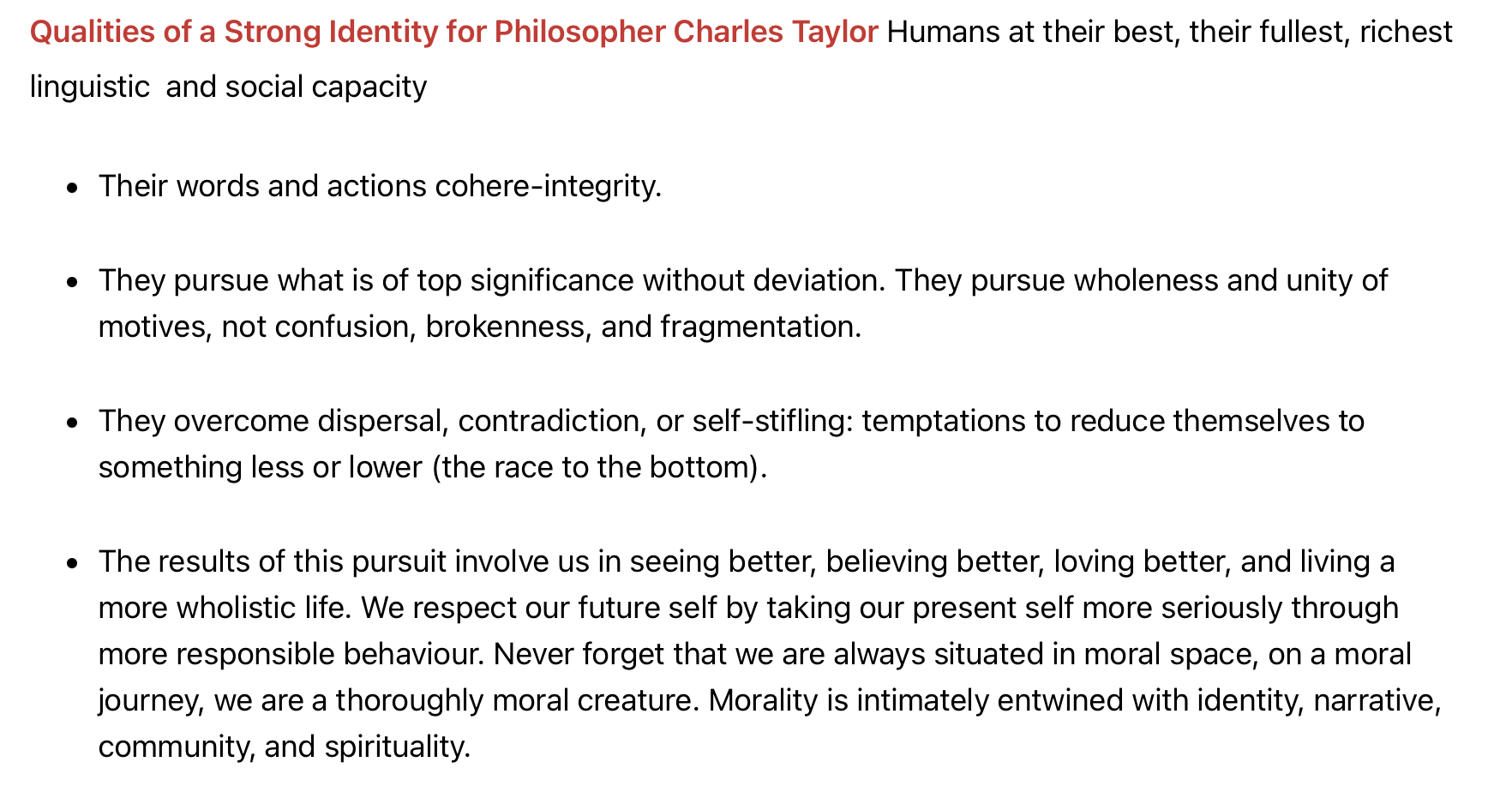
In this post, I want to emphasize some of the important parameters or context (situatedness) of freedom. How do we make best sense of healthy, wholistic, robust freedom and choice? This has become the vital point of tension in our discussion of The Wisdom of Charles Taylor in this series of twelve posts—a thought experiment riddled with a sense of urgency for contemporary life. With Taylor, I have been addressing a crisis at the heart of Western culture (loss of moral soul, virtue, and character), and working towards a vision for cultural renewal through the recovery of the language and culture of the good. It is absolutely vital to our wellbeing and our common future. The character of freedom is key to how the game of life gets played. Imagine, for example, hockey with no rules or referees, where every player maximizes their selfishness. Freedom without guardrails/values/virtues, without context, is no freedom at all, but rather more like chaos. It too often leads to oppression and exploitation, loss of rights and freedoms, and a smaller self. We are in the discourse of constitutive or metabiological knowledge, which speaks of an interconnected skein of meanings which define the shape of human significance (C. Taylor, 2016, 253). In this dynamic, there exists an interwoven set of enactments (behaviour), articulation (words and symbols), and interpretation (hermeneutics of the moral self). Our emotions are implicated as well, for when moral wrong is done to us, we suffer much pain. When moral integrity and courage are displayed, we are inspired, empowered, and heartened. Taylor intones: “I have integrity when my words and action cohere, when I pursue what is really important without suffering deviation or distraction from irrelevant issues or contrary desires…. Integrity bespeaks wholeness, unity.” (C. Taylor, 2016, 230). Clearly, morality requires infrastructure. The statement below is composed partly of warning and optimism about a way forward. We must choose wisely as we traverse late modernity.
In his important book, Hegel and Modern Society, Taylor (C. Taylor, 1979, 154-66) addresses the critical need to situate freedom properly in order to avoid a radical, destructive abstraction. This critique of Hegel applies to our quest for a redeemed freedom. His tough question is: “What should a society of freedom look like beyond an empty formula?” (C. Taylor, 1979, 155). As I have argued in this series, he longs for us to see the meta-perspective: the larger context of the individual choosing agent. Taylor raises some important issues and questions concerning the healthy situatedness and relationality of freedom. In his analysis of freedom in the late modern world, Taylor calls into question the validity of a radical freedom as self-dependence or self-sufficiency. This view is very common in economics and society today. Taylor does not find it surprising that we continue to value freedom as some sort of ideal: “[Freedom] is one of the central ideas by which the modern notion of the subject has been defined, and it is evident that freedom is one of the values most appealed to in modern times” (C. Taylor, 1979, 155). But he would argue that freedom needs a context with definite parameters/guardrails. There must also be content and substance in our definition of freedom in order to move beyond an ideological mystification of a rather raw, rebellious, narcissistic, revolutionary project. It does not exist by and for itself just as a beautiful, shining idea for a placard or a mythos to make us swoon or take up arms. This is idolatry. Pure freedom without limits (absolute freedom) is nothing; it is chaos; it is no place. “Complete freedom would mean the abolition of all situation.” says Taylor (C. Taylor, 1979, 157) and that renders it rather absurd. It is only negative freedom from, without its positive counterpart (Isaiah Berlin, Timothy Snyder) freedom for. Taylor’s analysis cuts through the naiveté and the mythology of an aesthetic idea of freedom like that of Michel Foucault. We should be alert, as Canadian public intellectual Jonathan Pageau says, that many contemporary aesthetic ideas can contain a Luciferian edge.
Taylor seeks to transcend the illusion of the sovereign self in command of the world by situating it in a world both larger than it and partly constitutive of it. He employs hermeneutics. He does this by striving to articulate for us those elements in the self and its circumstances that come closest to expressing what we are at our best, highest form of humanism. The most expressive articulations are not simply the creations of subjects, nor do they represent what is true in itself independently of human articulation: “They rather have the power to move us because they manifest our expressive power itself and our relation to our world. In this kind of expression we are responding to the way things are, rather than just exteriorizing our feelings” (C. Taylor, 1978). Thus, he reinforces this idea of moral realism. We must make sense of our choices within our whole context, to discern rightness or appropriateness of actions, the implications of our choices on others, and especially the marginalized, weak, or poor. What is required for robust, free agency, moral subjectivity, and healthy moral self-constitution?
The Hermeneutic
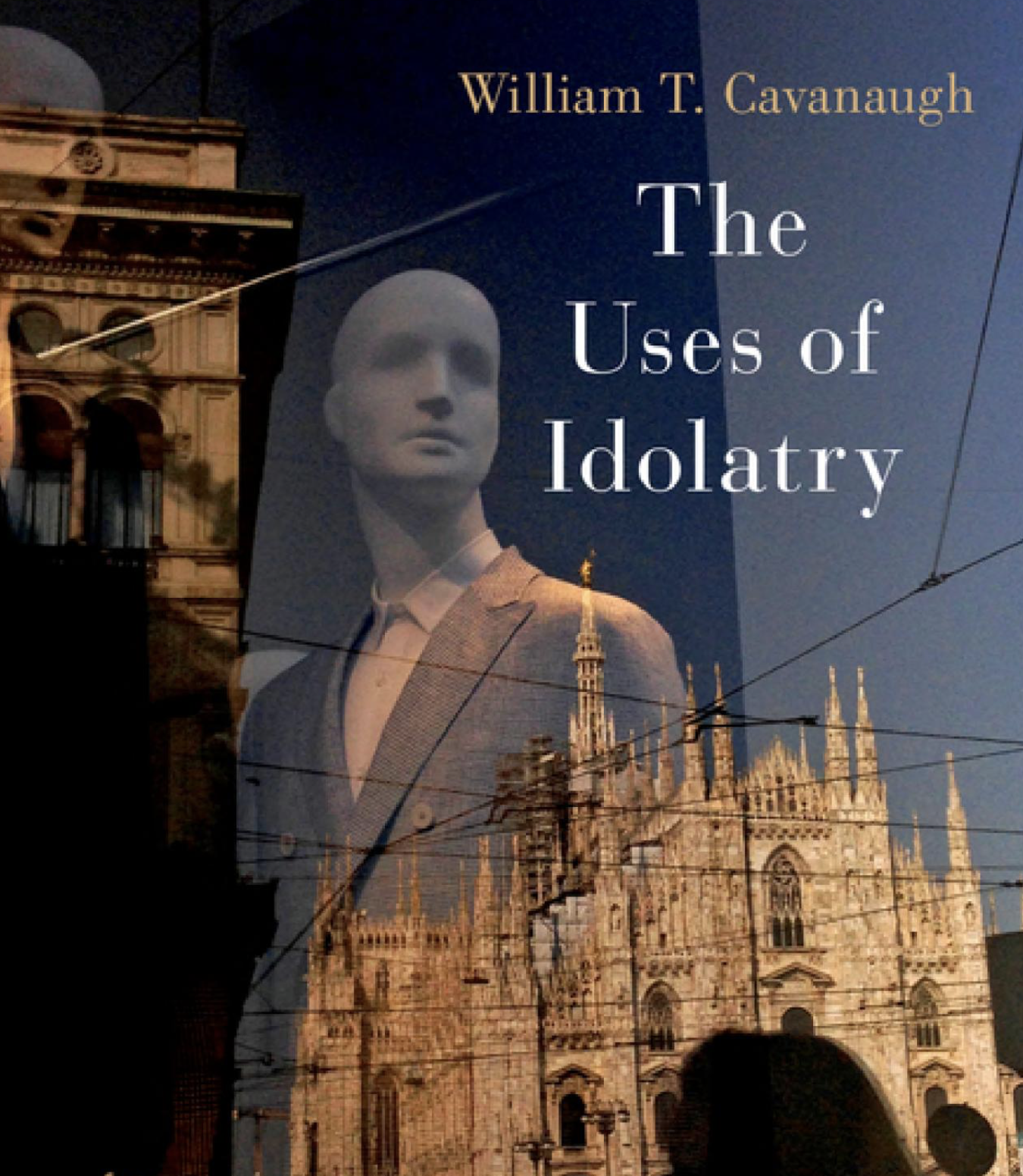
Much philosophical reflection in the twentieth century has engaged the problem of how to get beyond a notion of the self as an abstract, self-dependent will. One wants to bring to light its insertion into nature (one’s own and those which surround it), plus the context of one’s narrative history. Taylor is arguing that the situationless, transgressive notion of freedom, as a political modus operandi in Western history, has been very destructive, insensitive to larger context, other stakeholders, and to the past. He gives examples such as the Bolshevik voluntarism, a movement that crushed all obstacles in its path with extraordinary ruthlessness, or the Reign of Terror which was part of the French Revolution, both motivated by the “clarion call of freedom” (C. Taylor, 1979, 157). History bears out the strong temptation to forceful imposition of one’s final liberationist solution on an unyielding population, with untold violence unleashed in the name of radical, aesthetic-freedom. Freedom can be anti-human: Too often, poets have endorsed these brutal and bloody revolutions. As history has shown, the tendency is for the liberator to become the next oppressor. Freedom without context most often becomes a dangerous ideology, or idolatry (see William Cavanaugh’s critique of nationalism in The Uses of Idolatry, chapter 6., 217-79)), which justifies even the most brutal means to its ends. It calculates as a mythos, one that can be manipulated by persons with a wide variety of nefarious motives and goals. Unbounded, revolutionary freedom remains intensely problematic and dangerous. Marxism has often displayed this ‘burn it all down’ approach to social change.
Neither happiness nor pleasure, freedom nor justice could be identified or understood under the condition of no boundaries, or where freedom is simply defined as the radical transgression of boundaries, rather than true cultural critique. Taylor (C. Taylor, 1979, 157) notes: “Complete freedom would be a void in which nothing would be worth doing.” The tradition of freedom as autonomy and self-sufficiency is riddled with problems. The notion is that freedom should be “endlessly creative” (C. Taylor, 1979, 155). Isaiah Berlin spoke of both positive and negative aspects of freedom. In these solely negative characterizations of freedom (freedom from restriction), what occurs is the tendency to think away the entire human situation and to substitute an abstract, fantasy world where one could be totally free. It tends to manipulate and divide people, and leads to autocracy and oppression–losing freedom for all except a few elites. When we apply this to corporations, we see the rich getting richer and the poor getting poorer, producing the dangerous great economic divide in society. The market in the end will not make you free.
Unrestrained, self-determining freedom can often be empty freedom (a precarious sort of autonomy) leaving a vacuity longing to be filled by almost any moral trajectory, constructive or destructive: community development or narcissistic self-indulgence, compassion or violence, character development or self-trivialization, militarism or peace-making reconciliation. For example, self-disciplined freedom has been applied to ethnic cleansing, to expulsion of people from their land, or to slavery, torture, and terrible violence. It is irresponsible to be unconcerned about the outcome of an open-field freedom doctrine. Freedom without context, without ethics, and without a relationship to the good easily leads individuals towards celebrating their own power and using it destructively, not for the common good. Could anything be more well-illustrated from some of the social and political experiments of the twentieth and twenty-first centuries? Many volumes have articulated the problem on this subject.
According to Taylor (C. Taylor, 1979, 151-58), the trend toward this negative understanding of freedom comes from four key moves. It involves a decontextualization, a shaking loose of the individual self from definitions of human nature and from the natural world, the cosmic order, social space, religion, and history. This entails a serious form of self-wounding, self-depreciation.
Four Moves
Move a. The new identity of a self-defining subject wins by breaking free of the larger matrix of metaphysical, cosmic or societal order with its claims of the value of mutual accountability. In this case, freedom is defined mainly as self-sufficiency and self-dependence. It entails the process of defining an experimental self, a reconstructed or re-invented self.
Move b. Human nature has to be re-invented, reshaped in order to access unrestricted/unshackled action and self-expression. It is highly performative and can be very aggressive. One tries to remove all obstacles to freedom of expression, which are seen as various forms of oppression, domination, and harm to the self.
Move c. The uncensored individual indulges in a celebration of the Dionysian expressive release of instinctual depths, the sensuous, the violent, the rapacious. This revolutionary thinking is partly sourced in the dark work of the Post-Romantic, anti-humanist philosopher Arthur Schopenhauer and his followers.
Move d. Finally, this trajectory involves the death of all traditional values (humanist, Christian, Kant’s moral imperative, ideals from other religions), and entertains the belief that ethics is rooted in nothing but the will-to-power. It is the death of principle, virtue, and high character. One is accountable only to oneself, and thus there can be no such thing as responsible citizenship, or the obligation to the common good.
Consequences of These Radical Moves
a. Self-trivialization results in an egoistic, hollow, characterless person with no defined purpose and no ability to discern between good and evil, right and wrong, justice and injustice. Human rights are not respected when the goal is revolution.
b. One loses the ability to discern between one’s various conflicting desires: between destructive, neurotic compulsions, fears, paranoia, and addictions, over against high and noble instincts for the good of the other/society, justice, peace, humility and personal integrity. Malevolence mixes with charity in a duck soup causing moral confusion and angst. It is very difficult to make sense of such a person’s behaviour. Volatility is the order of the day.
c. The Trap: Despair can take over one’s psyche due to the loss of a larger horizon of meaning. Indeed, it can become a kind of dialogue with the devil. Inventing one’s own meaning and the reshaping of oneself is hard, a heavy burden—involving a lot of pressure (Jonathan Haidt, The Anxious Generation). Despair illness is a major problem in Western countries today.
d. Relationships take a hit because this whole approach to life does not celebrate the spirit of interdependency which is essential to community and communion. There is little emphasis on complementarity, or hope of forgiveness and reconciliation. The tendency is to blame others or the system for one’s or society’s problems.
Foucault’s late period (third oeuvre on care of self) is a good example of this phenomenon. Taylor writes:
Foucault in an important sense was a philosopher of freedom … that is, he was a philosopher who claimed to unmask and lay bare domination, the interiorization of power relations by victims, and although he often claimed that power had no subject he certainly portrayed it as having victims … The moral thrust of these analyses … was implicit in the language in which it was cast. They called for opening a line of resistance for the victim, a disengagement from the full grip of the current regime of power, particularly from its hold on our self-understanding. Foucault’s own intervention in politics and public life … bore out this interpretation … in his History of Sexuality 2 & 3 and latest interviews, he made clear his view of freedom, the building of an identity relatively uncolonized by the current regime of power. (C. Taylor, 1999, 115)
The goal seems to be one in which the person or group concerned will have achieved full autonomy and will no longer be controlled or influenced. No place is allowed for another possible telos of the struggle, one in which the agents or the groups, previously related by modes of dominance, might reassociate on a better basis of mutual interest. The invocation of the victim scenario is a very common move in a position of this type. The history is usually articulated in such a way as to make it almost inconceivable that there be a new mode of association, let alone that both sides need it to be complete beings.
Taylor, on the other hand, attempts to situate the self and subjectivity in a healthy context by relating it to life as embodied social being (Merleau-Ponty), connected to nature (without reducing it to nature) and history (again without reducing it to history). He argues strongly that one needs to see freedom within the context of a situation. Ethics, purpose, and moral agency, in his mind, are embedded in a social network, a community, in a narrative history. It was not always incumbent to see the self as autonomous individual making choices, designing oneself in a protective stance over against a hostile world or oppressive code of ethics. Based on his proposed realist moral ontology of the good, Taylor is motivated to reveal the problems with radical definitions of freedom as self-dependence rather than interdependence. They cannot sustain societal harmony or promote the common good. Freedom as escape must be subverted by freedom as opportunity or calling within community. The situated notion of freedom sees free activity as grounded/and nuanced in the acceptance of one’s defining situation, together with its limits, possibilities, and accountability–significant texture. One has to keep one’s promises and fulfil one’s obligations.
Finally, Taylor offers insight on freedom’s situatedness from another angle. He contests Foucault’s idea that freedom can be reduced to a set of limits to overcome, with only a vague, undirected creativity towards a beautiful self or the beautiful life. A skeptical freedom that limits itself to talk of new possibilities for thinking and acting, but heroically or ironically refuses to provide any evaluative orientation as to which possibilities and changes are desirable, is in danger of becoming merely empty or worse (predatory and malevolent). According to Taylor’s view, the individul flourishes in freedom when she pursues the good, is transformed by the good, within a context of community, and a coherent narrative identity. Freedom within this context allows the self to engage the social situation in a fruitful way. There must be a space where liberty can be secured and positive relational potential emerges, an atmosphere of trust and accountability. Taylor strongly cautions against reductive theories of freedom and the self. He says that one needs a “more articulated, many-levelled theory of human motivation” (C. Taylor, 1979, 160). He welcomes the full complexity of moral self-constitution, and does not want to leave out anything that is actually operative in healthy moral agency or in the full horizon of morality. Freedom without context (negative freedom) does not calculate as responsible freedom; it ignores the value of others as a significant part of ethics and is too narrowly focused on one’s relationship with oneself, and the development of one’s own project or ethos.
Applying Hermeneutics: The text of self and the text of freedom need a context, the motivational economy of the good. For Taylor, this context is the horizon of the good, including divine goodness, incarnational spiritual culture, and agape love. “All zero-sum views of divine and human freedom—views that assume the two are inherently competitive—will also be put in question; divine freedom will be reimagined as freedom for the love and freedom of the other.” (J. Begbie, Abundantly More, 2023, 154) Within this economy, the other reappears as a significant and positive contributing actor in one’s moral life. They are not the enemy to be feared or hated. It increases one’s capacity to see the human reality, value, and dignity of others, especially those who are different from us. For example, people like King, Ghandi, Mandela, and Jesus free us to be ‘for’ the other and free us ‘from’ the fantasy of being totally independent. See especially Taylor’s chapter fifteen, “History of Ethical Growth” (C. Taylor, Cosmic Connections, 2024, 553-587) for a deep analysis on this subject.
Taylor strongly believes that it is possible to win through on both freedom and responsibility (citizenship), mutuality and complementarity, reconciliation and healing of human trauma and brokenness. “The biblical New Testament testifies to this ceaseless pressure outward, to a momentum of love that exceeds the bounds we often assume determine and restrict our lives—it is potentially unstoppable in its effects. Koinonia reveals a non-possessive, non-contractual way of life.” (J. Begbie, 2023, 156). Divine love operates out of an abundance of generosity. To come to Christian faith is to participate in the mutual love of Son & Father: we are impelled to give ourselves to one another, because the love of the Father energizes us. Within this high dialectical relationship to the good, a person can establish deeper relationships and build mutually supportive, loving accountability and security. Tylor holds that this more rooted, embedded (thick) individual self will show more resilience and stability under stress, while enjoying wholistic freedom as it discerns its calling and meta-biological meaning. “We are invited into a momentum that enables us to delight in our God-given creatureliness, to flourish as creatures through an expansive relation with God—one of dispossession, of giving toward, and giving away” (J. Begbie, 2023, Ch. 8). The need remains for a more full-blooded conception of subjectivity (soul recovery) within the parameters of the moral horizon, the hypergood, narrative, and calling within community. Community of the right sort is at the heart of true freedom. Perhaps this will also lead to a higher, fuller, wiser, truer form of human life.
Economic Application
Successful economies are not jungles but gardens–they must be tended with care.
Inclusion creates economic growth and social harmony.
The purpose of a corporation is not to merely enrich shareholders or the corporate elites.
Greed/selfishness/hoarding is not good. Sociopathic behaviour is bad for business in the end, and lands some CEOs like Bernie Madoff in jail. It can lead to terrible fraud, destroy a business, or bring down a government.
A new narrative is emerging from roundtables and think tanks around the world. It is one that improves the welfare of more stakeholders (workers, customers, the community, shareholders) and cares for the environment. It is good for all players in the economic game of life, and improves civil society–builds for the long term. See S. Keen, The New Economics.
Empirical research shows that humans are quite cooperative, reciprocal, intuitively moral creatures with a healthy sense of responsibility for others–this outlook leads to prosperity and human dignity.
Virtuous economies round the globe are innovative, solve problems, and involve more complex forms of social and economic cooperation. Is this not the way of wisdom and high culture?
The Hermeneutical Way of Seeing the World
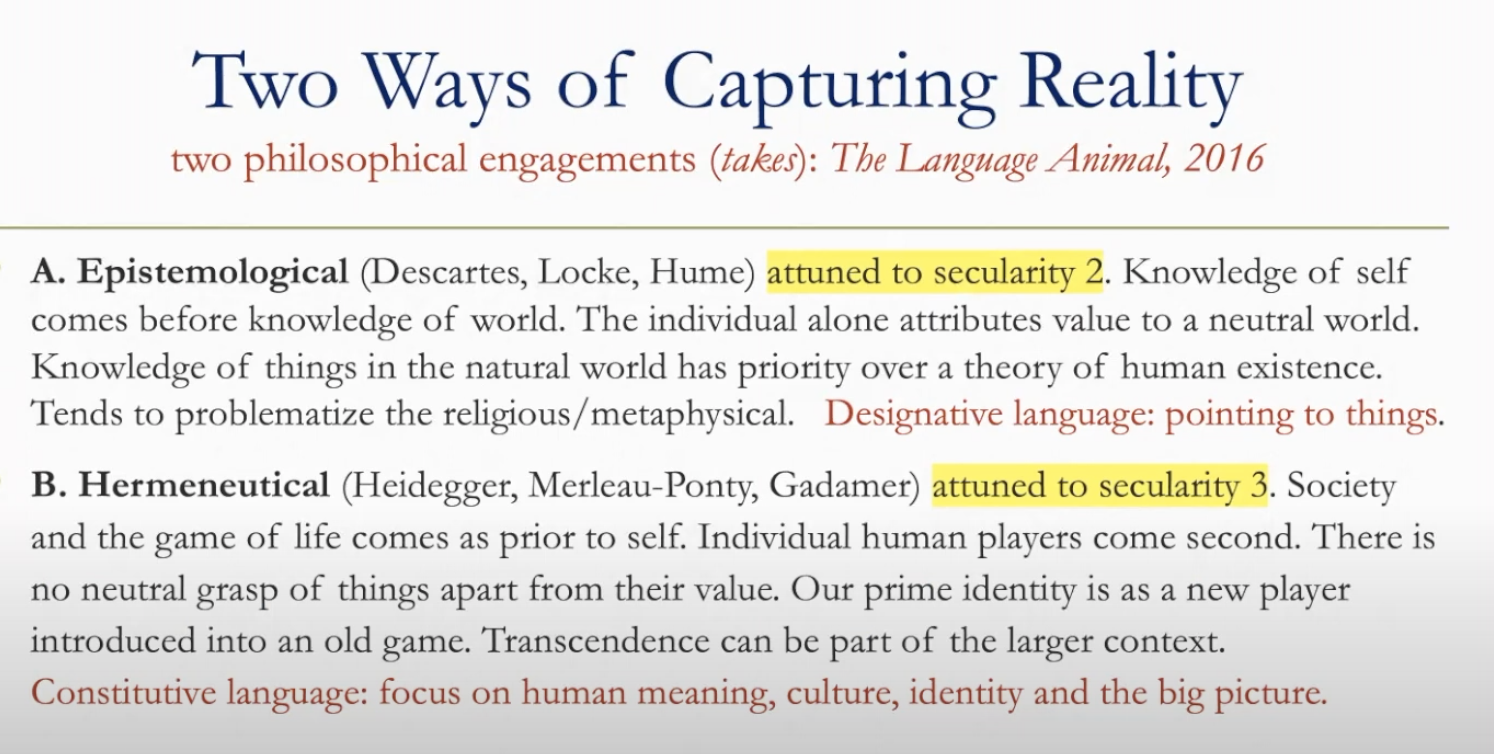
The working assumptions of this approach includes European philosophical voices like Heidegger, Merleau-Ponty, Gadamer, the later Wittgenstein, Charles Taylor and Jens Zimmermann. We find this approach a balance to Anglo-American Analytical philosophy (the epistemological approach). The connection between the individual self and the world is an I-Thou relationship.
Self is not the first priority: the world, society and the game/drama of life come first. We only have knowledge as agents coping with the world, and it makes no sense to doubt that world in its fullness. Taken at face value, this world is shot through with meaning, purpose, and personal discovery.
There is no priority of a neutral grasp of things over and above their value. It comes to us as a whole experience of facts and valuations all at once, interwoven with each other.
Our primordial identity is as a new player inducted into an old game which continues from ages past. History is important. We learn the game and begin to interpret experience for ourselves within a larger communal context. Identity, morality, and spirituality are interwoven within us and within the dynamics of life. We sort through our conversations, dialogue with interlocutors, family, and friends, looking for a robust and practical picture of reality that makes sense.
Transcendence or the divine horizon is a possible larger context of this game. Radical skepticism is not as strong here as in the epistemological approach. There is a smaller likelihood of a closed world system (CWS—closed to transcendence as a spin on reality) view in the hermeneutical approach. In a sense, it is more humble, nuanced, embodied, and socially situated/embedded (Merleau-Ponty).
Language use is the Expressive-Constitutive type (Herder, Hamann, Humboldt, Gadamer, Taylor) The mythic, poetic, aesthetic, and liturgical returns. Language is rich and expressive, open, creative, appealing to the depths of the human soul. Language is a sign. Language helps us create world.
Moral agency is revived within a community (oneself as another as in Ricoeur) with a strong narrative identity, in a relationship to the good, within a hierarchy of moral goods and practical virtuous habits that are mutually enriching and nurturing. One is more patient with other people, the stranger, the person who is different. Hospitality wins out over hostility.
The focus of human flourishing is on how we can live well, within our social location—a whole geography of relationships that shape our identity, and which we in turn shape as well. This is a thick version of the self, open to strong transcendence, within a meaningful whole.
Gordon E. Carkner, PhD, Author, Blogger, YouTube Webinars & Lectures, Meta-Educator with UBC Postgraduate Students & Faculty
Bibliography
Applebaum, A. (2024). Autocracy, Inc.: The Dictators Who Want to Rule the World. Signal McLellan & Stewart.
Begbie, J. (2023). Abundantly More: The Theological Promise of the Arts in a Reductionist World. Grand Rapids, MI: Baker Academic.
Carkner, G. E. (2024). Towards an Incarnational Spiritual Culture: Grounding Our Identity In Christ. Wipf & Stock Publishing.
Carkner, G. E. (2016). The Great Escape From Nihilism: Rediscovering Our Passion in Late Modernity. InFocus Publishing.
Cavanaugh, W. T. (2024). The Uses of Idolatry. Oxford University Press.
Keen, S. The New Economics.
Snyder, T. (2024). On Freedom. Penguin Random House.
Taylor, C. (1978). Language and Human Nature.Plaunt Memorial Lecture, Carleton University.
Taylor, C. (1979). Hegel and Modern Society. Cambridge: Cambridge University Press.
Taylor, C. (1999). In J.L. Heft (S.M.). (Ed.). A Catholic Modernity? Oxford: Oxford University Press.
Taylor, C. (2016). The Language Animal: The Full Shape of the Human Linguistic Capacity. Harvard University Press.
Taylor, C. (2024). Cosmic Connections: Poetry in the Age of Disenchantment. Harvard University Press.
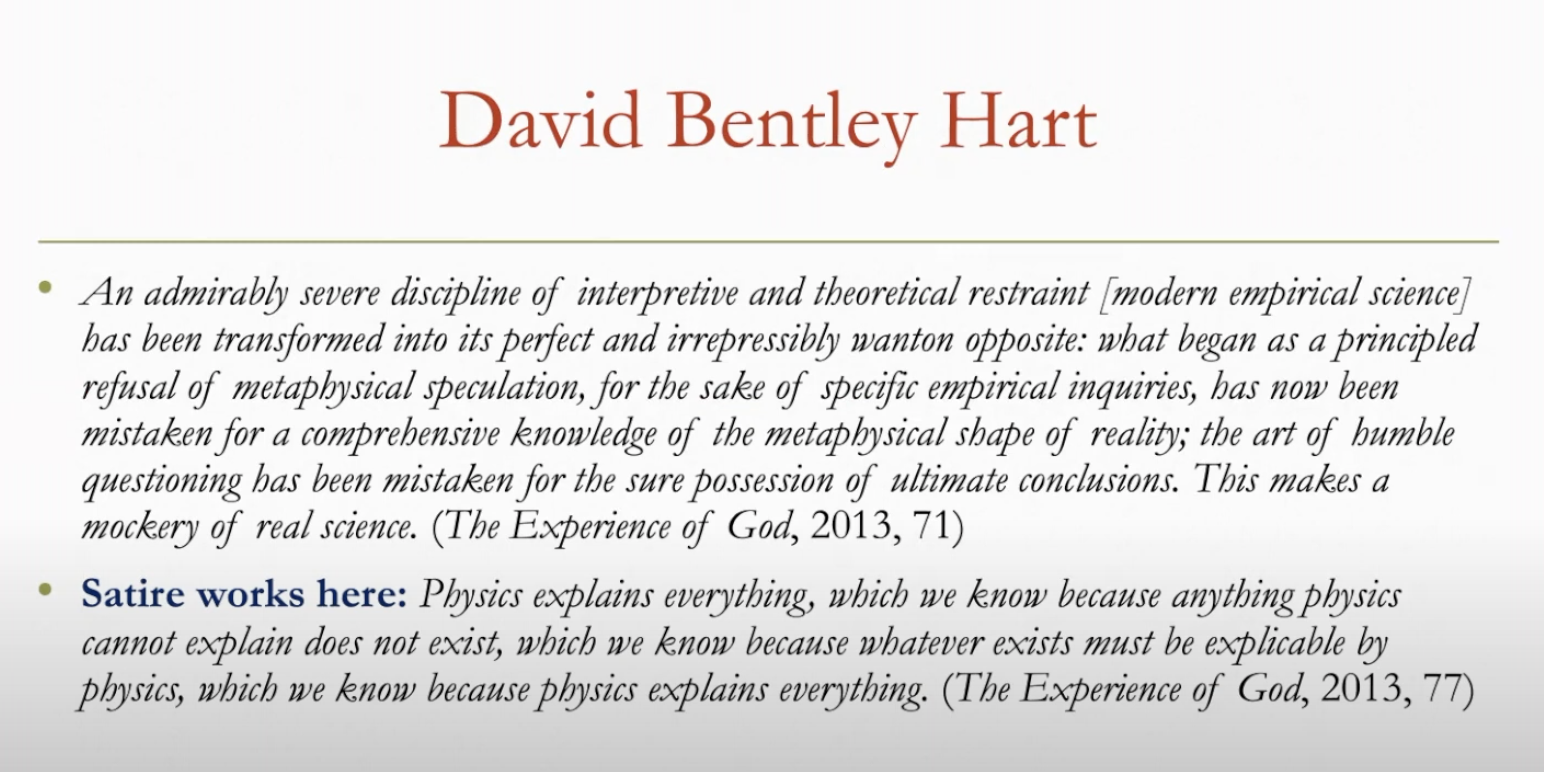
How should we understand the relationship between theology and science? How should this understanding shape our daily lives and decisions? Gain fresh insights as we consider some key theological and ethical issues in the biological sciences. Together, we’ll explore questions around creation and evolution; the role of genetics in human behaviour; the relationship between brain, mind, and free will; and distinctions between healing and enhancement.
Professor of Theology and the Arts, Duke & Cambridge Universities
Thursday, January 30, 2025 @ 4 PM
C. S. Lewis and Unfulfilled Longing: An Exploration through Music
Abstract
C. S. Lewis famously spoke of fleeting experiences of joy he had early in life, a longing for something this world cannot satisfy. Dr. Begbie will creatively explore this through music, comparing this pre-Christian unfulfilled desire with Christian hope.
Biography
Jeremy Begbie is the Thomas A. Langford Distinguished Research Professor of Theology at Duke Divinity School, and McDonald Agape Director of Duke Initiatives in Theology and the Arts. He teaches systematic theology, and specializes in the interface between theology and the arts. He is Senior Member at Wolfson College, Cambridge, and an Affiliated Lecturer in the Faculty of Music at the University of Cambridge. His books include Theology, Music and Time (Cambridge University Press); Resounding Truth: Christian Wisdom in the World of Music (Baker/SPCK); and Music, Modernity, and God (Oxford University Press); and Abundantly More (Baker). He is a very engaging speaker who has taught widely in the UK and North America, and delivered multimedia performance-lectures in many parts of the world.
Transcendent Turn to Agape Love as a New Source of the Good–and Means of Transformation
Cheakamus Lake, British Columbia
This blog post will pursue some of the insights of Charles Taylor with respect to a possible transcendent turn in moral philosophy and culture. I continue to pull on the threads of his wisdom for a renewed moral vision for the twenty-first century. Indeed, this could be a life-saver for Western culture in late modernity, answering the question: How should we then live and what vision will inspire and sustain us? Constitution of the moral self/spiritual identity has the double connotation of both the contents of the self, and the way in which the self is constructed. It leads the current discussion into an examination of what Taylor calls the epiphanies of transcendence. This provocative concept opens our investigation to moral sources beyond that which is possible within a naturalistic metaphysics (a dis-enchanted world/closed immanent frame). It moves it towards a creative interaction with a larger horizon: one of divine, transcendent, trinitarian goodness. This seems like the next important step in our thought series. There is a lot at stake in the game of life, as we unpack together the important qualitative nature of freedom of the will. Ill-defined freedom doesn’t work that well, and can lead to getting stuck in life. It needs to be defined in terms of a creative, dialectical relationship with the good.
Throughout his work in Sources of the Self, Taylor makes the irenic suggestion that there is no good reason to exclude the vision of agape love of the Judeo-Christian heritage as a viable hypergood (a term defined in blog post 4. https://ubcgcu.org/2024/07/09/qualities-of-freedom-of-the-will-4/). He posits it as a very high form of human relationship, and reinforces the idea in the 2007 volume A Secular Age. Taylor (1989) writes, “Nothing prevents a priori our coming to see God or the Good as essential to our best account of the human world” (C. Taylor, 1989, 73). As a significant percentage of the world population holds to be true, “God is also one of those contemporary sources of the good, the love of which has empowered people to do and be good” (C. Taylor, 1989, 34). Commentator Michael Morgan argues that Taylor’s account in Sources of the Self re-establishes the plausibility of the divine-human relationship for moral experience: “God is one of those entities that has figured in our moral ontology, that has provided a standard or ground of value, and has given our beliefs and actions meaning and significance” (M. Morgan, 1994, 53). More recently, this relationship has become occluded in contemporary Western culture and philosophical ethics through a process of reductionism and disenchantment. Taylor recovers the articulate grasp of agape even as he illuminates its possibilities for ethical discourse and joyful life together–robust community and communion.
The potential impact of the hypergood of agape love and the constitutive good of a trinitarian God on moral discourse is explored below. It is done with a view to unthink nihilism, and release our minds from the restrictions/grip of the Closed Immanent Frame ideology such as in the New Atheists, and the dysfunction of the resulting Crisis of Affirmation. This opens up amazing new possibilities for the moral self and for identity within a larger, richer moral horizon. Furthermore, it wrestles with the concept of accountability to other beings, both natural and human, through new concepts like goodness-freedom, a word that I have coined. There is a new hermeneutic/interpretive strategy at play in what emerges. This investigation of Taylor’s wisdom is like detective work: it involves a process of recovering lost things in culture.
The creative engagement/interface of freedom and divine goodness is proposed and explored as a fruitful way forward in ethics and spirituality, a creative segue out of personal despair, will-to-power violence, and stifling nihilism. It further explores the idea of a transcendent turn in ethics, and then draws on some of the insights of philosophical theology to flesh out a plausibility structure for interpreting the moral self in fresh terms. Today, there is an increasingly robust and fruitful dialogue between theology and ethics, between theologians and post-structuralist philosophers in the early twenty-first centuries (G. Ward, 1997; J. K. A. Smith, 2004; J. Bernauer & J. Carrette (Eds.), 2004). In addition, trinitarian theology is a substantial, rich, and relevant academic discourse in its own right, especially in Britain (Colin Gunton) and the United States. In a future blog post, I will draw on British (Alistair I. McFadyen), American (D. Stephen Long), and German (Christoph Schwöbel) scholarship to flesh out these ideas. Below, I lay the groundwork of the transcendent turn to agape.
Taylor (1989, 71) cautions that, “at least some hypergoods on offer … must be illusory, the projection of less admirable interests or desires.” For example, he questions ones that lead to human reductionism (make us less than full persons with dignity), or ones that abstract an individual out of real life, distort reality or exclude a major aspect of human experience. Ethics and morality is about how we should live and flourish as individuals and as a society amidst our networks of obligation. Corruption is always possible, where a good turns into an ideology or idol. Ethically, one never starts from a position of neutrality. Taylor argues that our moral framework springs from the best account of the human domain we can arrive at, and this account must be anthropologically relevant and livable, it must relate to deep meaning, identity, and purpose. Our spiritual outlook must be plausible: we need strong sources of the good if we are to maintain high ideals or high standards/principles in our hypergood. Taylor argues at this point,
The belief in God … offers a reason … an articulation of what is crucial to the shape of the moral world in one’s best account. It offers a reason rather as I do when I lay out the most basic concerns in order to make sense of my life to you. (C. Taylor, 1989, 76)
Epiphanies of Transcendence
Now I want to expand our spiritual imagination through introducing the language of epiphany. Epiphanies are suggestive of transcendence. Michael Morgan (1994, 56f)) points out that Taylor sees a parallel between the epiphanies of art and poetry in the nineteenth and twentieth centuries and the I-Thou epiphany of religious encounter with the divine. Taylor elaborates the idea of epiphanies (1989, 419f, especially 490-93). He sees Post-Romantic and modernist art as oriented to epiphanies, episodes of realization, revelation, or disclosure. Epiphanies and epiphanic art are about a kind of transcendence, about the experience of coming in touch with that which lies beyond oneself, beyond the immanent frame, something new, a ground or qualitative pre-eminence. Taylor reviews various ways of articulating the concept of epiphany in Sources of the Self (1989, 419-93). He shows how God, inserted into this idea of epiphany, fits as a moral source (1989, 449-52).
Epiphanies can be a way of connecting with spiritual and moral sources through the exercise of the creative imagination. Such sources may be divine (Taylor et al), or in the world or nature (German Romantics, Wordsworth), or in the powers of the imaginative, expressive self (Foucault et al). These epiphanies are an exemplar cases of what Taylor calls recovering contact with moral sources. A special case of this renewal of relationship between the self and the moral source is Christian religion and the relation to God, which he sees articulated in the work of Russian writer Fyodor Dostoyevsky. The relationship to art parallels the relationship to religion. The self is re-oriented in the presence of the inaccessible or sublime, something beyond one’s immediate grasp. It captures one’s amazement, produces awe.
For example, we experience this when our eyes are riveted to a certain painting in a museum, or our inner emotions are deeply stirred by a poem or a story of human courage and high virtue. One is taken beyond oneself, into an experience of transcendence. The experience involves both encounter, revelation, and calling. We could think of the absolute sense of wonder in viewing the Northern Lights. Sometimes this happens in reading a biblical Psalm or a poem by Malcolm Guite, where art and revelation coinhere. Epiphany engages the human imagination at a deep level as it did for Moses in front of the burning bush, or at Jacob’s Ladder, or with the Apostle Paul on the way to Damascus. The person is often shaken to the core of their being.Transcendence means more than a selfless exposure (ecstatic experience/spiritual high) or reorientation alone, but also a receiving that deeply involves the self, its imagination, its inner resources, its visions and revisions. In this calculus, for religion and art, the self remains autonomous and yet becomes more full as it opens itself to the impact of the epiphanic other. Epiphany can deeply influence our relationships—we are moving towards agape as part of the chemistry of such encounter.
Michael Morgan, in commenting on Taylor’s work, elaborates through the example of Jewish writer, Martin Buber, on this concept of religious epiphany or I-Thou encounter (M. Morgan, 1994, 60-61). Taylor appreciates (1994, 226-29) Morgan’s use of Buber in relation to his (Taylor’s) concept of epiphany. For Buber, the religious event, revelation, involves a meeting between the self and the divine other, an encounter that depends upon both parties. It is an act of self-affirmation, even as it is a giving over of the self to the other. In this case,
The self is receiver, but it is a receiver, not of a content, a proposition, a truth, but rather of a ‘Presence, a Presence as Power’. Furthermore, that Presence provides ‘the inexpressible confirmation of meaning’, a meaning that calls out to be done, to be confirmed by the self in this life and in this world.… This confirmation and this affirmation of God and self in the world are what Taylor calls a ‘changed stance towards self and world’, which doesn’t simply recognize a hitherto occluded good, but rather helps to bring this about. (M. Morgan, 1994, 60)
This entails the emergence of a fresh experience of high goodness in one’s experience. Thus, the concept of strong transcendencethrough epiphany, something that has currency for artists and poets of the twentieth century, provides a category to extend to the transcendence of God. The idea of God as a possible constitutive good should be intriguing to many ethically reflective and sensitive people today. Taylor’s historical account of moral ontology incorporates an advocacy of religion and the potential of a transcendent turn to the divine, in particular that of the Christian Trinity. Given the language of moral sources, it provides a contemporary moral and cultural discourse for such moral sourcing within the divine. As Taylor (1989, 479) notes, an encounter with God can be the epiphany that reveals an “unambiguously good moral source.” Morgan (1994, 63) clarifies: “In Taylor’s terms, practical reasoning about goods can apply to such goods in the religious context. Revelation—the religious epiphany—gives access to the divine.” This is what is involved in the transcendent turn, involving the recovery of a transcendent divine goodness. It is one that lies in relation to moral self-realization, one which lies beyond human experience, and yet engages one fully in one’s moral, spiritual, and cultural lived experience. It offers a space for transformation, where one is excited about personal, extra mile sacrifice for the good of one’s neighbour, or one’s efforts to bring about reconciliation between alienated parties or family members. We can often sense a new kind of freedom and voice to act and speak for justice, human rights, and benevolence.
What is the Path Forward?
Definitions of transcendence can appear confusing, even overwhelming, so here is some clarification of what I mean by this language. There is a type of transcendence that secular thinkers (those constricted by the closed immanent frame outlook) like Foucault are attuned to, a horizontal transcendence in the weak sense—a transcendence-within-immanence. Transcendence of this variety remains a form of intra-temporal transcendence, as in personal resolutions or plans for change. For example, this is what is attempted in Foucault’s quest for the self-fashioned, beautiful life, life as a work of art. The emphasis is on becoming something new—horizontally—within one’s own history, self-orchestration of one’s personal change or identity. To distinguish strong transcendence in Taylor’s sense, I want to use the idea of encounter with radical alterity. This means an encounter with radical exteriority, the radically transcendent, divine, personal other. It is characterized by the incursion of the eternal into the temporal, informed by the descent of divine transcendence into the historical life of the self (as in the incarnation of Christ). Eternity links up with time. The movement is both ways. This strong type of transcendent good provides a stance whereby no one culture-sphere (science, aesthetics, morality, or religion) or ideology (scientism, relativism, nationalism) can gain hegemonic control over such a good, or claim a God’s-eye viewpoint. Strong transcendence functions as a principle of restraint, while being efficacious within all culture spheres.
Charles Taylor firmly believes that this understanding of strong transcendence is critical to one’s best and most robust account of the moral world and the moral self. The moral economics of grace and gift are critical here: The refusal of, or resistance towards, strong transcendence is a choice to restrict one’s moral horizon and confine one’s moral imagination (to disenchant) unnecessarily. It entails a biased refusal of such a radically otherepiphanic encounter. Indeed, it is not a neutral decision over which we have total control, but one with serious consequences. High ideals/hypergoods without strong sources outside oneself puts a heavy burden on the individual–it can result in discouragement and cynicism, or giving up on the moral enterprise altogether. One can then begin to blame others (or institutions like the church) for their problems, weakness of character, or moral failure. This exit from the economy of grace is the choice that far too many make; it affects their ability to see the world and themselves as good, and produces a crisis of affirmation(Taylor, 1989, 448). Taylor asks us a really tough question at this juncture: Do we have to choose between a form of soul-destruction or self-condemnation, the disavowal of moral goods or world-hatred? “Does one have to either judge oneself negatively, or mutilate oneself spiritually?”, he asks (C. Taylor, 1989, 520). The crux of the dilemma is whether one can affirm the world and self, and at the same time affirm high moral standards of justice, responsibility for one’s neighbour, and benevolence.
This concept of a transcendent epiphany is captured in the Christian faith by the term in Greek: agape love. Agape exceeds the bounds of reciprocity; it cannot be defined in terms of prescriptions for self-realization, self-sufficiency, or self-interest alone. In this kind of love, we find ourselves involved in a strong transcendence. Agape can animate and empower the moral individual, so that sacrifice for the other is seen as mutually beneficial within the economy of grace. But when this grace disappears or when we become cynical, we retreat to a coercive stance of contempt or hatred. We devolve into a malignant narcissist. Terror sometimes flows in to take the place of benevolence. Fyodor Dostoyevsky makes a very interesting connection between self-hatred and terror. The Foucauldian autonomous self takes a stance over against society and the other (anti-humanist), a stance of resistance and self-protection, attempting to discover dignity in precisely this manner which Dostoyevsky discourages: of separation from the world, turning one’s back on the world. This explains the willingness of the aesthetic/self-creating self to take responsibility for itself, while exhibiting an unwillingness to take responsibility for the other and for the common societal good. But, agape love provides a whole new footing for identity.
There is So Much More to Agapeat this Juncture The kind of love at issue works itself out in the economy of loving one’s neighbour, it is a love which finds its ultimate motivation and efficiency in love that is freely given. It is a love that loves for the sake of loving: it entails a non-possessive love, a love that loves in spite of being unrequited, a love that expects nothing in return. Taylor’s recovery of such transcendent moral sources through this transcendent turn ultimately implies an opening of the self to something outside the closed immanent frame that empowers it. Agape has density and gravitas; it can transform our various human loves in ways that are a mystery to us. It is full of surprises as a creative moral source; it can turn morality from a burden to a meaningful adventure. This larger horizon could give enhanced perspective and positive energy to Foucault’s artistic self-creation; in fact, it does rethink his doctrine of self-creation. Foucault is open to the epiphany of self within a self-reflexive horizon, but does not access, was not open to, this epiphany of agape love within a transcendent horizon. With this concern in mind, Taylor holds out hope for a transcendent turn, hope for a different type of transformation from well beyond a pure immanent, choice-focused self-invention, one which brackets the social world and God. In this, he is advocating for critical realism. Taylor’s generous critique of the Parisian giant Foucault has revealed Foucault’s lack of openness to this more fulsome, robust grappling with oneself. There is a fresh discovery of self within the economy of grace or gift, a discovery and a transformation that offers a different stance towards self and the world. The individual is elevated by this love, as she sees that all parties benefit from it. The economy of grace spoken of here is connected to transcendence, to the goodness of a triune God. Taylor writes about Dostoevsky’s amazing insight:
What will transform us is an ability to love the world and ourselves, to see it as good in spite of the wrong. But this will only come to us if we can accept being part of it, and that means accepting responsibility.… Loving the world and ourselves is in a sense a miracle, in face of all the evil and degradation that it and we contain. But the miracle comes on us if we accept being part of it. Involved in this is our acceptance of love from others. We become capable of love through being loved; and over against the perverse apostolic succession [of terror and violence] is a grace-dispensing one. Dostoyevsky brings together here a central idea of the Christian tradition, especially evident in the Gospel of John, that people are transformed through being loved by God, a love that they mediate to one another, on the one hand, with the modern notion of a subject who can help to bring on transfiguration through the stance he takes to himself and the world, or the other.… What he [Dostoyevsky] was opposing was that humans affirm their dignity in separation from the world. (C. Taylor, 1989, 452)
There is a certain wonderful and mysterious strangeness to the idea of transcendent, divine goodness, and agape love. It exceeds one’s human cognitive grasp, or ability to define or contain it. One can offer terms like infinite, excellent, most intense, purest, unfathomable, or superlative. But one cannot fully grasp the qualitative dimensions of transcendent, divine goodness with human propositions. It is radically other, a radical alterity, trans-historical, eternal. This is very good; it is well beyond our normal human creative imagination. At one level, it is incompatible, incommensurable with human concepts of the good. It is definitely no mere human projection onto the cosmos. Goodness that we find in the human world points to, and participates in, but is not identical with goodness that is God. Divine goodness clarifies, animates, and reinterprets us while empowering us to love like we never thought we could, to bring us out of our cynicism, nihilism, and narcissism. This is very relevant to positive race and international relations. Paul the Apostle taught that agape was the hub from which all other virtues radiated, the source of all Christian virtue; the imitation of Christ proved the standard for a certain kind of life within communities of mutual admonition and esteem (1 Corinthians 13).
Application of Agape Love
Agape is a prophetic love. It refuses to equate anyone with his/her immediate observable being. A human being is not deeply and essentially the same as the one who is visible to the employer, neighbour, salesman, policeman, judge, friend, or spouse. A human being is destined to live in eternity and is fully known only to God. Agape is about the spiritual destiny of the individual; destiny is a spiritual drama. My destiny is my own selfhood given by God, but given not as an established reality, like a rock or a hill, but as a task lying under divine imperative…. Agape is simply the affirmation of this paradox and of this destiny underlying it. Agape looks beyond all marks of fallenness, all traits by which people are judged and ranked, and acknowledges the glory each person—as envisioned in Christian faith—gains from the creative mercy of God. It sets aside the most astute worldly judgment in behalf of destiny (Political Scientist Glenn Tinder, 1991, 25, 28).
~Gordon E. Carkner, PhD, Author, Blogger, YouTube Webinar Producer, Meta-Educator with UBC Graduate Students, and GFCF Scholarly Lectures.
Bernauer, J. & Carrette, J. (Eds.) (2004). Michel Foucault and Theology: The politics of religious experience. Aldershot, Hampshire: Ashgate.
Carkner, G. (2024). Towards an Incarnational Spiritual Culture: Grounding Our Identity in Christ. Wipf & Stock Publishing.
Morgan, M.L. (1994). Religion, History and Moral Discourse. In J. Tully, (Ed.), Philosophy in an Age of Pluralism: The philosophy of Charles Taylor in Question. Cambridge: Cambridge University Press.
Smith, J. K. A. (2004). Introduction to Radical Orthodoxy: Mapping a post-secular culture. Grand Rapids: Baker Academic.
Taylor, C. (1989). Sources of the Self: The Making of the Modern Identity. Cambridge, MA: Harvard University Press.
Taylor, C. (1994). Charles Taylor Replies. In J. Tully (Ed.) Philosophy in an Age of Pluralism: The philosophy of Charles Taylor in question (pp. 213-57). Cambridge: Cambridge University Press.
Tinder, G. (1991). The Political Meaning of Christianity: The Prophetic Stance. Harper Collins.
Ward, G. (Ed.) (1997) The Postmodern God: a theological reader. Oxford: Blackwell.
Biomedical (Cancer) Researcher, Cambridge University
Finding God Through Dawkins: a Dramatic Irony
Abstract
The so-called ‘New Atheism’ movement that came to prominence in the earlier part of this century has now declined. However, it has left in its wake an intriguing residue of religious and cultural consequences. One of the most prominent spokespersons for the movement has been Professor Richard Dawkins from Oxford University. The 2023 Kregel book, co-edited by Alister McGrath and Denis Alexander, Coming to Faith Through Dawkins, comprises twelve essays written by twelve different authors from five different countries, describing how the works of Dawkins and other New Atheist writers were influential in leading them from atheism or agnosticism to Christian faith. This lecture will review the roots of the New Atheism movement, and why it has led some former skeptics to Christian faith.
Biography
Denis Alexander, PhD, a noted geneticist, biochemist, and cancer researcher, is the Founding Director (Emeritus) of The Faraday Institute for Science and Religion, Cambridge, where he is Emeritus Fellow of St. Edmund’s College. He is past Chair of the Molecular Immunology Program and Head of the Laboratory of Lymphocyte Signalling and Development at The Babraham Institute, Cambridge. Dr. Alexander’s latest books are: Is There Purpose in Biology? Oxford: Lion, 2018; and Are We Slaves to Our Genes? Cambridge University Press, 2020. He gave the 2012 Gifford Lectures at St. Andrew’s University.
GFCF Mailing List: gfcfevents@gmail.com to be added to our information flow about future events.
Many Thanks to the UBC Murrin Fund + the Canadian Scientific & Christian Affiliation
Recent Selected Alexander Publications in Science and Religion
Alexander, D. R. (2001) ‘Rebuilding the Matrix – Science and Faith in the 21st Century’, Oxford: Lion Publishing, hb 512 pp. pb edn 2002. US hb edn 2003; French edn 2004; Turkish edn 2010; Chinese edn 2013.
Alexander, D.R. and White R.S. (2004) ‘Beyond Belief – Science, Faith and Ethical Challenges’ Oxford: Lion Publishing.
Alexander, D.R. (Ed + Chapter). (2005) ‘Can We Know Anything? Science, Faith and Postmodernity’, Leicester: Apollos.
Alexander, D.R. (2008) ‘Science and religion – negotiating the 21st century rapids’, in A. Bentley (ed) The Edge of Reason, London: Continuum.
Alexander, D.R. (2008, 2nd edn 2014) ‘Creation or Evolution – Do We Have to Choose?’, Oxford: Monarch.
Alexander, D.R.and Numbers, R.L. (eds) (2010) ‘Biology and Ideology from Descartes to Dawkins’, University of Chicago Press.
Alexander, D. R. (2011) ‘The Language of Genetics – an Introduction’. Philadelphia: Templeton Foundation Press and London: Darton, Longman & Todd.
Alexander, D.R. (2012) ‘A Critique of Intelligent Design’ in Darwinism and Natural Theology: Evolving Perspectives (ed Andrew Robinson), Newcastle: Cambridge Scholars Publishing.
Alexander D.R. (2012) ‘Science and Religious Belief in the Modern World: Challenges and Opportunities’ in Science and Religion: Christian and Muslim Perspectives (ed David Marshall), Georgetown University Press, pp 35-45.
Alexander D.R. (2012) ‘Creation and Evolution’ in Blackwell Companion to Science and Christianity (eds James Stump and Alan Padgett), pp 233-245.
Alexander, D.R. (2012) ‘The Spirit of God in Evolutionary History’ in The Spirit in Creation and New Creation[ed Michael Welker], Eerdmans, 2012.
Alexander, D.R. (2013) ‘L’age d’Adam: deux modeles pour le dialogue entre la Genese at la Science’, in Adam qui es-tu? (Lydia Jaeger, ed), Paris: Editions-Excelsis, pp. 111-128.
Alexander, D.R. (2013) ‘The Implications of Evolution for Religious Belief’ in K. Kampourakis (ed) Philosophical Issues in Public Education, Springer, pp 179-204.
Alexander, D.R. (2013) in Can Science Dispense With Religion? (ed. Mehdi Golshani), Amin Research and Cultural Center, Malaysia, pp. 21-39.
Alexander, D.R. (2014) ‘Order and emergence in biological evolution’, Faith & Thought, April, pp. 18-38.
Alexander, D.R. (2014) ‘The Faraday Institute for Science and Religion – the First Seven Years’, in The Science and Religion Dialogue[Michael Welker, ed], Peter Lang, pp73-86.
Whiteway E. and Alexander, D.R. (2015) ‘Understanding the Causes of Same-Sex Attraction’, Science and Christian Belief, 27:17-40.
Alexander, D.R. [2017] Genes, Determinism and God, CUP [The Gifford Lectures].
Alexander, D.R. [2018]. ‘Creation, Providence and Evolution’ in Andrew B. Torrance and Thomas H. McCall [eds] Knowing Creation Vol 1, Zondervan, pp. 261-285.
Alexander, D.R. [2018] Is There Purpose in Biology?, Oxford: Monarch.
Alexander, D.R. [2018] ‘Order and Emergence in Biological Evolution’, in Gerrit Glas and Jeroen de Ridder (eds), The Future of Creation Order, Springer, pp 151-169.
Alexander, D.R. [2019] ‘Healing, Enhancement and the Human Future’, Case Quarterly 53: 4-9, 2019.
Alexander, D.R. [2020] Are We Slaves to Our Genes? [Cambridge University Press]
“Faith is more than evidence and reason, but it is definitely not less.” ~Johan Erasmus, working on his PhD at North-West University in South Africa on the subject of race and reconciliation
“The promotion of a naive humanism predicated upon a noble savage embodying humanity’s innate goodness, free from the corruption of civilization, might lead to a crippling narcissism. In a universe where humans are basically all good, it makes sense that people who disagree with me are basically all bad.” ~Johan Erasmus, South Africa
“Dawkins acknowledges that a simple survival-of-the-fittest explanation is not sufficient to explain morality.” ~Nick Berryman, an Engineering Manager for a cutting-edge technology company
“The Christian explanation is that an intelligent designer is the ultimate source [of information]. This is not a “God of the gaps” argument. Coded information when found is always regarded as evidence of an intelligent source. This is true when archaeologists discover ancient symbols. It would be true if scientists discovered a coded message from outer space.”~Nick Berryman
Biological Complexity: “Dawkiinites seem to agree that as a complex phenomenon, life is statistically highly improbable, and as improbable as it is, chance (in its metaphysical sense) is not a satisfactory explanation as to how the wondrous complexity of life on Planet Earth came about…. Contrary to Dawkin’s claims, natural selection does not overcome the problem of the statistical improbability of the occurrence of life…. Dawkins commits the category mistake by treating probability as a property of complexity. ~Louise Mabille, a Nietzsche scholar
Rethinking the Immanent Framewith Implications for the Moral Good
What is the nurturing river that runs through the human quest for moral health, wisdom, & sanity?
Many people seem to be hungry for fresh perspectives on the current Western cultural ethos. I argue that we urgently need to rethink our view of the ‘secular’. In this post, I reveal something quite astonishing in the work of eminent Canadian philosopher Charles Taylor that helps us see why robust morality is suppressed in our day. At stake is a more complex and creative discussion of the secular that opens the imagination to dialogue and discovery–even to new language and perspective. Taylor points out that many of our common assumptions about the relationship between science and secularity are shown to be quite naive and faulty–including bad leaps of faith. His critical analysis of the Immanent Frame, which heavily influences the social imaginary of contemporary Western thought, is nothing short of a brilliant contribution of insight. I offer a pertinent comparison between Taylor’s idea of a Closed versus an Open Immanent Frames. This blog post gives insights that could well alter your outlook on the world in which we seek our freedom, identity, purpose, and meaning. The articulate grasp of some of these concepts makes a world of difference.
Aside: Throughout this series of posts, The Qualities of Freedom of the Will, we remember that moral frameworks offer cultural escape from devastating, confusing relativism and isolating moral subjectivism, or even dangerous amorality/nihilism/malignant narcissism–>death is the conclusion. Such moral frameworks (including many moral goods) are taken as essential to human wellbeing; their loss entails a personal crisis and possible pathology and breakdown. Language is key to creative, life-giving moral sources; the right words create new worlds. Aristotle wrote: “Humans are animals with logos.” There are three key axes of such moral frameworks: a. The value of human life itself, and the cost or demand that this realization places upon us; b. The quest for a life that is worth living (the Good Life) which permeates our choices and actions; c. The dignity we afford ourselves and others as to our place within the human drama, and our overall contribution to life and culture (our calling). Such constitutive (meta-biological) language speaks of purpose, identity, moral understanding or wisdom. This is the high road of unselfishness (other-orientation) in life of which many heroic individuals speak. We are called to make sense of (interpret) various goods at play in our life story as we move on a trajectory of moral growth (David Brooks), growth in virtue (Mark McMinn). Moral sources contribute strongly to our identity and personal vision: they offer inspiration, imagination, reorientation, even reconfiguration of life. Indeed, what are we humans like at our highest, fullest moral/linguistic capacity? What resonates with our higher self, our house of meaning, the space with less inner conflict?
We are offered a particularly insightful analysis of our current cultural ethos by Emeritus Philosophy Professor Charles Taylor. It arises in his most recent Templeton Prize tome, A Secular Age. (2007).
Late modern philosopher Richard Rorty spoke of Taylor as one the top twelve living philosophers of our day. He captures the way in which we have located ourselves in the late modern world and the picture that has taken our minds captive: he calls it theimmanent frame. This house of the mind and imagination constitutes a unique social imaginary (implicit understanding of the space in which we live) in human history. My focus here will be to exposit the key insights of chapter 15 in A Secular Age. In this critical analysis, he shows how religion along with its high ethics has been philosophically and culturally marginalized in Western culture, even while it is in resurgence. Taylor gives us tough insights and important tools to grapple with these issues. He leads us to think circumspectly about how we have arrived in this cultural space/moment.
The core theme of this landmark book is to study the fate of religious faith in the strong sense in the West, meaning: a. belief in a transcendent reality, and b. the connected aspiration of personal transformation, which goes beyond ordinary human flourishing. He is deconstructing or calling into question the subtraction story within the Western Master Narrative (one deeply embedded in our late modern consciousness), where science replaces religion after Christendom. Within this perspective, the growth of science entails the death of God and the recession of religion. Religion is taken to be replaced by science. But is this a fair claim, is it hermeneutically valid?, Taylor asks. When did science become equivalent to secularism in our minds and why? This is the crux of the investigation.
Ultimately, Taylor wants to explore with us the plausibility of the thick, life-nurturing, transcendent dimensions of human culture. He does not believe that all citizens of late modernity need to deny the possibility of the transcendent within this immanent frame, to live within a horizontal/flat dimension only. From his perspective, the story of the rise of modern social spaces doesn’t need to be given an anti-religious spin. The actual reality of Western culture is closer to the truth that “a whole gamut of positions, from the most militant atheism to the most orthodox traditional theisms, passing through every possible position on the way, are represented and defended somewhere in our society” (C. Taylor, 2007, 556). They are defended in various non-neutral contexts, institutions, and communities. This creates for citizens of late modernity the sense of being cross-pressured by the plurality of positions that they encounter in their daily lives. The dialogue and debate of these perceptions is still very robust, with endless potential options to find meaning (the so-called Nova Effect). Actually, he shows that both belief and unbelief in God co-exist within society (secularity 3). Taylor sees three views of the secular to help our discernment.
So, what does Taylor mean by the immanent frame? The bufferedidentity (as opposed to the porous pre-modern self) is a key part of such a mental frame. It operates within a disenchanted world where supernatural beings or forces with teleological goals or intentions are deemed close to impossible (C. Taylor, 2007, 539). Final causes are eliminated from the picture. With this immanent frame, there is a loss of a cosmic order; everything important is this-worldly, explicable on its own terms; it fits within the time-space-energy-matter dimensions. Social and political orders are constructed by humans solely for mutual benefit, not to please a divine entity, or follow a higher good. Society is made up of expressive individuals (the normative element). Each human is charged with finding her or his own way of being human (Nova Effect), their own individual spiritual path. Everyone has also become an individual measure of the good (auto-nomos).
But the immanent frame is by no means ethically neutral or strictly objective. It includes some things (values such as secular time) and excludes others. It renders ‘vertical’ or ‘transcendent’ worlds as either inaccessible or unthinkable. Indeed, it takes a hard moral position, and it operates as a philosophically reductionistic stance (Jeremy Begbie, Abundantly More, 2023). These are strong claims of faith. Taylor refers to this moral position as exclusive humanism (naturalistic materialism). Here’s how he puts the narrative/plausibility structure in a nutshell:
So the buffered identity of the disciplined individual moves in a constructed social space, where instrumental rationality is a key value, and time is pervasively secular. All of this makes up what I want to call “the immanent frame”. There remains to add just one background idea: that this frame constitutes a “natural” order, to be contrasted with a supernatural one, an “immanent” world over against a possible “transcendent” one. (C. Taylor, 2007, 542)
Taylor points out two different ways of seeing the world within this immanent frame, one closed (Closed World System/CWS), and one Open. The individual still does have the choice in late modernity to open themselves to the beyond or the transcendent, that something more (Jeremy Begbie, Abundantly More, 2023). As per Wittgenstein, each is a picture that holds us captive (seems both natural and logically unavoidable). It constitutes the horizon within which we observe, think and reason. But of course, it can black out (make us blind to) certain aspects of reality by the very nature of how it shapes our way of analyzing the world. It restricts our imagination. It involves an unquestioned background, something whose shape is not perceived, but which conditions, largely unnoticed, the way we think, infer, experience, process claims and arguments. For example, a major thesis in modernity is that science must bring secularity in its train, which for Taylor is a non-obvious, unproven, and biased claim (blik). But many of us do believe in the transcendent as a cultural assumption (David Bentley Hart, The Experience of God, 2013). Part One of this book is the most important. More on this later.
From within this mental and emotional picture, it just seems obvious to many who hold it that the order of “the argument proceeds from science to atheism” (C. Taylor, 2007, 565), that modernization brings secularization. The viewpoint is held passionately and defended fiercely. In the nineteenth century, Durkheim and others assumed that science would develop to the point where people no longer need to believe in God or religion. They would graduate from such superstition. This is parallel to the angry rhetoric of the New Atheists today, featured by Richard Dawkins of Oxford. But there is actually a hidden leap of faith in this stance, notes Taylor. It carries with it a false aura that it is obvious, or a logical conclusion. It involves, however, a moral attraction to a materialistic spin on reality, a moral outlook (where God and religion is at the bottom of important things to consider). An alternative viewpoint is expressed in the stories contained within the twelve scintillating stories within Coming to Faith Through Dawkins, edited by Denis Alexander and Alister McGrath (2023). These travellers were once steeped in the discourse of New Atheism, but eventually saw through the contradictions and shallowness in its rhetoric to become sincere believers in Christianity. https://ubcgfcf.com/2024/10/01/denis-alexander-engages-new-atheism/
Moral truths are fully rational, but not proven by science. Science is descriptive but not prescriptive on what one ought to do with respect to another person.
This materialistic bias is not based on scientific facts as such (despite the fact that it takes some of its inspiration from the epistemological success of science). There is a heavy focus on human goods, on human flourishing: rights, welfare, equality, and democracy. Taylor writes:
We can come to see the growth of civilization, or modernity, as synonymous with laying out of a closed immanent frame; within this civilized values develop, and a single-minded focus on the human good aided by a fuller and fuller use of scientific reason, permits the greatest flourishing possible of human beings. Religion not only menaces these goals with its fanaticism, but it also undercuts reason, which comes to be seen as rigorously requiring scientific materialism. (C. Taylor, 2007, 548)
As already stated, we currently live in this cross-pressured space of belief and unbelief. Our culture pulls us in both directions: secular and religious. This tension is found in famous writers such as Blake, Goethe, Dostoyevski, or the Polish poet Milosz. The struggle for belief is ongoing, never definitively won or lost today. This is the major theme of the insightful CBC Ideas Series produced by David Cayley called After Atheism. We know of both:
Those who opt for the ordered, impersonal universe, whether in the scientistic-materialistic form, or in a more spiritualized variant, feel the imminent loss of a world of beauty, meaning, warmth, as well as of the perspective of self-transformation beyond the everyday (along with regrets about loss of its positive impact on society and nostalgia for a distant yesterday).
Those whose strongest leanings move them towards at least some search for spiritual meaning, and often towards God. (C. Taylor, 2007, 592-3)
Two Influential Approaches to How We Perceive Reality
In this light, it is helpful to understand the impact of two distinct ways of engaging the world intellectually and philosophically: aka, epistemological and hermeneutical. I also lay this out in more detail in my earlier 2016 book, The Great Escape from Nihilism: Rediscovering Our Passion in Late Modernity.
1. The Epistemological Approach (tradition of Descartes, Locke, Hume). The set of priority relations within this picture often tends towards a closed world position (CWS). Its assumptions include the following:
Knowledge of self and its status come before knowledge of the world of things and others.
Knowledge of reality is a neutral fact before we (the individual self) attribute value to it.
Knowledge of things of the natural order comes before any theoretical invocations or any transcendence (which is thereby problematized, doubted or repressed). This approach tends to write transcendence out of the equation.
Within this view, the individual and their freedom of choice is primary and certainty is within the mind. The self is an independent, disengaged subject, reflexively controlling its own thought processes self-responsibly. The oft-presumed neutrality of this view is actually false; it is in fact a heavily value-laiden approach. It offers a whole construction of identity and society with distinctive priorities and values.
Materialism/Naturalism as a belief system, in point of fact, is a construction(not arising from science), a story we tell ourselves as late moderns, over and over again, about the entire cosmos and our place within it, our value, identity, trajectory and purpose. Humans have always had a way of placing themselves in the context of the cosmos and time. They have always had a creation narrative. It depends on a certain naturalistic metaphysics or worldview, which was not always as common as it is today. But how plausible is it? Taylor’s contention is that the power of materialism today comes not from scientific “facts”, but has rather to be explained in terms of the power of a certain package uniting materialism with a moral outlook, the package we call “atheistic humanism” or “exclusive humanism” (C.Taylor, 2007, 569). It works off an ontological thesis of materialism: everything which is, is based on “matter”, without explaining why this is taken as true.
Taylor rightly questions whether we are to logically conclude that everything is nothing butmatter (reductionism) and that we should try to define our entire human and natural situation in terms of matter alone. Enlightenment of this sort is a kind of excarnation or out-of-body thinking. The self is radically abstracted from its socio-cultural embodiment and this in turn causes great harm, including an identity crisis. Cambridge theologian and advocate for the arts Jeremy Begbie lays out its reductive pressures clearly and beautifully in Abundantly More.
This approach employs a designative use of language which traps the pursuit of wisdom within language and confines it to immanence, where language and its relationship to truth are reduced to pointing. Language here primarily designates objects in the world. The object is observed, held at arms length, but not participated in. It is impersonal. One assumes a use of language based on quantitative judgments that are non-subject dependant. This tradition also contributes to a mechanistic outlook on the universe, focusing on efficiency. It is committed to the primacy of epistemology (evidence and justified belief). It is not oriented to universals, transcendentals or essences. Taylor unpacks this in a more elaborate fashion in his 2016 tome, The Language Animal, chapters 4 and 5. There is a reduction of language capacity in this philosophical stance.
Ethics from this perspective goes something like this: Once upon a time, human beings took their norms, their goods, their standards of ultimate value from an authority outside themselves; from God, or the gods, or the nature of Being or the cosmos. But then they came to see that these higher authorities were their own fictions, and they realized they had to establish their norms and values for themselves, on their own authority. This is a radicalization of the coming to adulthood story as it figures in the science-driven argument for materialism (aka Scientism). The dramatic claim to establish our own standards comes down to the thought that we no longer receive those norms from an authority outside us, but rather from our own scientific investigations (C. Taylor, 2007, 580). We are, so to speak, morally self-authorized.
Part of this immanent frame Master Narrative is that for proponents of the death of God, they want to see God-absence as a property of the universe which science lays bare. Taylor notes: “It is only within some understanding of agency, in which disengaged scientific inquiry is woven into a story of courageous adulthood, to be attained through a renunciation of the more ‘childish’ comforts in meaning and beatitude, that the death of God story appears obvious” (C. Taylor, 2007, 565). He questions this narrative, this particular secularization thesis, and holds it up for serious scrutiny.
The claim is that religious belief is a childish temptation and a beautiful world, lacking courage to face reality and grow up into a more complex, harsh world. Maturing into adulthood implies leaving faith in God behind. But loss of faith in adulthood is not an obvious fact of observable reality, but a construction of human identity and our place in the world. Taylor questions whether it has a fulsome hermeneutical adequacy. (C. Taylor, 2007, 567). He is not at all convinced that the arguments from natural science to atheism are strong; they seem to include bad reason, inconclusive arguments, and are based on faulty assumptions. David Bentley Hart agrees (The Experience of God). A fair critique of the epistemological approach allows for the emergence of a more robust ethical discourse.
2. The Second Way of Perceiving Reality: the Hermeneutical Approach (tradition of Heidegger, Merleau-Ponty, Gadamer). Taylor relays that it was a revelation for him to pick up on phenomenology philosophers like Merleau-Ponty. Note also Jens Zimmermann’s hermeneutical analysis in his Hermeneutics: A Very Short Introduction (OUP 2015). One could also draw on the brilliant Anthony Thiselton, a specialist on Gadamer. The language game is Constitutive (C. Taylor, The Language Animal, 2016, chapters 6 & 7). The presuppositions of the hermeneutical approach are:
a. Self is not the first priority; the world, society and the game of life come first. We only have knowledge as agents coping with the world, and it makes no sense to doubt that world.
b. There is no priority of a neutral grasp of things over and above their value.
c. Our primordial identity is as a new player inducted into an old game.
d. Transcendence or the divine horizon is a possible larger context of this game (radical skepticism is not as strong). There is a smaller likelihood of a closed world system (CWS) view in the hermeneutical approach to the world. In a sense, it is a more humble and nuanced view. It is open to larger horizons.
Within this view, therefore, one is not so boxed in regarding the parameters of thinking. Within this Open Immanent Frame, certain hard features of the first approach to reality can be deconstructed and the weakness of such features exposed. Enlightenment could and does mean an engaging belief in God for millions if not billions around the world in late modernity. The first view is definitely a more restrictive possibility for making sense of the world. Thomas Nagel questions its reductionism in making sense of consciousness, purpose or teleology and moral value (Mind & Cosmos). We may well ask: Is it actually a progressive environment for thought, or is it intellectually stifling? I propose that one gets more purchase from the hermeneutical approach, especially as one moves beyond the very restrictive purview of science itself. At the end of the day, science the methodology was never meant to be turned into an ontology (reductive materialism). David Bentley Hart offers an amazing follow through from this discussion and helps late modern culture avoid implosion into nihilsim through circular reasoning (see above quote). John Milbank also suggests this point in his Theology and Social Theory.
Some Reflective Conclusions
This discussion on secularity and the immanent frame has been quite revealing regarding the background of our thinking, how we infer, experience, and process claims and arguments–including our biases. Despite the existence of closed versions of the immanent frame, Taylor claims that we are in pursuit of more spirituality today than ever (Nova Effect). We are all quite religious in our own way. This is partly a reaction to the reductionism and stifling nature of contemporary nihilisms and posthumanism, the dangers of lost dignity to being human, even dire threats to human rights. He believes, as does William T. Cavanaugh in The Uses of Idolatry (2024), that human beings are religious animals all the way down. Taylor brings an indictment to the Closed Immanent Frame which harmfully eclipses dialogue about other significant dimensions of reality. It renders us inarticulate, or autistic, concerning very pertinent matters, robbing us of our fullest language capacity (C. Taylor, The Language Animal, 2016). Religion and belief in God have a very significant role to play in ethics, culture, and in late modern society. This is recognized by many intellectuals and regular people, even though contested by others. But in fact, secularity 2 is also a contested stance, involving much faith; it cannot be proven. Taylor has exposed the myth of secularity 2, and deconstructed the subtraction story that science has replaced religion in the contemporary world. Science is a good and fruitful, but limited, epistemological approach to reality. But it is pathetic and weak as a worldview. This makes room for the recovery of ethics that is connected to strong transcendence. At the end of Sources of the Self, Taylor suggests that there is a possibility of a transcendent turn towards the very profound, identity-enriching agape love.
A Critical Point of Application: In our globalized world, given the huge military, technological, and environmental challenges of our day, massive kleptocracy, leader idolatry and corruption, the very survival of our species depends on the imperative of a fresh vision of how we can live together wisely, honestly, fairly, and peacefully. We need deep solutions to contemporary problems and threats to human wellbeing. We need to find ways of coming together in mutual benevolence.
Roger Scrutin Muses on Virtue, Freedom, and Accountability
Virtue consists in the ability take full responsibility for one’s acts, intentions, and avowals, in the face of all the motives for renouncing or denouncing them. It is the ability to retain and sustain the first-personal centre of one’s life and emotions, in the face of decentering temptations with which we are surrounded and which reflect the fact that we are human beings, with animal fears and appetites, and not transcendental subjects, motivated by reason alone….. Virtues are dispositions that we praise, and their absence is the object of shame…. It is through virtue that our actions and emotions remain centred in the self, and vice means the decentering of action and emotion…. Vice is literally a loss of self-control, and the vicious person is the one on whom we cannot rely in matters of obligation and commitment…. Freedom and accountability are co-extensive in the human agent…. Freedom and community are linked by their very nature, and the truly free being is always taking account of others in order to coordinate his or her presence with theirs…. We need the virtues that transfer our motives from the animal to the personal centre of our being–the virtues that put us in charge of our passions [because] we exist within a tightly woven social context. Human beings find their fulfilment in mutual love and self-giving, but they get to this point via a long path of self-development, in which imitation, obedience and self-control are necessary moments….. Let’s put virtue and good habits back at the centre of personal life.” (R. Scrutin, On Human Nature, 100, 103, 104, 111, 112)
Sittlichkeit is the German word (Hegel) for the concept of the ethical life or ethical order. There is family life, civic society, state laws, community laws, strata laws. Ethical behaviour is grounded in customs and traditions; it is developed through habit and imitation in accord with the objective laws of the community. This is what we call healthy normativity. The question today is whether we are losing this sense of normativity, groundedness, and balance in an age of deconstruction and revolution–late modernity. I recently heard a Harvard professor of European Law intensely focused on deconstruction, but with no alternative to replace it. Our response to the ethos of our age is of highest importance if we want to preserve what is good, wise, true, and beautiful. Listen to Justin Brierly on The Surprising Rebirth of Belief in God: https://open.spotify.com/show/7lovL2tXCyAGkbWZM9F9hg?si=PGZddmZZSLyv5REMaLIZ7g
~Dr. Gordon E. Carkner PhD, Author, Blogger, YouTube Webinar Producer, Meta-Educator with UBC Postgraduate Students
~Dr. Eva Sham, Ph.D. in theology, University of St. Michael’s College, Toronto, is an independent scholar/researcher in historical theology.
The hermeneutic course that I audited many years ago taught that the modern grammatico-historical method of biblical interpretation (exegesis) was more “objective” than the traditional allegorical approach (for example, Paul’s use of allegory in Gal. 4:2₋₋31). Nevertheless, my longing to know God put me on a journey of exploring different ways of reading the Bible. One of them is the figural reading of Scripture.[1] “Figural reading” originates from the term “figure” which means a word that represents another and includes literary tropes such as metaphor, analogy, and others.
Figural exegesis has its roots in the writings of the Church Fathers who distinguished the “spiritual” sense from the “literal” (“historical” or “plain”) sense of the text. The figural sense includes what medieval theologians described as three non-literal levels of meaning which refer to matters of faith (allegory), matters of morals (tropology), and matters of our final realities (anagogy), It also includes the Protestant dyad of typology and allegory. In Puritan typology, Old Testament types foreshadow New Testament antitypes such as Christ, the Church, and redemption-related events. By the seventeenth-century, however, the figural approach became increasingly regarded as an untrustworthy way to interpret the Scriptures.
It is in the context of a growing dominance of historical-critical exegesis that Jonathan Edwards, eighteenth-century New England philosophical theologian, preacher, and pastor, continued to read Scripture figurally and typologically. For him, the entire universe is full of images/types of divine things because God has revealed himself in God’s “two books”: Scripture and nature or Creation even though the natural world during his era was regarded as an entity that could be studied independently.
For example, in the sermon “Christ, the Light of the World” based on John 8:12,[2] Edwards uses the figure “light,” which is both a natural and scriptural type, to represent a number of things but especially Christ. For him, the beauty of light signifies Christ’s beauty. Just as light revives those in darkness, Christ (the Sun of Righteousness) awakens people from their deep sleep of sin, enlivens them, and causes them to bear fruit as children of light (John 12:35₋₋36; Eph. 5:8).
The traditional practice of reading the Bible figurally uncovers a spiritual sense of Scripture that the modern historical-critical method of exegesis, which views the literal sense as historical reference, is unable to do. Figural practice may be described as a five-fold movement of sowing, tending, gathering, sorting, and delighting.[3]
Let us consider the biblical word light in John 8:12. In sowing, this word is allowed to interact and resonate with other biblical texts to which it refers. We tend to this word by engaging with these texts in their diverse contexts from Genesis to Revelation, such as
Gen. 1:1₋₋5; Is. 60:1₋₋3; 2 Cor. 4:3₋₋6; Rev. 21:9₋₋11, 22:5. Here, God’s Word does its work in our minds and hearts as we take the time to pray, reflect, and study. We then gather up and take note of all the connections that these biblical references have with the word light in John 8:12. Various theological elements relating to creation, the glory of God, life, the gospel, Christ, and the Church would emerge from these biblical texts. In sorting these theological ideas in relation to John 8:12, we might articulate the following: God’s creative Word or Scripture reveals that Christ has overcome all the darkness of evil and suffering in this world; while unbelievers are blind to the gospel of life in Christ, those who follow him will eventually behold the divine glory. In the final movement of figural practice, we rejoice in God’s Word and respond to God’s grace with prayer and praise.
Thus, instead of treating the biblical texts as objects of analysis, we are drawn into the Word of God (Heb. 4:12). As we practise the figural reading of Scripture in small groups and are nurtured through figural sermons and teachings in our church communities, God’s Word forms us and eventually transfigures the Church (the body of Christ) as a whole to reflect the glory of Christ.
1. Ephraim Radner, Time and the Word: Figural Reading of the Christian Scriptures (Grand Rapids: Eerdmans, 2016), 6₋₋8.
2. Jonathan Edwards, The Works of Jonathan Edwards, vol. 10, Sermons and Discourses, 1720₋₋1723, edited by Wilson H. Kimnach (New Haven: Yale University Press, 1992), 535₋₋546.
Professor of Philosophical Theology at DePaul University
Tuesday, September 24, 2024 @ 4:00 PM
Abstract
This lecture explores two sides of the modern economy: the rationalized and disenchanted world of the Amazon warehouse, and the enchanted world of products that magically appear on our doorsteps. Dr. Cavanaugh will argue that these are two sides of the same coin. First, he will show that even Max Weber himself could not shake free of the idea that modernity was haunted by enchantment in production. Second, he will look at Karl Marx’s analysis of enchantment in consumption. Finally, he will argue that the biblical concept of idolatry captures our current cultural moment: a shift in what we worship to things of our own creation.
Biography
William T. Cavanaugh, PhD from Duke University, is Professor of Catholic Studies and director for the Centre for World Catholicism and Intercultural Theology at DePaul University in Chicago. He is the author of The Myth of Religious Violence, Oxford University Press, 2009; and The Uses of Idols, Oxford University Press, 2024. His specialty is political theology, economic ethics, and ecclesiology. In his 2024 tome, Dr. Cavanaugh reveals his excellent scholarship in this deeply researched topic of cultural idolatry, offering a sustained, cogent, sympathetic critique in a wonderful model of public theology. This impressive work ranges across the fields of history, philosophy, political science, sociology, and cultural studies. For this lecture, special attention to chapters 3. and 7. will help.
Cavanaugh’s Research Interests
His major areas of research have to do with the Church’s encounter with social, political, and economic realities. He has authored six books and edited three more. His books and articles have been published in 10 languages. He has dealt with themes of the Church’s social and political presence in situations of violence and economic injustice. He just recently published a book on secularization and idolatry, called The Uses of Idolatry, exploring the ways in which a supposedly disenchanted Western society remains enchanted by nationalism, consumerism, and the cult of celebrity. He teaches in an interdisciplinary way, showing the riches and challenges of Christian tradition through art, theology, scripture, music, poetry, history, and novels.
“Idolatry is the human creation of systems that react back upon us and come to dominate us as false gods.” ~Bill Cavanaugh
About the Book: “Jean-Luc Marion once described idolatry as the ‘low water mark of the divine.’ What he meant was: it is not something to be dismissed. Idolatry, too, is a sort of revelation. William Cavanaugh’s careful, sympathetic exercise in this important book embodies this approach. Akin to Augustine’s theologically inflected ethnography of the late Roman Empire, here Cavanaugh ‘reads’ the rituals of late capitalism in order to discern the devotions of our so-called secular age. But he does so in the spirit of invitation, not denunciation. A wonderful model of public theology written for a wide audience.” (James K. A. Smith, author of How (Not) to Be Secular).
The church is the incubator and the epicentre of counterdesire, writes Christopher Watkin in Biblical Critical Theory. (473-76) What are the rhythms of our hearts? The contrast below constitutes a veritable manifesto for an alternative outlook and lifestyle. Chris Watkin contrasts consumption-desire and biblical intimacy-desire in a most helpful manner.
Consumption-desire is centred in the consumer, who is always right and votes with the wallet. Intimacy-desire has two poles, the lover and the beloved, who both shape the relationship. Here freedom is defined by the ability to love and give life to one another.
Consumption-desire is cyclical: lack, desire, consumption, satisfaction, dissatisfaction, repeat. Intimacy-desire forges a cumulative depth of relationship over time, investing over and over again continuously.
Consumption-desire is fuelled by the noble lie of ultimate fulfilment–every product and pleasure contributes to the good life. Intimacy-desire is driven by the promise of ultimate fulfilment when “the kingdom of the world has become the kingdom of our Lord and his Messiah.” It seeks to fan into flame, develop and cultivate existing desires to meet the deepest human needs–servanthood-oriented.
Consumption-desire is economic, obeying the laws of scarcity, equivalence, merit, and performance. It is motivated by debt. Intimacy-desire is aneconomic, running free in world of bounty, superabundance, gift, and grace. It is motivated by thankfulness and generosity. The more I give away, the more I have.
Consumption-desire is mediated by corporations who like monetizable assets like labour, money, our data. It is based on an investment of capital. It calculates and focuses on your use value. Intimacy-desire is unmediated: God and church do not want your monetizable assets; they want you, yourself as an end, a member of a family. It is based on an investment of character and wants your full enjoyment.
Consumption-desire tends towards restlessness; Intimacy-desire tends towards rest.
Consumption-desire understands pain as lack, to be remedied by further consumption. Intimacy-desire sees pain as growth, to be worked through and harnessed to deepen the relationship.
Consumption-desire is indexed by possessions. Growth comes through accumulating more things, more money and assets. Intimacy-desire is indexed by dispossession–I lose my life in order to save it. My liberation is through self-forgetfulness, kindness and generosity.
“The power and wisdom we desire, the love and freedom, the rest and satisfaction, the justice and fullness…. The cross of Christ is the narrow road to the transfigured fullness of every human desire.” (Christopher Watkin, Biblical Critical Theory, 2022, 433)
One of the big problems in today’s late modern age is a sense that morality is up for grabs, that moral values are relative to each individual, like one’s taste in music or coffee. I have raised questions about this posture through this blog series on The Qualities of Freedom of the Will, where I attempt to apply a hermeneutics of liberation and reconciliation (community healing). Our quest is to discover freedom in the context of responsible relationships and mutual obligations for the common good. I see genuine hope in Canadian philosopher Charles Taylor and his retrieval of the language of the good–within his critical moral realism. For him, moral reality is given rather than merely constructed. Ethical relativism, on the opposite end of the spectrum, denies that any objective, universal moral properties or principles exist. Such relativism arose in the philosophical context of the dominance of empiricism and naturalism (early modernity) and the rejection of metaphysically abstract universals or transcendentals like Truth, Beauty, and Goodness. Relativism perpetuates the mindset that we know how things really are for all people: i.e., that morals are relative to individuals, cultures, or sub-cultures. Paradoxically, it is a ‘universal claim’ that there are no universal standards of human behaviour. Nietzsche saw very clearly that if there was an end to God and traditional values, then the strong could impose their values on the masses. Domination would be widespread. Thus came his model of the ubermensch (superman) and the ethics of will-to-power. There is a natural progression from relativism to will-to-power ethics (with the assumption that a human is just another thing in the world to be manipulated). This is why ideologies of various kinds (especially the far right and far left, Fascism and Communism) are so powerful today. Personhood, dignity, and freedom are all under threat in a relativistic world. There are serious personal and social consequences of a commitment to relativistic ethics and morality.
William Golding’s novel Lord of the Flies, which many studied in secondary school, is a graphic, heart-wrenching picture of unrestrained evil, where might makes right and bullying and scapegoating is the accepted social order. A group of boys, marooned on a remote island, are forced to make up their own society, and the results are both shocking and mesmerizing. The most powerful boys asserted domination. The twentieth century has trembled at the great atrocities and abuse of power by those who are without any fear of a transcendent being or any sense of obligation to a code of conduct, higher ideals, or even a set of norms. They operated without moral accountability, except to their own ideology or self-idolatry (malignant narcissism).
Moral philosopher R. Scott Smith argues in his book, In Search of Moral Knowledge, that ethical relativism or moral subjectivism is in fact a bankrupt view of the nature of morality. It fails as a moral theory and a guide to the moral life and civilized society. It results in morally inconsistent and untrustworthy behaviour and a breakdown of the social order. In effect, it leads to the corrosion/corruption of morality itself:
We should not settle for a relativistically based tolerance, since it will not succeed in building a moral society or in helping people be moral. That kind of morality forces us to consider all ideas and ways of life as being equally valid, yet we can know that this is not the case.… Nevertheless, tolerance (as respect of people as having equal moral value) would make sense if a universal, objective moral basis exists for that equality. (R. S. Smith, In Search of Moral Knowledge, 162)
Yale Professor of Law and History, Samuel Moyn, agrees in his 2015 book, Christian Human Rights, where he reminds us that there was once a Christian understanding of basic rights. Relativism in the twentieth and early twenty-first century has led us into some very dangerous political experiments. Untold billions have been spent on war-making, with severe consequences on human wellbeing. Human rights have been violated in terrible ways; imperialism ran rampant; multiple millions of persons have perished amidst the brutality. Millions died. Need I mention the death camps of German Naziism or the Russian Gulag? The amount of suffering and destruction of property was unprecedented, giving twentieth the legacy the bloodiest century in history. British journalist Paul Johnson (A History of the Modern World: from 1917 to the 1980s) graphically illustrates the way in which the ethic of will-to-power has flourished in the soil of relativism during the twentieth century. In fact, we may well ask: Do we have one example in history of benevolent leadership without the restraint of traditional morality and the rule of law? Indeed, can we find a historical-political context where the governing authorities who have absolute power (whether king, dictator, tzar, or proletariat leader) actually do not become corrupt and abuse their power? Andy Crouch captures it:
In a Nietzschean world, we are all reduced to waiting for Superman—or, just perhaps, acquiring enough power that we ourselves can thrust back all that resists us, achieving the domination we believe is necessary for the triumph of the good…. The quest to become Superman does not produce strength adequate to master reality–it undermines it. For in his commitment to power as godlike domination over all space and over all other beings, it is idolatry. When idolatry seems to work, it is radically unstable … the injustice that flows from idolatry ultimately ruins not just its victims but its perpetrators. (A. Crouch, 2013, 50, 52)
Relativism and the Quest for a Stable and Free Society
Without a moral plumb line, societies seem headed for personal nihilism or political tyranny. This dilemma was admitted by an atheist blogger: RationalSkepticism.org. The ultimate end point is despair and ugly oppression, propaganda and control from the top (Jason Stanley, How Fascism Works). We get the splendid idolatry of nationalism where a celebrity or the state is worshipped (W. T. Cavanaugh, The Uses of Idolatry, chapter 6.). A subjectivist ethic is no ethic at all and offers no hope for society or for psychologically healthy people’s relationships–it runs from reality and responsibility. It will encourage more people to become sociopathic and narcissistic.
Relativism is very unstable ground for ethics. It offers no motive reason to get along in society, no moral basis for law, no place to appeal when there is a dispute between parties. There entails a loss of human rights and freedoms. If an individual truly lives on the assumption of moral relativism, no one will trust them or like them. That says a lot at a practical level. It encourages élitism, arrogance, and cheating. We need much higher standards to arbitrate the variety of human desires and goals. Robust morality must address the proper resolution of conflicts and call unjust behaviour to account, as in the Universal Declaration of Human Rights which has produced so much good in the world. We have to treat others like they really matter, like they are worthy of love and respect (imago Dei). Moral relativism leads us into some frightening conclusions (amidst its moral ambivalence)–intellectually, sociologically, and experientially. We must ask whether there is not another paradigm that can be more intellectually sound, sane, and just for all, something that will lead to better human flourishing . Despite its popularity (more than 50% of Americans; many college students) and its role as an opiate for the unreflective masses, relativism is both incoherent and dangerous. It corrupts society and prepares the way for bullies to assert their leadership, boosting injustice and challenging liberal democracy. Unscrupulous people take advantage of it all the time.
I agree with Charles Taylor that beliefs are not merely objective, and that one is subjectively tied in with her beliefs (C. Taylor, Sources of the Self). Our value convictions are partly a matter of resonance, and they are precious to us, to our identity and sense of self. We own them personally. Think of the amazing passion of Greta Thurnberg on saving the planet from climate disasters. But they are not as arbitrary as some often superficially claim. There is both an objective and subjective pole of the moral good. Charles Taylor as stated in an earlier post is a falsifiable moral realist. What he disavows is the conclusion that all moral beliefs are of equal value or strictly relative to the individual or the culture at hand, such that we cannot call them to account. This view has been shown to be unworkable and riddled with a nasty trail of racism, Dionysian cruelty, and violence. All humans, all leaders, all cultures are accountable to high standards, to high virtue, to responsible behaviour and speech. It seems counter-cultural today, but the conviction this blog series demonstrates and promotes is that we do not have a right to our own individual morality (radical autonomy/autonomos), unless we live on a desert island far from all other human beings. That view has proven to be a fantasy, socially inadequate, and vacuous: hollowing out the self, producing a thin ineffectual self with a tepid, self-centred character. In this sense, we were not born to be happy–to just live out of our own desires of self-fulfilment.
Some values have a better fitness with what we aspire to be as a human community and as high-minded individuals. They are nobler, more life-nurturing, pro-human, pro-justice, and pro-community. Other values are lower, demeaning, death-dealing, repressive of others, disrespectful towards minorities or the marginalized. Many people indeed are not living up to their full potential. I argue that the way forward is a theo-anthropological move, which involves a recovery of the ancient idea of the good as championed by philosopher Charles Taylor. He offers a more fully nuanced version of moral realism than many. Taylor believes, against the grain of much contemporary moral philosophy and the current moral revolution, that there is a hierarchy of values well worth attending to. A number of top moral and anthropological scholars agree with him (Nicholas Wolterstorff, Miraslov Volf, Richard J. Mouw, J. Budziszewski, Alasdair McIntyre, R. Scott Smith, Oliver O’Donovan, Nigel Biggar, D. Stephen Long). If ethical relativism were correct, there could be no such thing as moral growth or purpose in culture or in a person’s life. But we know instinctively that it is not appropriate to remain childish and self-centred into our thirties. Everything would settle down to the lowest common denominator of relational chaos, and mutually assured destruction. Narrative growth, discussed in Blog 8 of this series, would be stifled. David Brooks (The Road to Character) argues convincingly that moral growth is indeed necessary for moral health and the future of sound leadership. To have improvement, one must have a standard of rightness or goodness by which to judge and discern the difference in moral values, and to expose moral vices, calling them to account. Nietzsche and Weber do not get the last word on our values.
It is my conviction that objects and healthy relationships have independent existence and innate value, that there is something true, good, and beautiful about the world and people, despite what we may want to think (realism). Life is hard and there is a proper and responsible way to live together unselfishly in late modernity. Plurality of convictions do exist in today’s world, and we need patience with each other, but that observation definitely need not imply complete relativism, nor does it imply that one should slide into personal subjectivism. It does mean that we have to drill down in understanding different ethical frameworks and worldview (social imaginary) options. We have to critically separate the true and authentic, noble and integrated, from that which makes us feel good, that which we desire, or even that on which we were raised. Philosopher Arthur Holmes says it well:
Neither the plurality of different worldview perspectives nor the different elaborations given any one perspective imply that worldviews are entirely relative. Truth-claims can still be made and ways must be found for evaluating the claim that a certain worldview is objectively true.
Holmes is saying that it is possible to wisely discern truth, move towards it, embrace it. It is vitally important that we do so. Ethical systems are always tied to worldviews or what Taylor calls a way of seeing and experiencing the world, a social imaginary. Ethical relativism is actually tied into materialistic naturalism, a worldview outlook that honest atheist Thomas Nagel (Mind and Cosmos) says is inadequate for understanding or living the moral life. It cannot even offer proper explanatory gravitas for the complex phenomenon that is human morality. We all need a posture, a world-life perspective or story, to give structure and meaning to our lives and our society, and to set appropriate moral goals. Thus, worldview discernment is foundational to finding a way forward out of corrupt, painful, and debilitating relativism. We need to test our beliefs on the anvil of reality and be open for correction and for transformation to a better outlook. Indeed, we need a better narrative or plausibility structure.
What would it look like to paint an alternative to Nietzsche’s dark vision of bodies in competition?
The real danger, the real intellectual misfit here is ontological subjectivity. This is the conviction that an object or idea has no reality outside a person’s mind or heart. In this view, truth lacks a transcendent quality; it is all within me, according to my choice. Truth depends on me and my take on reality. This is the strict social constructionist view which we find in Neo-Nietzschean philosophers like Michel Foucault. Relativism reduces ethics to perceived experience. In fact, humans are subjectively involved in coming to know the world, but there must be a world objectively there and a community/culture to dialogue with, in order for the knowledge to emerge. Just believing something does not make it so. That can be nothing more than fantasy, fideism, hypocrisy, or cowardice. We must check our motives. There are important objective criteria which are used to critically examine the validity or plausibility of a worldview (James Sire, The Universe Next Door).
There are three dominant, competing worldview options in the early twenty-first century in the West: Naturalism (atheism/materialism), Pantheism, and Christian Theism. Naturalism and Theism are the two key competitors. A relativistic view of morality derives either from Naturalism or Pantheism. The Naturalist view holds that there is no God, and therefore no derived transcendent source of right and wrong, no transcendent goodness from which to derive or define human goods, pursue righteousness, or the common social good. Thus, moral choices are individualistic and subjective (or made by a group ruled by an élite). Again, philosopher Thomas Nagel (Mind and Cosmos), although an atheist, does not believe that naturalism can offer the explanatory power necessary for what we know as human ethics. Richard Dawkins and Sam Harris are wrong at a fundamental level: atheistic scientism and a stable moral society (where we treat each other fairly) are incompatible (J. D. Hunter & P. Nedelisky, Science and the Good). Honoured Christian philosopher Alvin Plantinga added his critique to this view in Where the Conflict Really Lies. Pantheism promotes the idea that good and evil are part of the system, the colours of life, even part of god or ultimate reality (good & evil are one). This makes moral discernment really tough, if not impossible. The waters become quite murky. That doesn’t seem like the way to go for wisdom on human relations either.
Tim Keller has an important insight at this juncture. I paraphrase: “All worldviews are embedded in a combination of reason, faith, emotions, and a particular social context. No one is neutral philosophically, spiritually, or ethically. To move from one social imaginary to another means moving from one standard set of beliefs to another, one community of faith to another, one standard of orthodoxy and heresy to another. For example, it is a huge leap of faith from the doctrine of atheism to humanism.” We have to judge their plausibility and their consequences/outcomes. This video below contains quite a good dialogue at Google on the topic.
Christian Theism, on the other hand, roots its ethical framework in the infinite goodness of personal God, who transcends human and creational reality. God is not just another entity in the world, but the very ground of being, the Creator of all things. In this scenario/paradigm, the good is sourced in a God who is infinite goodness in a person. Ethics, including the capital virtues, is oriented to what pleases God and benefits one’s fellow humans (D. Stephen Long, The Goodness of God). Humans are called to mediate this goodness to society and to the biosphere through good stewardship and practice of the virtues (righteousness, fruits of the Spirit, 2 Peter 1:3-11). Evil is that which detracts people from these goals and twists the true, perverts the beautiful and the good. It divides people via selfishness, covetousness, pride, hatred, and greed among other capital vices. It is often a matter of misplaced loves: finding love in all the wrong places or meeting one’s needs/longings/filling that existential void in all the wrong ways. This often happens at the direct expense of others, even those we love and admire. Evil is cowardly, irresponsible behaviour and it should be resisted. It divides us, alienates us from one another, destroys precious lives.
Expressing late nineteenth century ambivalence about God and ethics, atheist existentialist Albert Camus recognized the need for God regarding the social good. He realized the consequences of losing God in moral discourse, even though he himself believed that no God was available to us. In his book, The Rebel, Camus writes:
When man submits God to moral judgement he kills Him in his own heart. And then what is the basis of morality? God is denied in the name of justice, but can the idea of justice be understood without the idea of God?
His thoughts were ironically prophetic. Tom Holland has continued this theme today in his book Dominion. Many are unaware of the dire cultural consequences of rejecting God, denying God’s existence. The rejection of God has proved a terrible mistake for the world, producing incipient narcissism, self-trivialization, and despair. It leads to various forms of self-destruction/self-harm and destruction of others through terrible violence and theft. It has resulted in our late capitalist obsession with productivity, efficiency, and consumption, acquisitiveness and greed that so dominates the consumer economy (William Cavanaugh, The Uses of Idolatry). Cavanaugh sees the consumer economy as a kind of religion or secular worship. Many people still long for God and the higher goods deep within to help reshape human relations even though they cannot personally understand how to believe in his existence once again. Many people today find that they miss God deeply, the idea of agape love and the economy of grace, a world where charity and generosity are the dominant aspirations for human wellbeing. What kind of moral universe do we want to inhabit going forward?
What are the robust sources of morality in our day?
At its heart, Christianity is concerned about an historical event/nrrative: the Jesus Story. It is actually based on a series of events culminating in the life, death and resurrection of Jesus of Nazareth. The story is mediated through the Bible and a living community of faith that has grown and flourished for two thousand years. It has roots in Judaism and the Hebrew prophets, the calling of Abraham and Moses, the wisdom of the Psalms. This is public information available for investigation and scrutiny by anyone interested (Leslie Newbigin). Embodied in Jesus is a fresh, livable and life-giving ethic: concern for the marginalized, for women and children, the poor and weak, just political relationships and human rights, reconciliation and love for enemies, economic equality of opportunity (Jim Wallis, The (Un)Common Good). Jesus revealed a strong vision for humanity that changed the ancient world in fundamental ways. In Jesus, we find a major truth claim: he claimed to be God in human flesh (John 14:6 and 7), in effect to be the Transcendent Good Embodied in a Person, showing us by example how the compassionate/good life could be lived. The incarnation is a core belief in Christianity. It is articulated in the Sermon on the Mount which was highly appreciated by social reformers like Ghandi and Martin Luther King Jr. This can and should be tested for its authenticity and robustness. If it is correct, gripping and authentic, it has the deepest possible relevance to people today, offering rich hope for personal transformation. Christians believe that his call and invitation is to all humans from all backgrounds and religions and viewpoints to explore a higher ethic and a healthier humanism (Jens Zimmermann, Incarnational Humanism). It is a universal invitation to the existential depths of a person. Tim Keller claims that Christianity makes better sense of the world than the alternatives because it can account for more of the phenomena; more of human complexity and identity; more cultural diversity; more of our experiences of longing, fullness and hope; and more of our desire for justice, satisfaction and wholeness (T. Keller, Making Sense of God). The biblical story is a living and active agent of humanization for so many people today (Dr. Jordan Peterson). It provides a great set of lenses by which to understand culture and ourselves at depth. It connects.
The Relevance Question, although very important, should always be secondary to the truth question. Pragmatism can block the full truth of a situation, and cloud our judgment. We become confused intellectually, spiritually, and morally. Humans share more basic values across cultures and centuries than is often perceived, and have quite similar aspirations for their children. Oxford literary scholar C. S. Lewis argues very strongly in his important book The Abolition of Man for what he calls the “Tao” or the doctrine of objective, shared values in all cultures around the world, the belief that certain attitudes are really true and others really false, to the kind of thing the universe is and the kind of beings that we humans are. Dennis Danielson did a modern rewrite (The Tao of Right & Wrong) of the ideas of Lewis in this book. There is truth, as he sees it, that transcends cultural plurality, individual bias or choice. He sees in the Tao a way to avoid the abyss of relativism with its consequential nihilism/nothingness. Those who aspire to high values (justice, respect, concern for family, sexual fidelity, consistent behaviour, covenant, honest business practices, just government, truthfulness, compassion, mercy) do have something important in common and this can offer support to others who don’t yet see such a vision, or believe that it is possible. All people need inspiration from moral exemplars who embody such high ideals and standards of behaviour.
The question of the good takes us into deeper reflection on our identity and what makes us truly human. The questions raised within the Jewish-Christian scriptures help us discern the foundations of who we are and how we might live a kind, dignified, sane, and noble communal existence. There is something intrinsically personal about the nature of obligation, the value of persons. Moral claims are made by someone within a web of obligations, and grounded in some objective value. All of us want to be treated with dignity and respect. Our freedom needs the content and moral horizon of the good that Taylor writes about in order to provide meaning that will endure the stressors of life and provide a thick identity.
Love transfigures power. Absolute love transfigures absolute power. And power transfigured by love is the power that made and saves the world (This is the Biblical Narrative in Essence).
Psychologist Erich Fromm has some profound insight on moral decision-making:
“Our capacity to choose changes constantly with our practice of life. The longer we continue to make the wrong decisions, the more our heart hardens; the more often we make the right decisions, the more our heart softens–or perhaps comes alive…. Each step in life which increases my self-confidence, my integrity, my courage, my conviction, also increases my capacity to choose the desirable alternative…. Each act of surrender and cowardice weakens me, opens the path for more surrender, and eventually freedom is lost.”
Step up with Courage for the Good and the Common Good.
Instead of the toxic opioid of relativism that confuses us and puts us to sleep morally, there exists a tremendous need for the courage of deep, positive conviction. Society will not avoid anarchy if an appropriate moral and spiritual source and glue is not found (Brad Gregory, The Unintended Reformation). It has to be more substantial than consumerism or personal desire, self-interest or appetite, or just fighting for my interests and individual rights. We need a platform for healthy debate and substantial answers to real moral and ethical questions, as sociologist Jurgen Habermas adjures us: “It is not first technology, but rather moral decision-making, that will determine what kind of future we will have.” It must be grounded in the love of one’s neighbour and human generosity and care for the weak and the vulnerable, rather than acquisition of the most wealth and pleasurable experiences possible (radical expressivism and self-indulgence).
What is the deepest truth about the world? Is the deepest truth a struggle for mastery and domination? Or is the deepest truth collaboration, cooperation, and ultimately love? Andy Crouch, Playing God.
People need a proper paradigm, a moral map, to learn how to live from the inside out according to their higher self, higher motives of truth, beauty, and goodness that promote good personhood, longevity for the human race and for the planet. The book Integrity by Henry Cloud reinforces this theme.Ethical relativism leads down a dark path to ideology, and into the abyss of nihilism. Christian principles (Sermon on the Mount; Romans 12 and Ephesians 4 and 5 idea of giftedness, agape love, the pedagogy of charity) offer the kind of parameters and stability that we need to value others highly, mentor our children, make the tough choices in life and to build a better world, a better moral infrastructure for civil political discourse. We can face head on some of our toughest ethical and political challenges (Glenn Tinder, The Political Meaning of Christianity). We ignore the moral and spiritual insights of Christianity to our own peril. Nobody is perfect or always consistent, but responsible freedom is the quality of attitude we need for a healthy local and world community, a just, non-violent, functional society which creates opportunities for all, not just the wealthy and privileged. I believe at a deep level and from experience that humans will flourishing and experience joy in new ways as they discover and live by and through high, God-inspired principles. Let me close with one more quote from wise author Andy Crouch:
All true beings strive to create room for more being and to expand its power in the creation of flourishing environments for variety and life, and to thrust back the chaos that limits true being. In doing so it creates other bodies and invites them into mutual creation and tending to the world, building relationships where there had been none: thus they then cooperate together in creating more power for more creation. And the process goes on. There is a kind of being that delights in sharing space and a deeper, truer being that is able to create more than enough space–room for more being. (A. Crouch, 2013, 51)
Application to Responsible Moral Living: Mentally Strong People Do These Things Consistently
1. Reflect on their progress; they are willing to pivot to improve outcomes; they develop healthy self-critical skills.
2. Tolerate discomfort, fear and even suffering for the long goal. They are willing to take the necessary, but not foolish, risks to grow or improve the world.
3. They think big; think productively; watch for new opportunities; open doors; associate with eagles.
4. Examine their core beliefs with a view to staying in touch with reality, and doing what is best for others as well. They take time out to rest and reflect on what is really important in life, to gain clarity, peace, and composure. They care for their family and friends and don’t let work devour them or become an idol.
5. They do not play the victim or complain about circumstances or colleagues; they are prepared to work and succeed on their own merits, while being open to grace and gifts from others who like their project and vision. They have staying power (resilience) because they know what they want and are bigger than (transcend) their problems. They are reliable, accountable, fruitful people.
6. Practice kindness and discretion; they manage emotions, thoughts and behaviour despite success or failures of the moment. They accept full responsibility for their past behaviour (good or bad) and are willing to reconcile wherever possible.
7. They are outrageously generous to the less fortunate and care about and celebrate the success of others.
8. They are constantly learning new things that improve their skill set and make themselves into better human beings. They aspire to wholeness and balance.
9. Stay out of debt which enslaves, oppresses, and depresses many people; it can even lead to crime and bankruptcy. They take care of their health, get exercise, eat well, and get regular medical checkups.
10. Develop healthy habits: prayer, Bible reading, worship, compassion, good friendships, community building. They are more than willing to go the extra mile to help others.
~Gordon E. Carkner PhD, Philosophical Theology, University of Wales. Meta-Educator with UBC Postgrad Students, Author, Blogger, YouTube Webinars and Lectures
See Gordon’s newest book on the renewal of culture: Towards an Incarnational Spiritual Culture: Grounding Our identity in Christ, Wipf & Stock, 2024; and his recent YouTube Video “Rethinking identity Through the Lens of Incarnation” https://www.youtube.com/watch?v=hRpC9f0J6WM.
Applebaum, A. (2024). Autocracy Inc.: The Dictators Who Want to Run the World. Penguin.
Begbie, J. (2023). Abundantly More: The Theological promise of the Arts in a Reductionist Age. Baker Academic.
Cavanaugh, W.T. (2024). The Uses of Idolatry. Oxford University Press.
Crawford, M. B. (2015). The World Beyond Your Head: On Becoming an Individual in an Age of Distraction. New York: Farrar, Strauss & Giroux.
Crouch, A. (2013). Playing God: Redeeming the Gift of Power. IVP.
Gregory, B. S. (2012). The Unintended Reformation: How a Religious Revolution Secularized Society. Harvard University Press.
Holland, T. (2019). Dominion: How the Christian Revolution Remade the World. Basic Books.
Hunter, J.D. & Nedelisky, P. (2018). Science & the Good: The Tragic Quest for the Foundations of Morality. Yale University Press.
Johnson, P. (1983). The History of the Modern World from 1917 to the 1990s. Weidenfeld and Nicolson.
Keller, T. (2016). Making Sense of God: An Invitation to the Skeptical.
Long, D. S. (2001). The Goodness of God: Theology, Church and the Social Order.
Moyne, S. (2015). Christian Human Rights. University of Pennsylvania Press.
Smith, R. S. (2014). In Search of Moral Knowledge: Overcoming the Fact-Value Dichotomy. IVP Academic.
Taylor, C. (1989). Sources of the Self: the Making of the Modern Identity. Harvard University Press.
Tinder, G. (1991). The Political Meaning of Christianity: The Prophetic Stance. Harper San Francisco.
Wallis, J. (2013). The (Un)Common Good: How the Gospel Brings Hope to a World Divided. Brazos
Zimmermann, J. (2012). Incarnational Humanism: A Philosophy of Culture for the Church in the World. IVP Academic. See also 2024 edition by Regent Publishing.