Posted by: gcarkner | February 20, 2013

Jens Zimmermann on Recovering Humanism

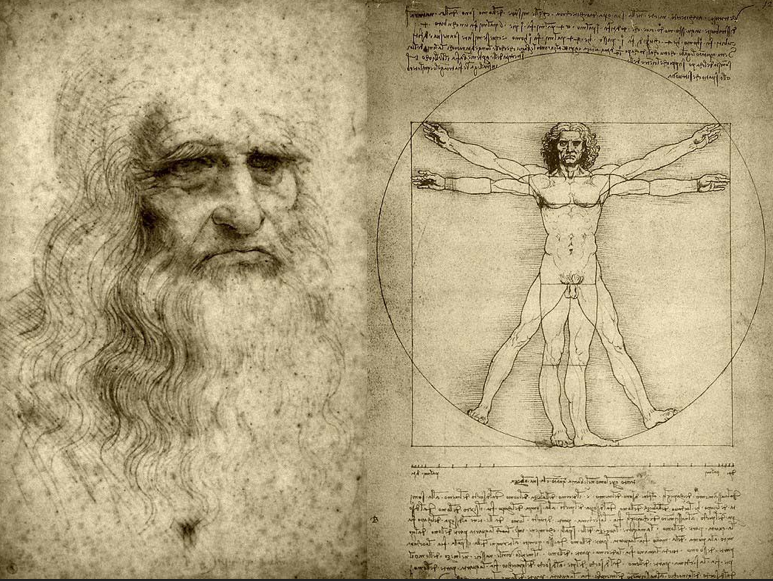
Da Vinci's ManThe Creative Challenge of Christian Humanism

Dr. Jens Zimmermann

Canada Research Chair of Interpretation, Religion and Culture, Trinity Western University

Wednesday, February 27 @ 4:00 pm, Woodward IRC Room 5

ABSTRACT

The question of who we moderns are and what vision of humanity to assume in Western culture lies at the heart of hotly debated questions about the role of religion in education, politics, and culture. The urgency for recovery of a greater purpose for social practice is indicated by the increasing number of publications on the demise of higher education. Dr. Zimmermann contends that a main cause of this malaise is to be found in the alienation of reason and faith. He remains hopeful that the West can recover and rearticulate its identity, renew its cultural purpose by recovering the humanist ethos that originally shaped it. The journey he takes us on traces the religious roots of humanism from patristic theology, through the Renaissance and into modern philosophy. Historically, humanism was based on a creative correlation of, and compatibility between, reason and faith. Our speaker uses his considerable skill to re-imagine humanism for our current cultural and intellectual climate. This lecture follows in stream of thought with the CBC Ideas Series called The Myth of the Secular, a reframing of the conversation about religion and society in the twenty-first century.

BIOGRAPHY

Jens Zimmermann holds a Ph.D. in Comparative Literature from the University of British Columbia, and a Ph.D. in Philosophy from the Johannes Gutenberg University in Mainz, Germany. He currently occupies the Canada Research Chair in Interpretation, Religion and Culture, and is Professor of English at Trinity Western University (TWU) in Langley. He has published eight previous books in the areas of theology, philosophy, and literary theory. He is board member of the International Bonhoeffer Society (English Language Section), and co-editor of the IBI (International Bonhoeffer Interpretation) series. With two other colleagues, he also runs the Religion, Culture and Conflict group at TWU, which organizes inter-faith conferences. The group recently published Politics and the Religious Imagination (Routledge 2010). Dr. Zimmermann has just released a new book from Oxford University Press in 2012 (Humanism & Religion: a call for the Renewal of Western Culture) from which comes the theme of today’s lecture.

UBC Lecture on Christian Humanism Feb, 2013

Jens has just released a new book: Hermeneutics: A Very Short Introduction.

See also YouTube debate between David Bentley Hart and Spokesperson for the UK National Secular Society Terry Sanderson on this topic of roots of humanism: http://www.youtube.com/watch?v=UI4uh0FKIrg 

See also The Great Escape from Nihilism by Gordon Carkner (2016) for the quest to recover the tradition of Christian humanism.


Read More…

Posted by: gcarkner | February 15, 2013

Research Disciplines

Research Disciplines that Make a Difference

1. Take lots of notes on your computer while reading; set up a sound filing system so that you have easy access. You never know when you are going to need that paper or quote in future. Perhaps you will use it in teaching eventually. Pen & paper notes are fine as long as you get them on your computer as soon as possible. Reference everything. Back up everything at least twice!

2. Discipline and design your work in two week chunks. This is enough time to master a new book, or get a handle on a new research method, or write a section of a chapter. Have either your supervisor or a friend hold you accountable to the goal of that period. Meeting regularly with someone to discuss what you learned is key to the process; this is the Oxford model of the tutorial. It is 900 years old and it works.

3. Only answer your email at a certain time of the day; don’t let it constantly distract you from the task at hand. The ping on your email system can be your enemy in disguise. Cut down on all eye candy distractions. Read More…

Posted by: gcarkner | February 15, 2013

Ten Myths about Scientific Reason and Faith

Paul Davies on Scientific Reason and Religious Faith

Reprint from PAUL DAVIES (thought provoking article on the nature of science and the laws of physics)-> Read this article at least three times to capture its insight.

The New York Times, 
November 24, 2007

Tempe, Ariz.

SCIENCE, we are repeatedly told, is the most reliable form of knowledge about the world because it is based on testable hypotheses. Religion, by contrast, is based on faith. The term “doubting Thomas” well illustrates the difference. In science, a healthy skepticism is a professional necessity, whereas in religion, having belief without evidence is regarded as a virtue. 
 
The problem with this neat separation into “non-overlapping magisteria,” as Stephen Jay Gould described science and religion, is that science has its own faith-based belief system. All science proceeds on the assumption that nature is ordered in a rational and intelligible way. You couldn’t be a scientist if you thought the universe was a meaningless jumble of odds and ends haphazardly juxtaposed.

Read More…

Posted by: gcarkner | February 14, 2013

Jean Bethke Elshtain: a Unique Contributor

Top Christian  Political Theorist

Jean Bethke ElshtainShe is the Laura Spelman Rockefeller Professor of Social and Political Ethics at the University of Chicago Divinity School, and is a contributing editor for The New Republic. She is, in addition, newly the Thomas and Dorothy Leavey Chair in the Foundations of American Freedom at Georgetown University. She is a member of the American Academy of Arts and Sciences and she has served on the Boards of the Institute for Advanced Study, Princeton, and the National Humanities Center. She is the recipient of a Guggenheim Fellowship and has received nine honorary degrees. In 2002, Elshtain received the Frank J. Goodnow award, the highest award for distinguished service to the profession given by the American Political Science Association.

The focus of Elshtain’s work is an exploration of the relationship between politics and ethics. Much of her work is concerned with the parallel development of male and female gender roles as they pertain to public and private social participation. Since the September 11, 2001 attacks she has been one of the more visible academic supporters of U.S. military intervention in Afghanistan and Iraq.

She has published over five hundred essays and authored and/or edited over twenty books, including Democracy on TrialJust War Against Terror: The Burden of American Power in a Violent World, Jane Addams and the Dream of American Democracy, Augustine and the Limits of Politics, and Sovereignty: God, State, Self.

One of her last discussions http://mailchi.mp/veritas/under-god-religion-in-public-life?e=9f1d2a36f1 Under God: the role of religion in public life.

Read More…

Posted by: gcarkner | February 12, 2013

Nihilism and Suffering: Incompatible?

Nihilism Fails to Honestly Engage Evil and Suffering

~Gordon Carkner PhD~

Author of The Great Escape from Nihilism

Recovery of Meaning Amidst Suffering Dr. Gordon E. Carkner, author of The Great Escape from Nihilism.   (slides)


The problem of evil and suffering is one of the toughest for people of all worldview persuasions. Yet, it can be our teacher in moral growth and discovery of meaning if we dare to dig deeper into the human condition, if we dare to think about it in the proper moral horizon. A bitter response to personal tragedy or an abusive relationship easily emerges: “Trust no one!” If a trusted friend, colleague or relative committed the unseemly act, the hurt individual can opt for retreat and a refusal to ever trust again. We heard a prayer request this week: “Help me to learn to trust that there are some good people out there.” One’s emotions disengage and commitments can become ever so tentative, nervous and cautious. It could also be a strong temptation for  a person who has had a life-altering injury, like a severed spinal cord or serious Iraq War injury. The problem of coping is especially true of someone who was abused as a child in their innocence; the emotional scars are often carried well into adult life and can be debilitating. Tragedy like this can break our narrative and our spirit, dash our hopes and dreams. We die inside. Read More…

Posted by: gcarkner | February 10, 2013

What’s in a Word?

Power in a Word: Agape

We have spoken of the power of language to leverage the world in this blog. Is the ancient Greek word agape such a term? It has a long and noble history in the West. Perhaps too few of us know of its legacy. This post will act as a first response to the previous discussion on Quality of the Will. Transcendent agape love transforms the self, according to Charles Taylor, a love from above, transcendent of the human community, beyond mere human flourishing or survival of one’s tribe. He talks about this in terms of the possibility of a transcendent turn in philosophy to release late moderns from the burden of too much choice that leaves us morally frozen, and too much freedom of the wrong kind–freedom devoid of responsibility.

This is the constitutive good which can empower the moral self, a self that emerges most robustly within a community of mutuality. Trinitarian love offers the self a certain stance towards society; it sees something good in the human self, that is, the created (imago dei) image of God  (Taylor, 1999, p. 33). Perhaps we can discover a lost humanist heritage.

Our being in the image of God is also our standing among others in the stream of love, which is that facet of God’s life we try to grasp, very inadequately, in speaking of the Trinity. Now it makes a whole lot of difference whether you think this kind of love is a possibility for us humans. I think it is, but only to the extent that we open ourselves up to God, which means in fact, overstepping the limits set by Nietzsche and Foucault. (Taylor, A Catholic Modernity?, 1999, p. 35.) Read More…

Posted by: gcarkner | February 5, 2013

Is it a Fine-tuned Universe?


The Fine-tuned Universe is the proposition that the conditions that allow life in the Universe can only occur when certain universal fundamental physical constants lie within a very narrow range, so that if any of several fundamental constants were only slightly different, the Universe would be unlikely to be conducive to the establishment and development of matter, astronomical structures, elemental diversity, or life as it is presently understood. The existence and extent of fine-tuning in the Universe is a matter of dispute, debate and lively conversation in the scientific community. The proposition is also discussed much among philosophers.

Noted Physicist Paul Davies asserts that “There is now broad agreement among physicists and cosmologists that the Universe is in several respects ‘fine-tuned’ for lifeIt is fine-tuned for the building blocks and environments that life requires.”  Astronomer and mathematician Sir Fred Hoyle at Cambridge University was in complete amazement when he discovered the resonance in the carbon atom, a basic building block of the biological life, and also discovered that carbon along with other heavy elements were made in the nuclear furnace of stars. His famous words were: “A common sense interpretation of the facts suggests that a super-intellect has monkeyed with physics, as well as chemistry and biology.” Among scientists who find the evidence persuasive, a variety of explanations have been proposed, including the Anthropic Principle: Did the universe somehow have human observers in mind in the events that occurred after the Big Bang and in the 40 or so physical constants that are key to modern physics and our very existence? Of course, this is really the only universe we know and examine. It is truly filled with wonder, giving us abundance and huge variety of life.

Screen shot 2013-02-06 at 8.13.58 PM

Read More…

Posted by: gcarkner | February 2, 2013

The Lost Boys of Sudan

The Real Problem of Evil

My 15 year old daughter and I watched an award winning  documentary the other day called God Grew Tired of Us. It was a tragic and wonderful real life story. For some of us, the problem of evil and suffering is a theoretical/philosophical issue. How can a good God allow such suffering. Where did evil originate? There was no hiding behind the niceties of the philosophy colloquium for several thousand of these displaced boys known as The Lost Boys of Southern Sudan.  This story occurred during the civil war. They were in the pit of human evil where people were treated like rodents, villages burned, families splintered, the economy devastated. Some saw their parents killed in front of them. It was a nightmare of organized state barbarism, anti-humanism.

The parade of refugees was on the run for their very lives from military forces of the north destined to wipe them off the face of the earth. Many died on the journey, but they had to pull together. They organized and set a trajectory for Ethiopia. Many were as young as five. They walked barefoot for a thousand miles with very little food to finally find respite at a refugee camp in Ethiopia where they had some support for three years. It is a story of amazing human will to survive the worst circumstances. Then the government of Ethiopia fell and they were on the run once again, this time to Kenya. Just 12,000 made it to a UN refugee camp  in northern Kenya called Kakuma. The story follows the lives of three of these lost boys who spent ten years in Kakuma, leading and caring for the others in the camp. The camp swelled to 86000. These three were finally given a chance to go to America and start a new life through the refugee program. Read More…

Posted by: gcarkner | January 31, 2013

Can Language Set You Free?

Language and the Road to Freedom

Sometimes our language is quite restrictive; it can really nail us down. It is hard to see beyond the picture of the world that has taken us captive and the language that articulates this picture. But fresh language and new interlocutors can free us from the grip of too narrow a perspective on life and reality. Perhaps we academics need to collaborate more on language, to expand our imagination whatever our discipline. We have been impressed with engineering and science faculty who have done a second PhD in Fine Arts or Humanities. These were some of the most innovative academic program developers at University of Waterloo; they pioneered communal learning in Systems Design Engineering. Can new language set us free into new levels of genius and creativity? We suspect so. This is also the benefit of interdisciplinary studies at UBC. We should see language as a kind of wealth to steward well. To close ourselves off, to implode into a minimalist or reductionist language game, is to be in denial of this common human possession, this larger linguistic horizon.

In the CBC Series The Myth of the Secular, David Cayley and his guests open up for re-examination the language of the secular. It is an excellent series. They don’t buy the traditional thesis of secularization (flattened one-dimensional secularism) that involves the subtraction of religion. Today religion is flourishing throughout the world. Charles Taylor is suggestive of the transcendent condition of our having a grasp on our own language, especially as we explore the expressive-poetic tradition of language. We often discover this in dialogue (Sources of the Self, p. 37), when pushed to the wall by colleagues who disagree with our personal convictions. Language is so embedded in our identity that we have a hard time transcending it without dialogue with others of a different worldview. Celebrate what other language games and metaphors, figures of speech, can illuminate. Celebrate how they can show you how to transcend the narrowness of the academic speak within your discipline. Tap in to that broader conversation. Read More…

Posted by: gcarkner | January 29, 2013

The Windover by Gerard Manley Hopkins

The Windover by Gerard Manley Hopkins

To Christ our Lord

I caught this morning morning’s minion, king-
    dom of daylight’s dauphin, dapple-dawn-drawn Falcon, in his riding
    Of the rolling level underneath him steady air, and striding
High there, how he rung upon the rein of a wimpling wing
In his ecstasy! then off, off forth on swing,
    As a skate’s heel sweeps smooth on a bow-bend: the hurl and gliding
    Rebuffed the big wind. My heart in hiding
Stirred for a bird, – the achieve of, the mastery of the thing!


Brute beauty and valour and act, oh, air, pride, plume, here
    Buckle! AND the fire that breaks from thee then, a billion
Times told lovelier, more dangerous, O my chevalier!
   No wonder of it: shéer plód makes plough down sillion
Shine, and blue-bleak embers, ah my dear,
    Fall, gall themselves, and gash gold-vermilion.

« Newer Posts - Older Posts »

Categories