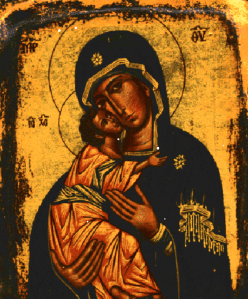
Giovanni Bellini, The Garden of Gethsemane
Faith in God includes one’s ongoing resolve to receive God’s moral character in Christ inwardly, and to belong to God, in the reverent attitude of Gethsemane; Christ in you is the inward agent-power of Christ working, directing at the level of psychological and motivational attitudes, towards a cooperative person’s renewal in God’s image as God’s beloved child; furthermore Gethsemane union with Christ as Lord calls for volitional cooperation and companionship with Christ, who empowers and guides how we think, not just what we think.
~Dr. Paul Moser, Philosopher Loyola University, Chicago
How are we to understand Good Friday and Easter from such a distance? How does it relate to our experience? Is it mere sentiment or something more profound? Andy Crouch in his book Culture Making: recovering our creative calling, (Chapter 8 “Jesus as Culture Maker”) has some brilliant insights into the difference that Jesus life, death and resurrection have for shaping the horizons of possibility (shalom and human flourishing) for societies, ancient and modern. He helps us grapple with the various dimensions of this sorrow and celebration. See also I Corinthians 15 and reflect on the meaningful quotes by other authors and leaders.
~Gordon Carkner
The Cross
He suffered the full weight of the human story of rebellion against God. He was literally impaled on the worst that culture can do–an instrument of torture that stood for all the other cultural dead ends of history, from spears to bombs, gas chambers to waterboards. Like all other instruments of violence, a cross is cultural folly and futility at its most horrible. (141)
The core calling of [Jesus] life is not something he does at all in an active sense–it is something he suffers. The strangest and most wonderful paradox of the biblical story is that its most consequential moment is not an action but a passion–not a doing but a suffering. (142)
On Good Friday, love embraced suffering as Jesus drank the bitter cup. Dr. Martin Luther King Jr. self-consciously followed the same journey of the suffering death of Jesus, the way of the cross, as he promoted civil rights for African-Americans in the Southern USA in the 1960s. He worked hard to replace the perverted symbol of the cross which was used as a justification for aggression, hate and violence—e.g. as an instrument of the Ku Klux Klan. His life quest was to restore the cross as a symbol of love, mercy, justice and non-violence. He incarnated a form of extreme love, a committed non-violent protest against systemic injustice.
~Iwan Russell-Jones, former BBC Filmmaker and Professor of Faith and the Arts, Regent College
https://ubcgcu.org/2014/04/17/good-friday-by-malcolm-guite/ Good Friday Poem by Malcolm Guite Read More…







 See also posts on Charles Taylor and the Immanent Frame.